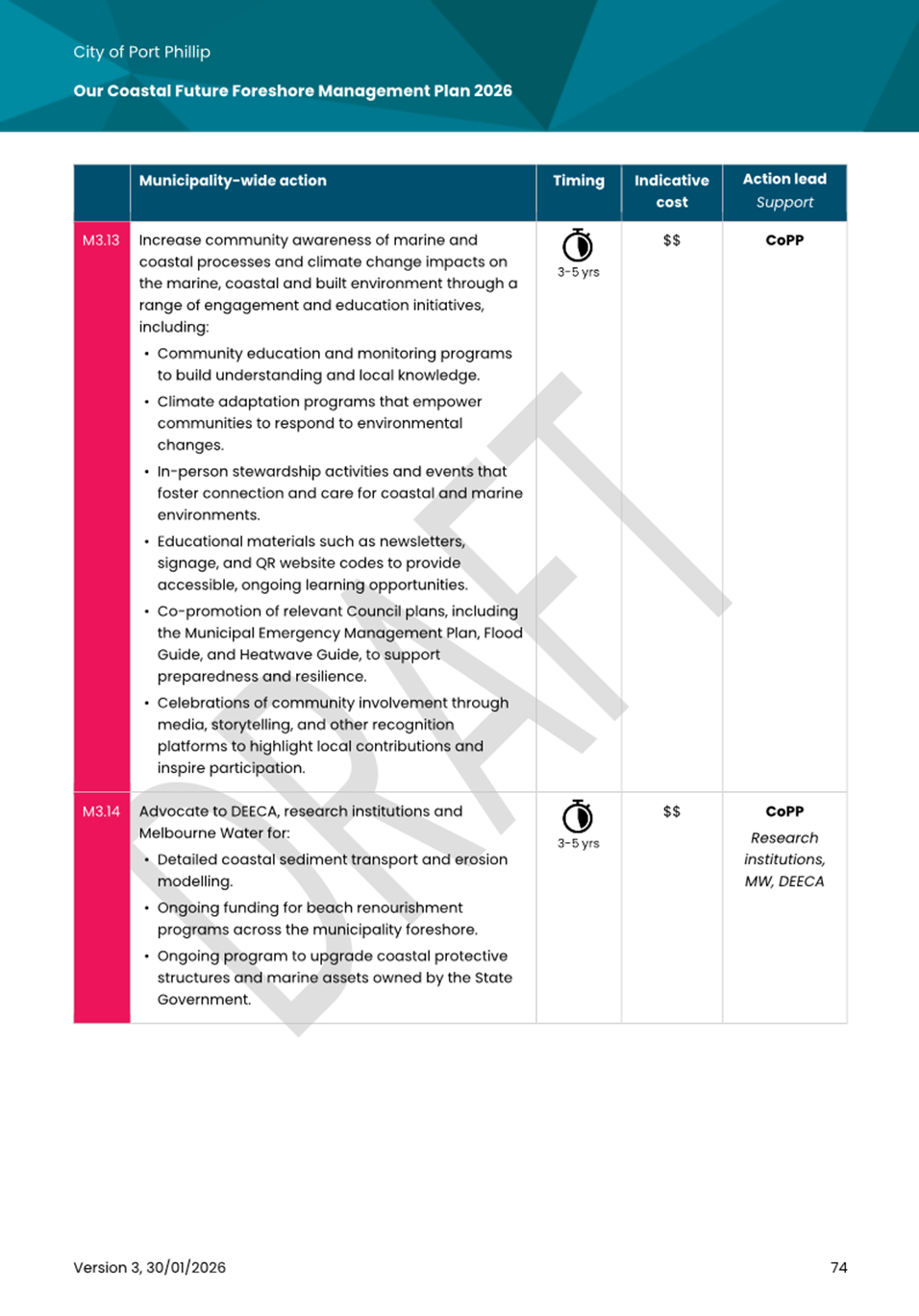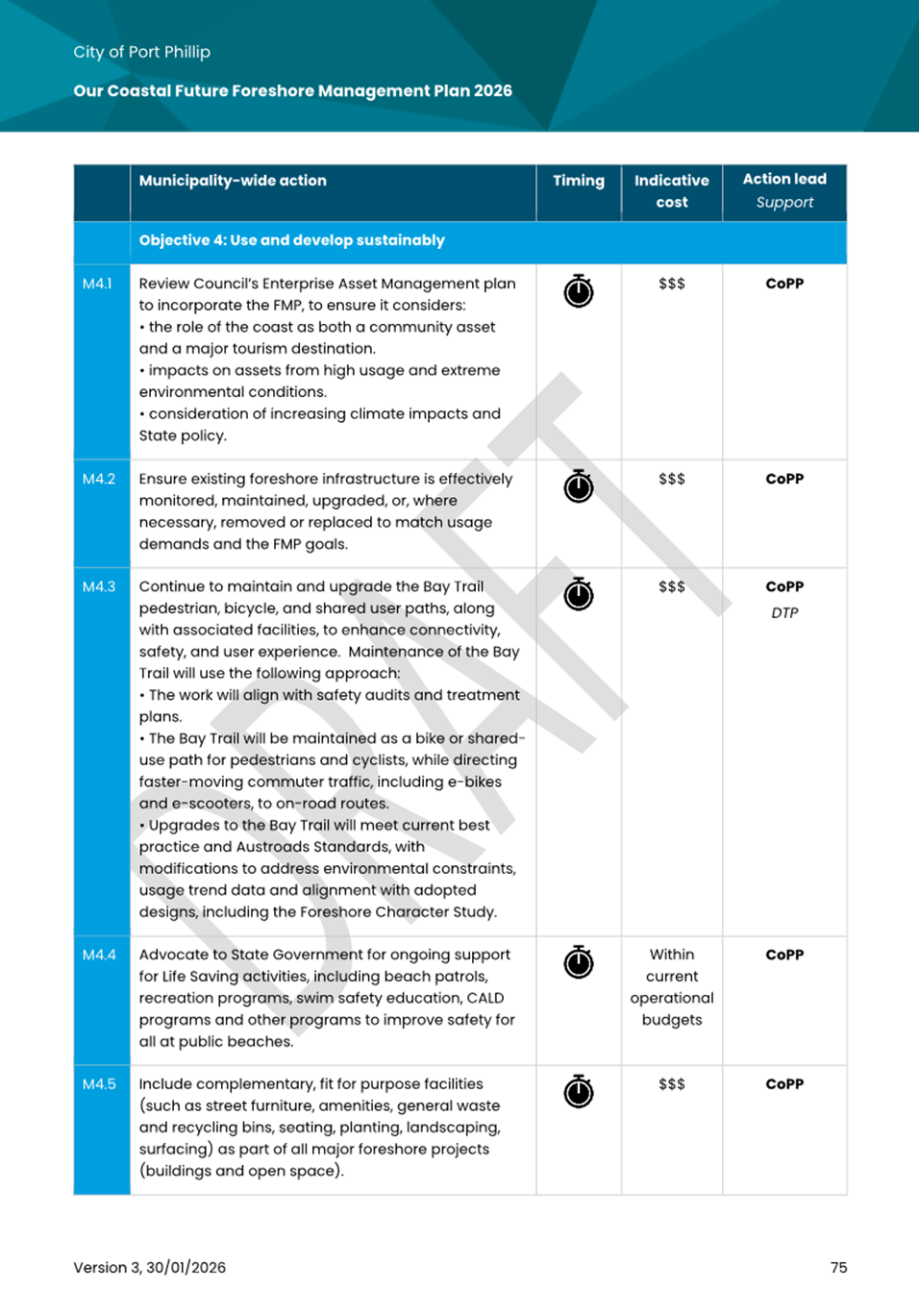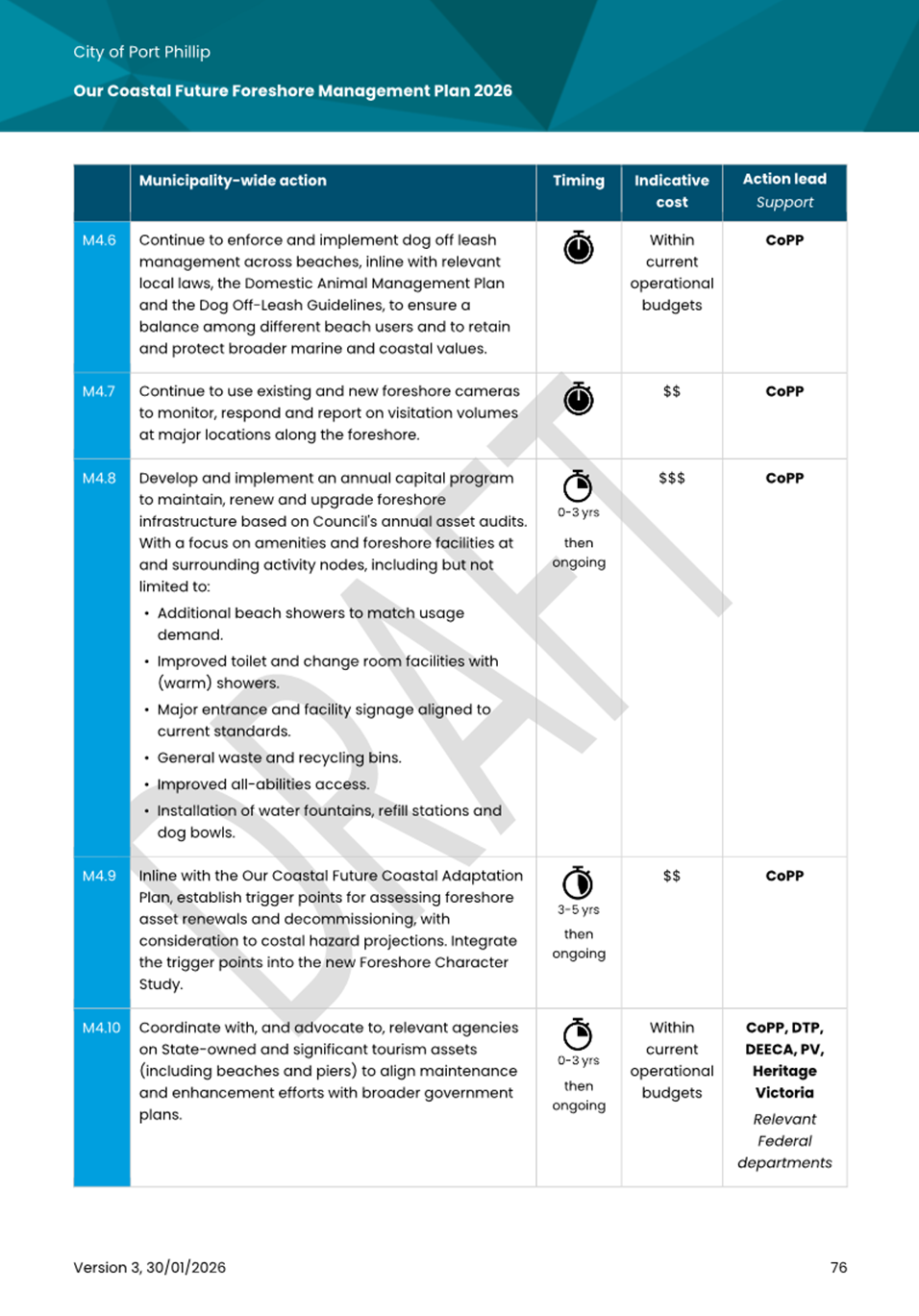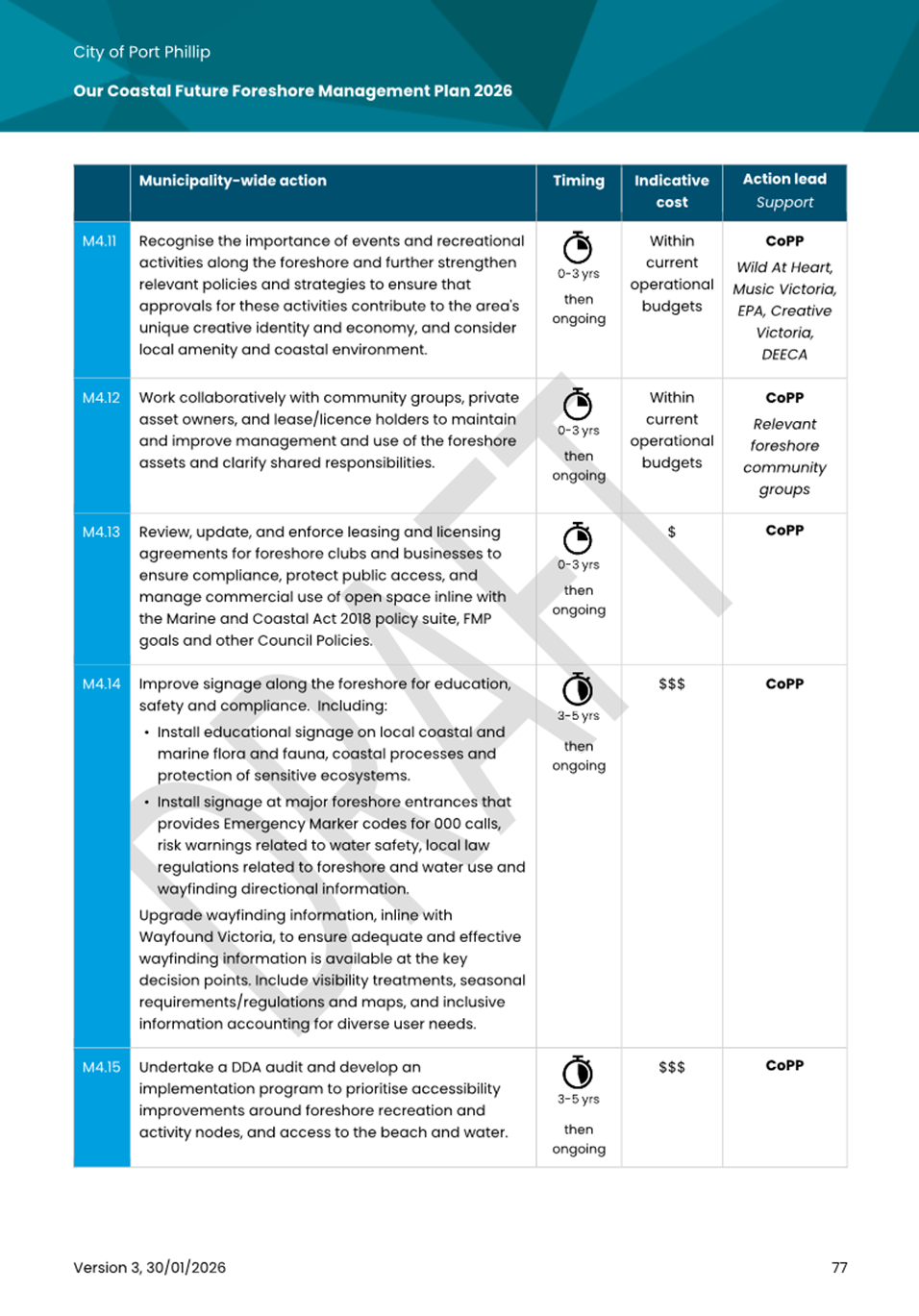
Meeting of the Port Phillip City Council
18 March 2026
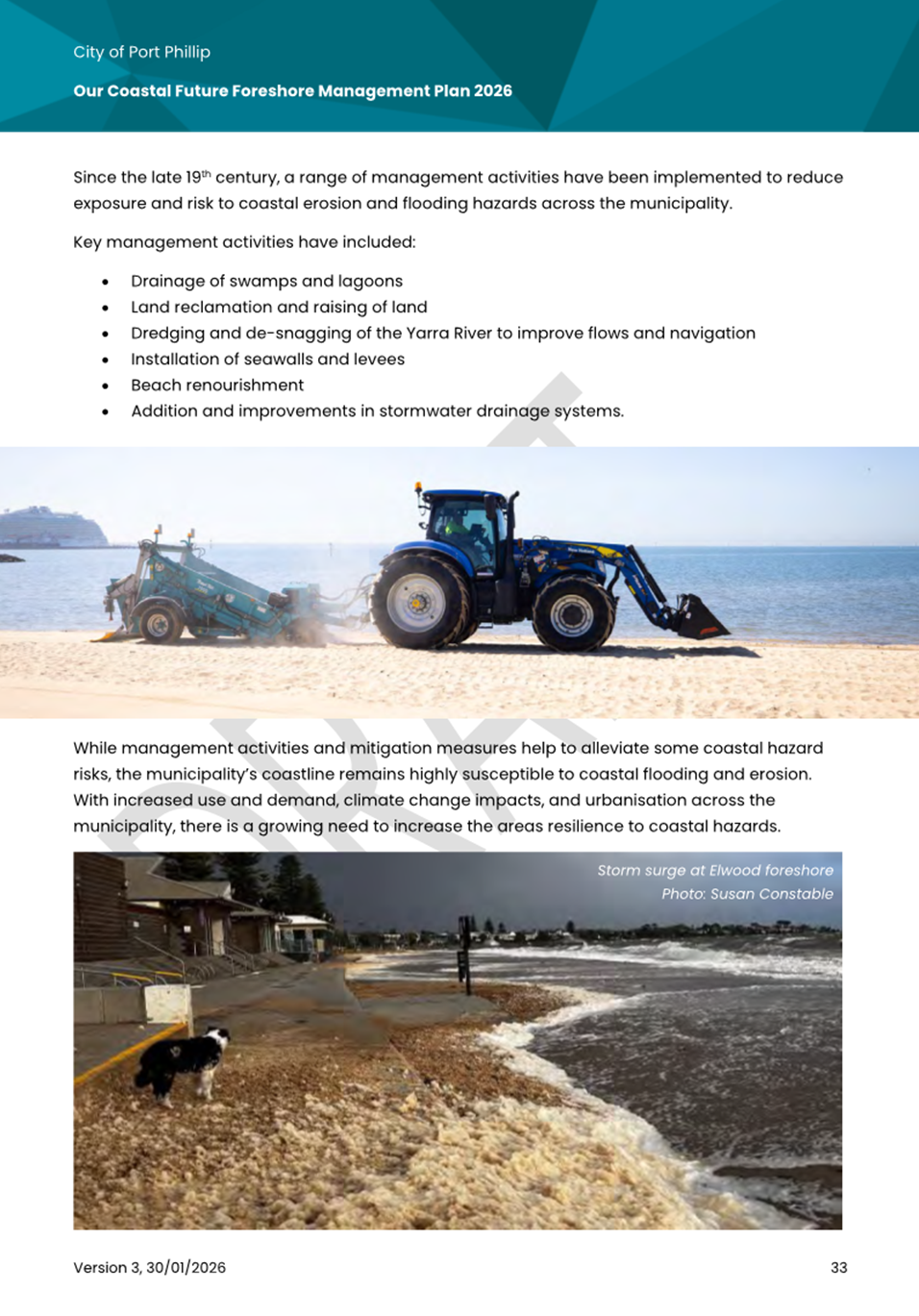
|
Welcome Welcome to this Meeting of the Port Phillip City Council. Council Meetings are an important way to ensure that your democratically elected representatives are working for you in a fair and transparent way. They also allow the public to be involved in the decision-making process of Council.
About this meeting There are a few things to know about tonight’s meeting. The first page of tonight’s Agenda itemises all the different parts to the meeting. Some of the items are administrative and are required by law. In the agenda you will also find a list of all the items to be discussed this evening. Each report is written by a Council officer outlining the purpose of the report, all relevant information and a recommendation. Council will consider the report and either accept the recommendation or make amendments to it. All decisions of Council are adopted if they receive a majority vote from the Councillors present at the meeting. |
Public Question Time and Submissions Provision is made at the beginning of the meeting for general question time from members of the public. All contributions from the public will be heard at the start of the meeting during the agenda item 'Public Questions and Submissions.' Members of the public have the option to either participate in person or join the meeting virtually via Teams to ask their questions live during the meeting. If you would like to address the Council and /or ask a question on any of the items being discussed, please submit a ‘Request to Speak form’ by midday on the day of the meeting via Council’s website: Request to speak at a Council meeting - City of Port Phillip |
|
|
|
|
Meeting of the Port Phillip City Council |
To Councillors
Notice is hereby given that a Meeting of the Port Phillip City Council will be held in St Kilda Town Hall and Virtually via Teams on Wednesday, 18 March 2026 at 6:30 PM. At their discretion, Councillors may suspend the meeting for short breaks as required.
AGENDA
1 APOLOGIES
2 MINUTES OF PREVIOUS MEETINGS
Minutes of the Meeting of the Port Phillip City Council 4 March 2026.
3 Declarations of Conflicts of Interest
4 Public Question Time and Submissions
5 Councillor Question Time
6 Petitions, Joint Letters & Deputations
Nil
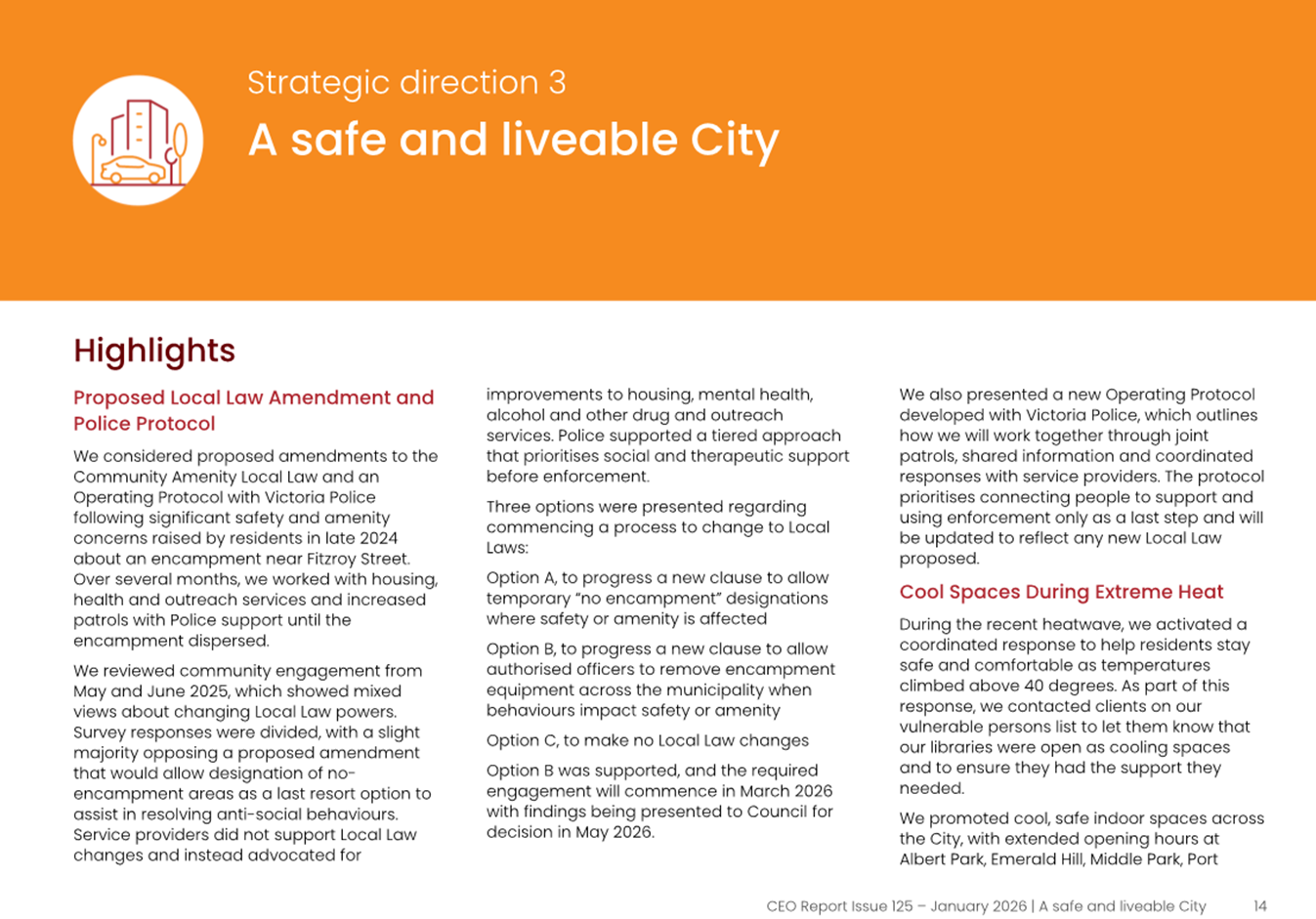
7 Presentation of CEO Report
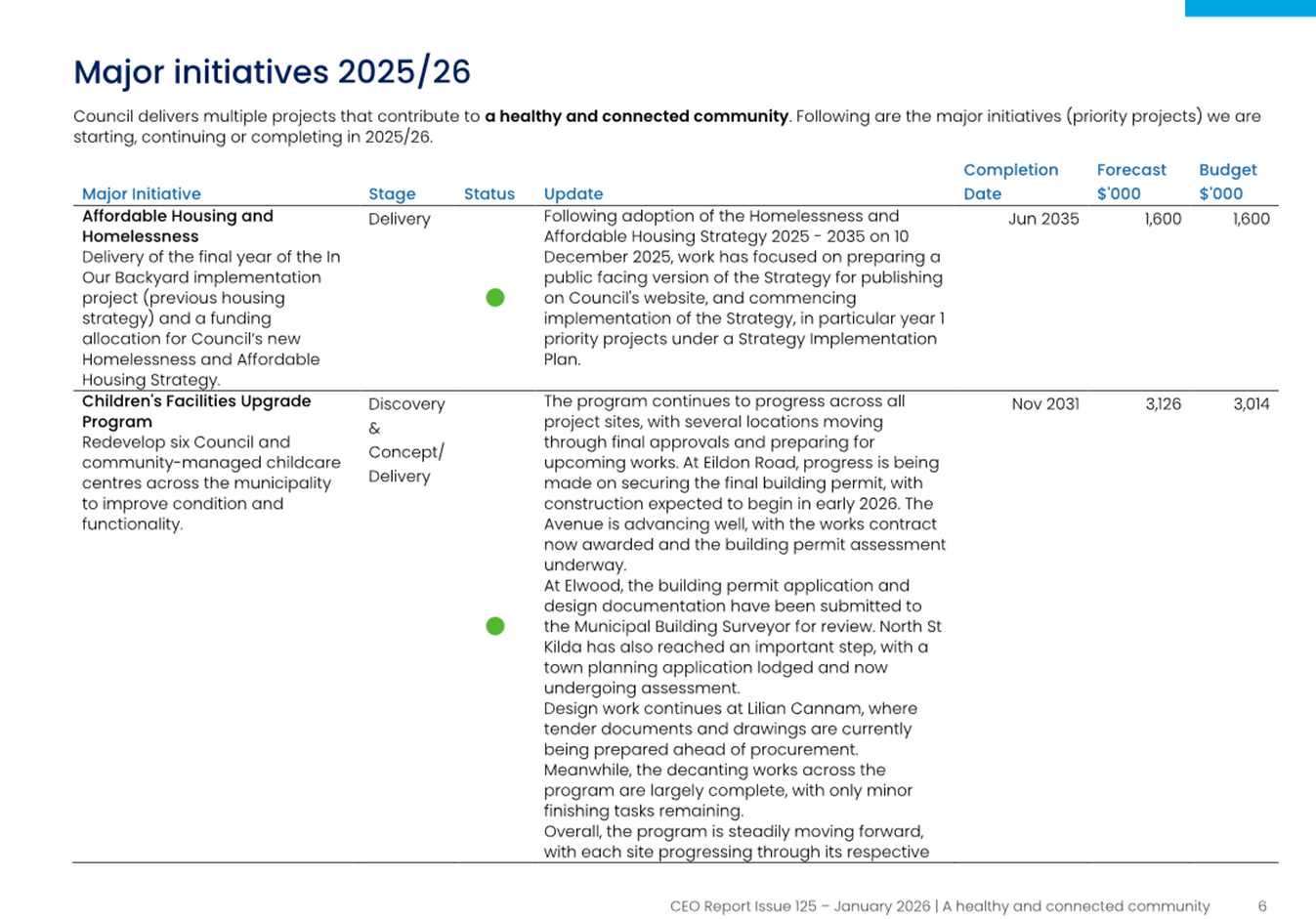
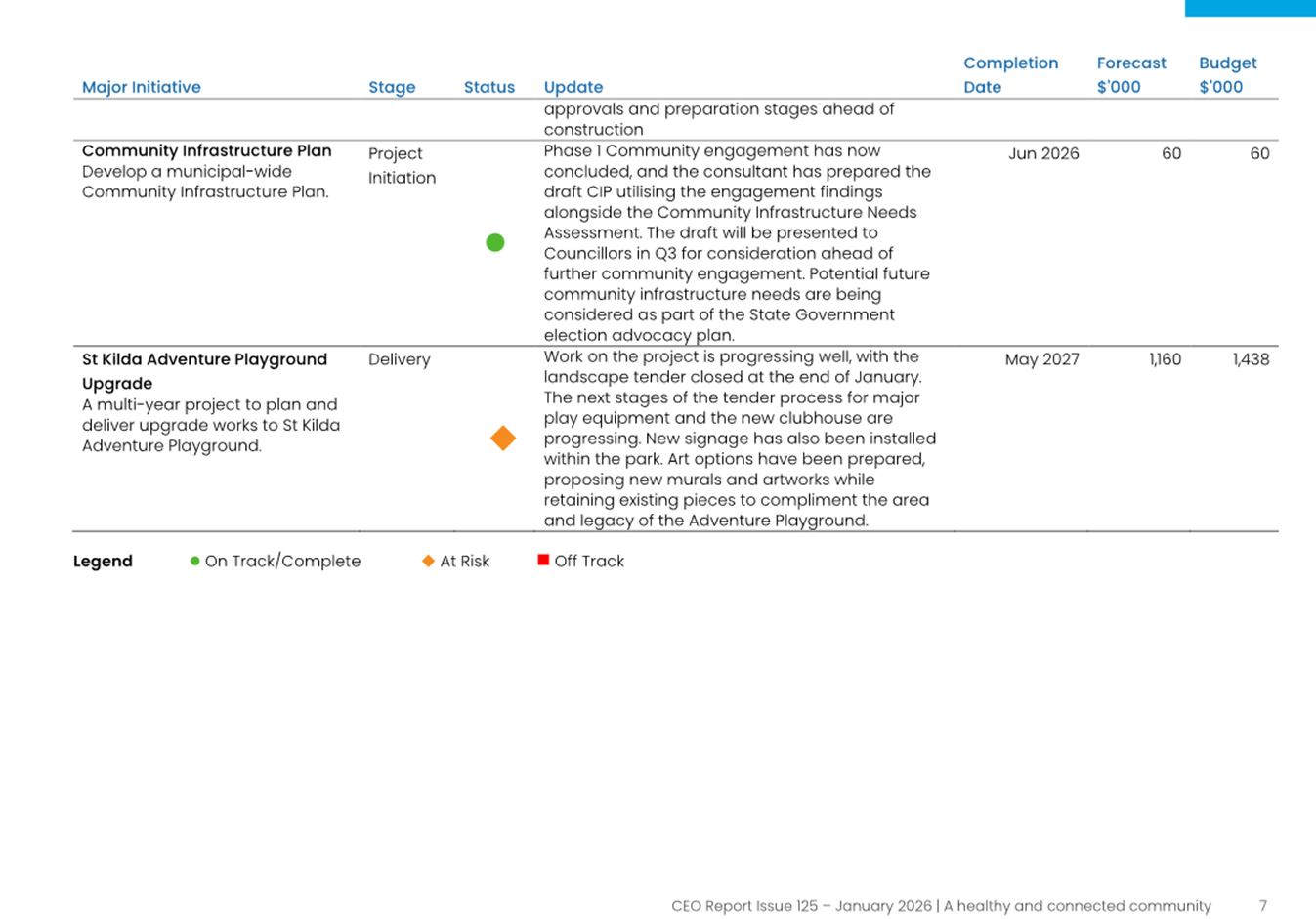
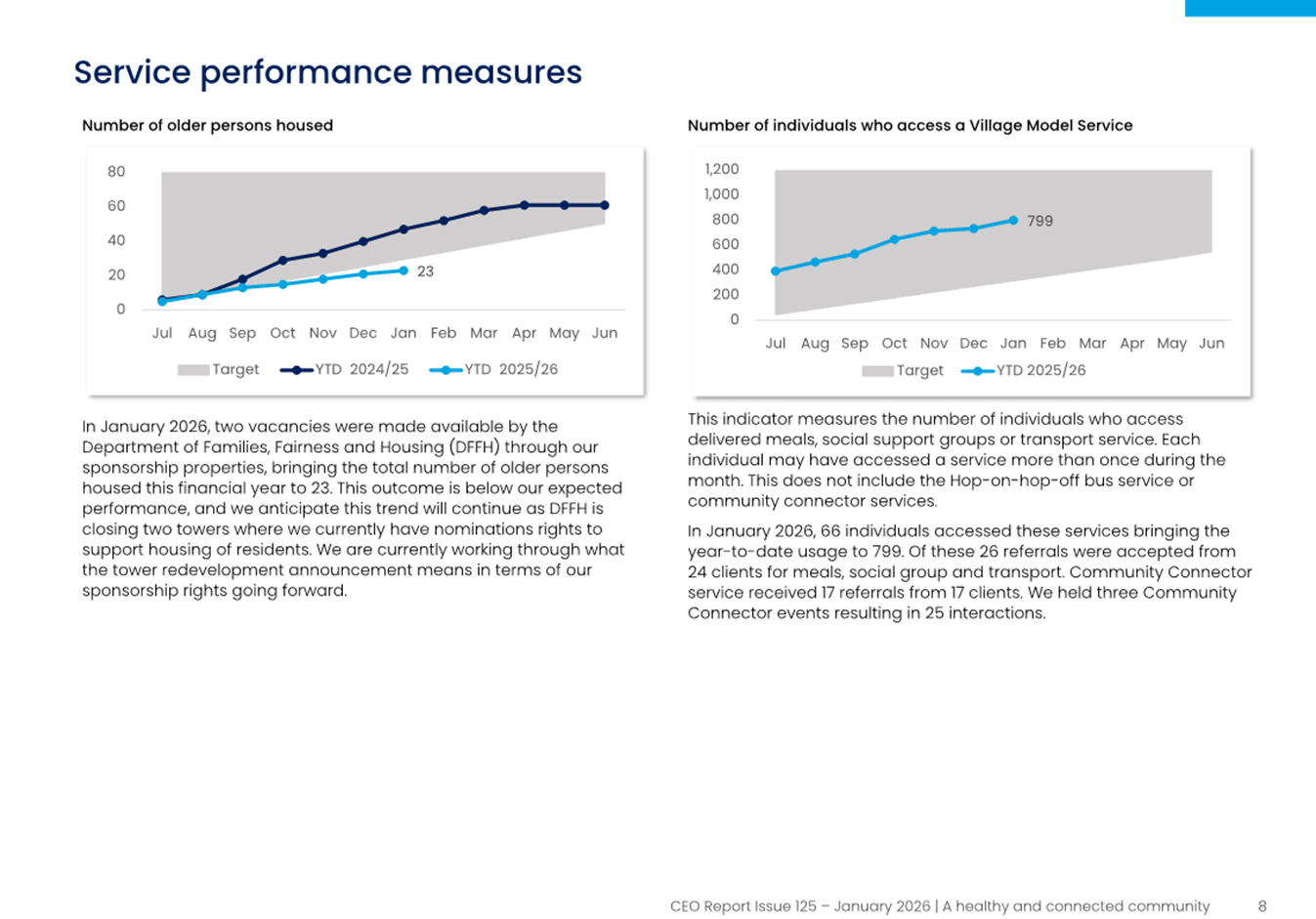
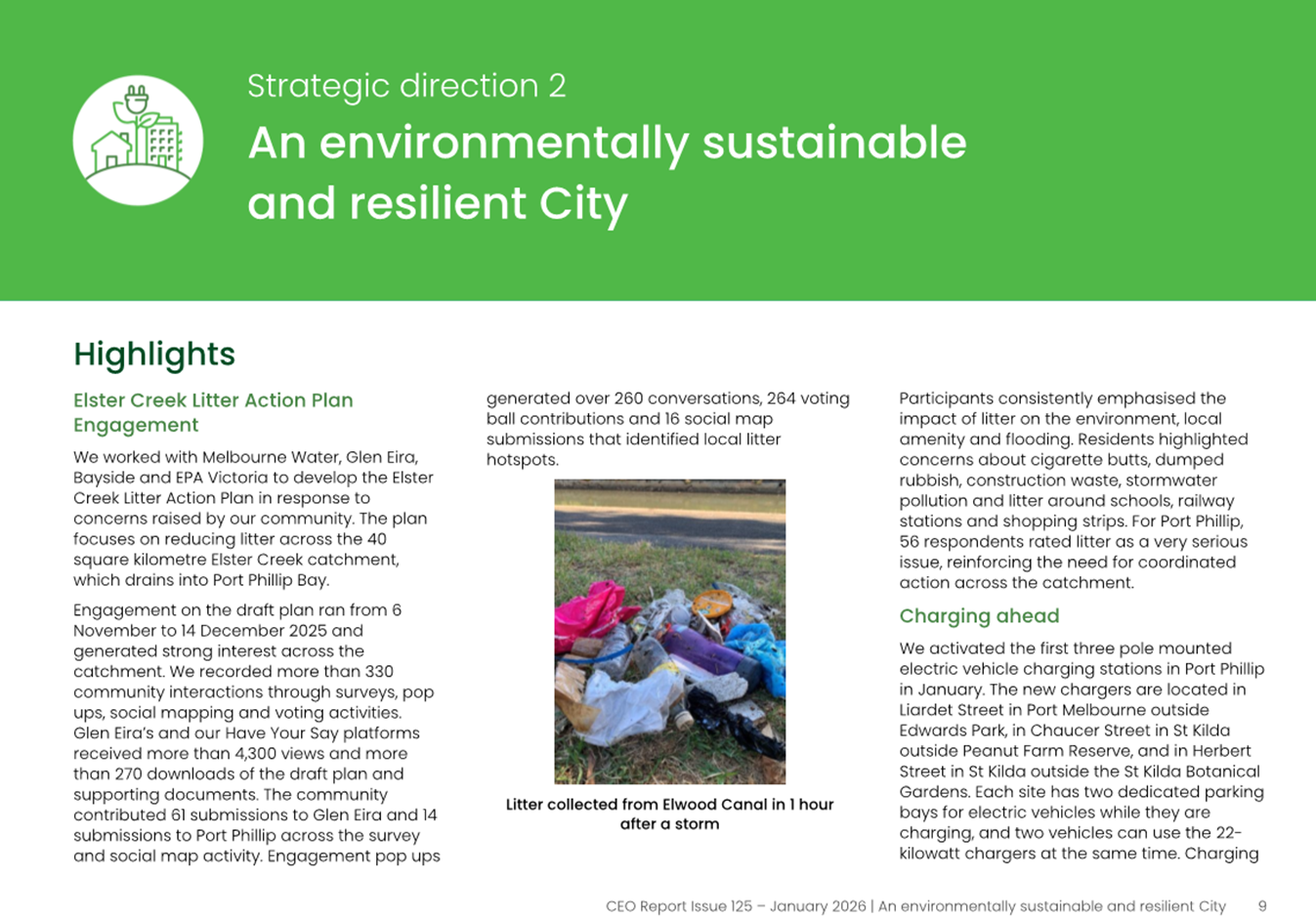
7.1 Presentation of CEO Report – January 2026 Issue 125...................................................................................... 6
8 A Healthy and Connected Community.................. 44
8.1 Draft Proposed Community Infrastructure Plan (release for engagement).......................................................... 45
9 An Environmentally Sustainable and Resilient City 134
9.1 Community Electric Vehicle Charging Program....... 135
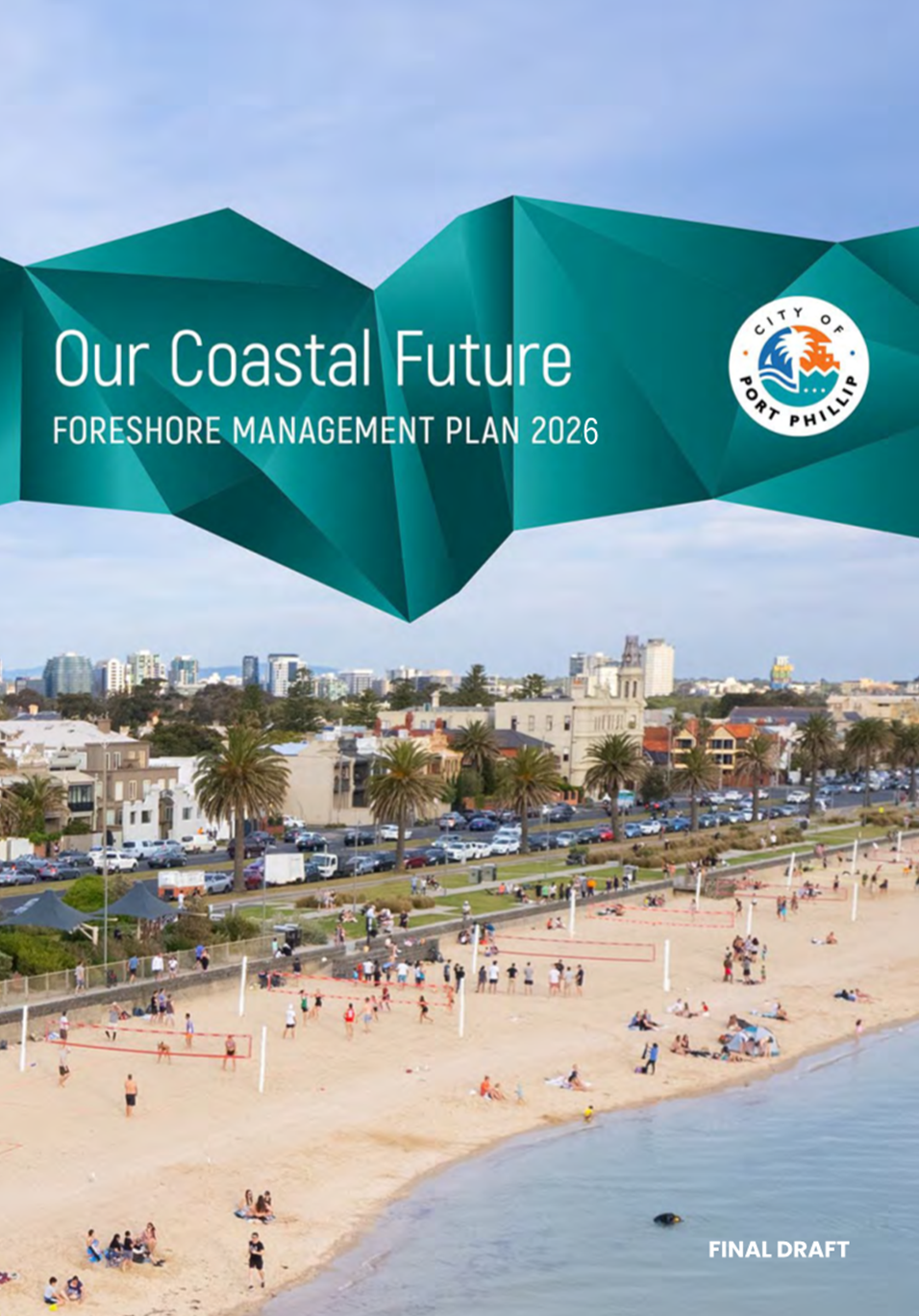
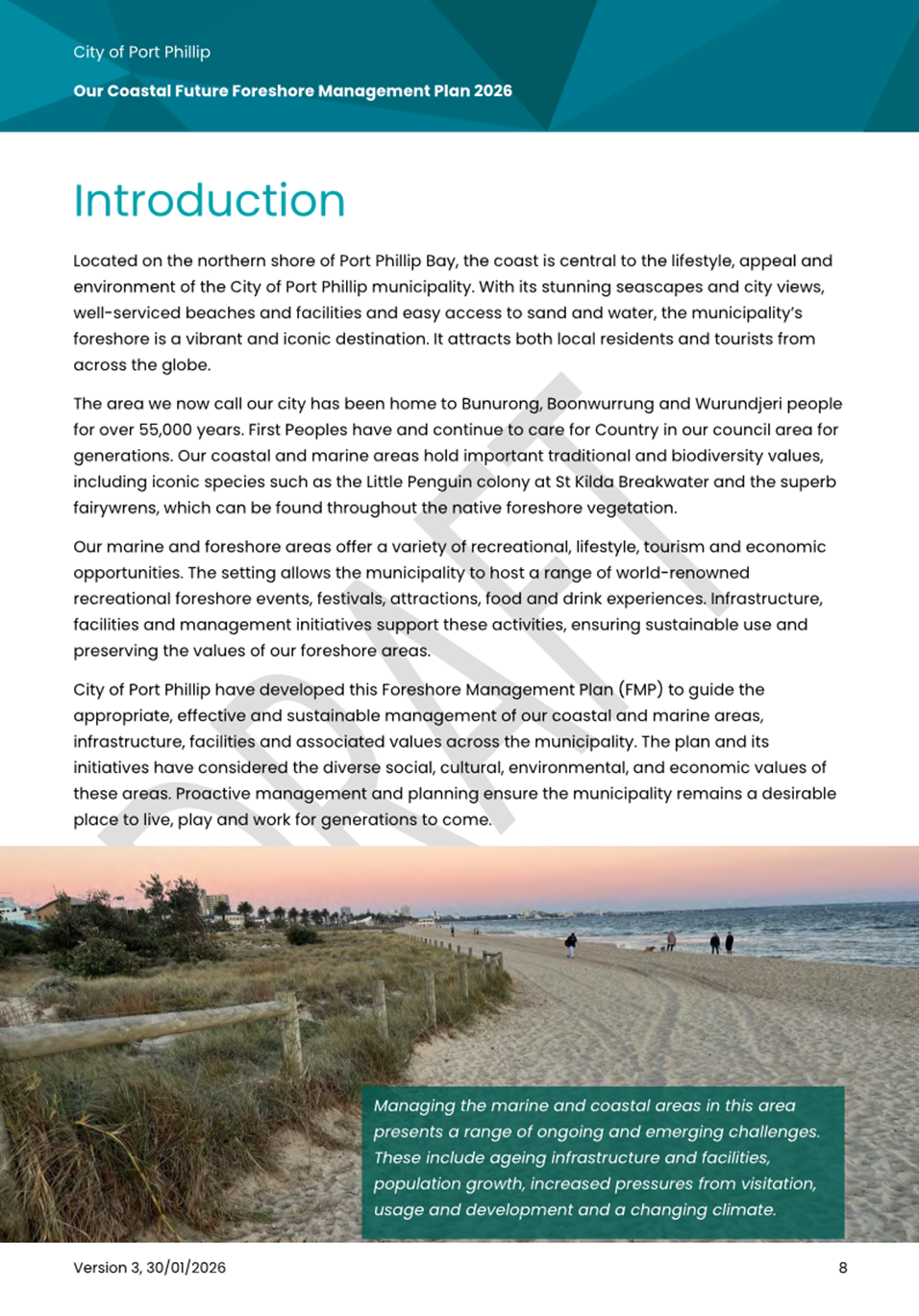
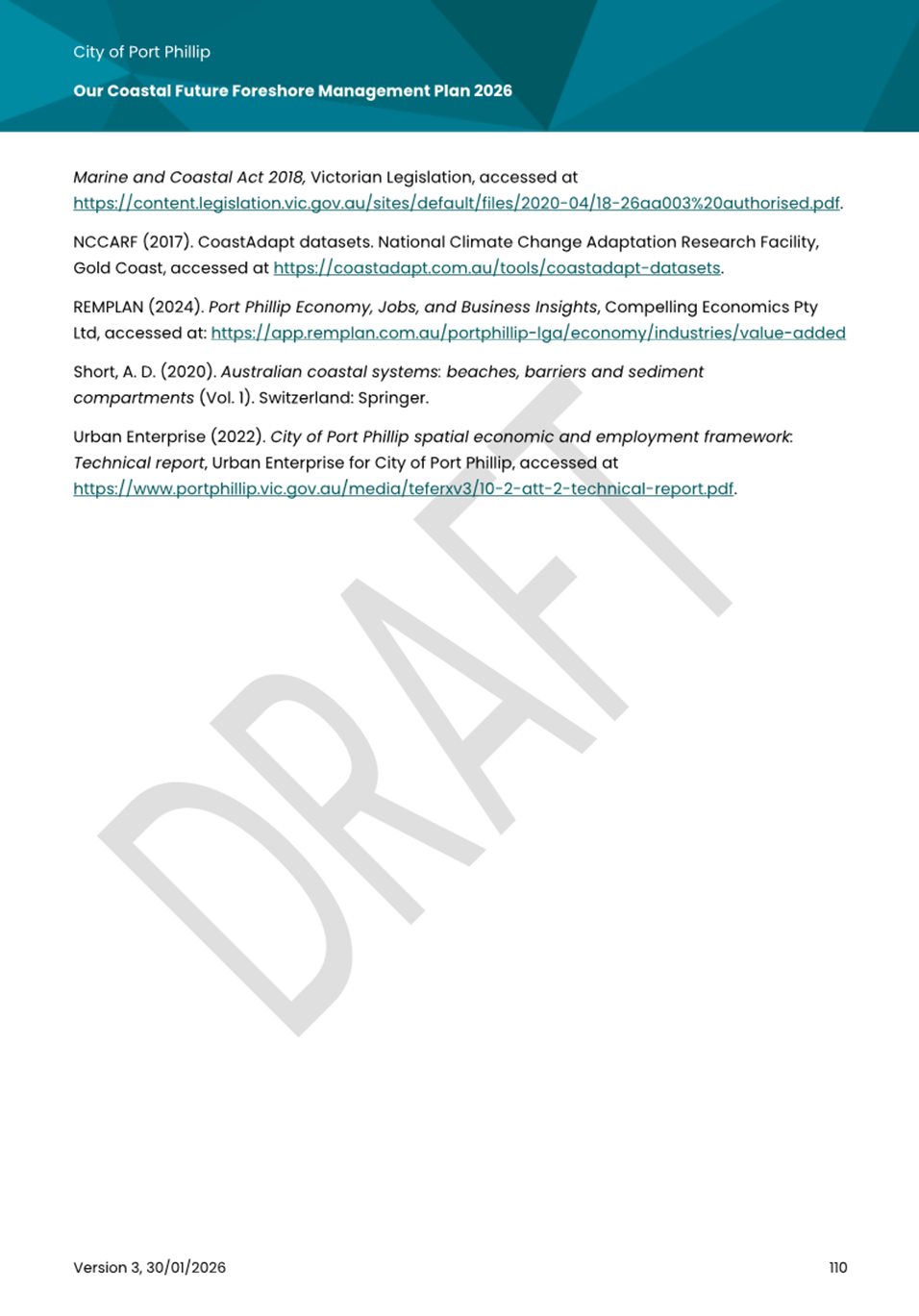
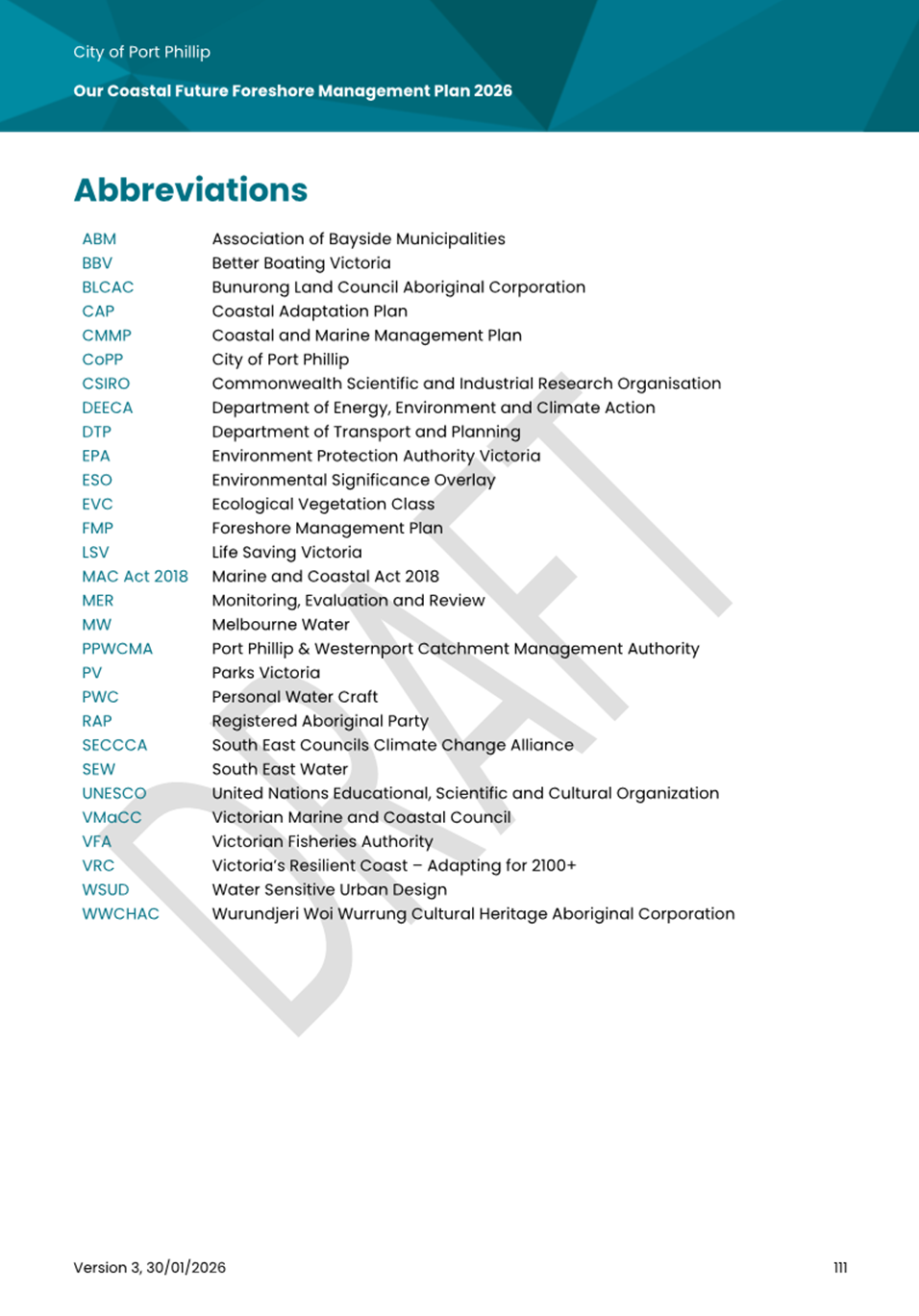
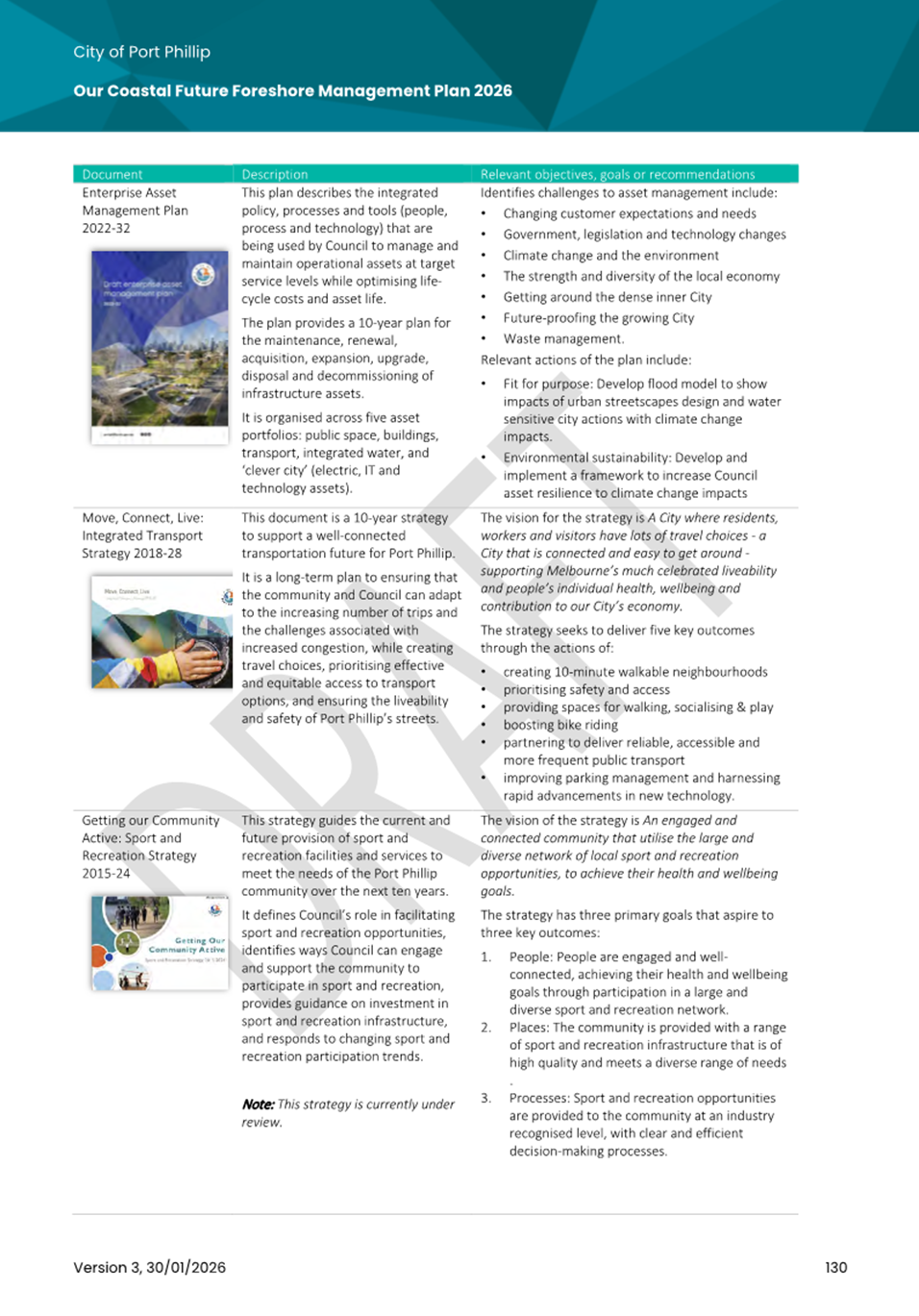
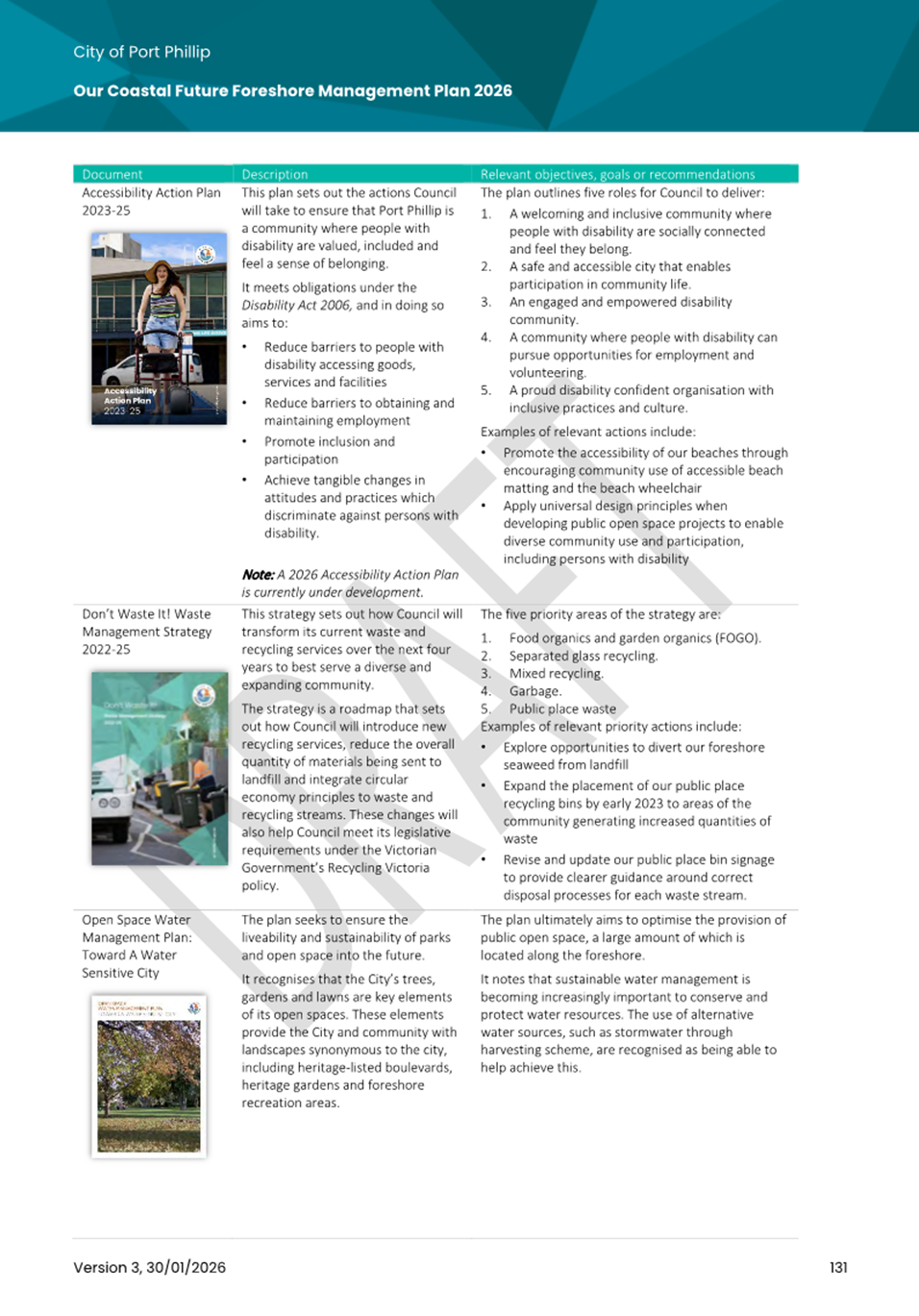
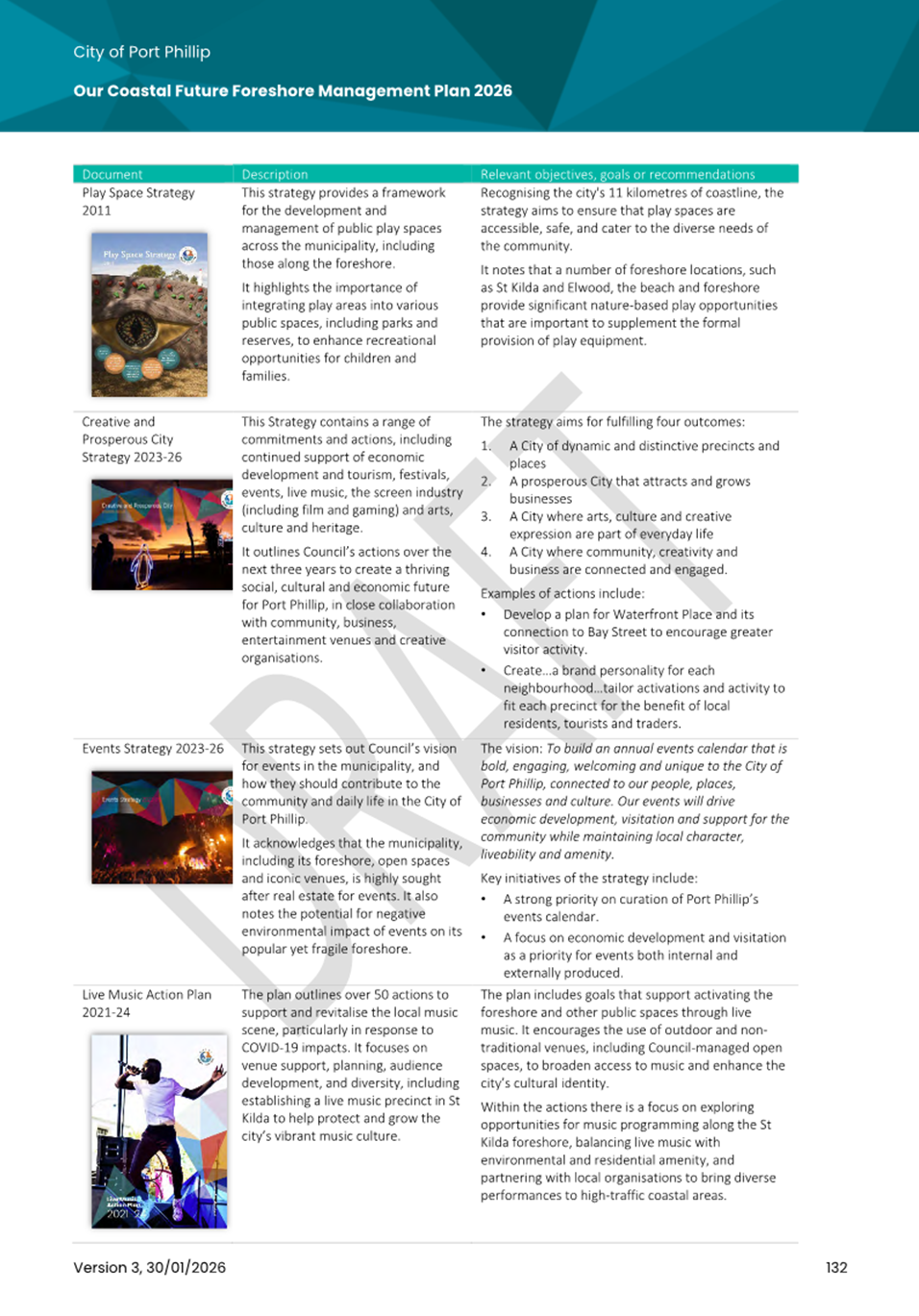
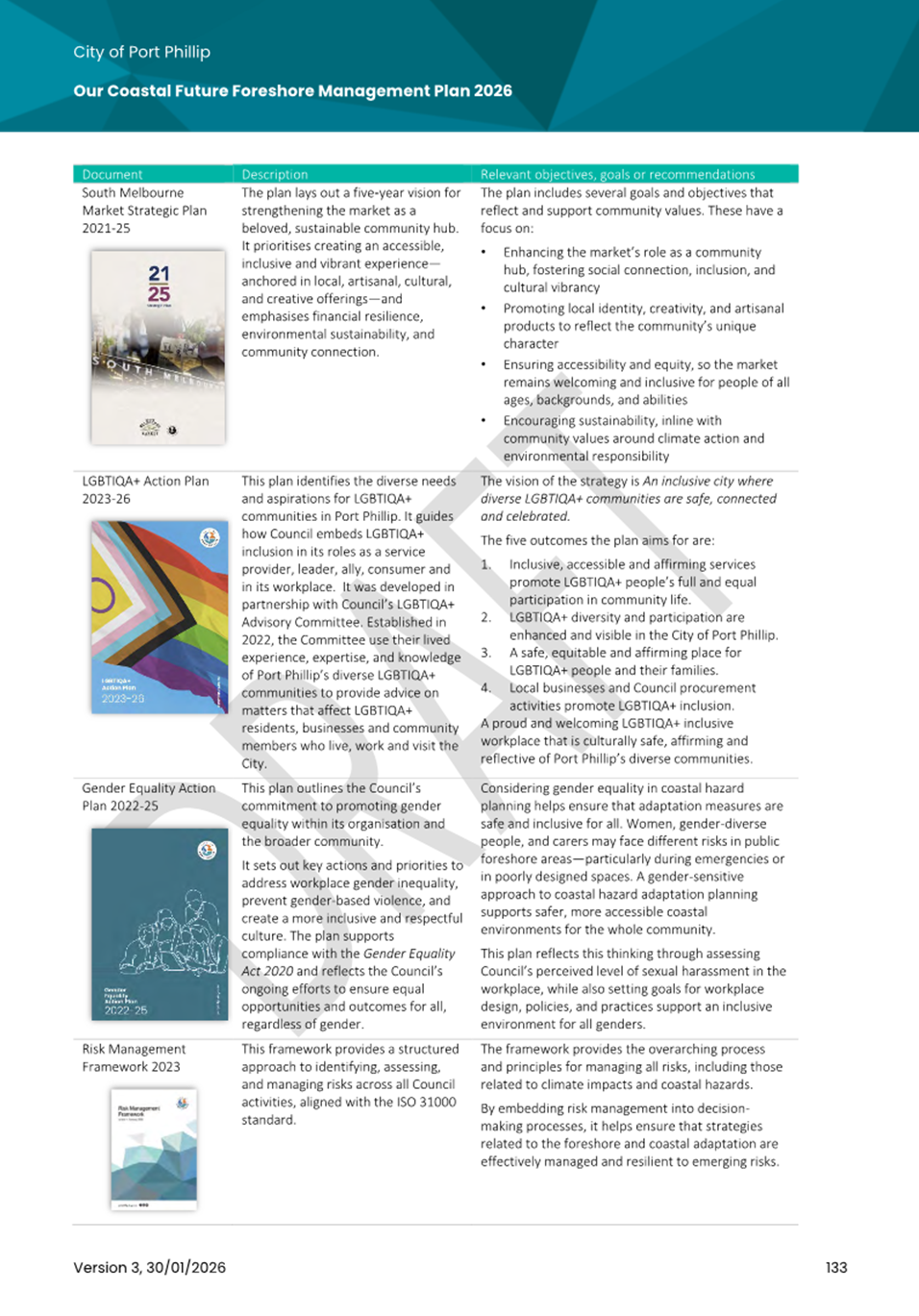
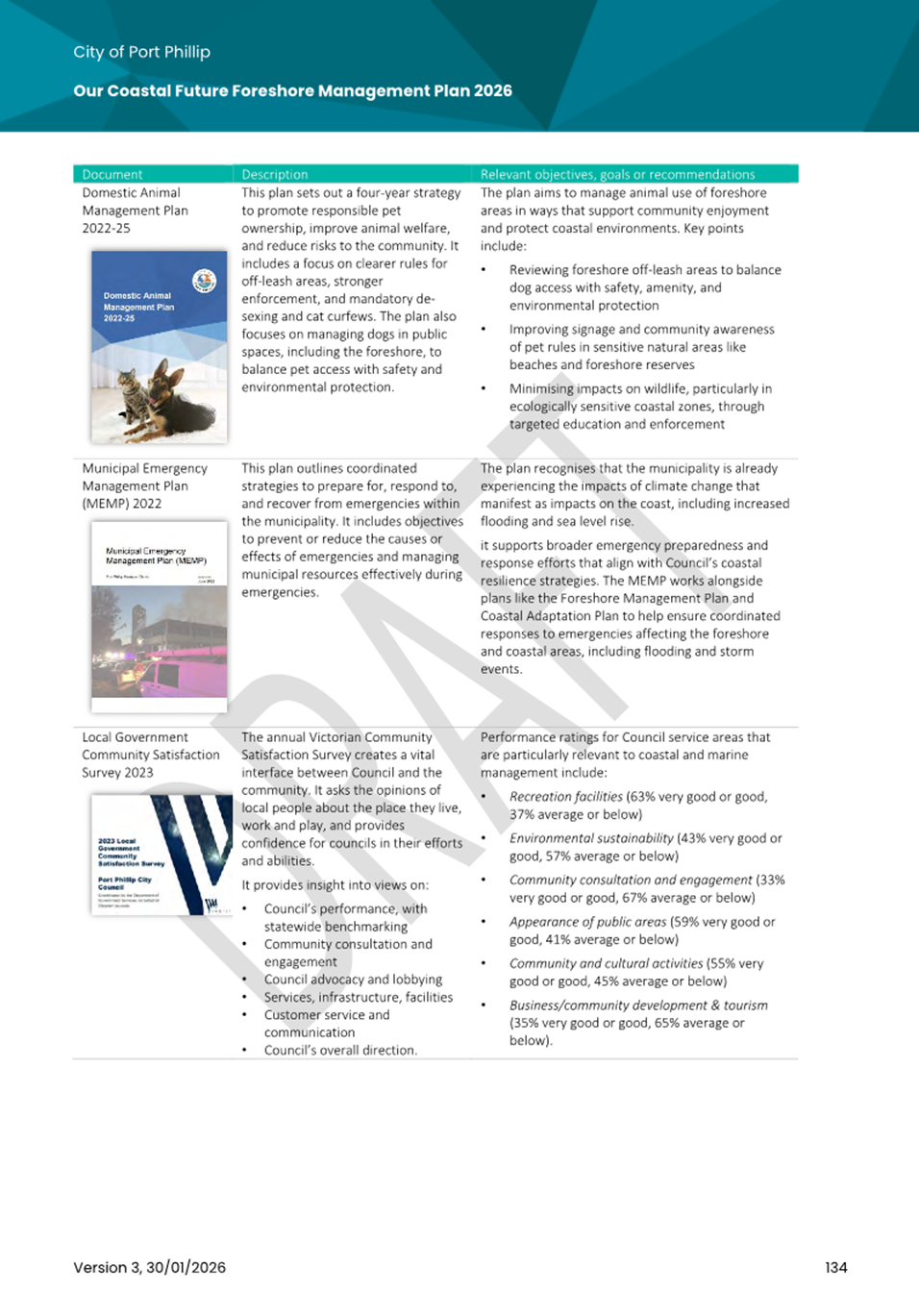
9.2 Draft Foreshore Management Plan for Public Consultation.............................................................. 171
10 A Safe and Liveable City........................................... 330
10.1 Collaborative procurement to new e-bike and e-scooter agreement................................................................. 331
11 A Vibrant and Thriving Community....................... 339
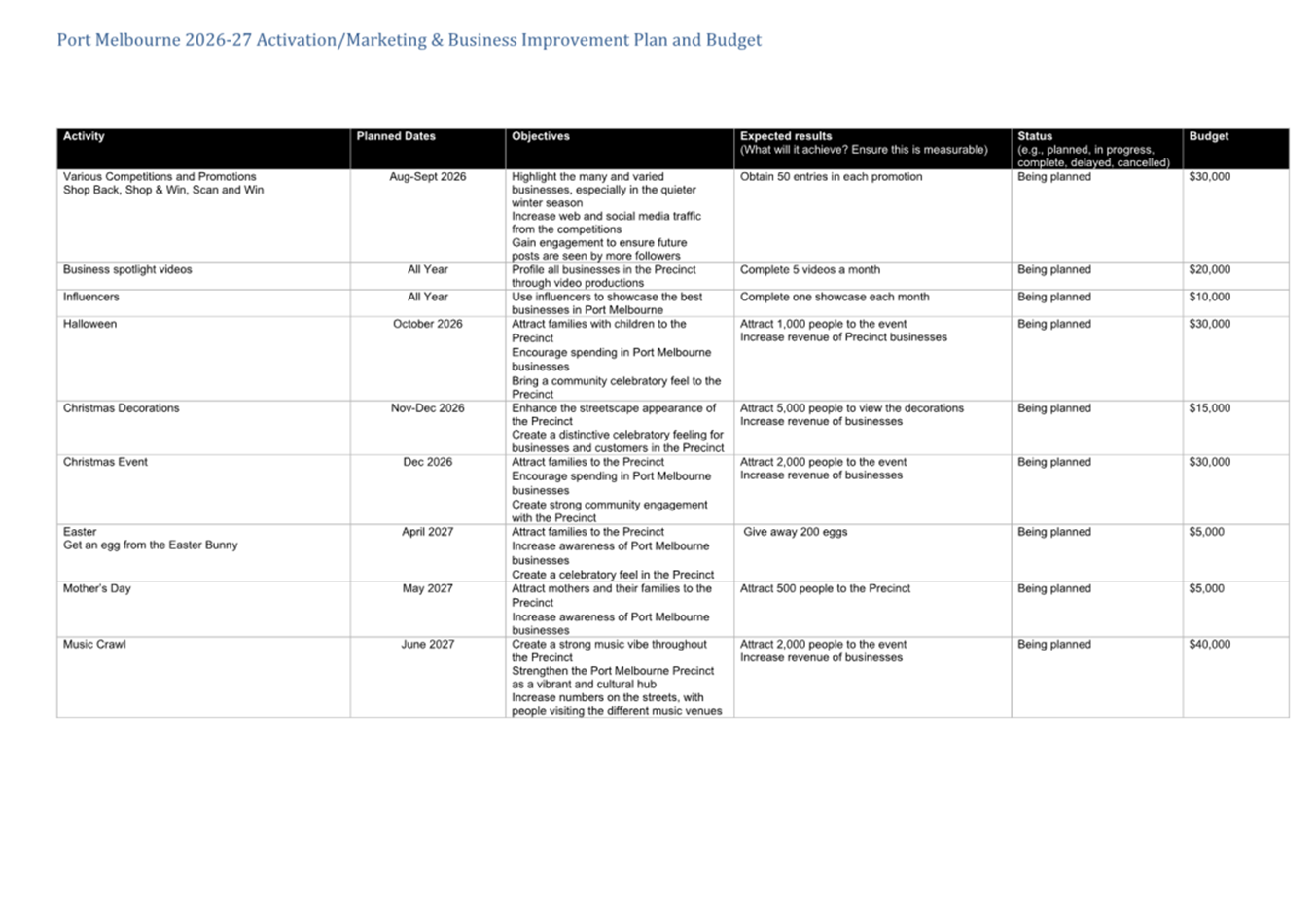
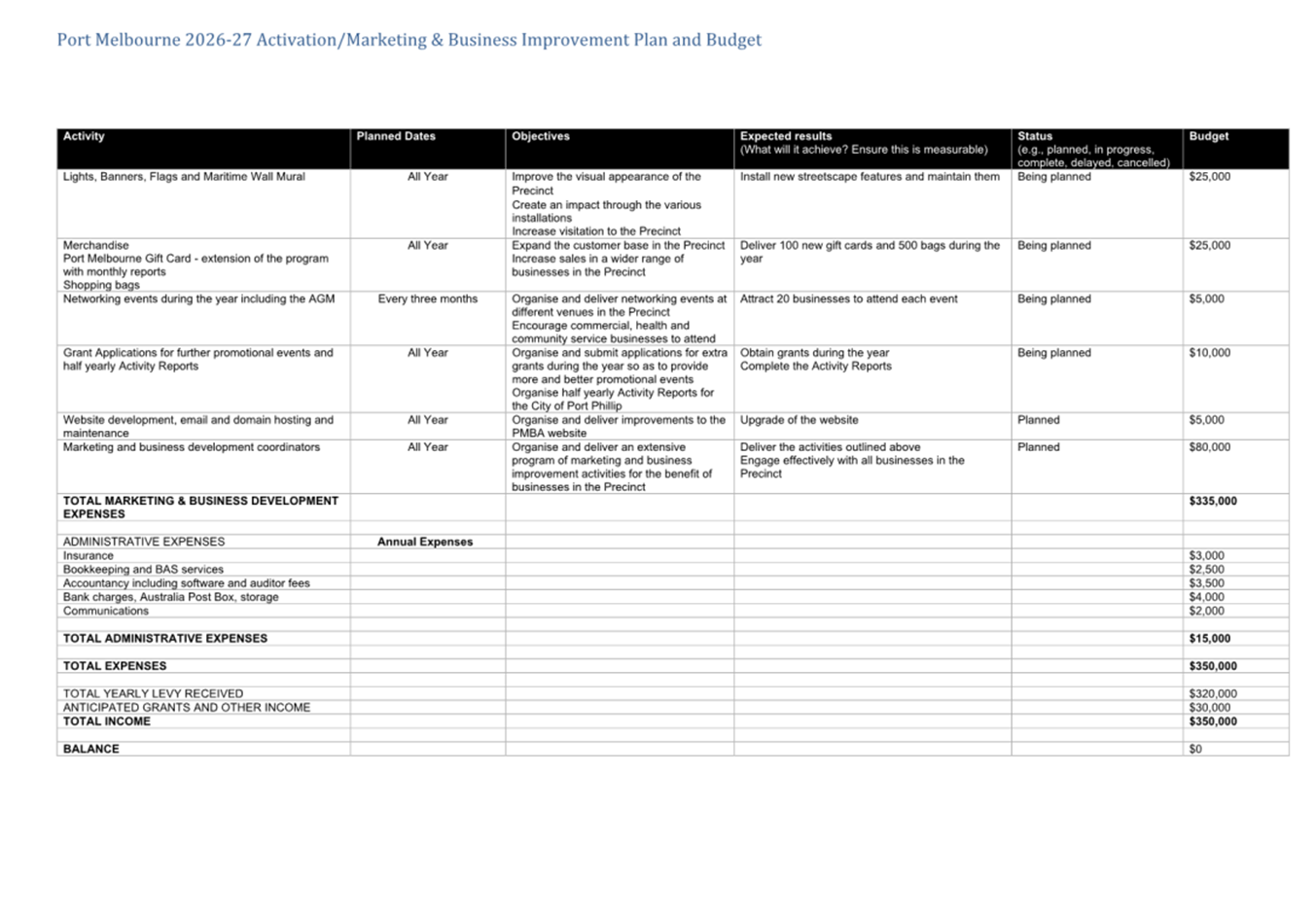
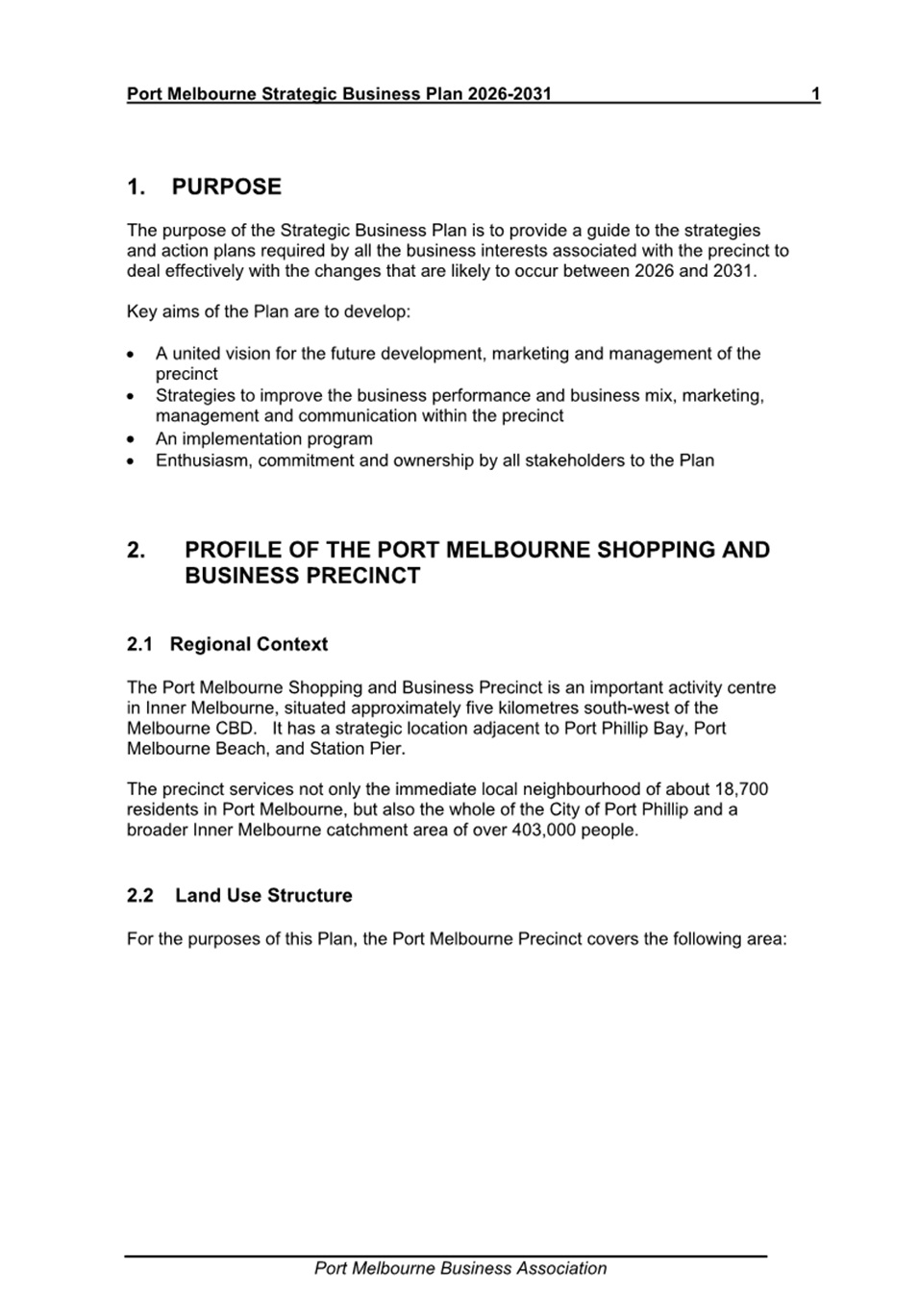
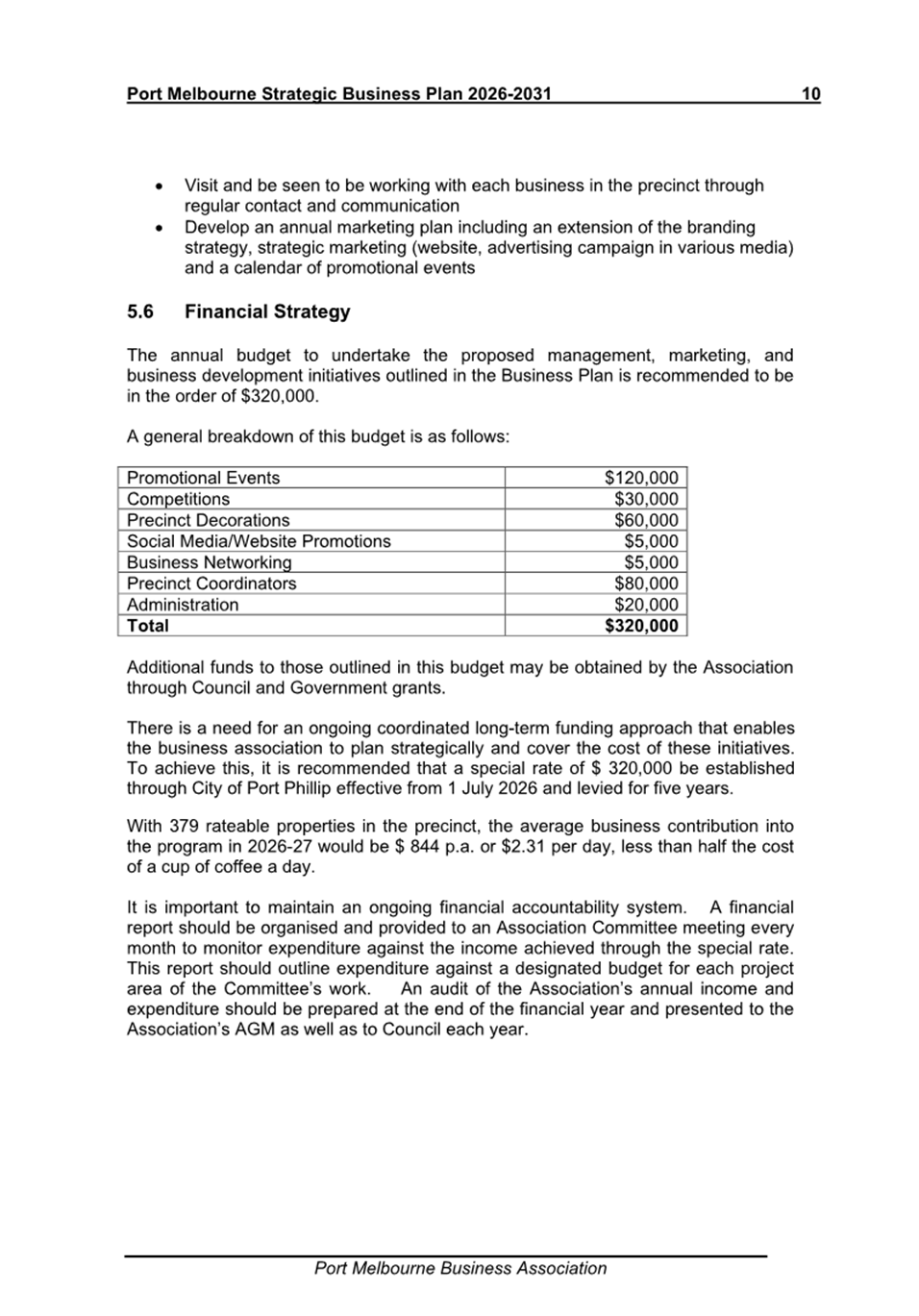
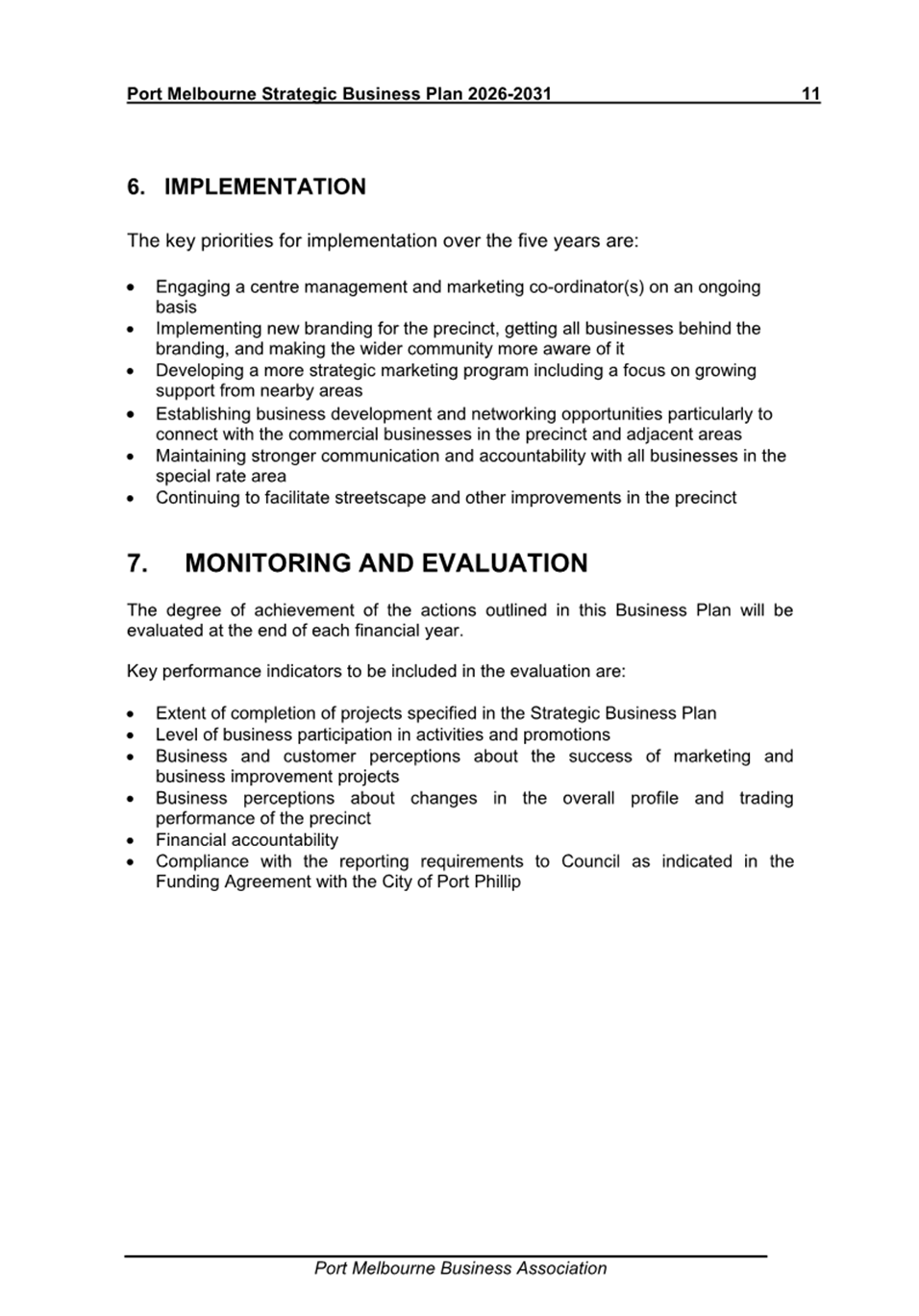
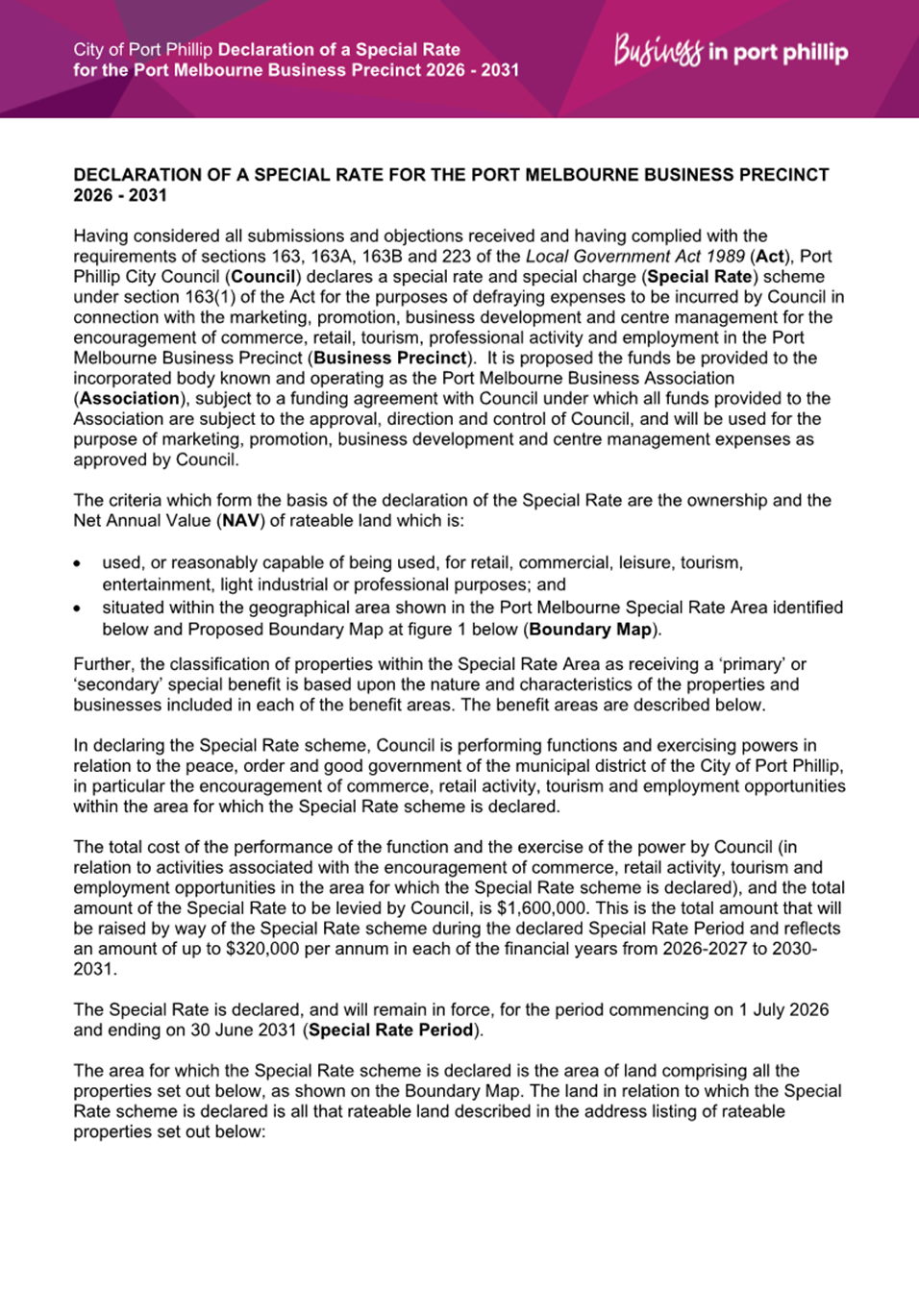
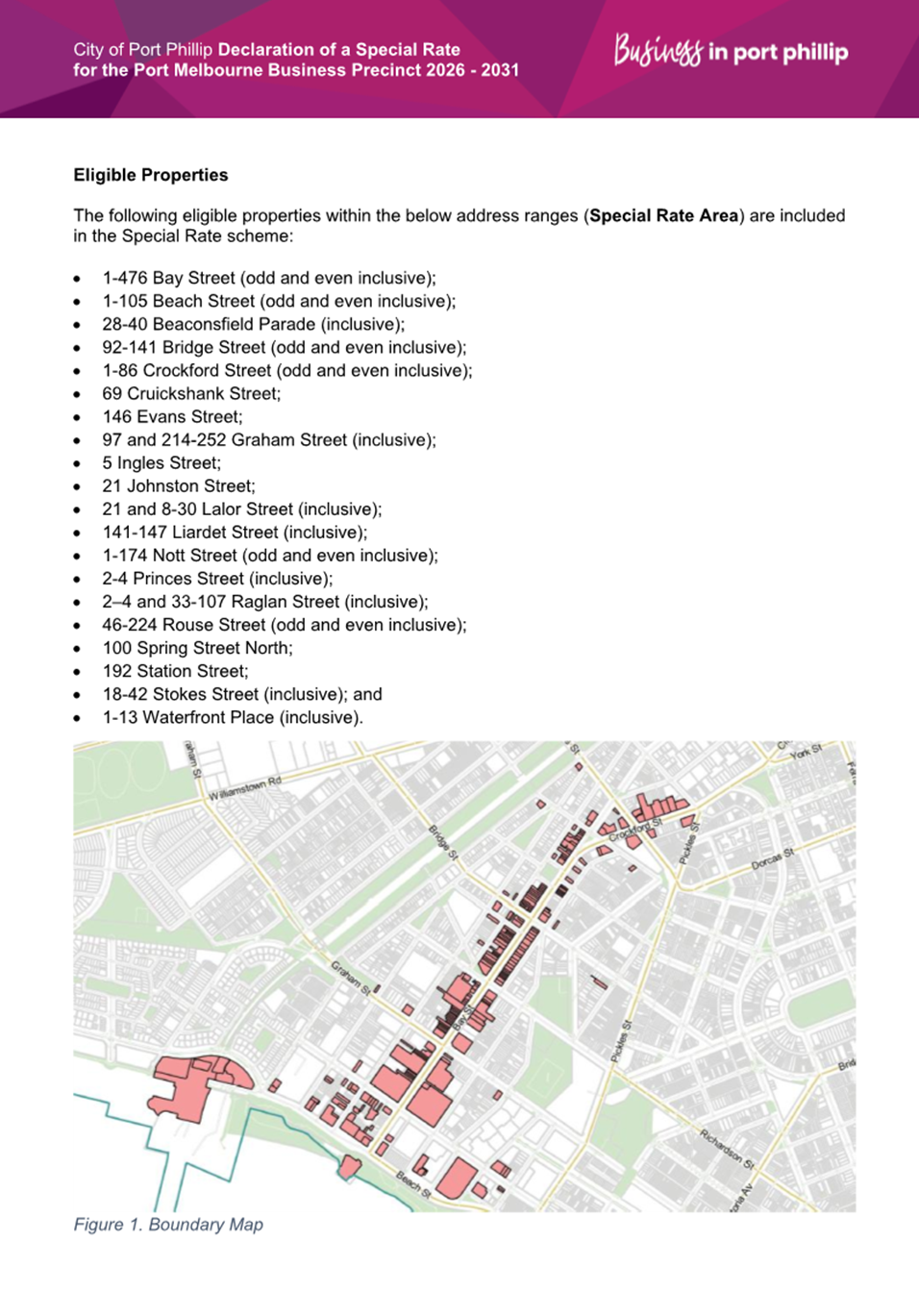
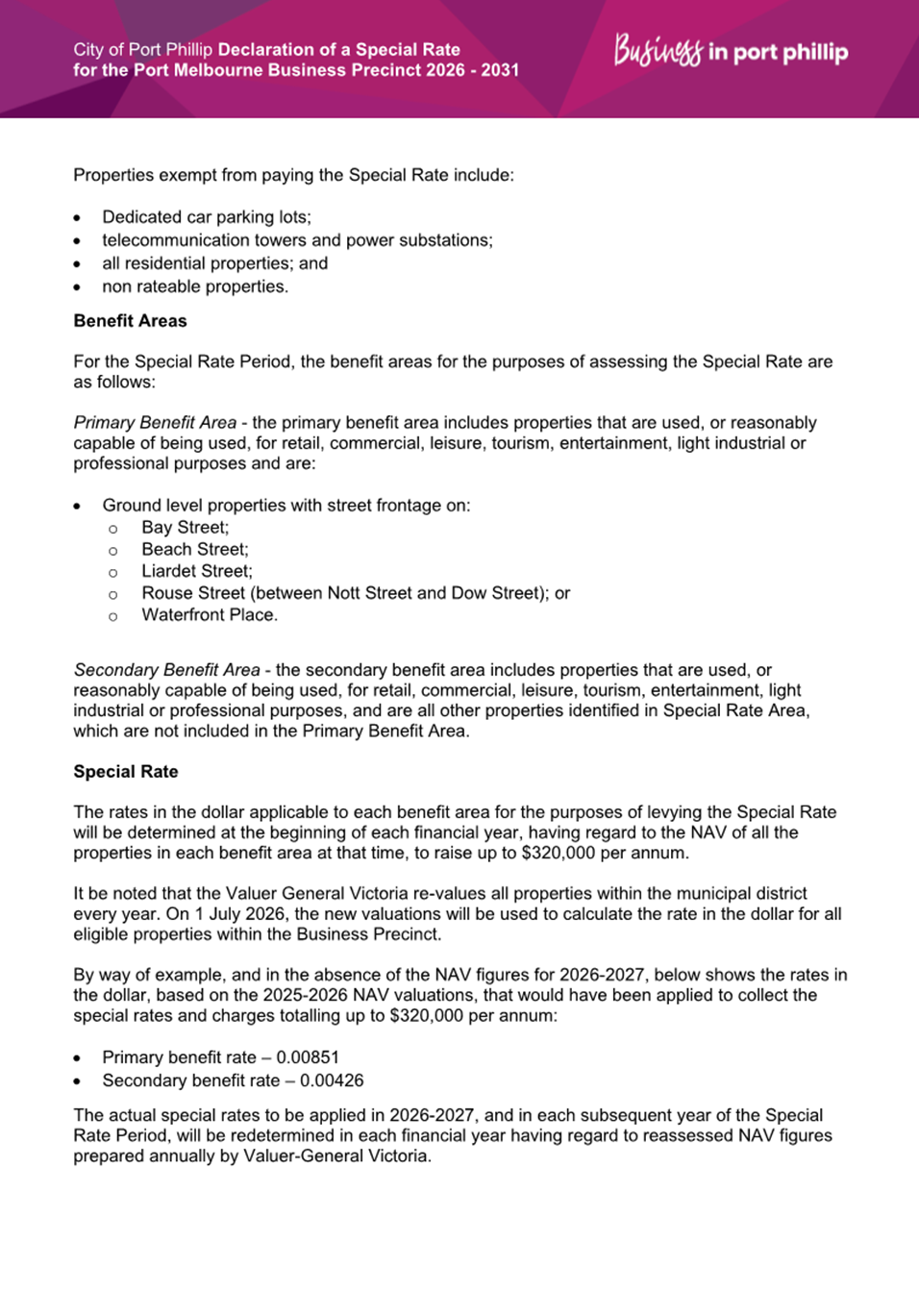
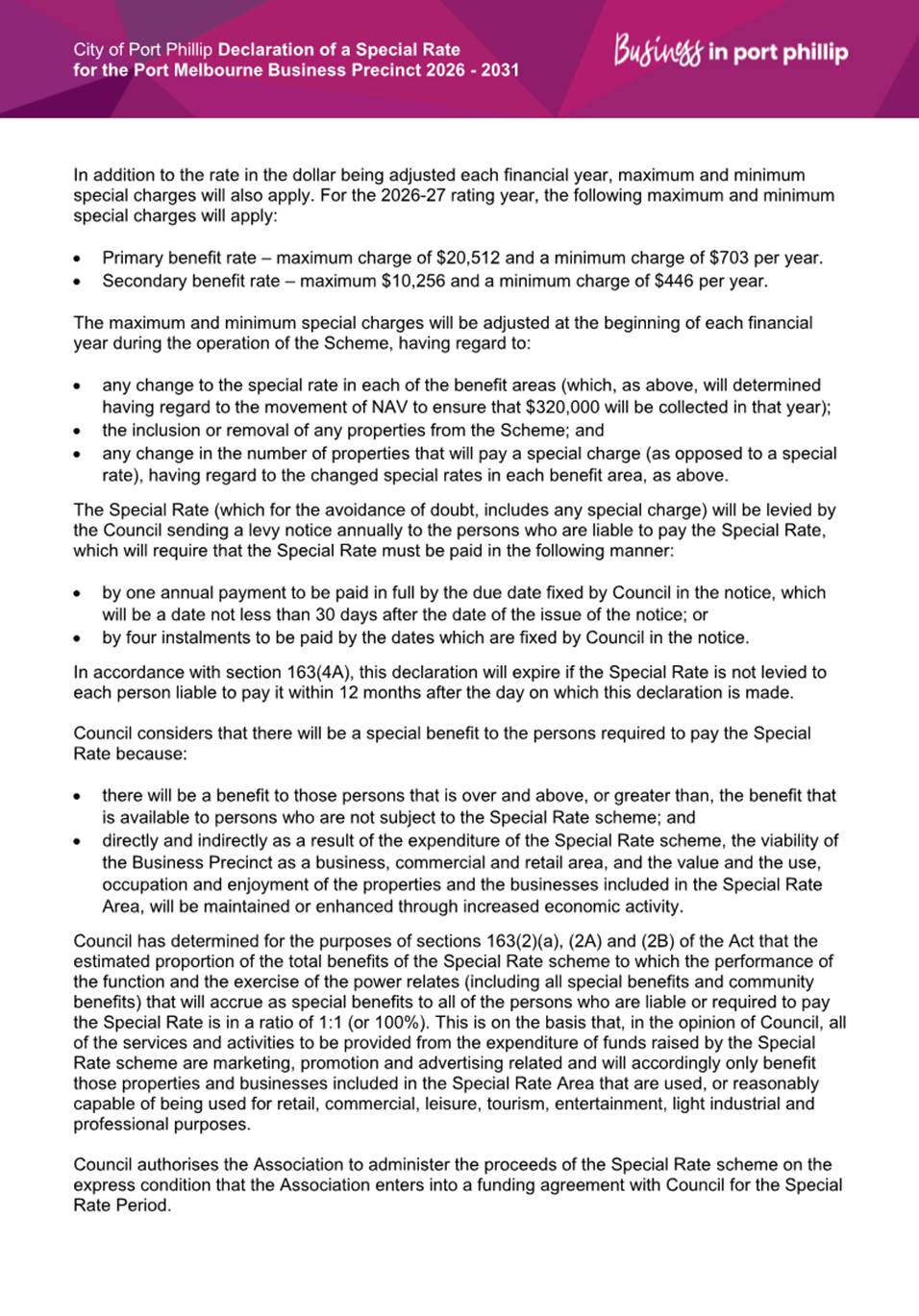
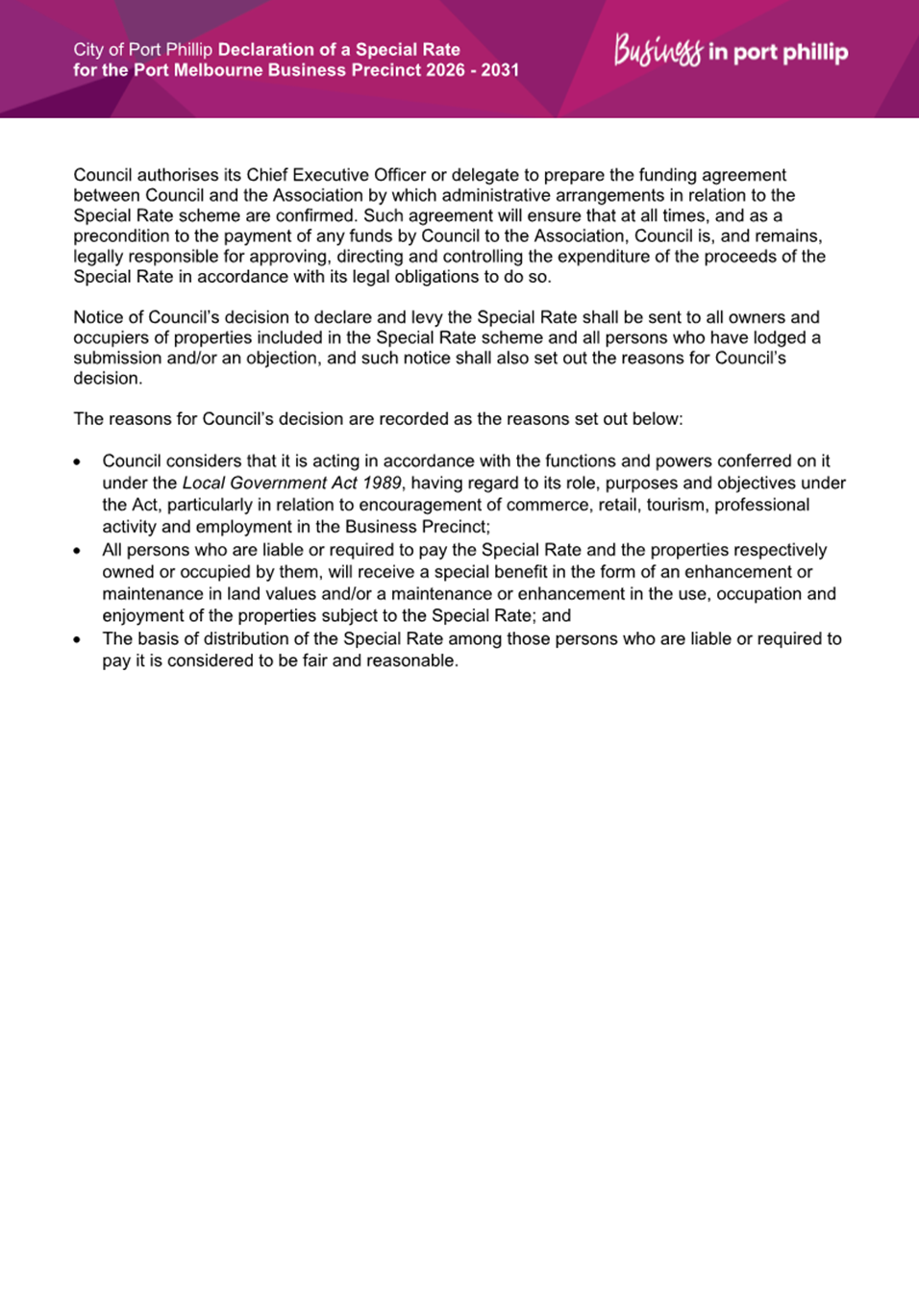
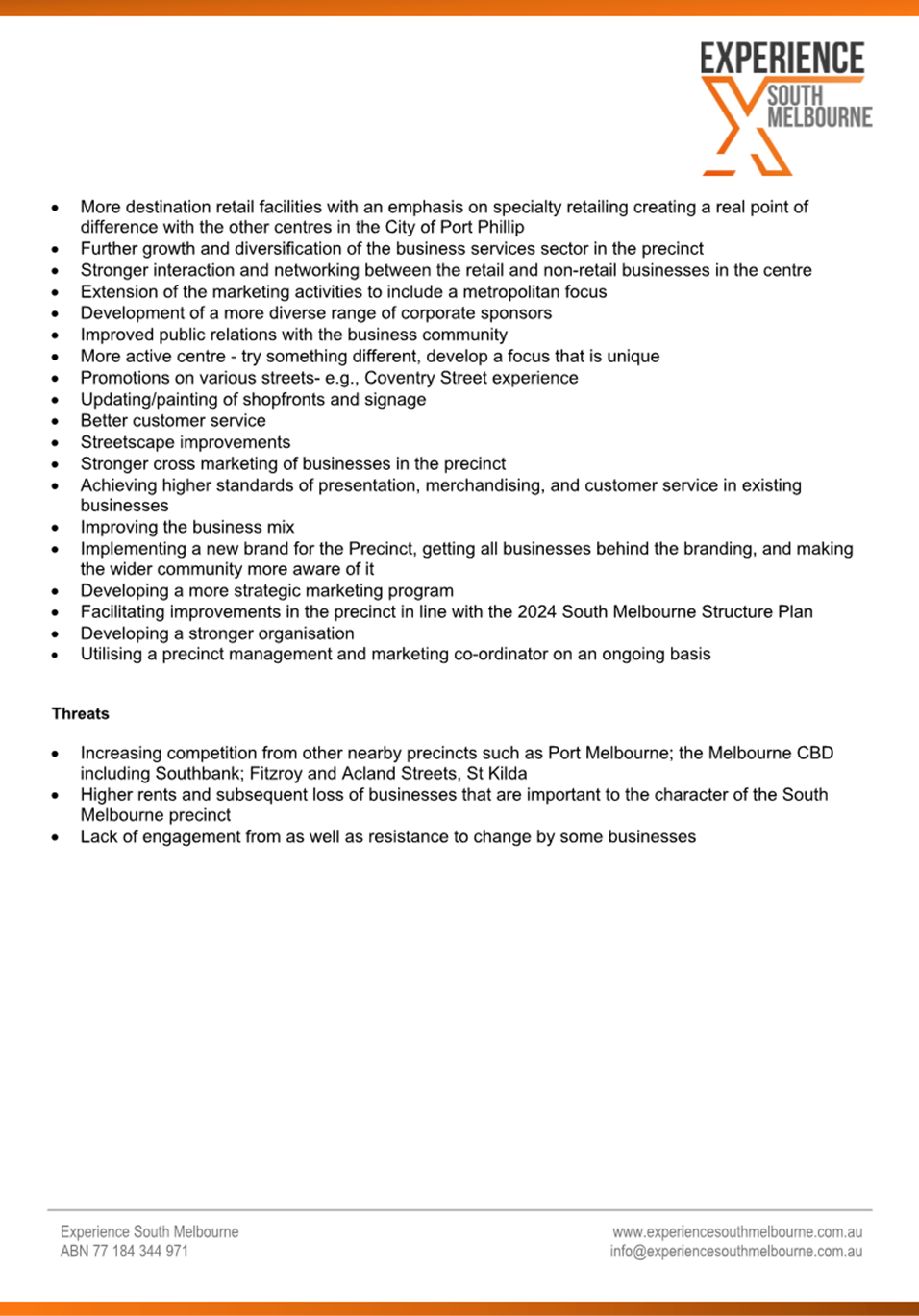
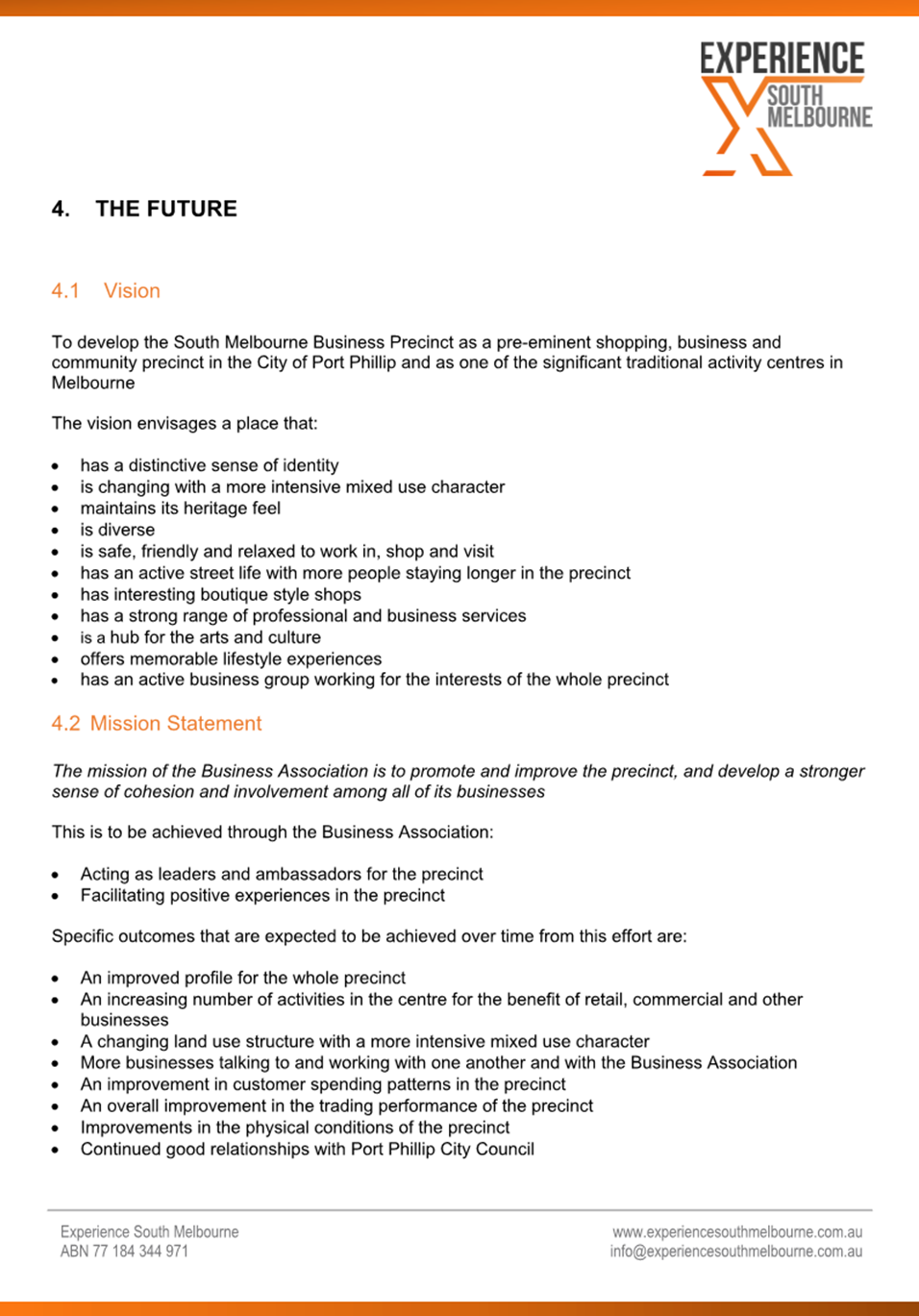
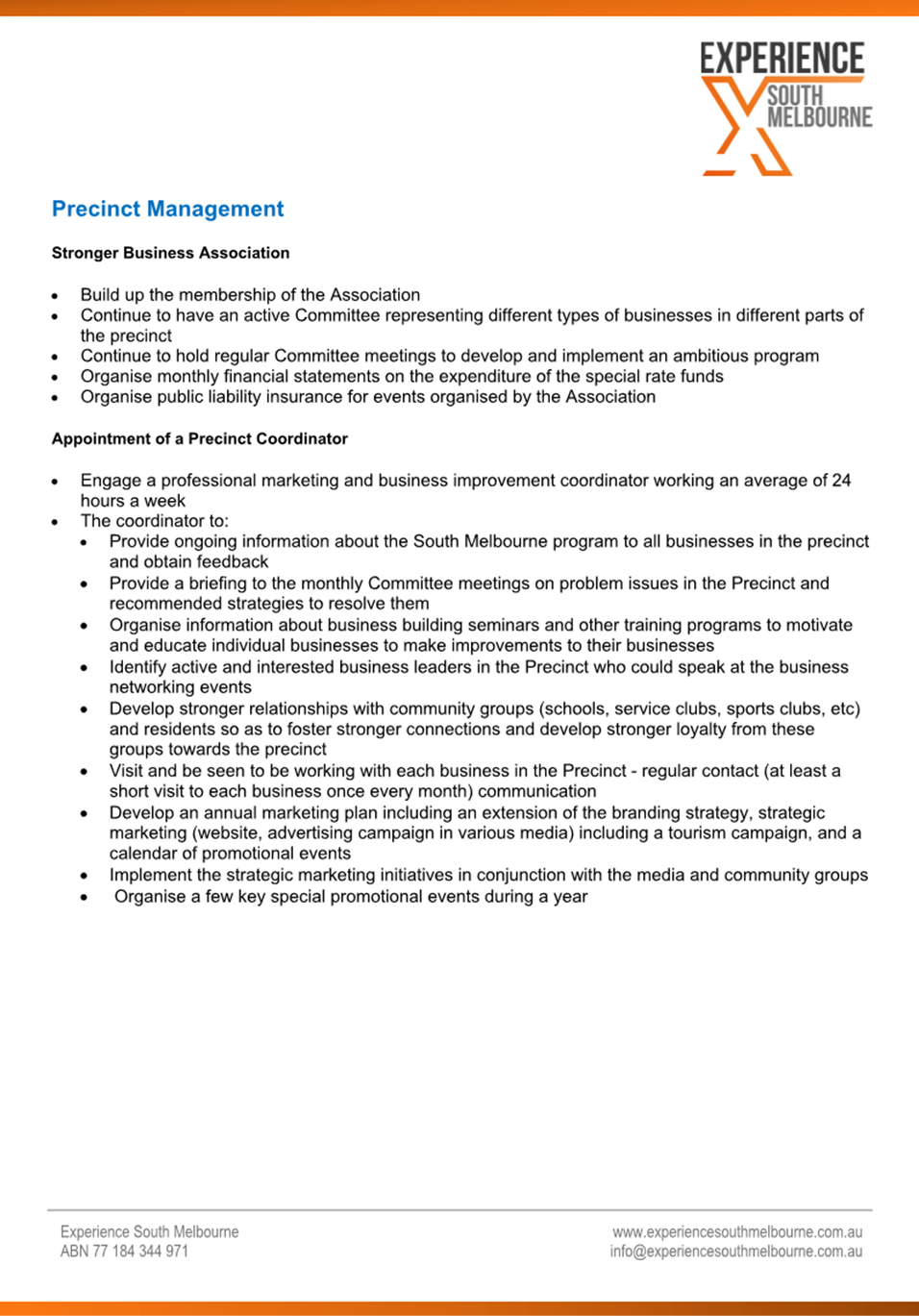
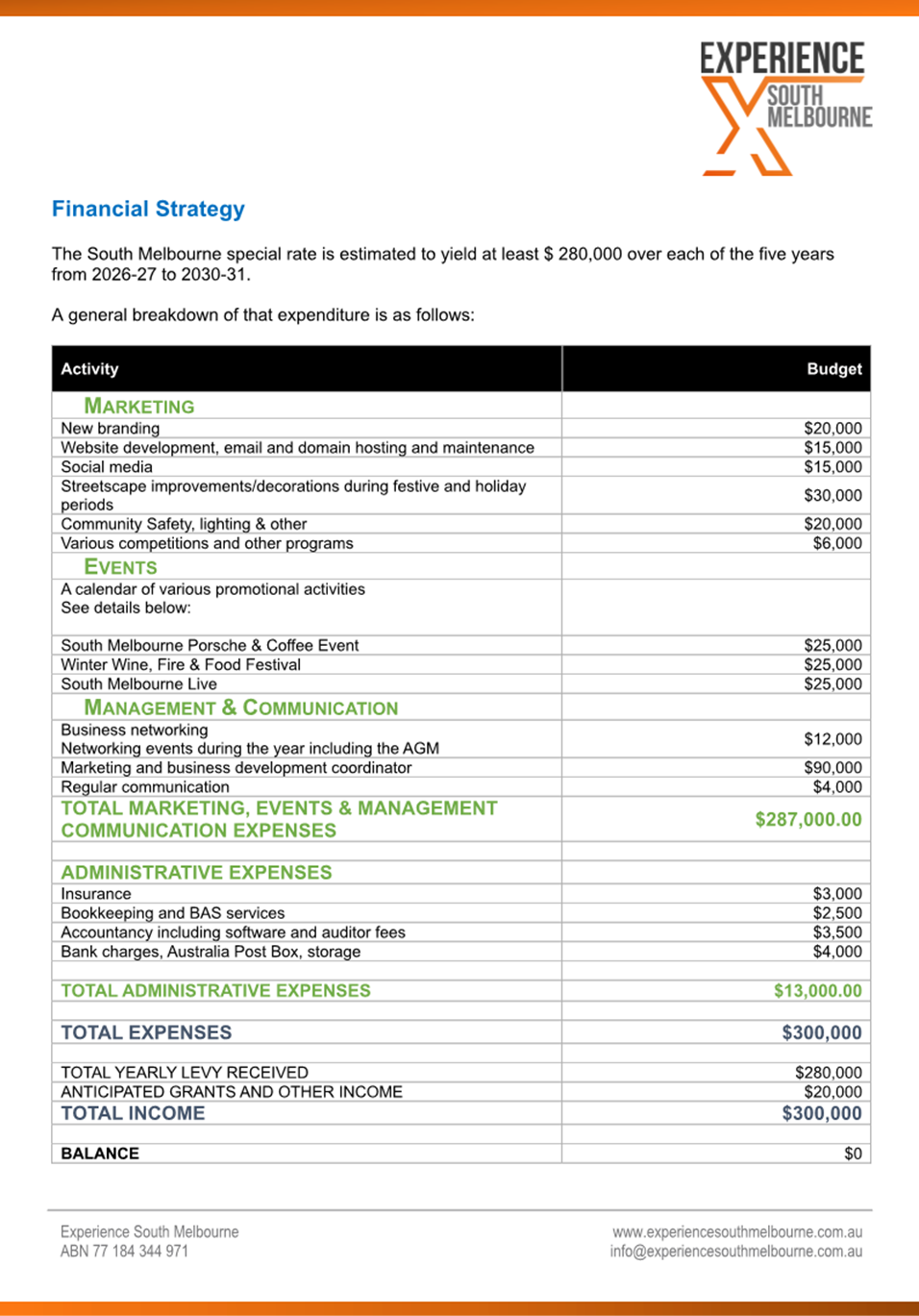
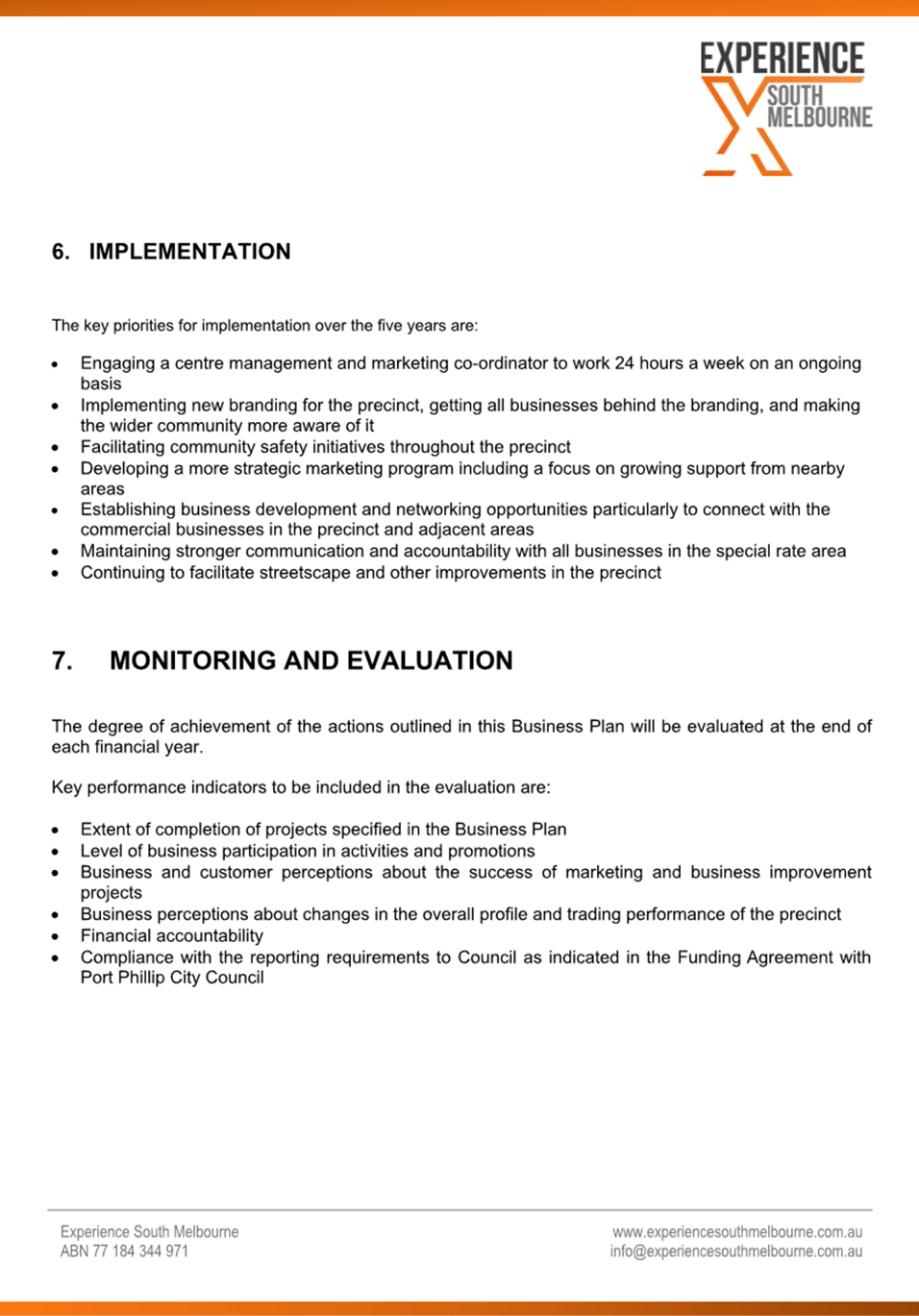
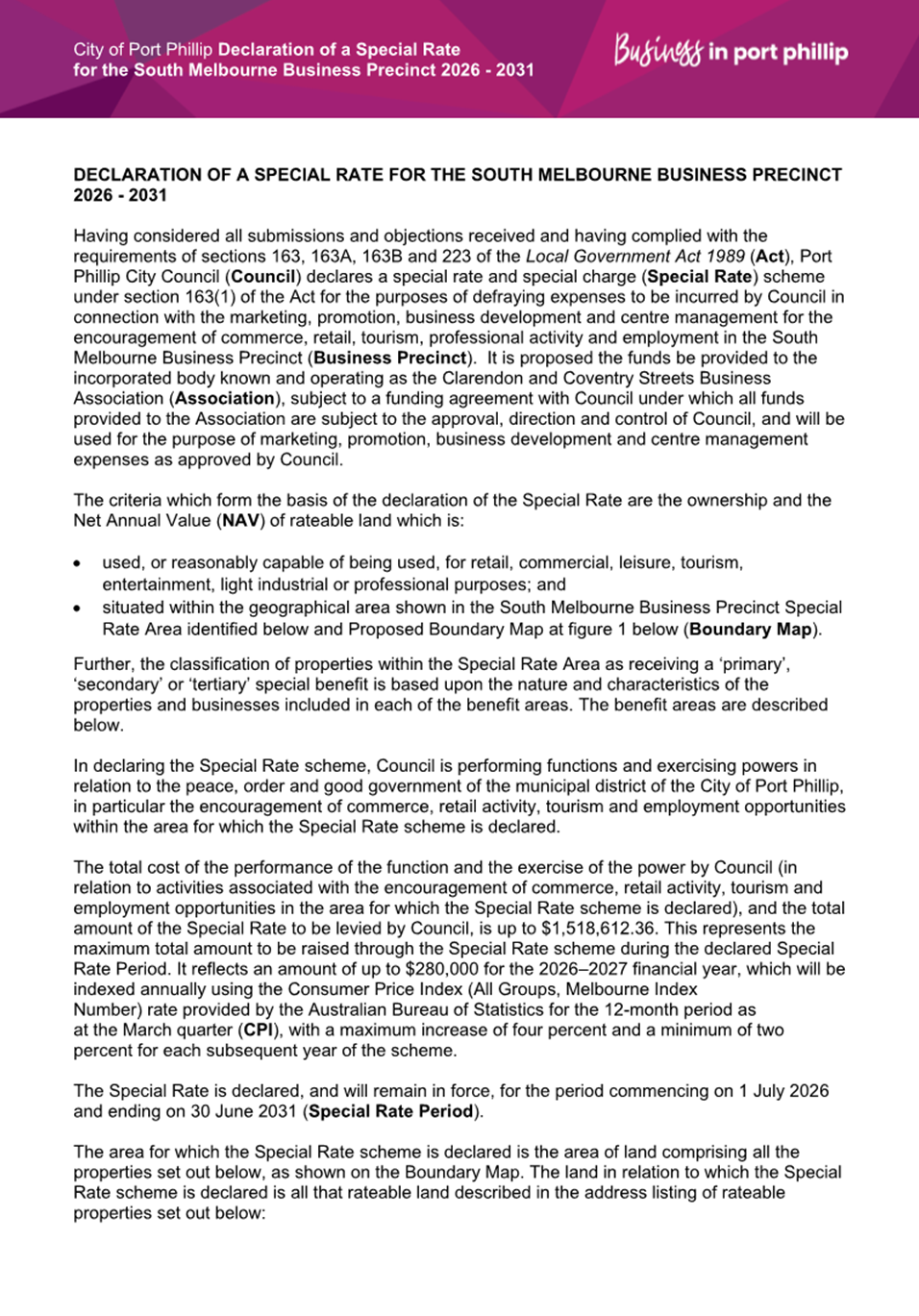
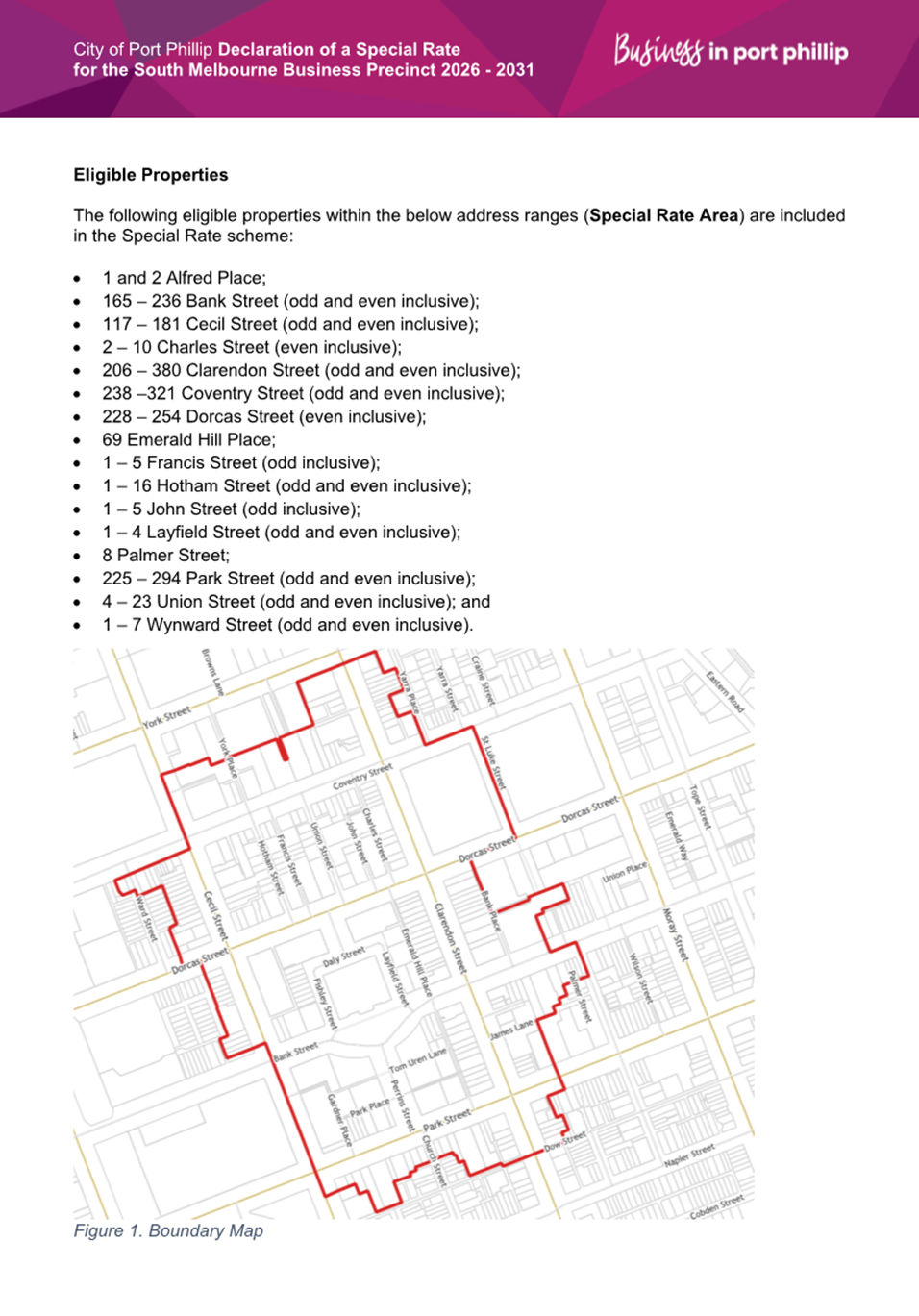
11.1 Port Melbourne Special Rate and Charge 2026-2031 - Consideration of Objections and Submissions......... 340
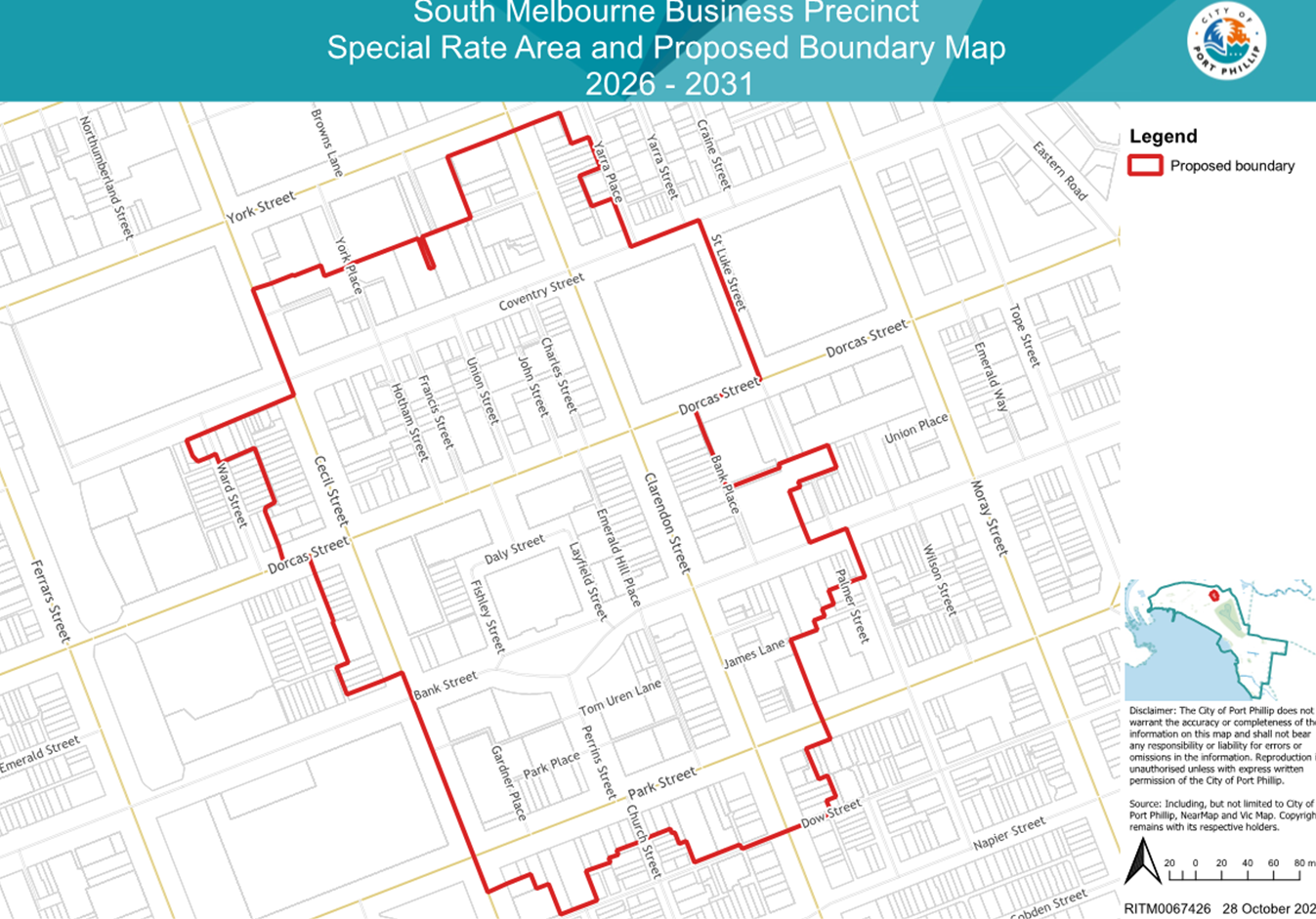
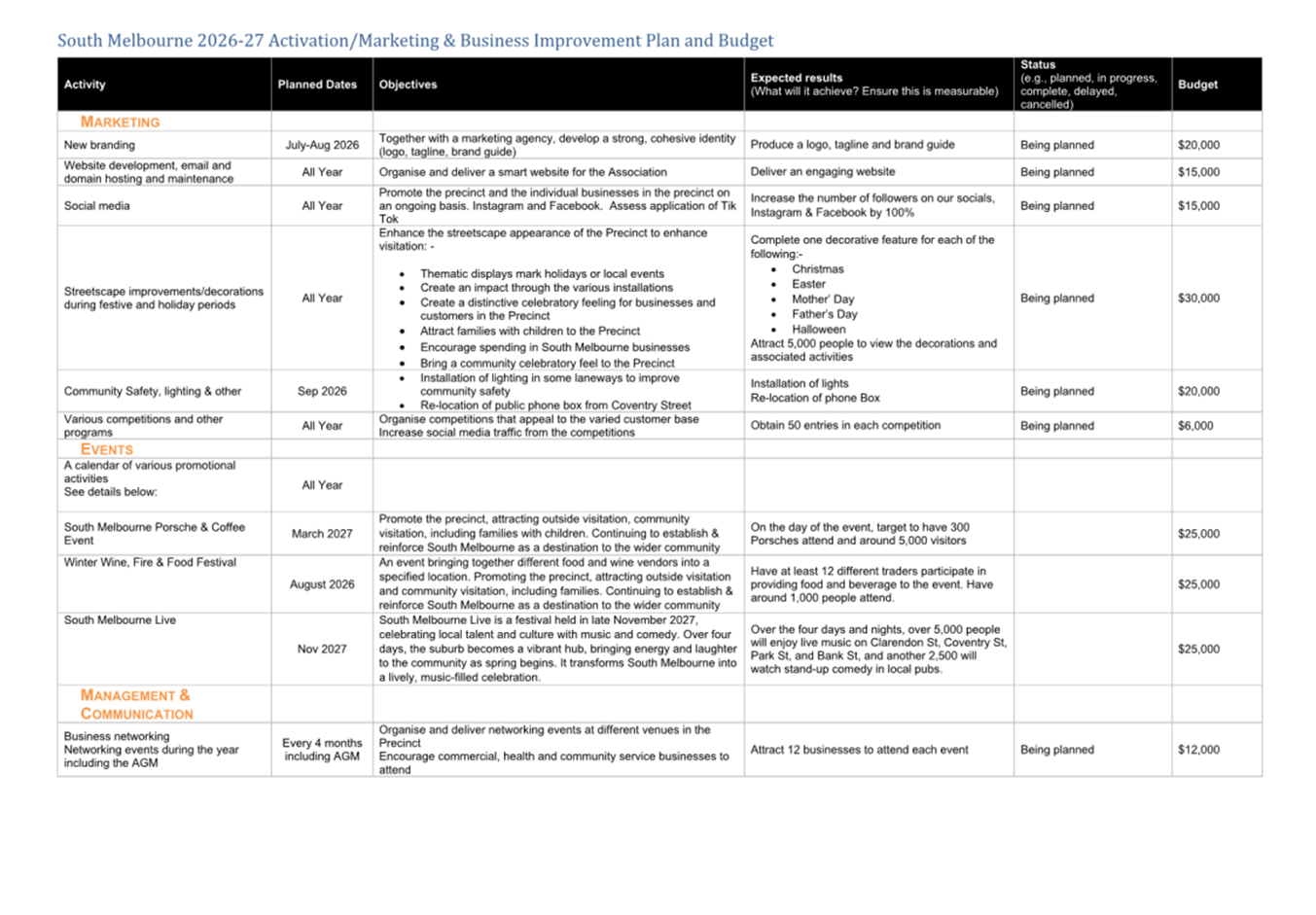
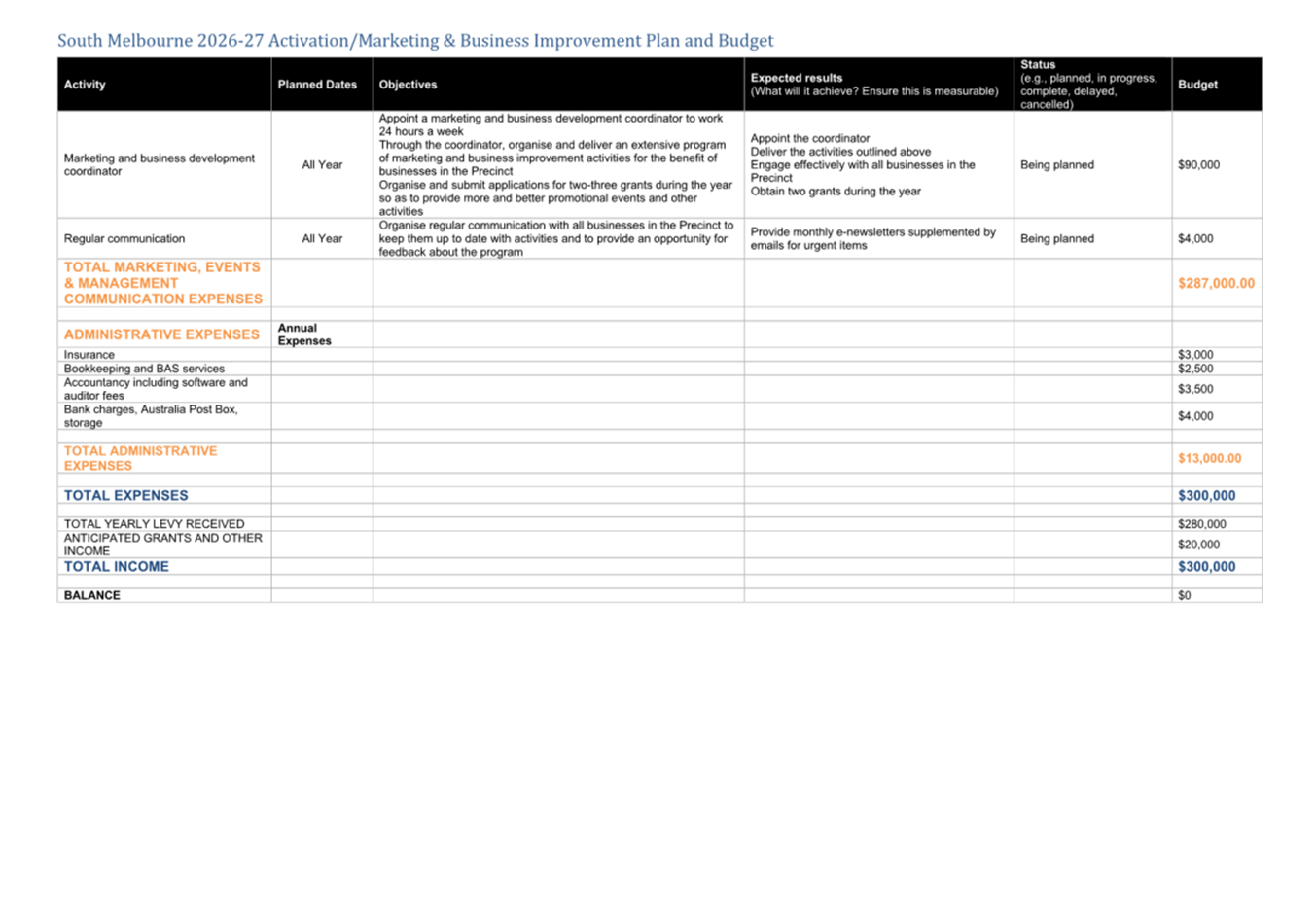
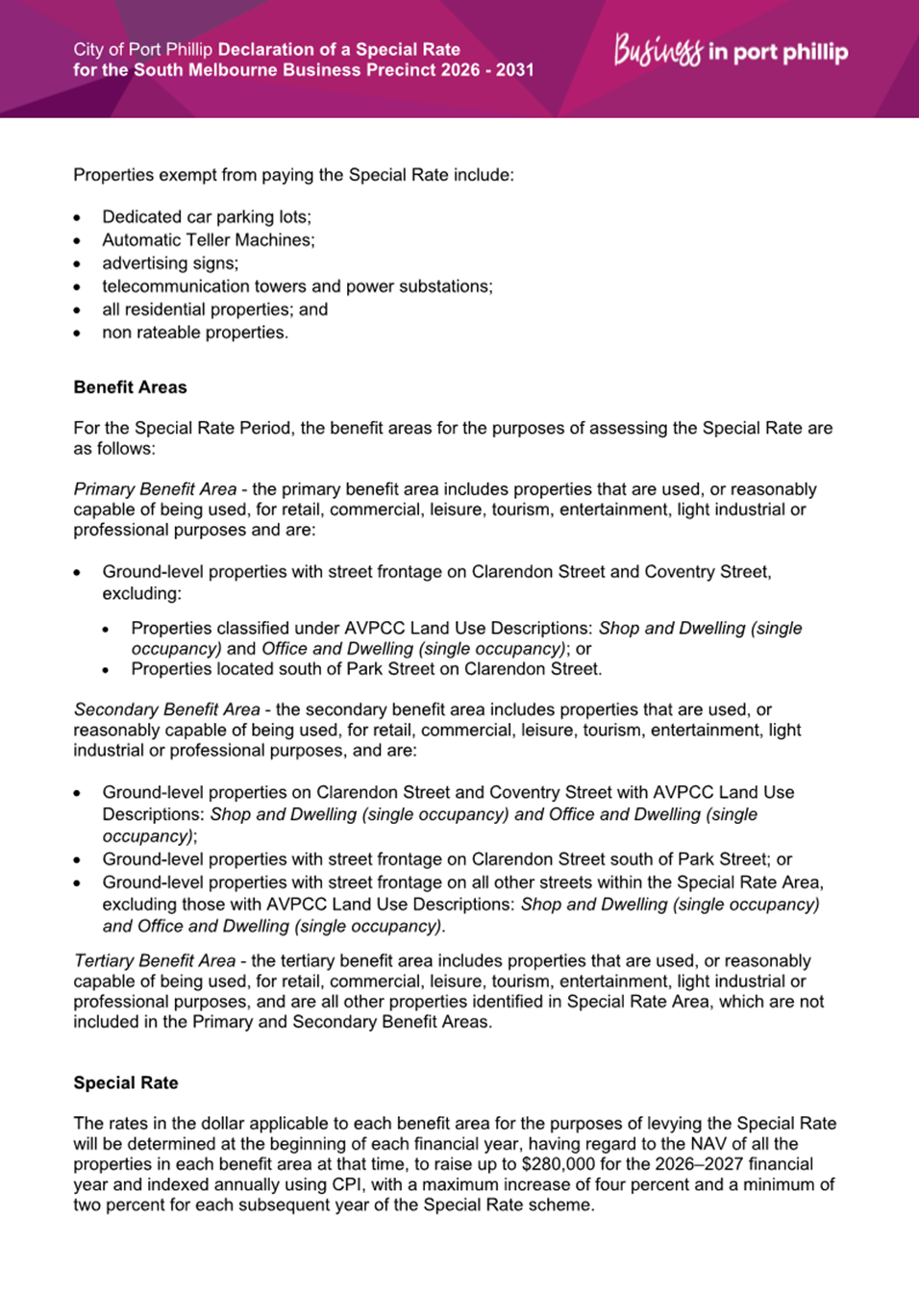
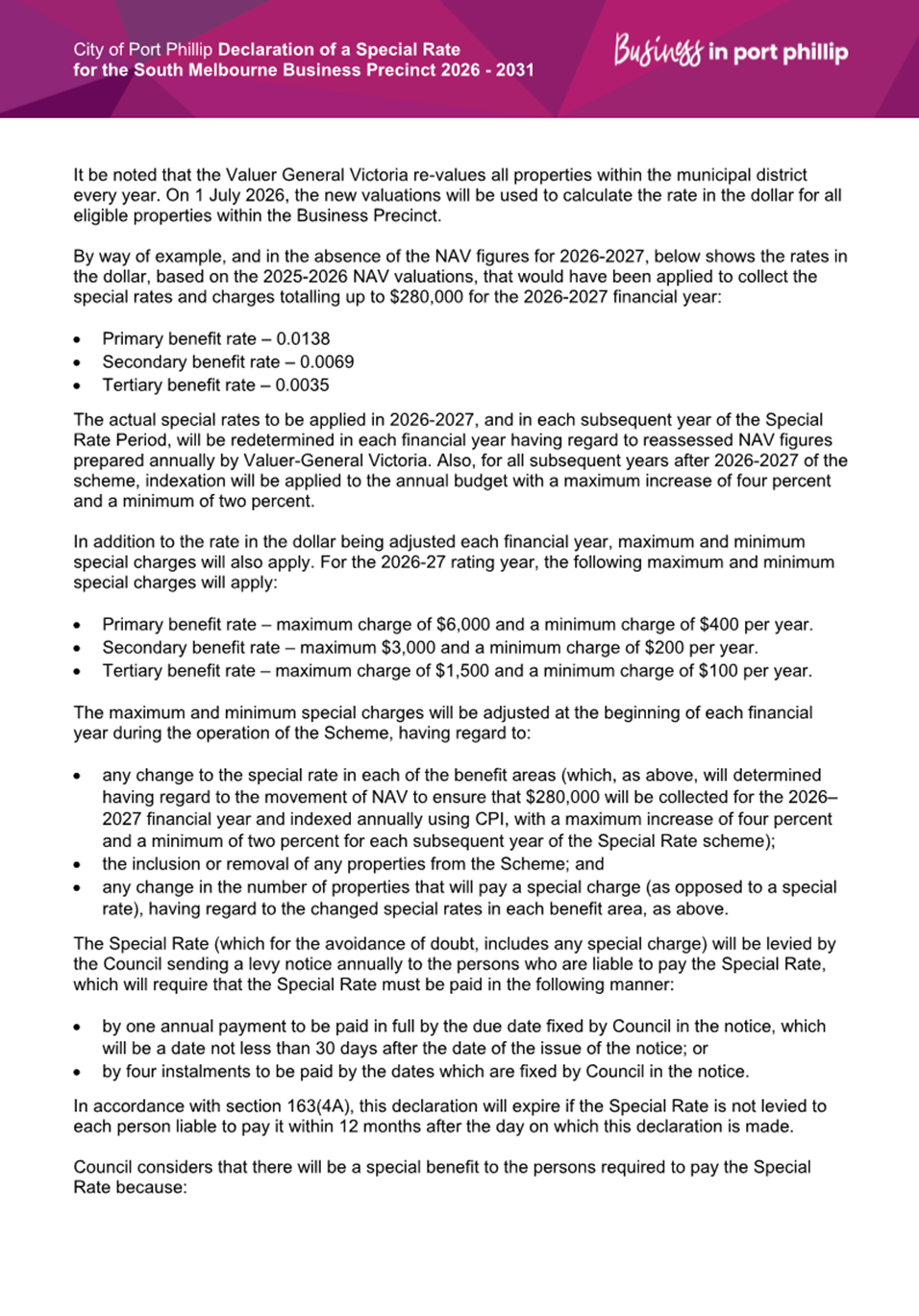
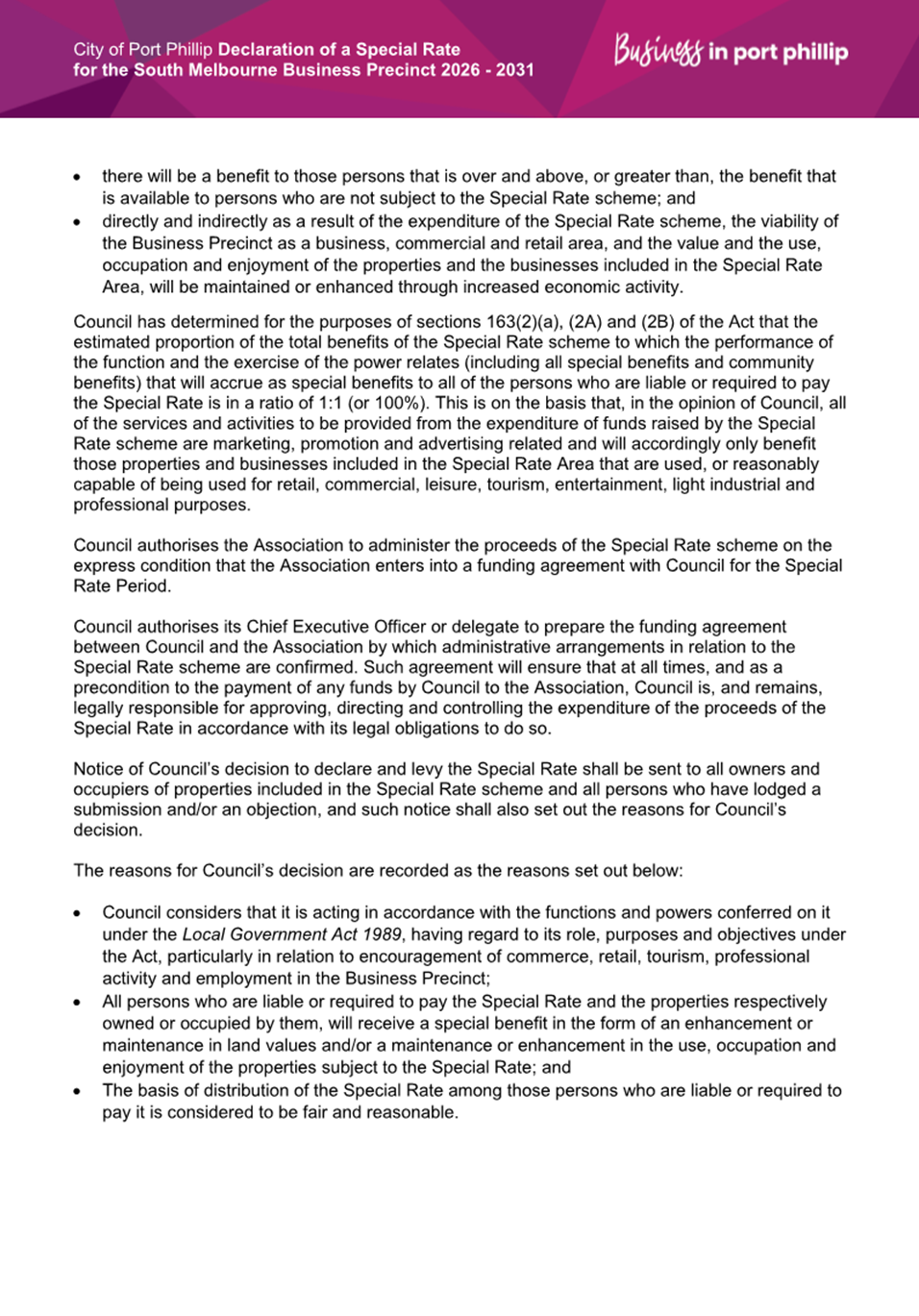
11.2 South Melbourne Special Rate and Charge 2026-2031 - Consideration of Objections and Submissions...... 370
12 An Engaged and Empowered Community........... 404
12.1 Municipal Association of Victoria - Motion Submissions.................................................................................. 405
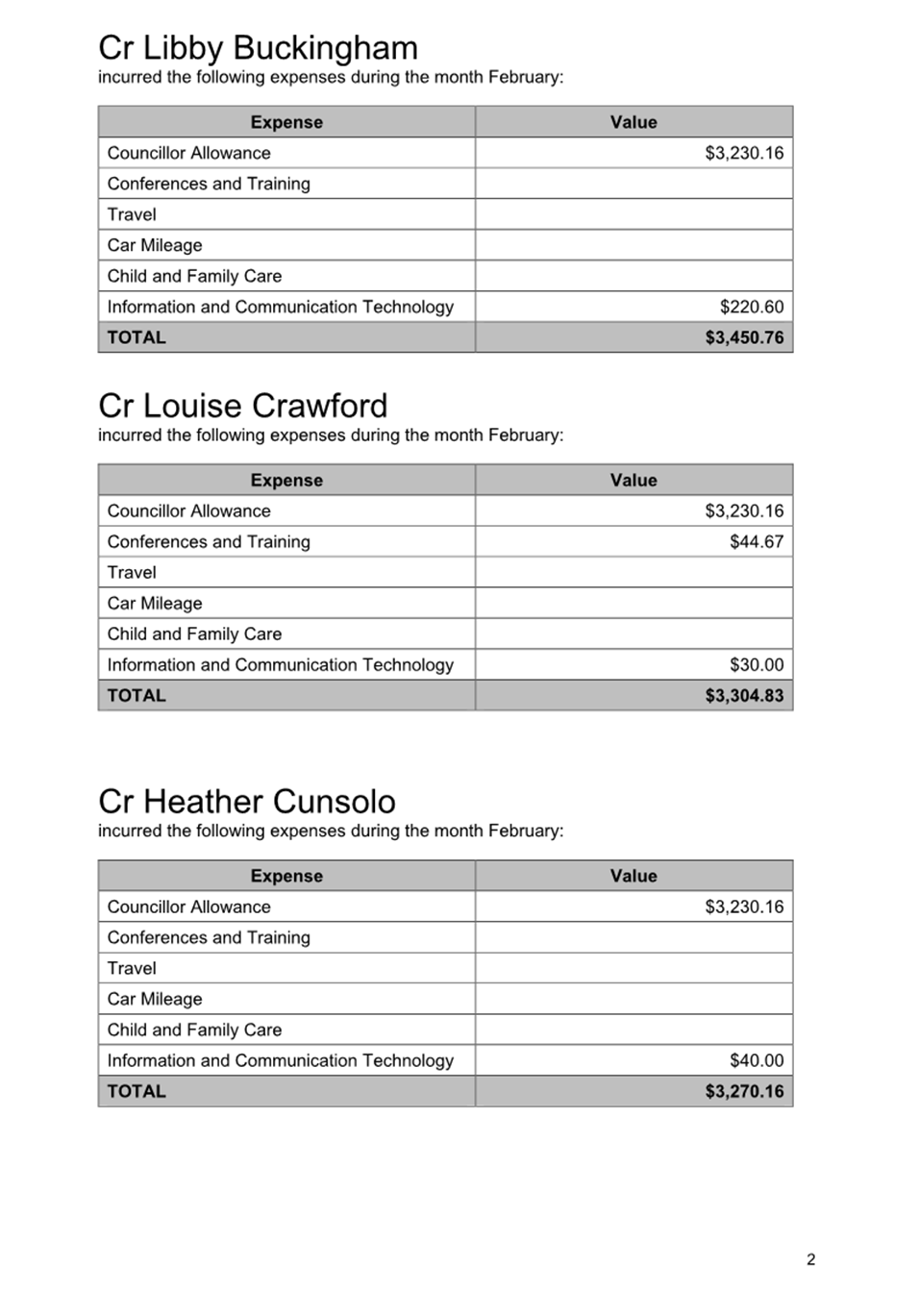
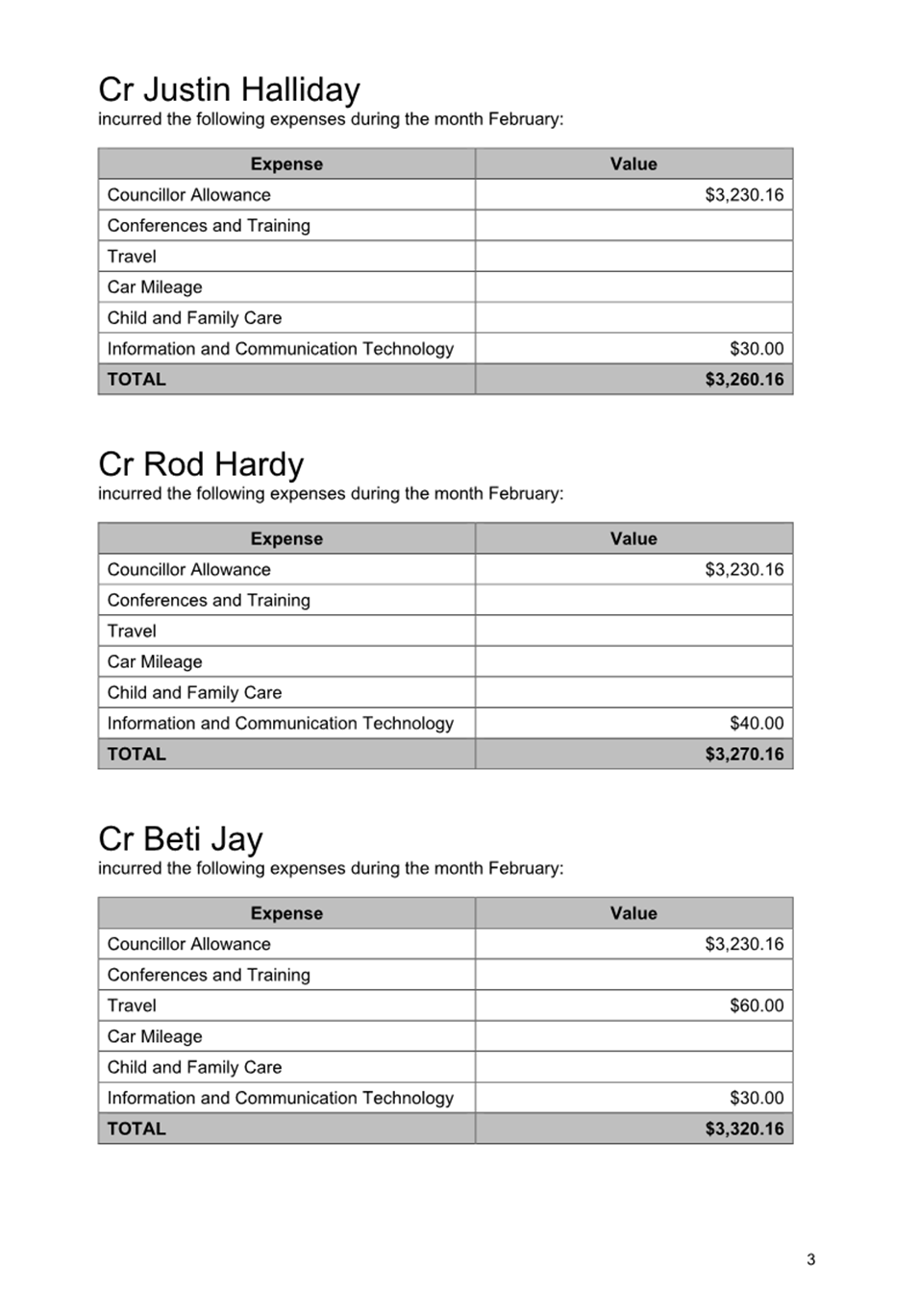
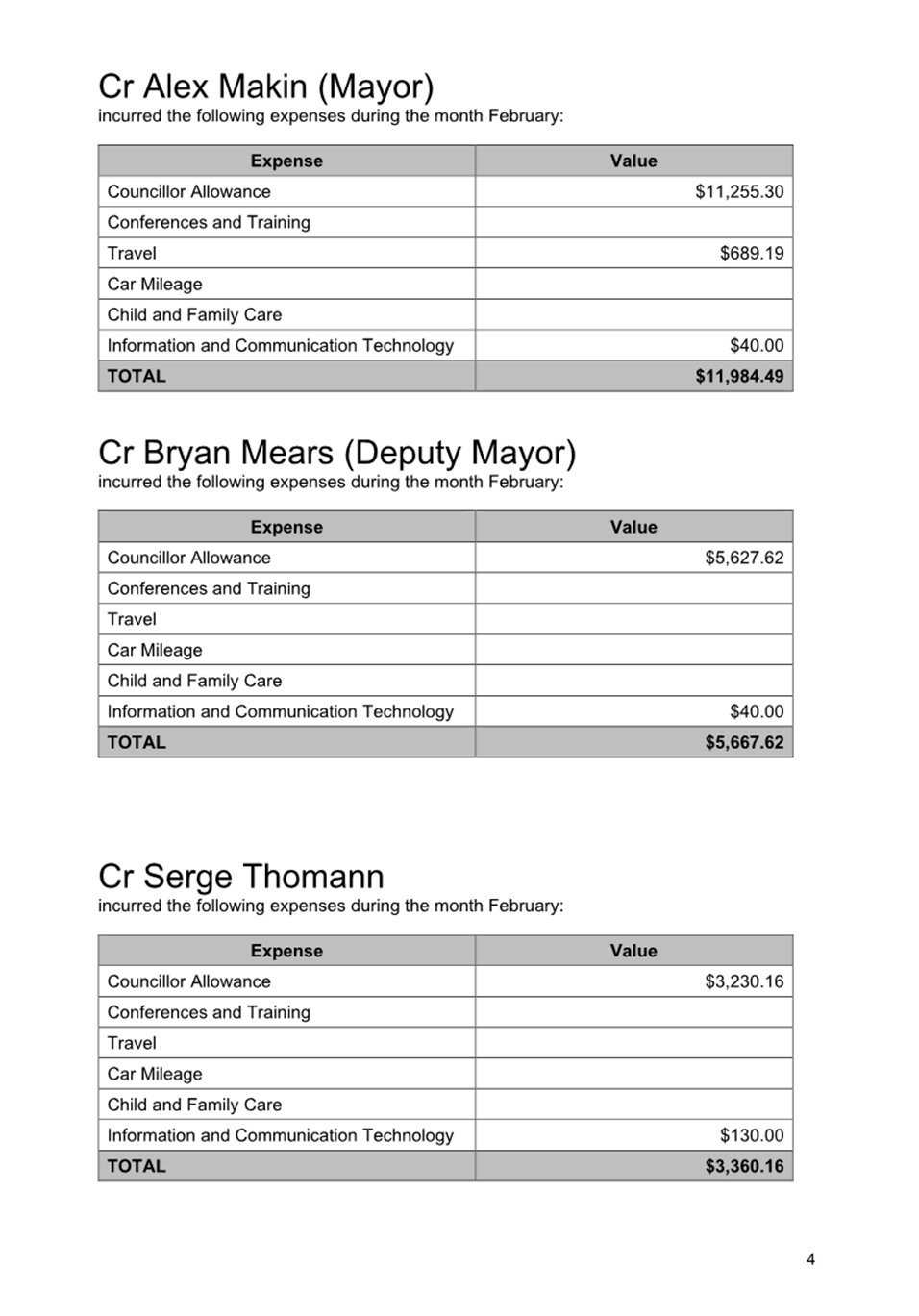
12.2 Councillor Expenses Monthly Reporting - February 2026.......................................................................... 417
13 A Trusted and High Performing Organisation 423
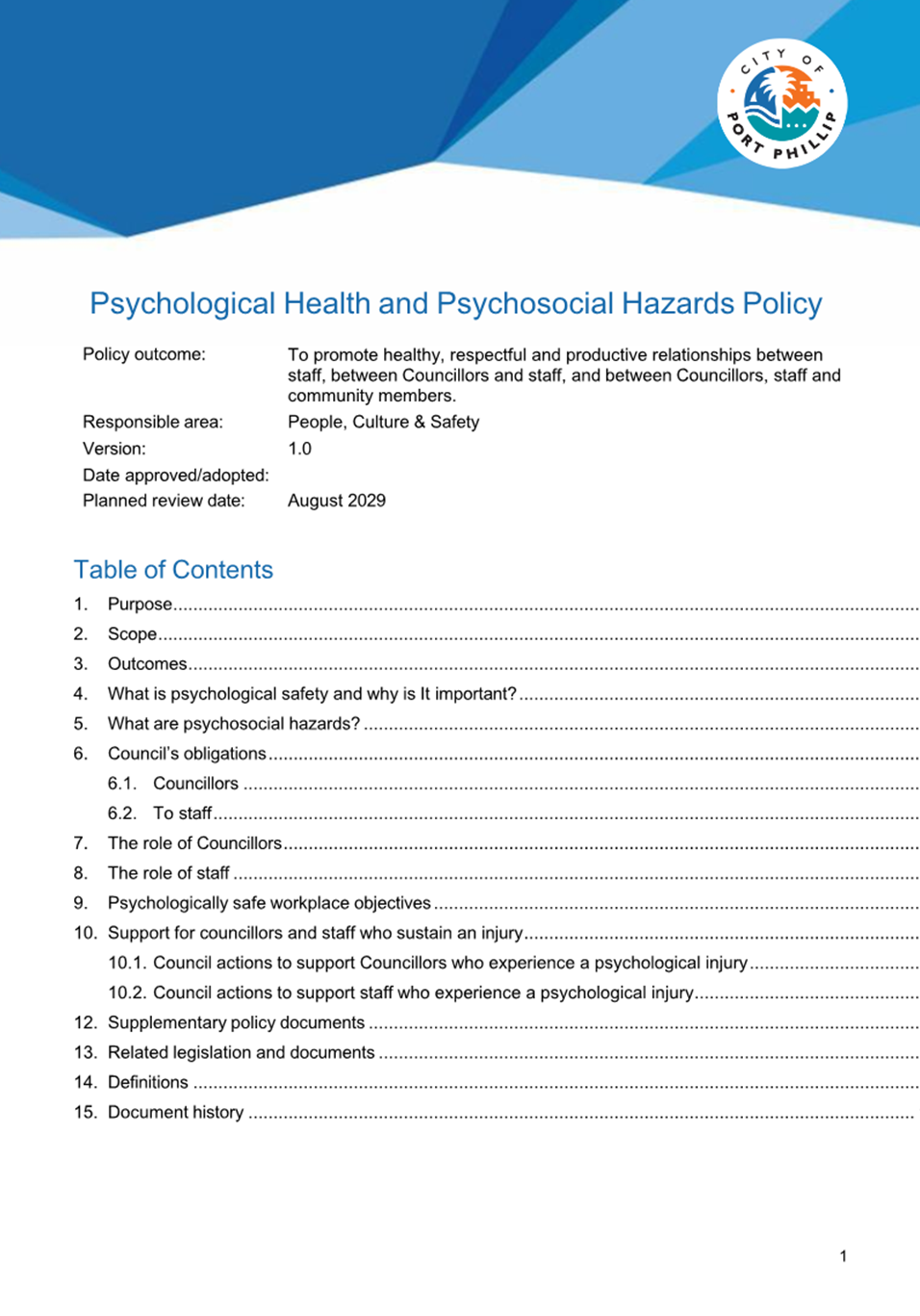
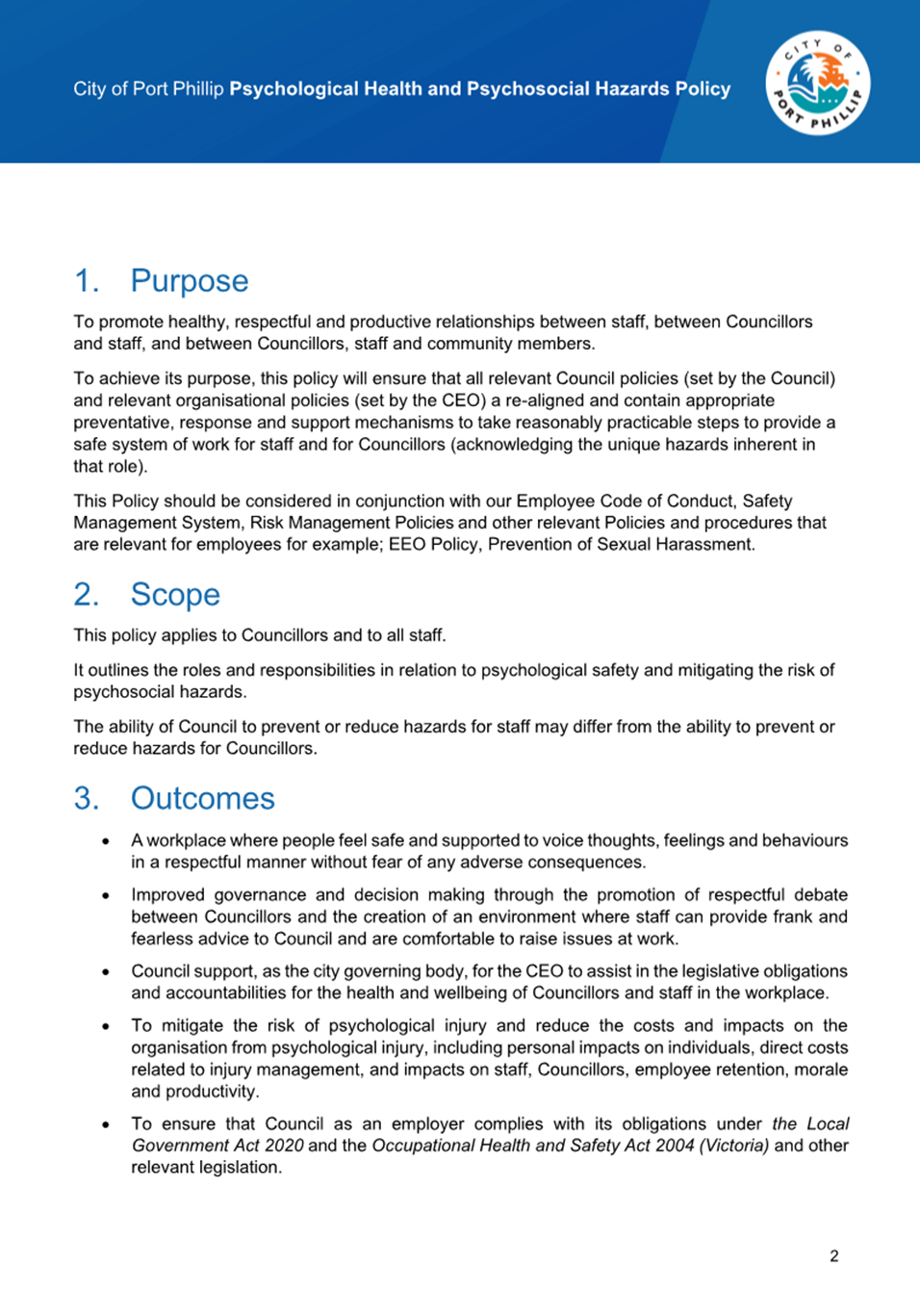
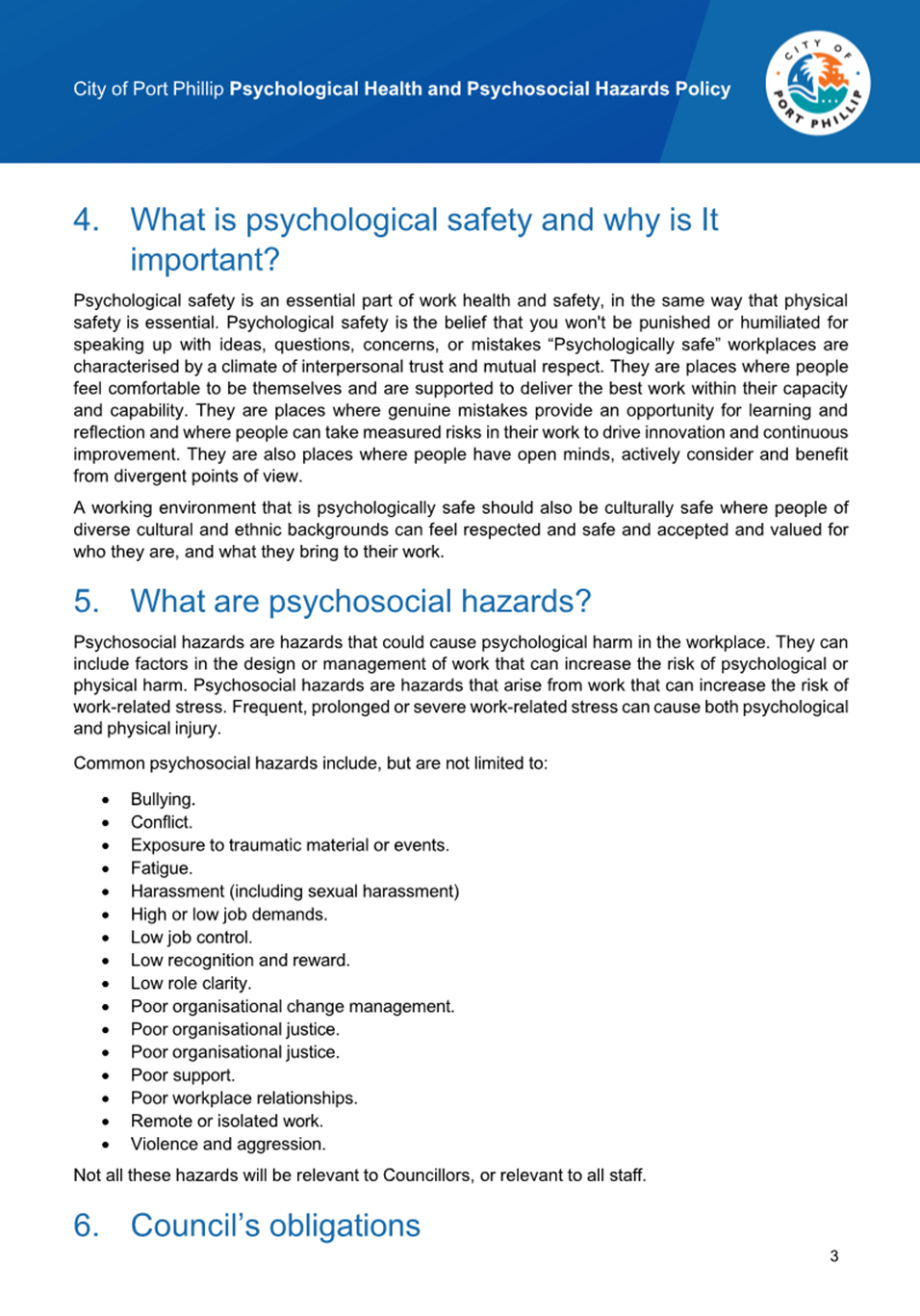
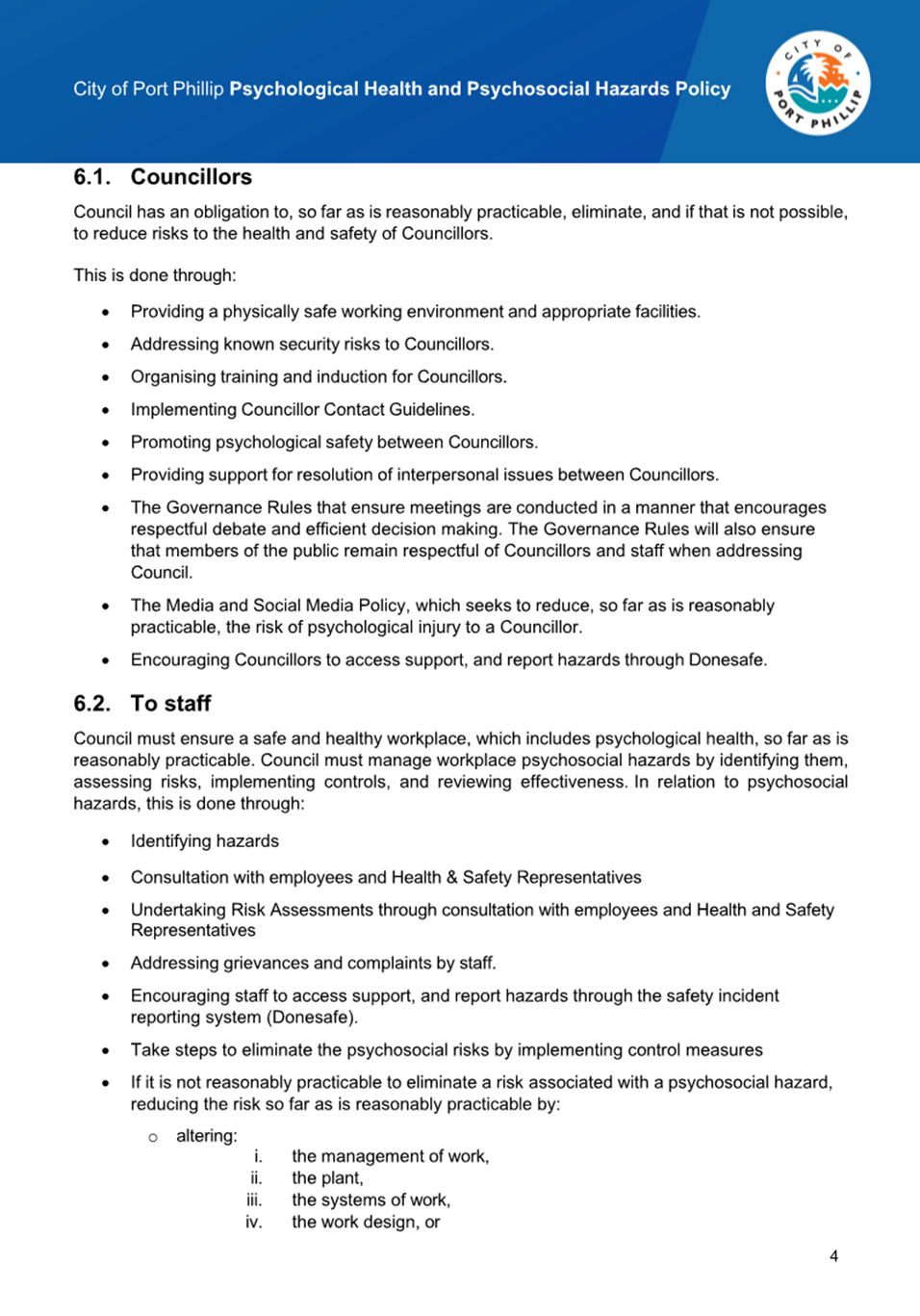
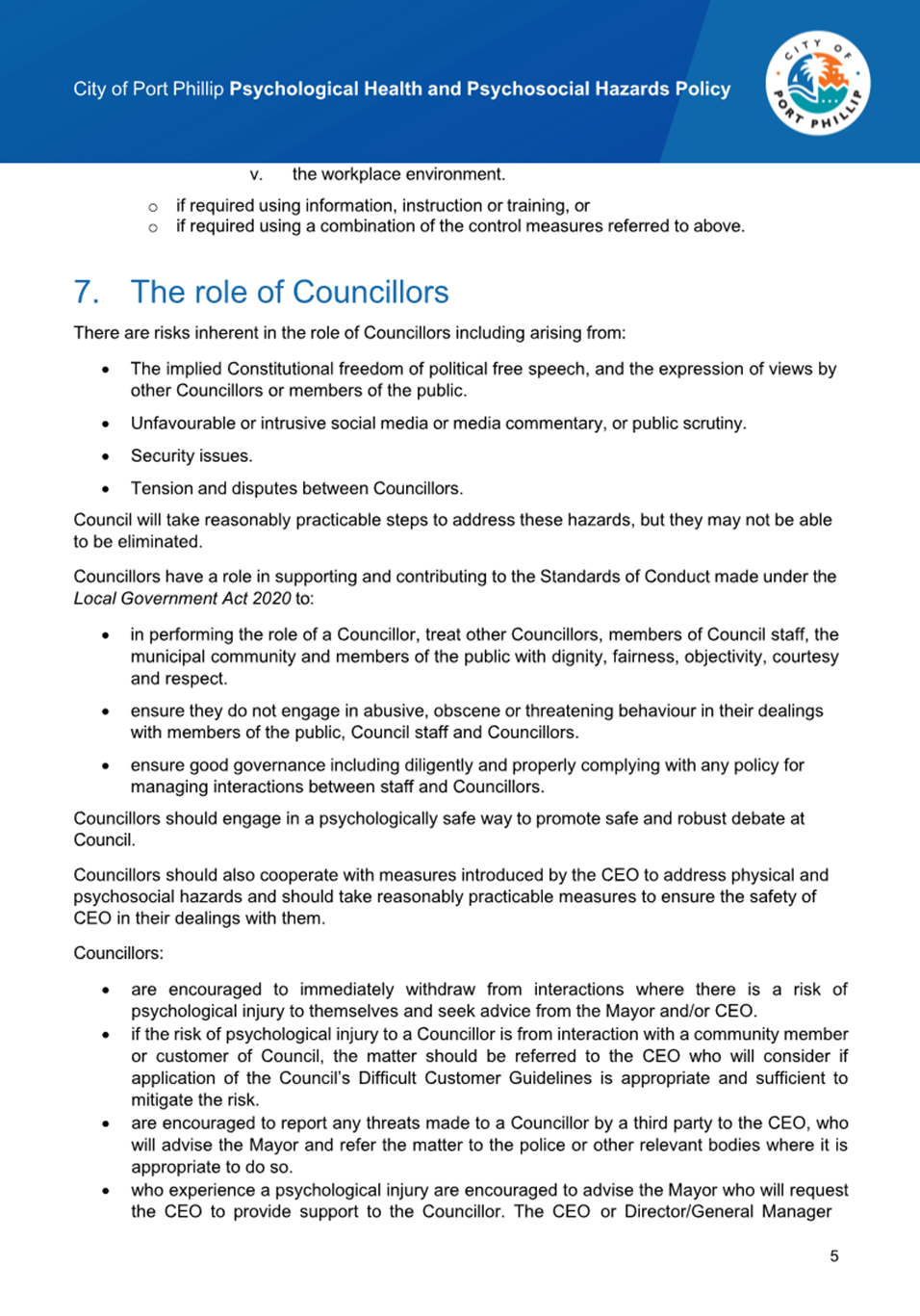
13.1 Psychological Health and Psychosocial Hazards Policy.................................................................................. 424
14 Notices of Motion
Nil
15 Reports by Councillor Delegates
16 URGENT BUSINESS
17 Confidential Matters
The information contained in the following Council reports is considered to be Confidential Information in accordance with Section 3 of the Local Government Act 2020.
17.1 CEO Employment Matters
3(1)(f). personal information, being information which if released would result in the unreasonable disclosure of information about any person or their personal affairs.
Reason: Under the CEO Employment and Remuneration Policy, Section 16 - Confidentiality, Council does not disclose any personal information, being information which if released would result in the unreasonable disclosure of information about any person or their personal affairs. The CEO's remuneration falls into that category.
Meeting of the Port Phillip City Council
18 March 2026
1. Apologies
2. Minutes of Previous Meetings
|
That the minutes of the Meeting of the Port Phillip City Council held on 4 March 2026 be confirmed. |
3. Declarations of Conflicts of Interest
4. Public Question Time and Submissions
5. Councillor Question Time
6. Petitions, Joint Letters and Deputations
Nil
7.1 Presentation of CEO Report – January 2026 Issue 125............................................................. 6
Meeting of the Port Phillip City Council
18 March 2026
|
Presentation of CEO Report – January 2026 Issue 125 |
|
|
Executive Member: |
Robyn Borley, General Manager, Governance and Performance |
|
PREPARED BY: |
Trac McCabe, Head of Corporate Planning |
1. PURPOSE
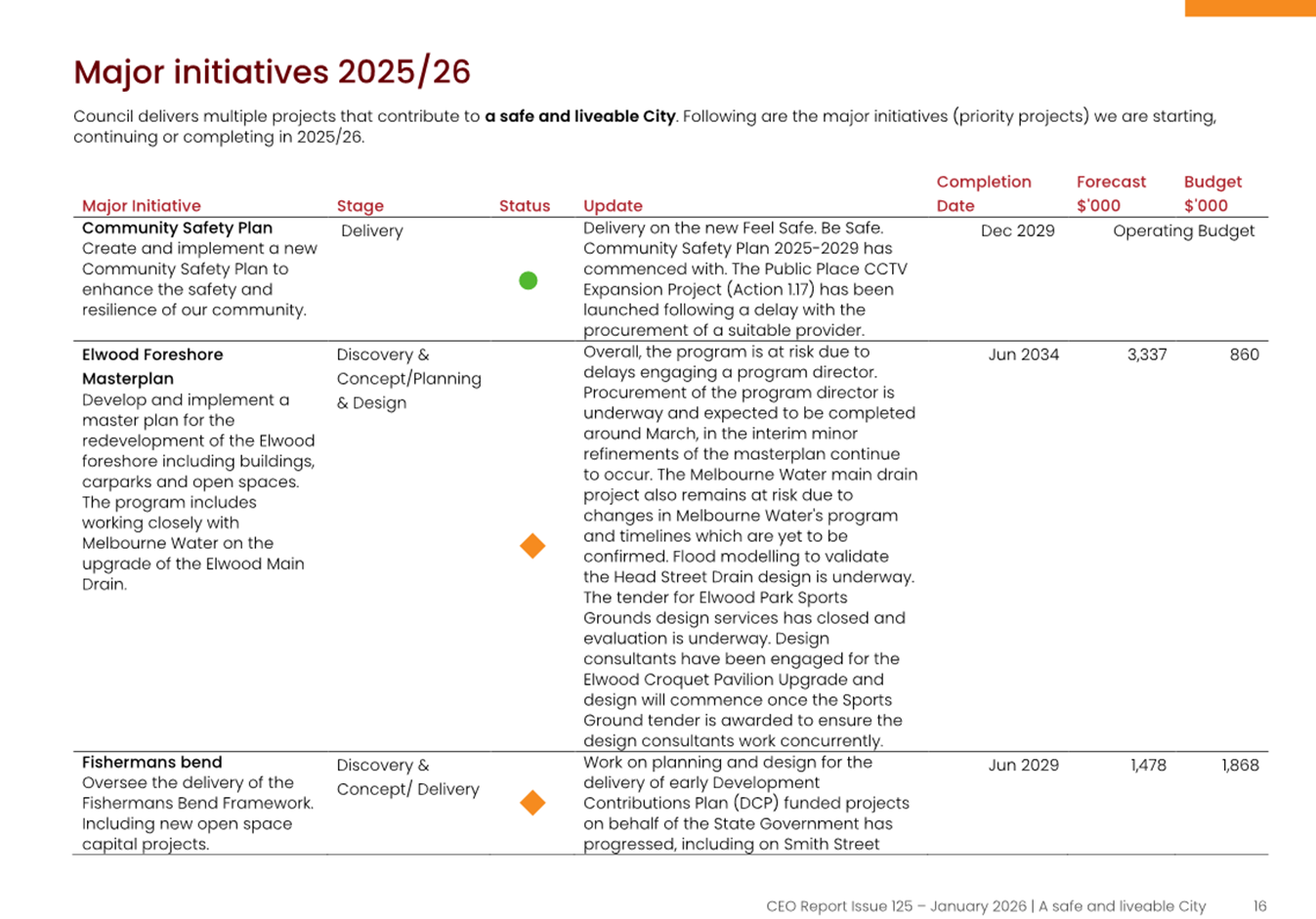
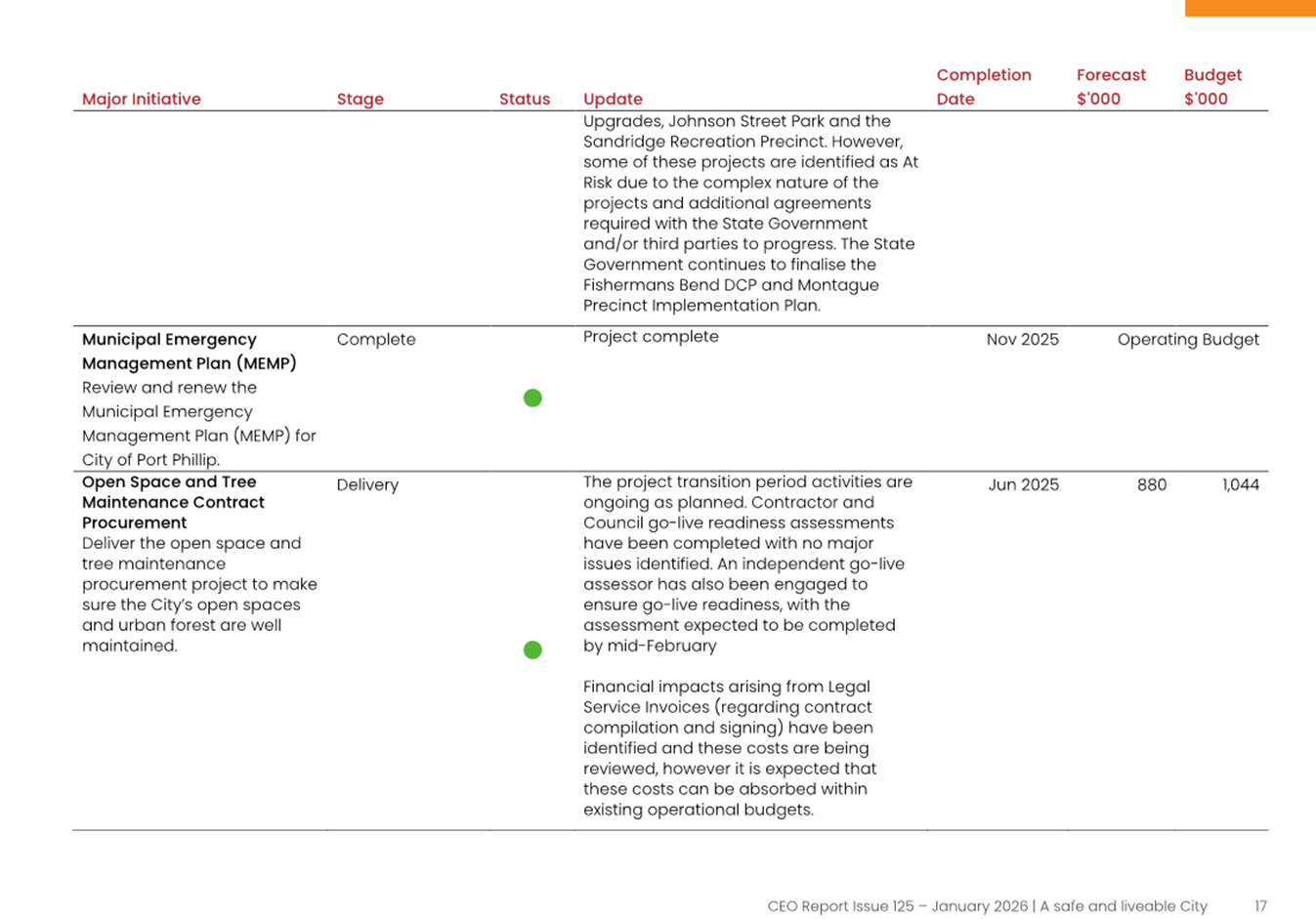
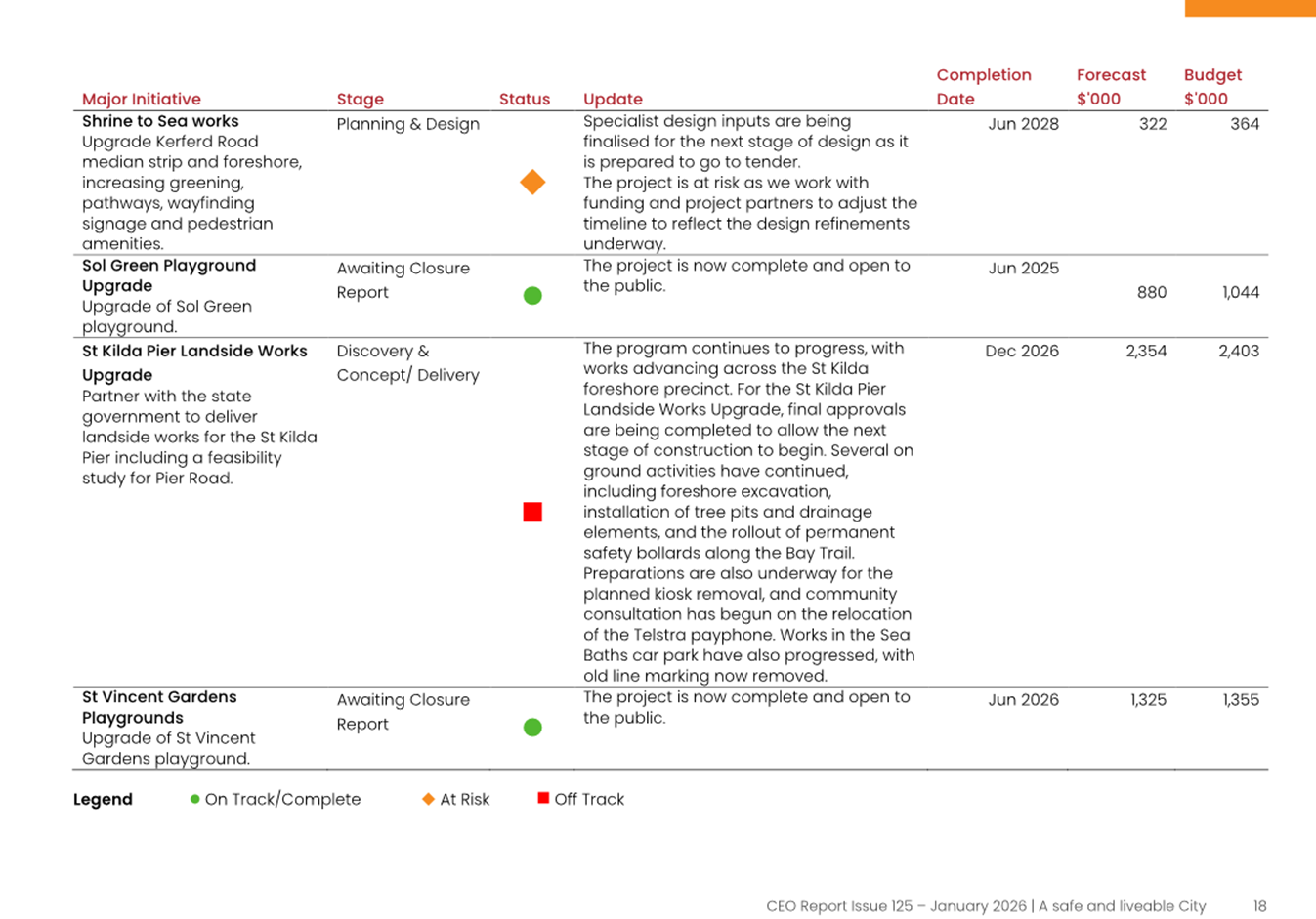
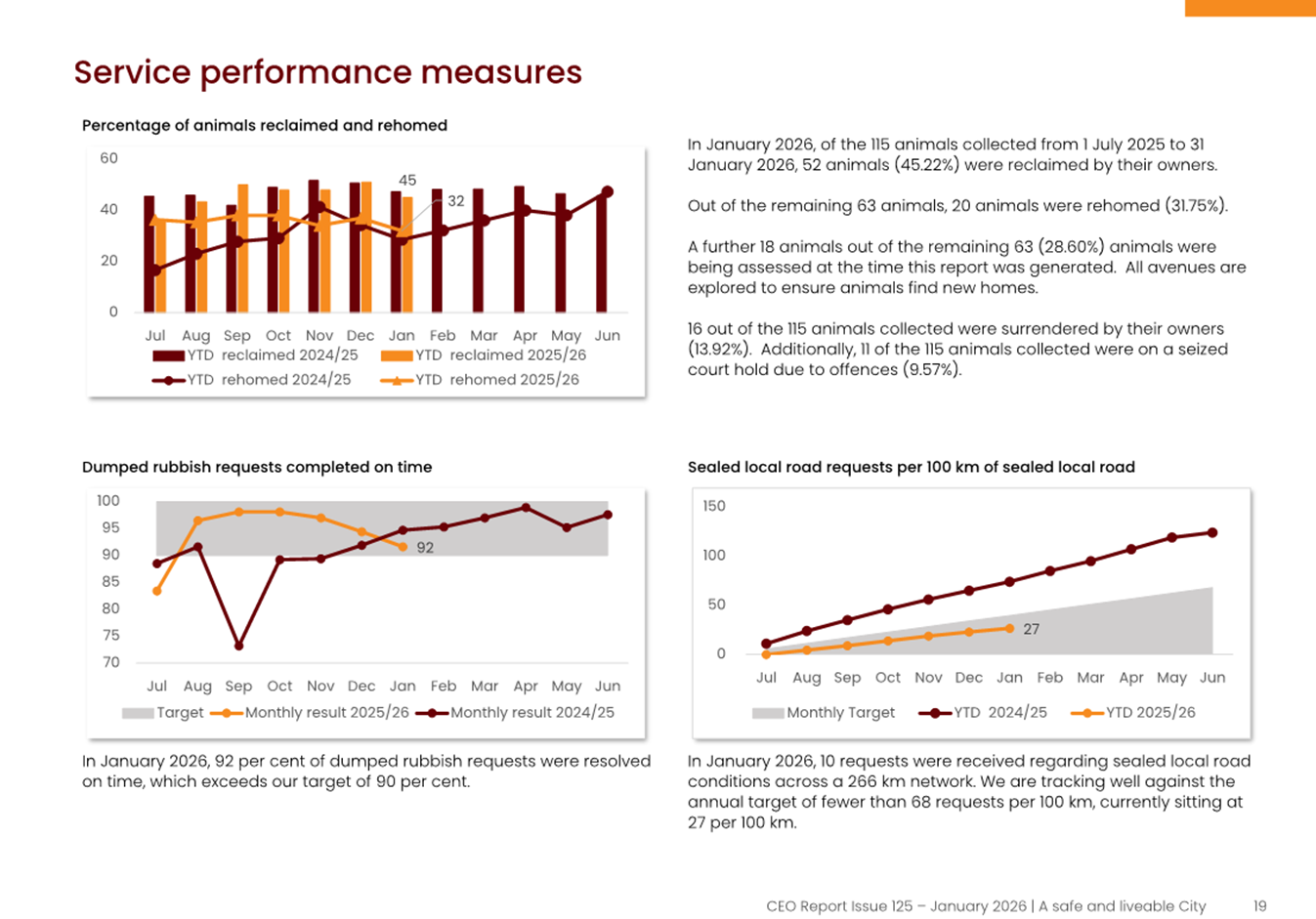
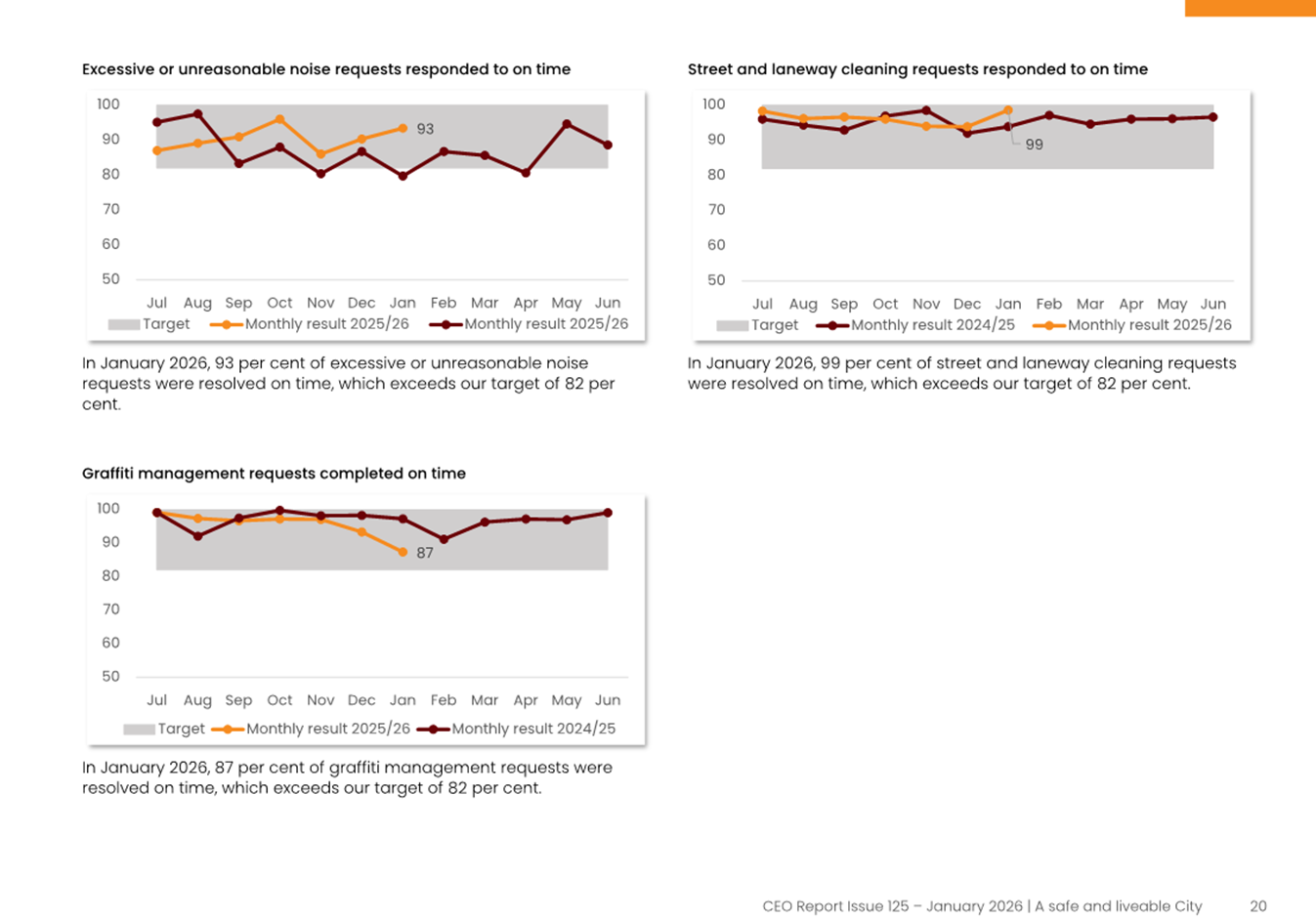
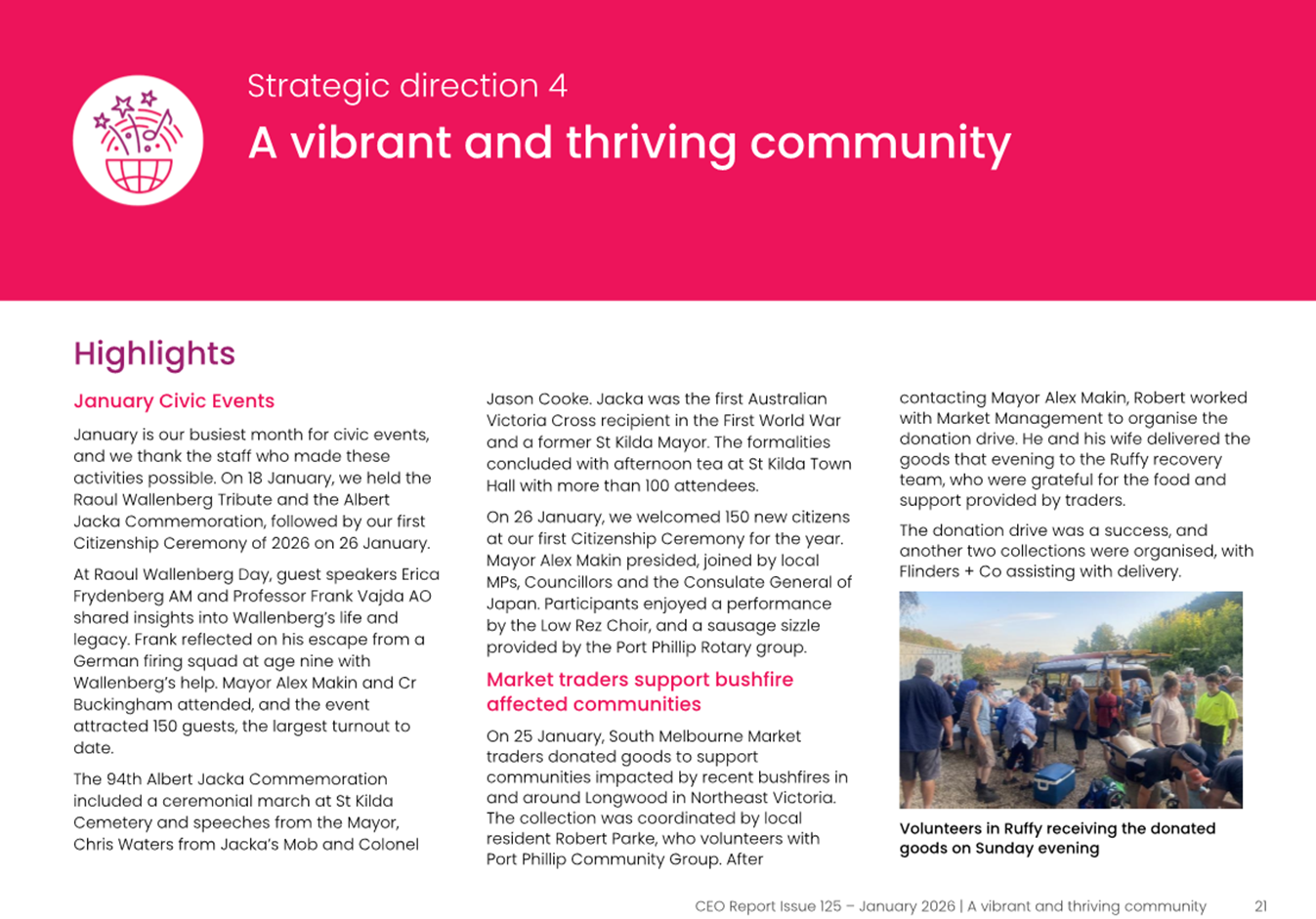
1.1 To provide Council with a regular update from the Chief Executive Officer regarding Council’s activities and performance.
2. EXECUTIVE Summary
2.1 The CEO Report is a key mechanism for providing Council with regular updates on organisational performance and activities. It reflects our commitment to transparency, accountability, and keeping our community informed.
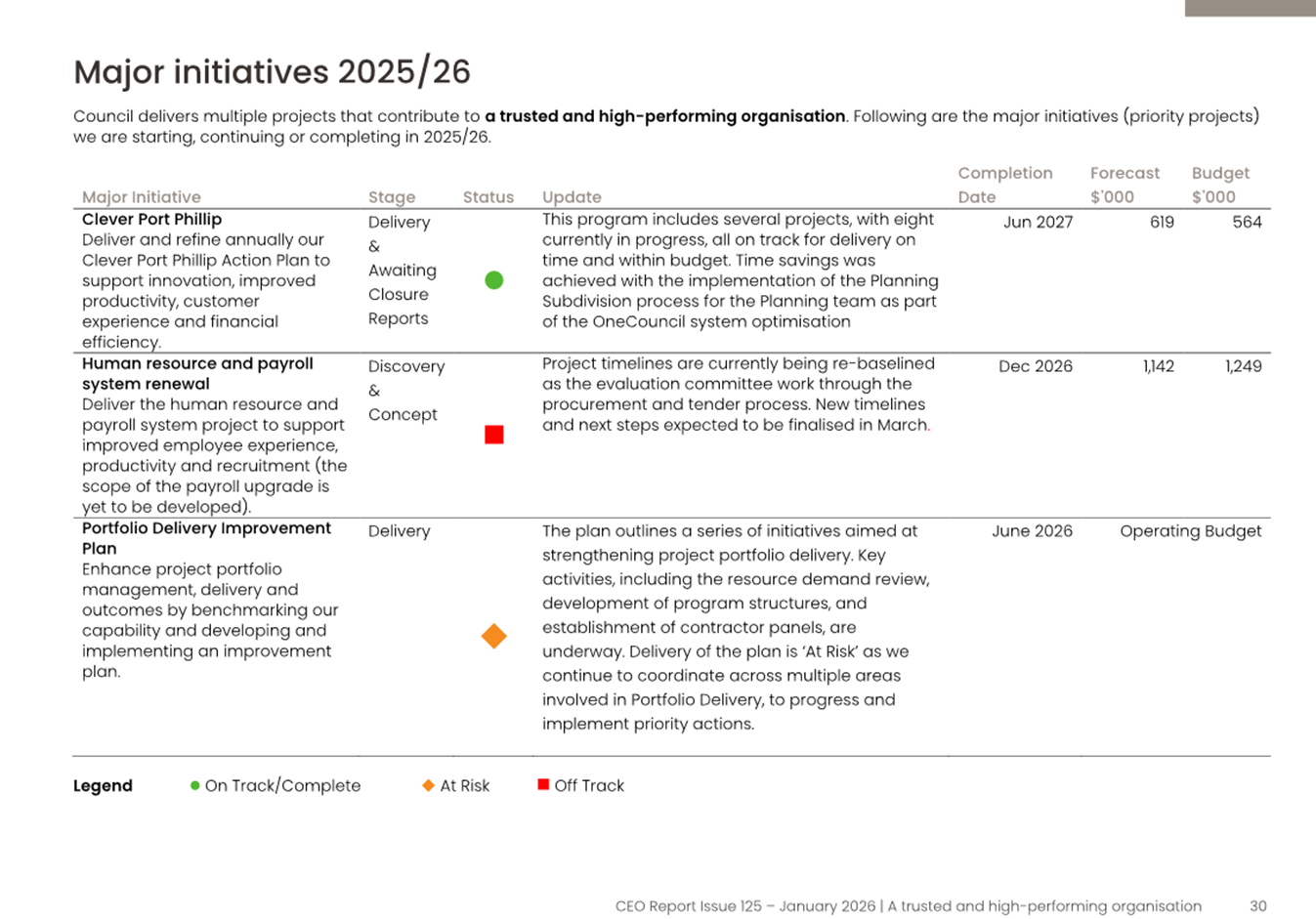
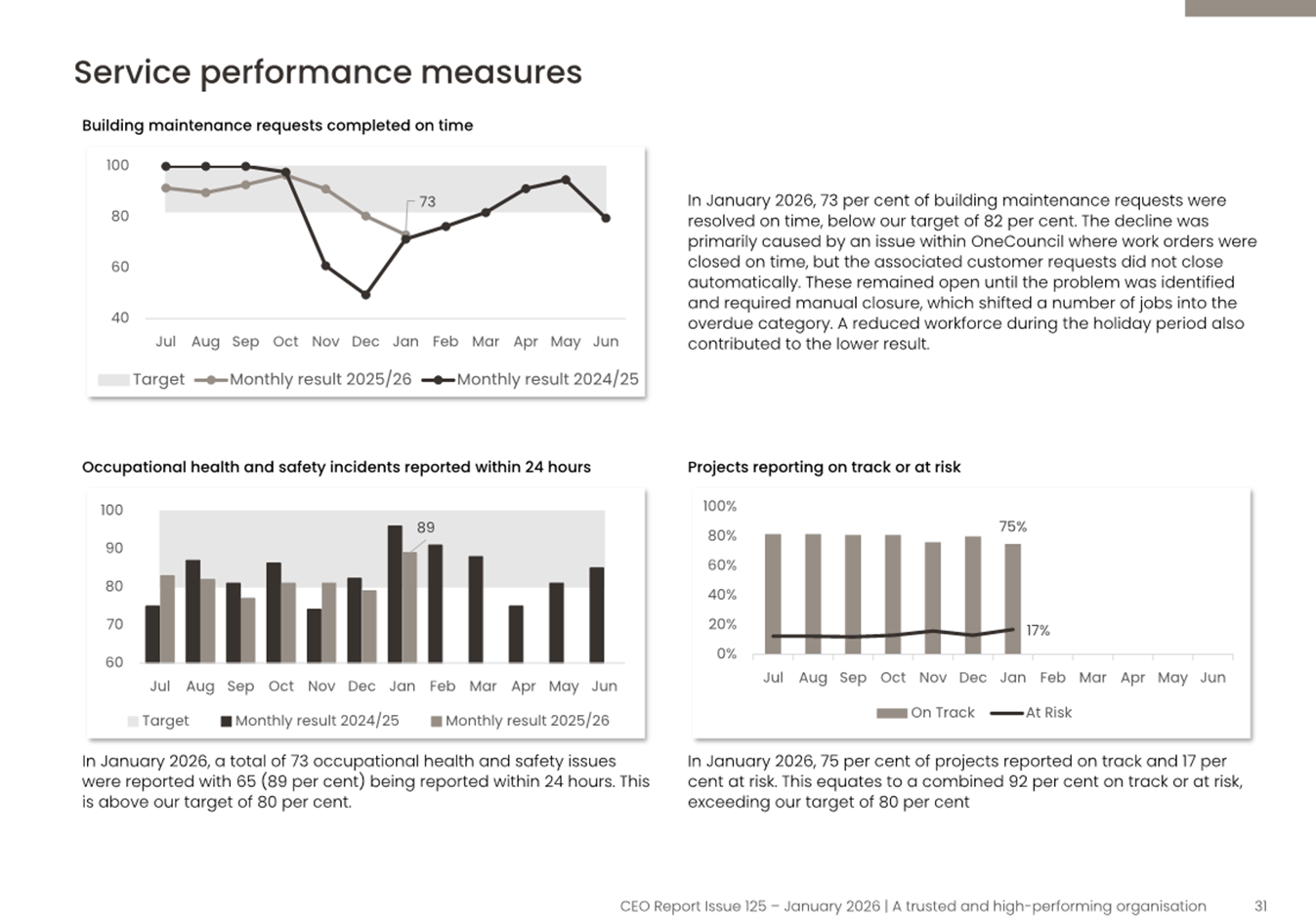
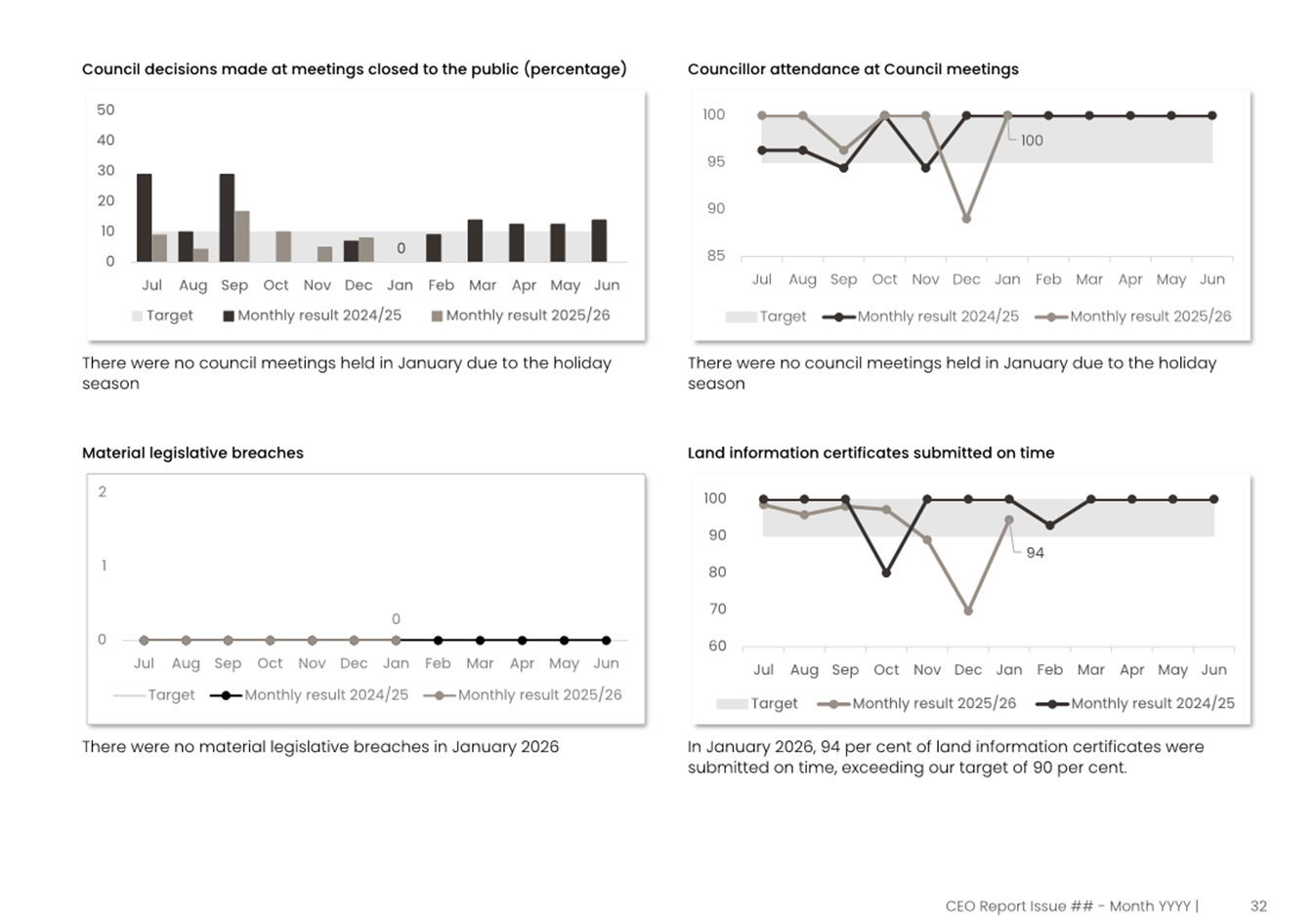
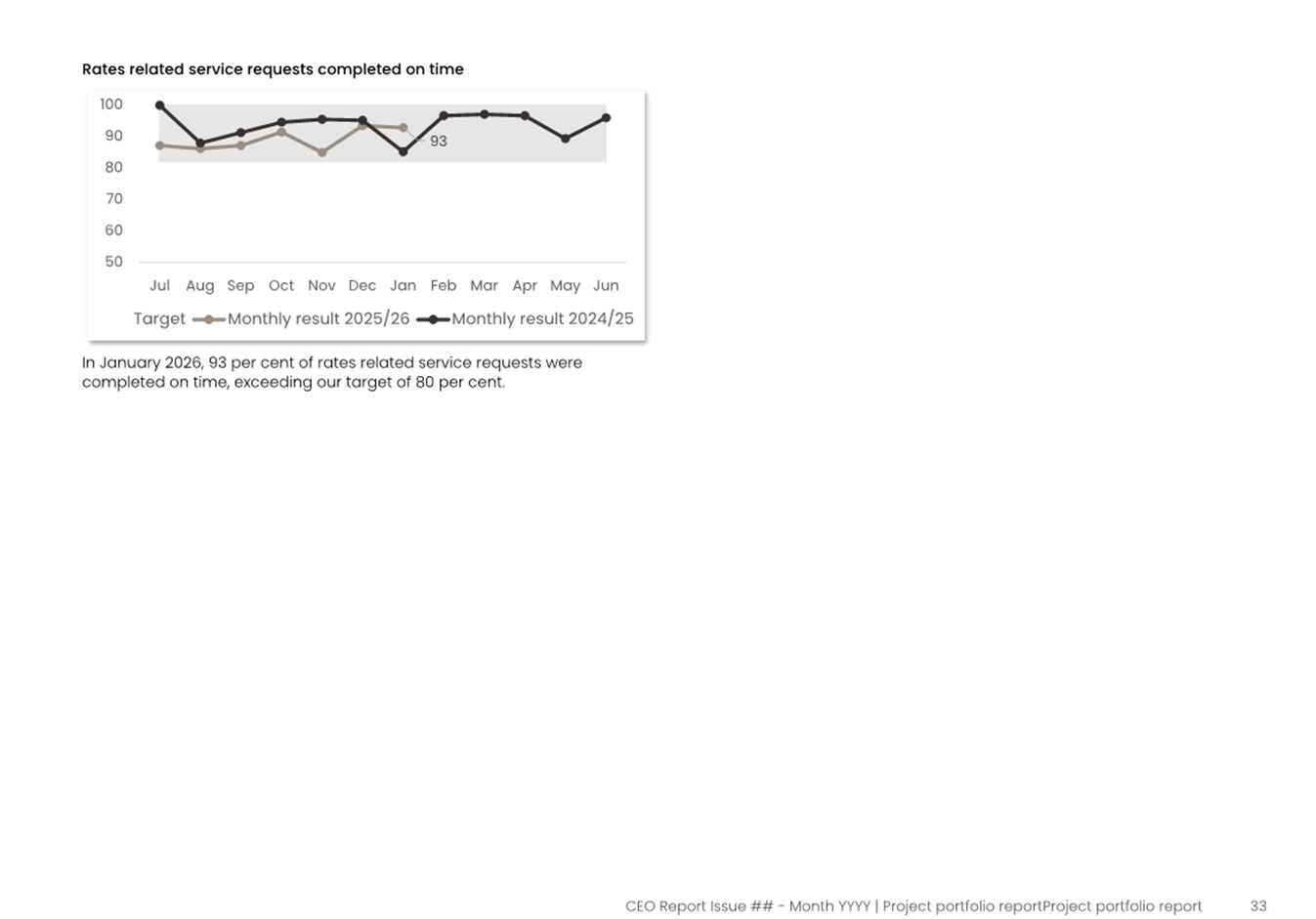
2.2 The attached CEO Report – January 2026 Issue 125 (Attachment 1) focuses on Council’s performance for January 2026.
|
That Council: 3.1 Notes the CEO Report – January 2026 Issue 125 – (Attachment 1). 3.2 Authorises the CEO or their delegate to make minor editorial amendments that do not substantially alter the content of the report. |
4. OFFICER MATERIAL OR GENERAL INTEREST
4.1 No officers involved in the preparation of this report have a material or general interest in the matter.
|
ATTACHMENTS |
1. CEO Report - #125 - January 2026 |
Meeting of the Port Phillip City Council
18 March 2026
8. A Healthy and Connected Community
8.1 Draft Proposed Community Infrastructure Plan (release for engagement).................................. 45
Meeting of the Port Phillip City Council
18 March 2026
|
Draft Proposed Community Infrastructure Plan (release for engagement) |
|
|
Executive Member: |
Kylie Bennetts, General Manager, Community Wellbeing |
|
PREPARED BY: |
Christine Dening, Manager Community Building and Inclusion |
1. PURPOSE
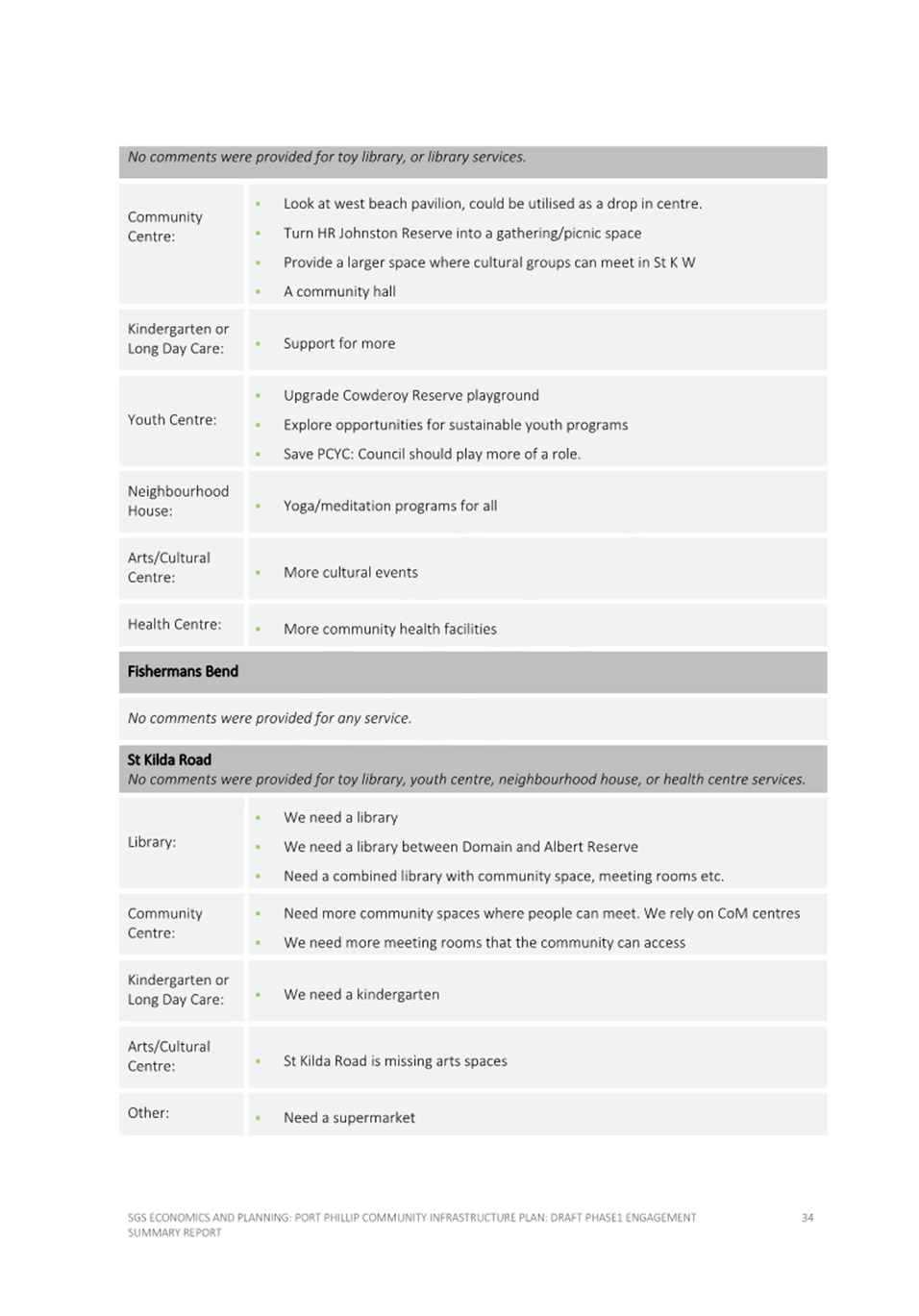
1.1 To present the draft proposed Community Infrastructure Plan (the CIP) to Council and seek approval to proceed with the next stage of engagement, including public exhibition of the draft CIP for community feedback.
2. EXECUTIVE Summary
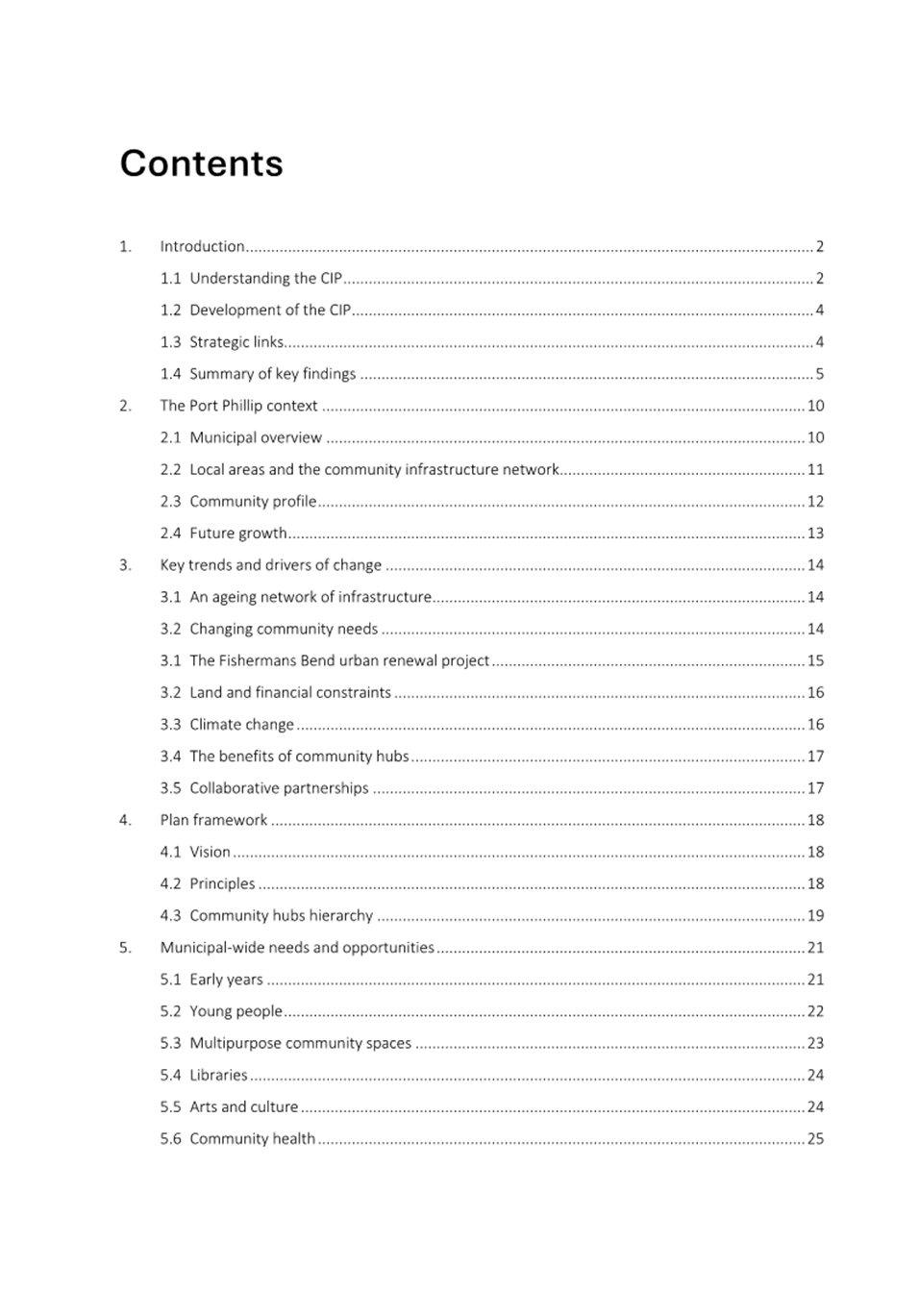
2.1 The purpose of the CIP is to identify the key community infrastructure needs and opportunities across different service types and locations, and to help guide short and medium-term decisions as well as longer term planning. It ensures community infrastructure keeps pace with a growing and changing population.
2.2 The CIP is not intended as a delivery plan for Council projects. Instead, it offers a high‑level view of community needs to inform Council’s advocacy efforts, guide partnerships with other service providers, and support engagement with infrastructure users.
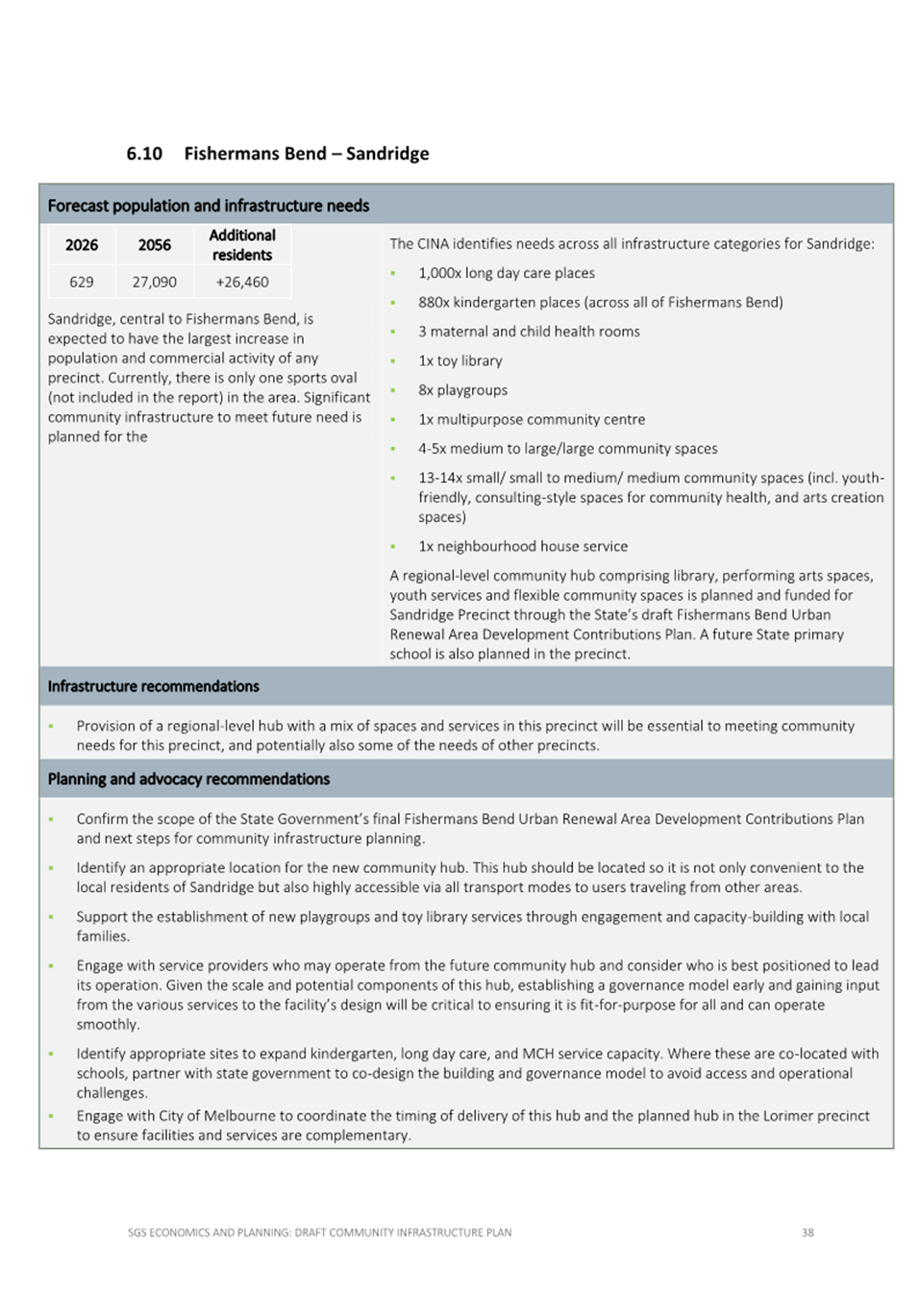
2.3 This is especially important in growth areas such as Fishermans Bend and Lakeside, which currently have minimal community infrastructure but are expected to experience significant population growth and, consequently, increased demand for community facilities over time.
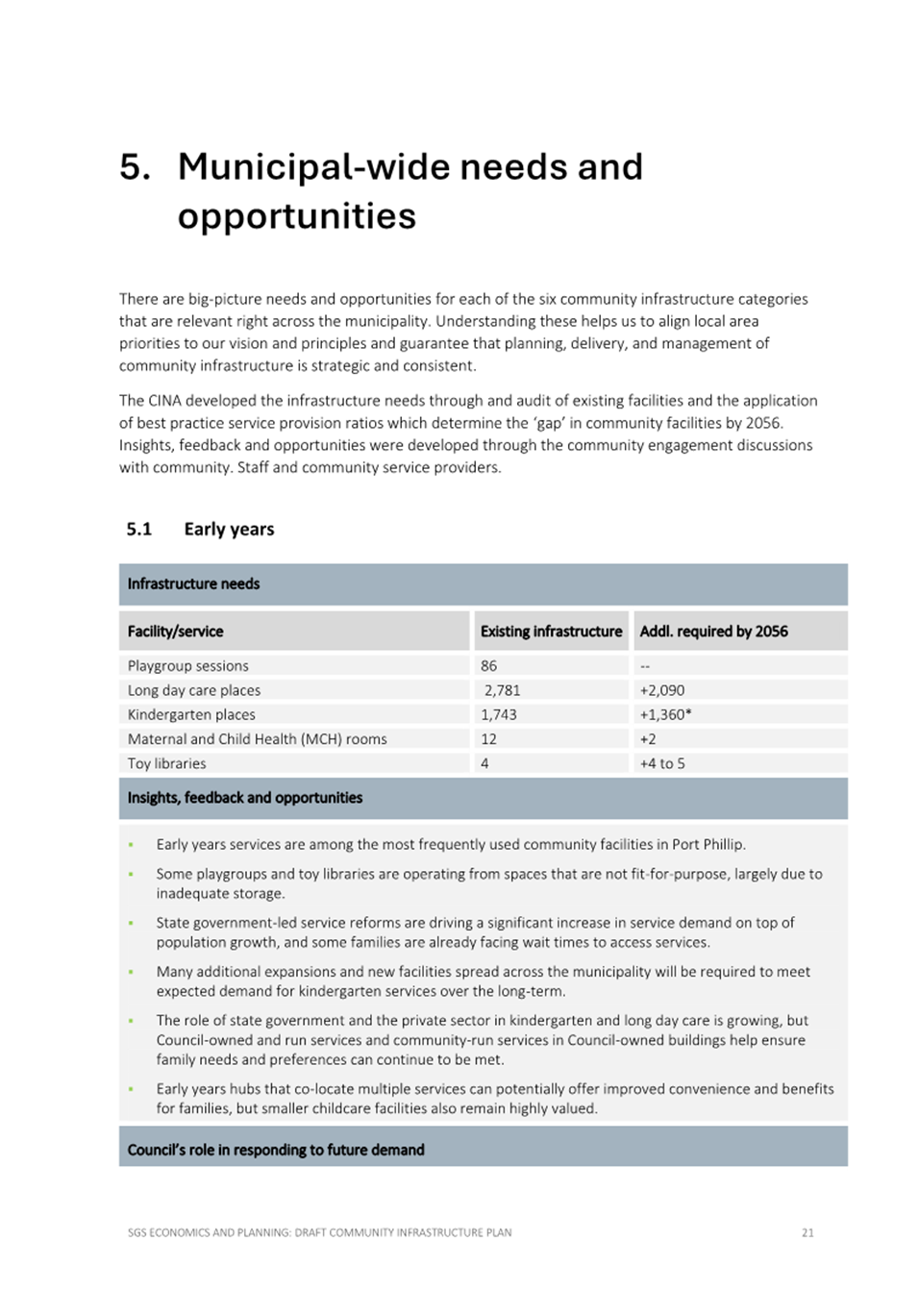
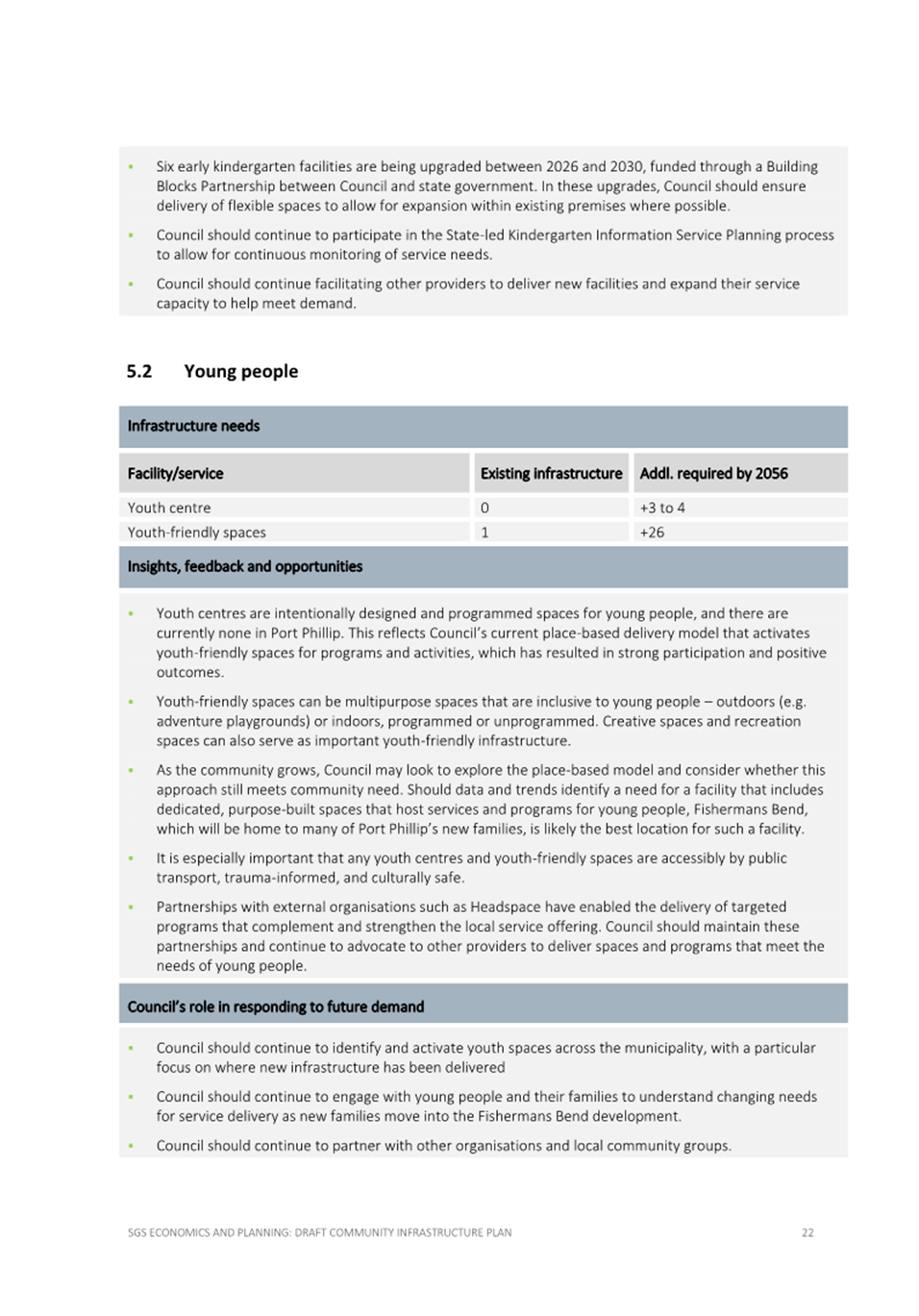
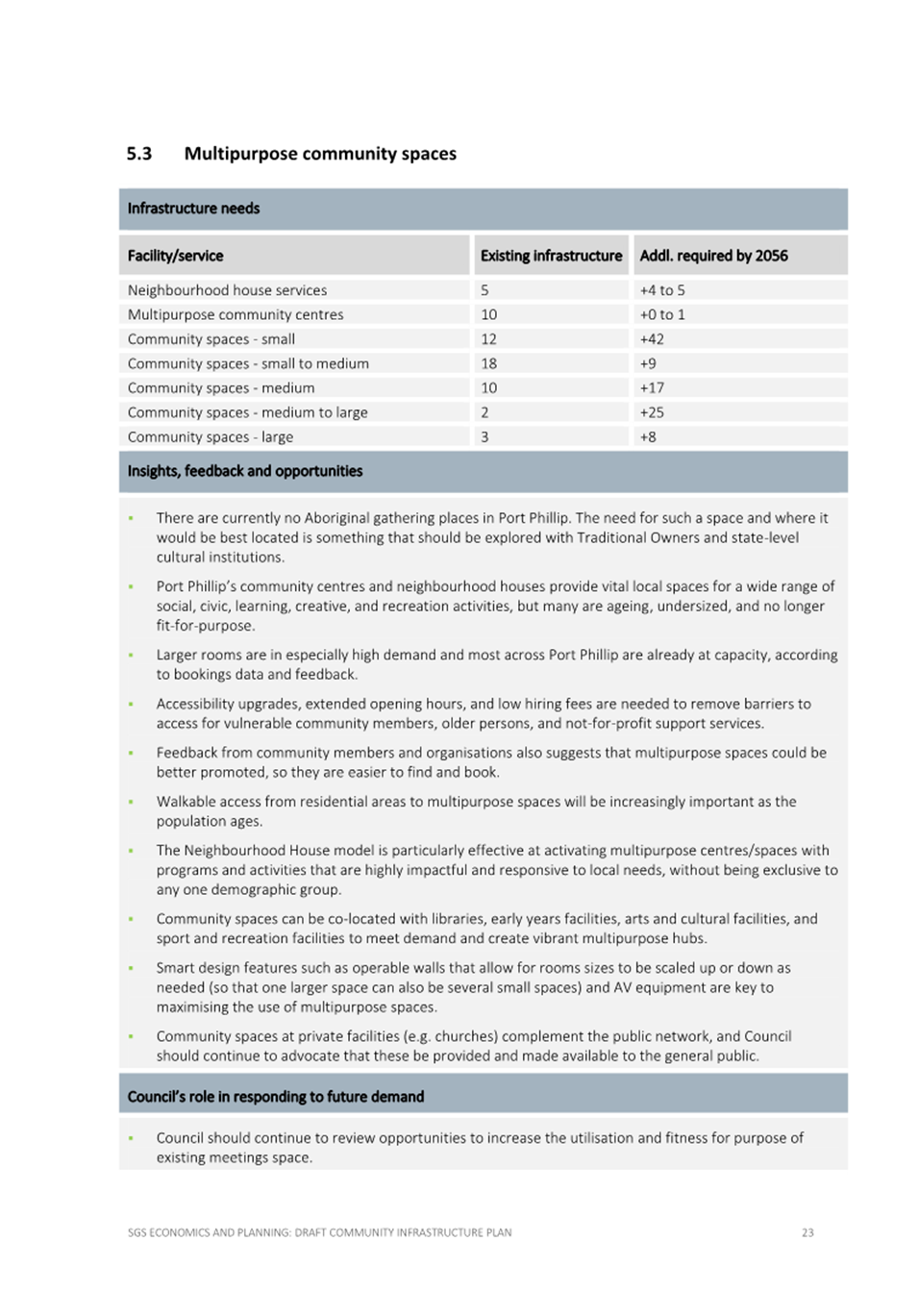
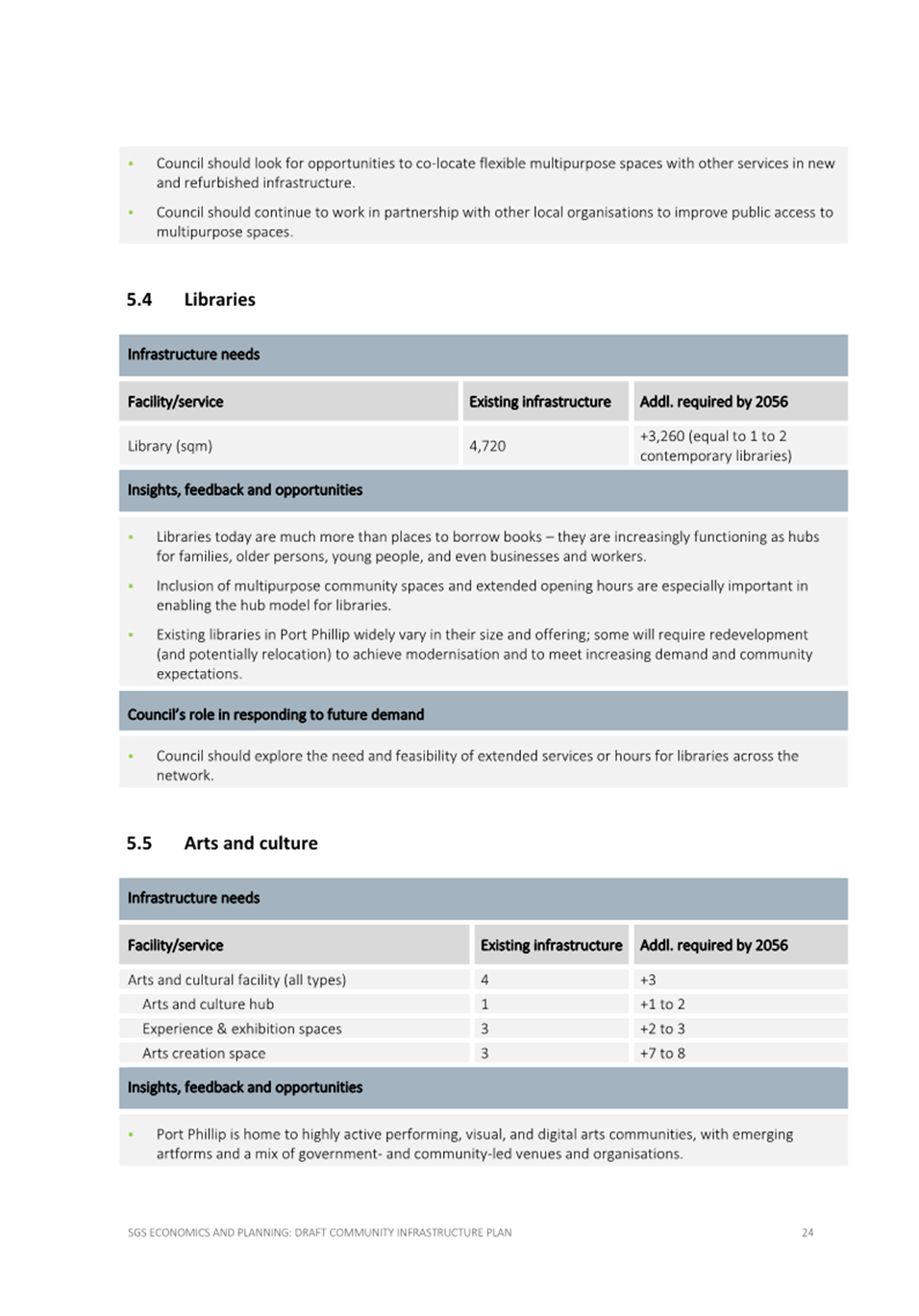
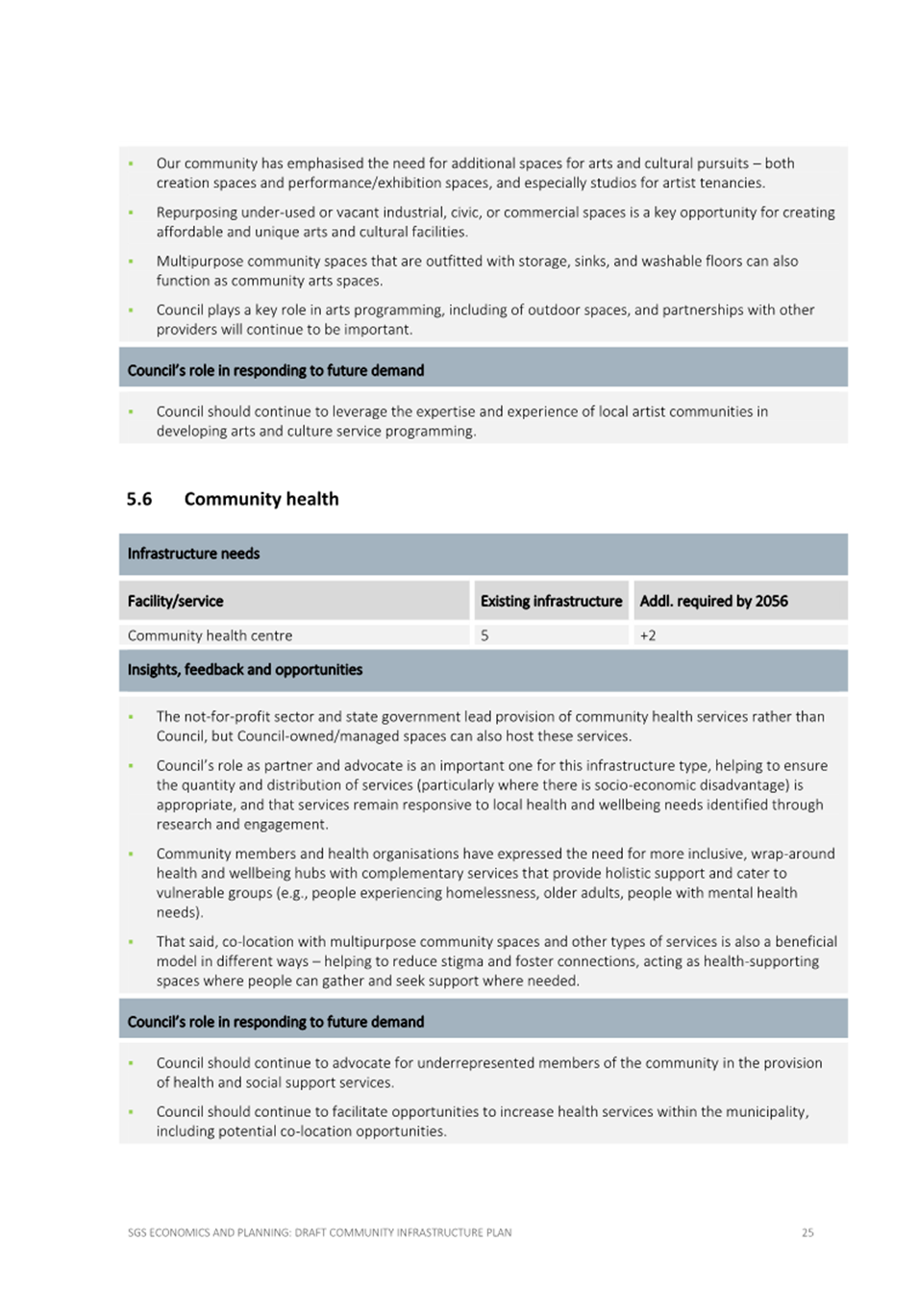
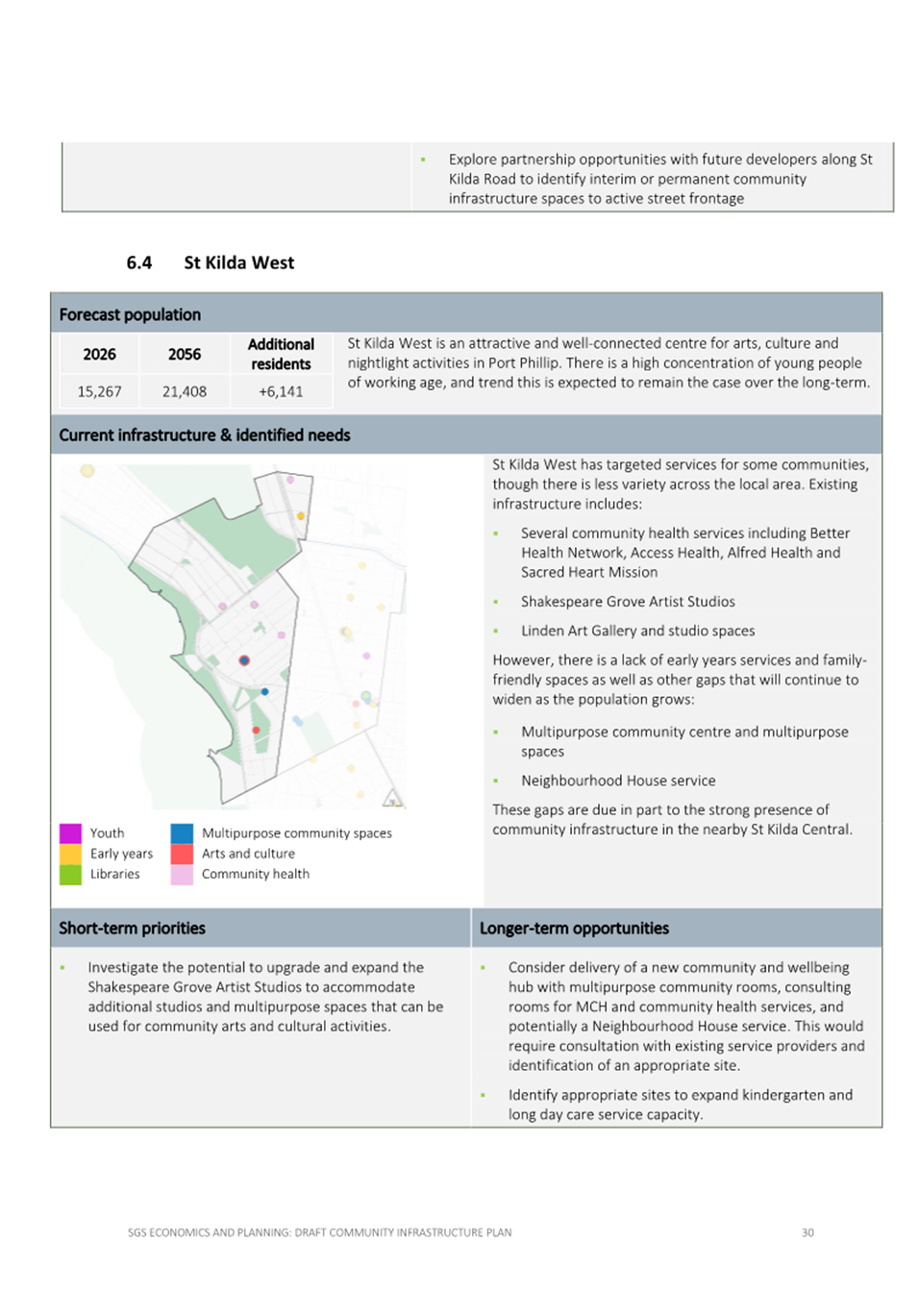
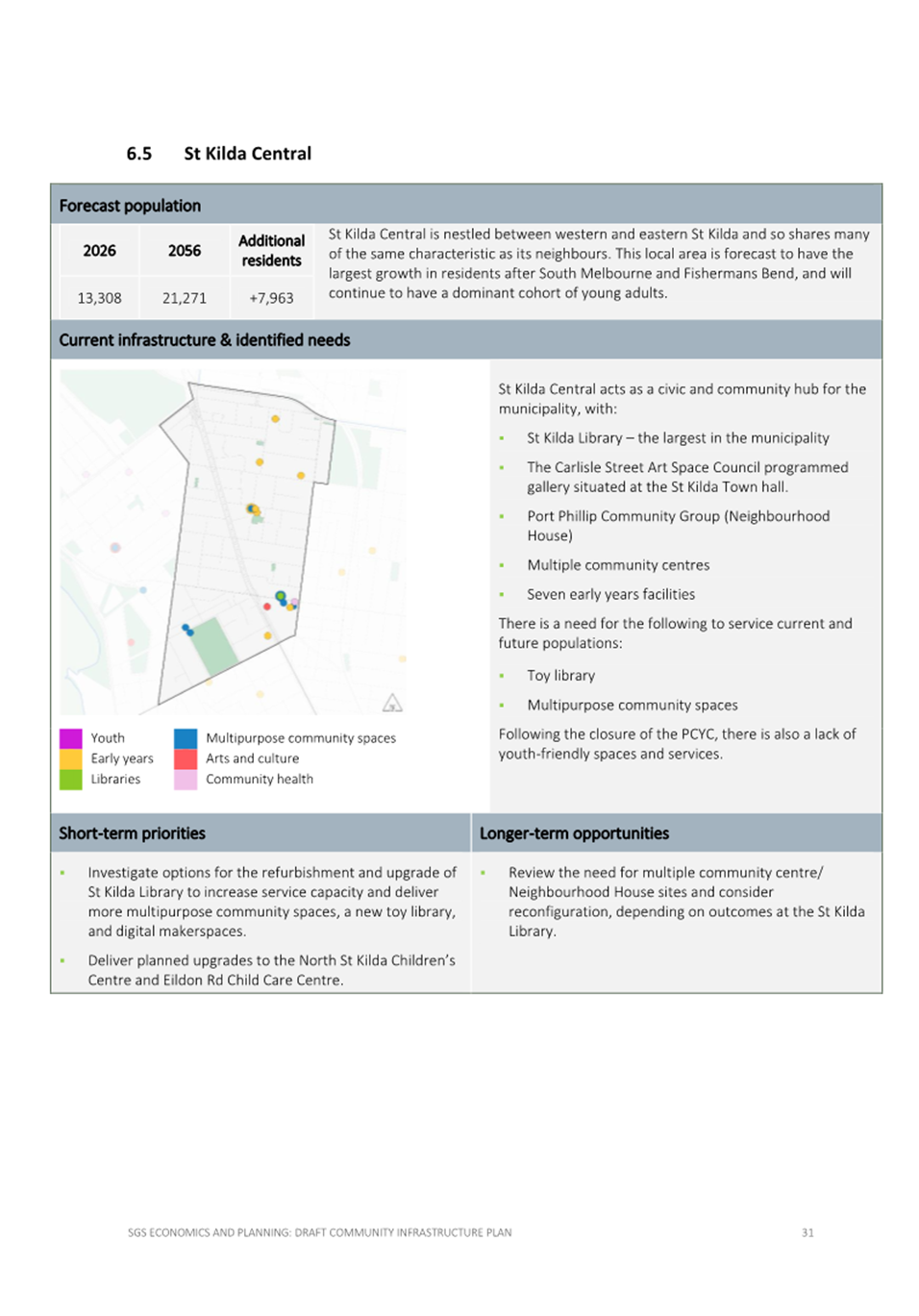
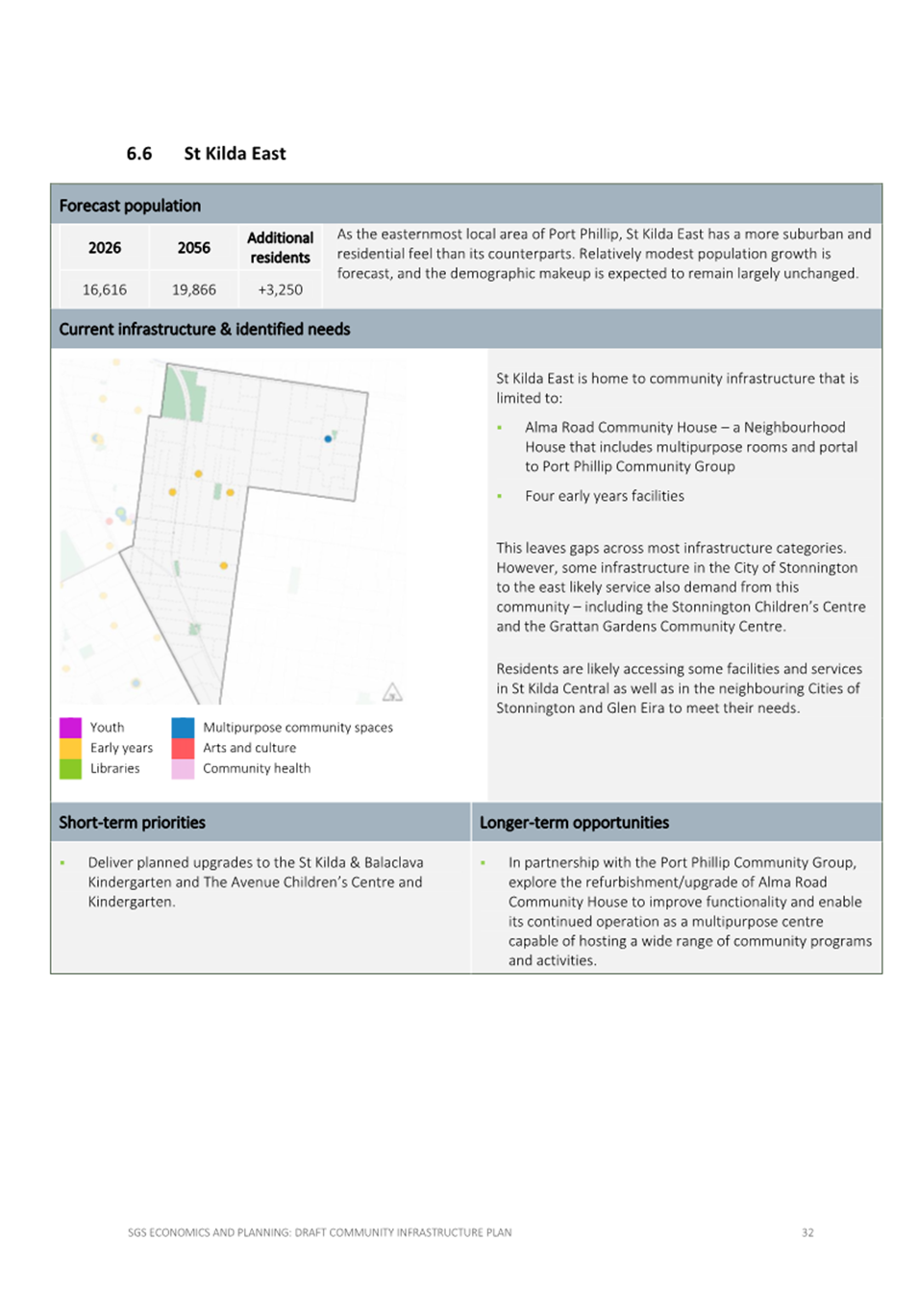
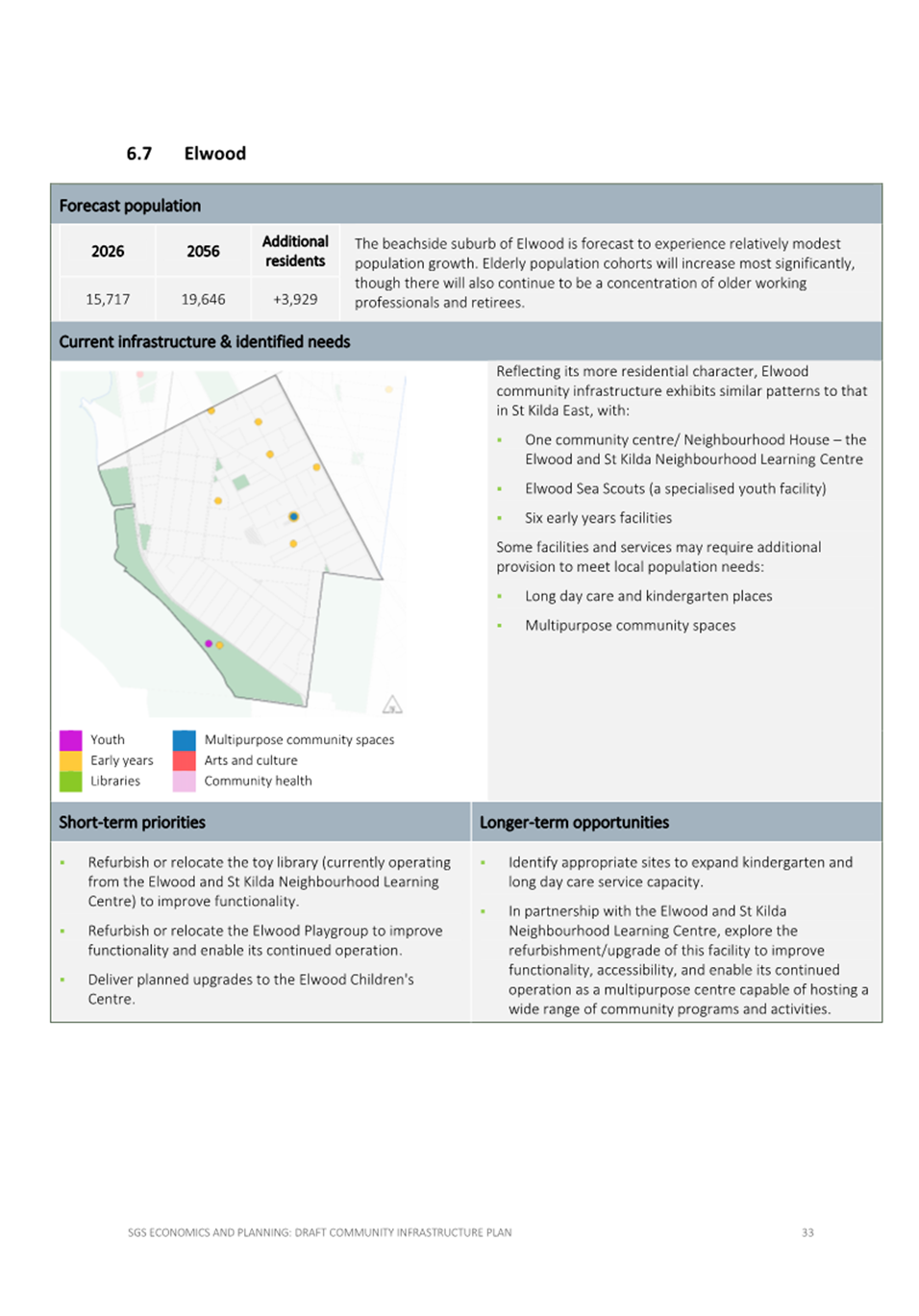
2.4 Community Infrastructure included within the CIP includes, early years facilities, libraries, art and cultural venues, community and civic centre, maternal child health facilities, multi-purpose spaces for community use (such as toy libraries, playgroup facilities) and neighbourhood houses and community centres.
Note: Recreation and sports facilities are out of scope in the CIP and will be considered through the Sport and Recreation Strategy with an opportunity to add this as a layer in the future alongside other contextual layers such as transport and utilisation of community facilities.
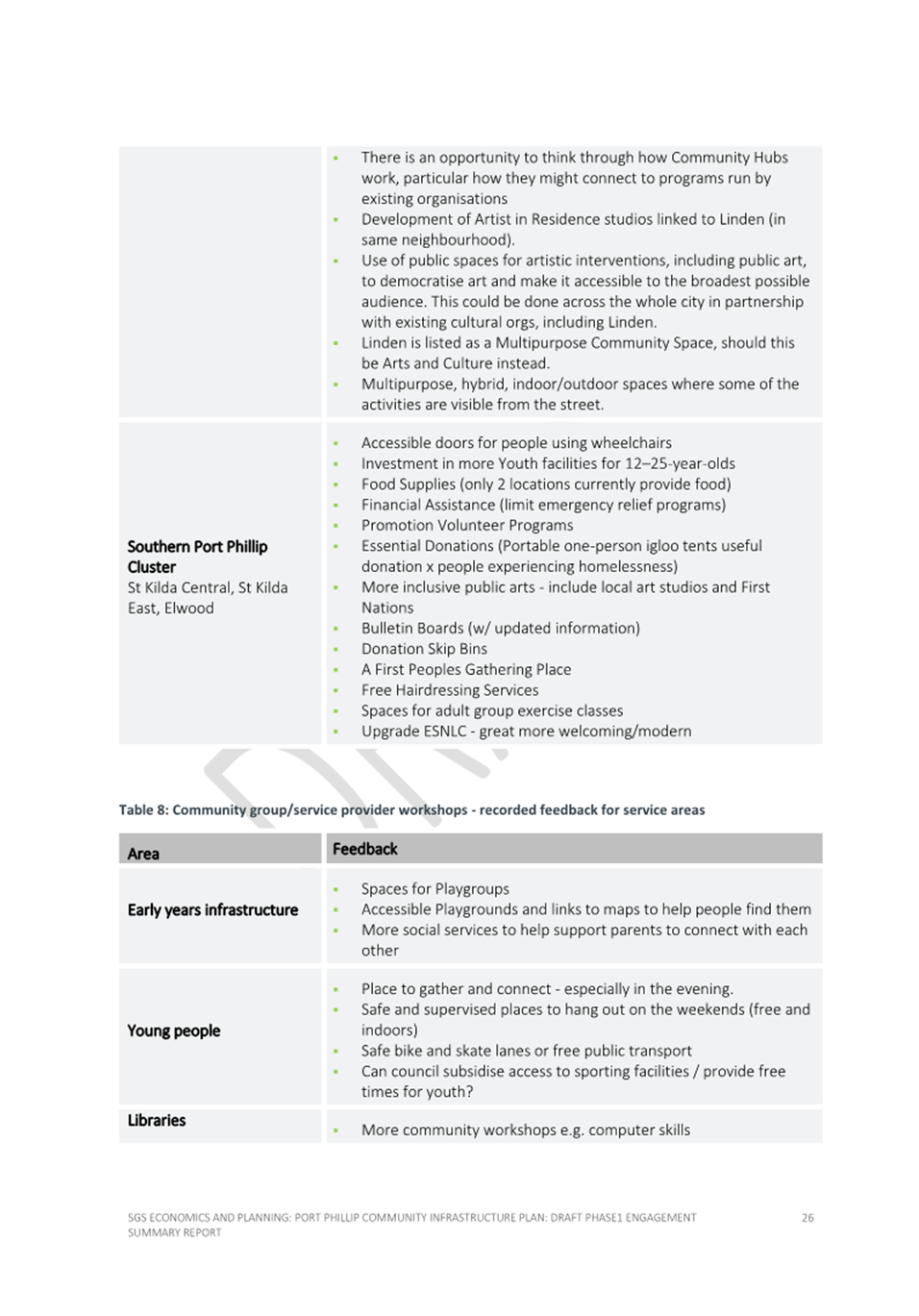
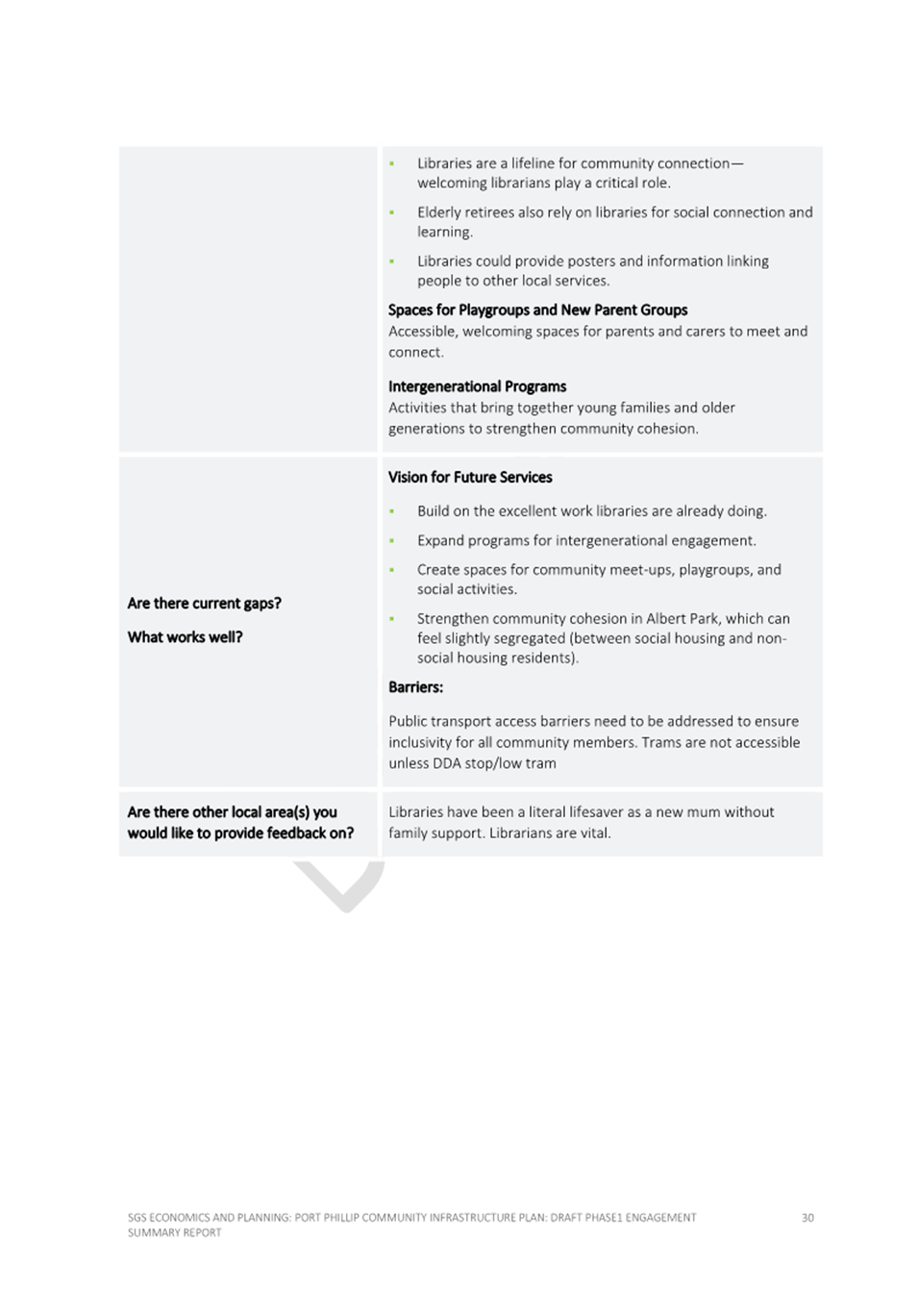
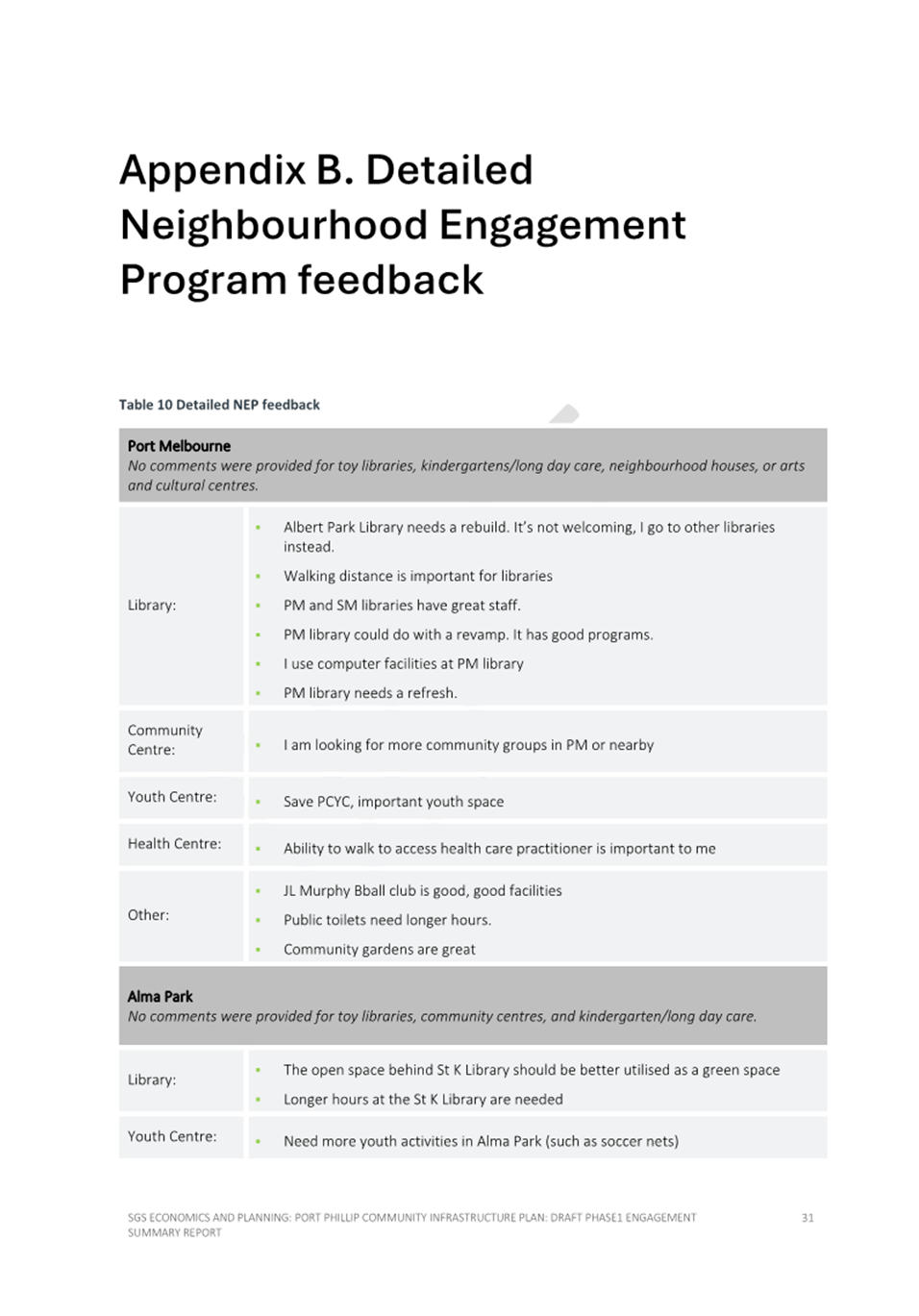
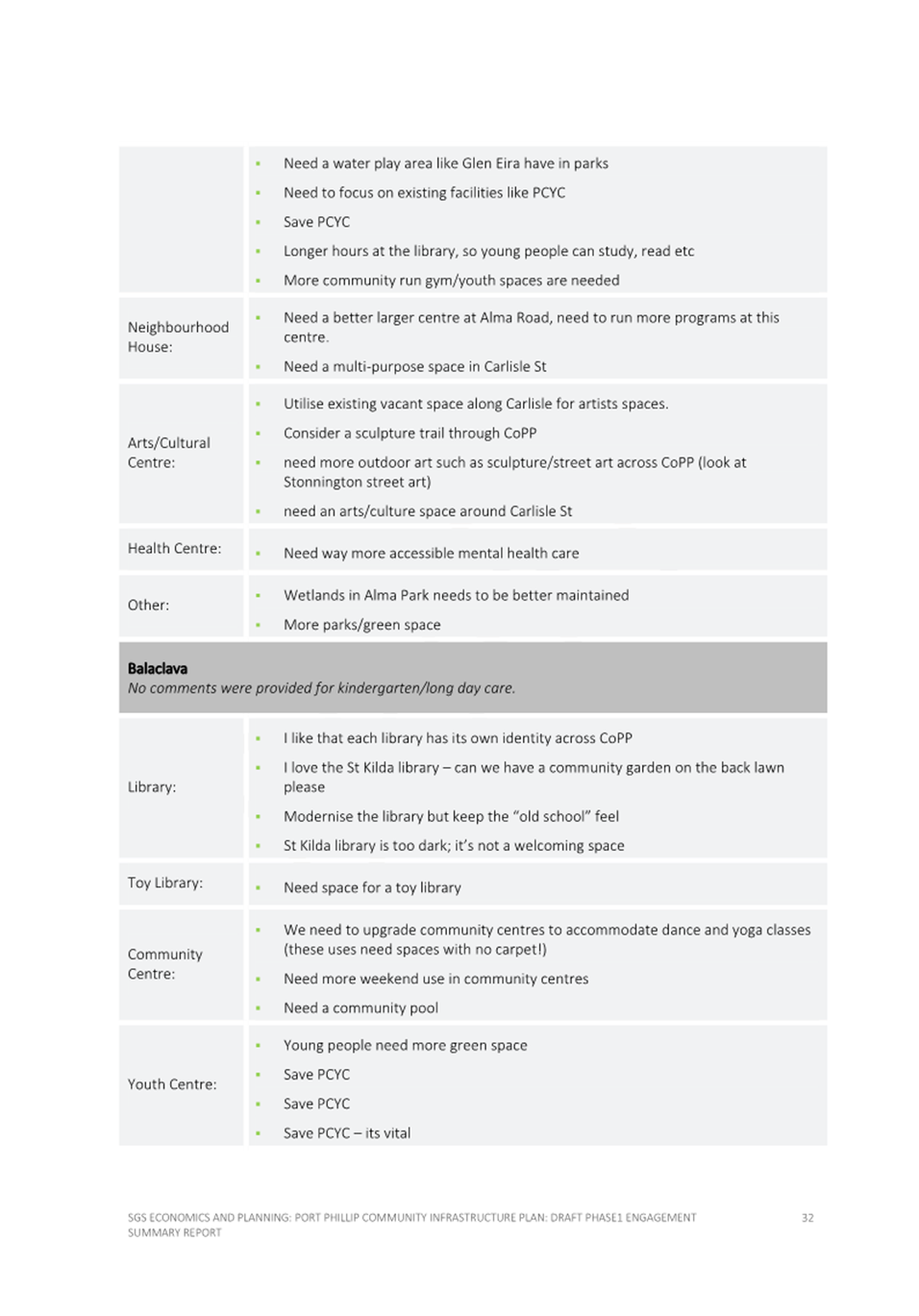
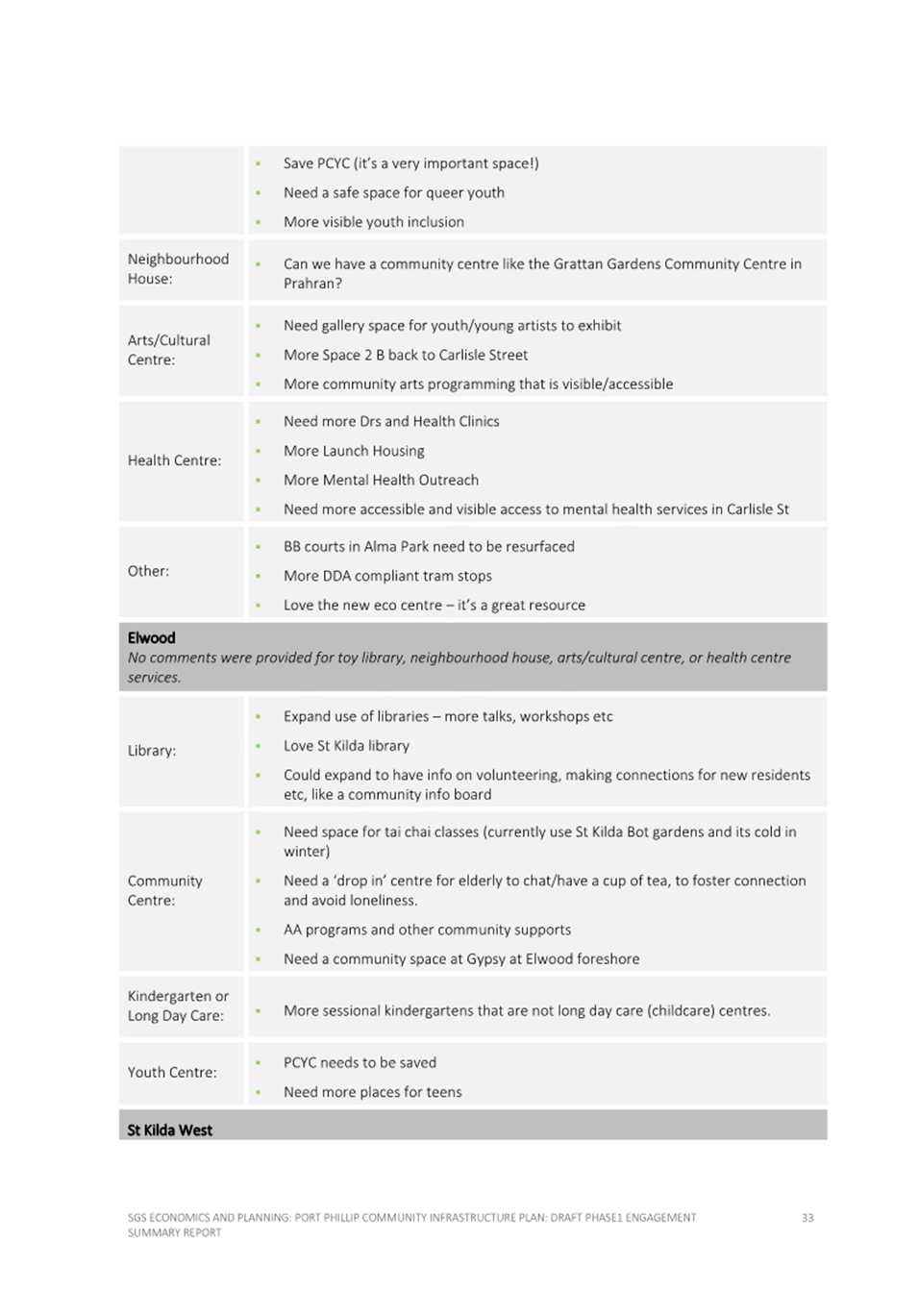
2.5 In April 2025, SGS Economics and Planning (SGS) were engaged to prepare a Community Infrastructure Needs Assessment (CINA). The CINA reviewed future demand (using population projections and participation trends) and current supply (through an audit of existing facilities) to identify where community infrastructure is needed now and in the future. It has been a key input into community engagement and the development of the draft CIP.
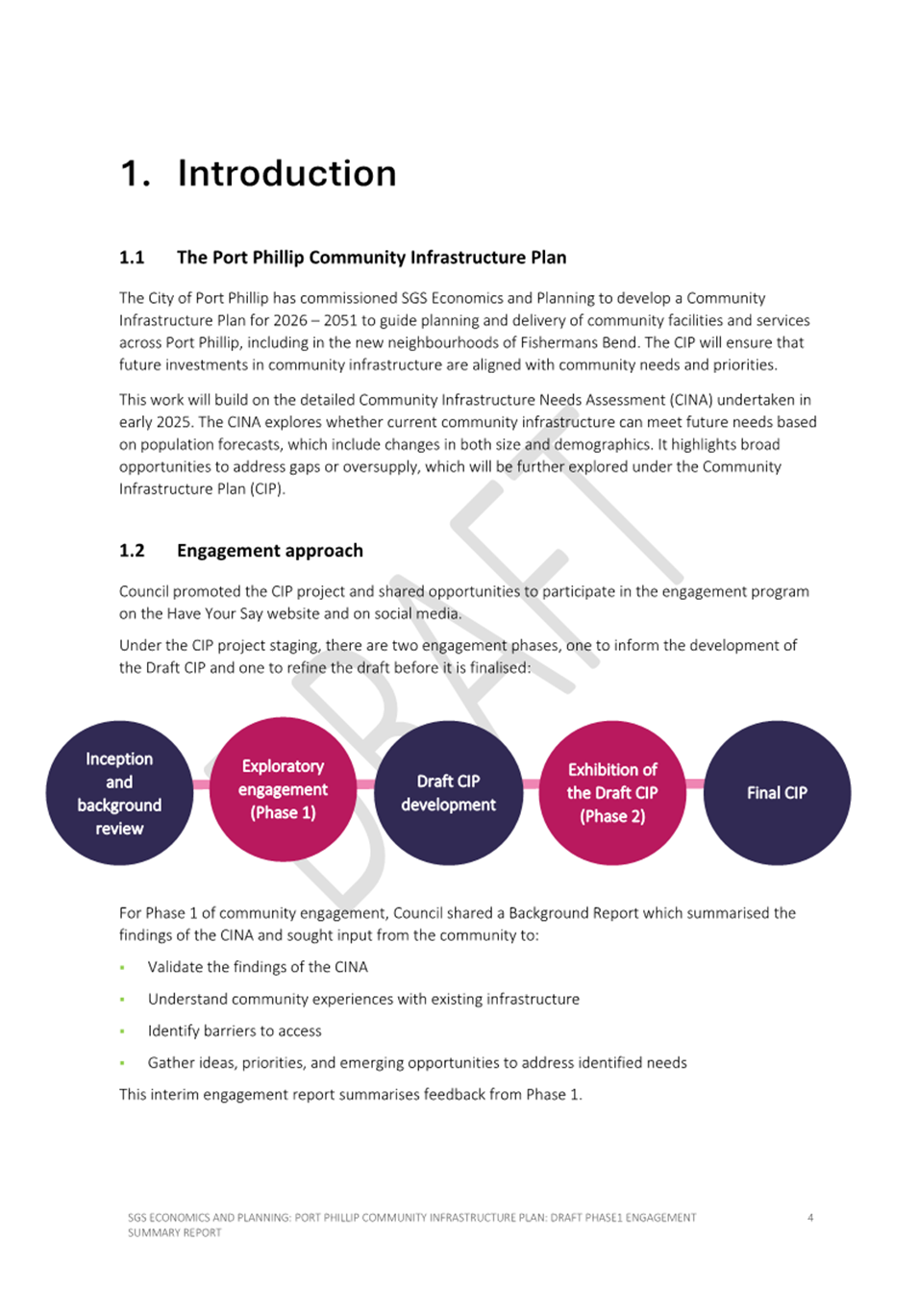
2.6 On 17 September 2025, Council endorsed the approach for developing the CIP and began phase 1 of community engagement. This included:
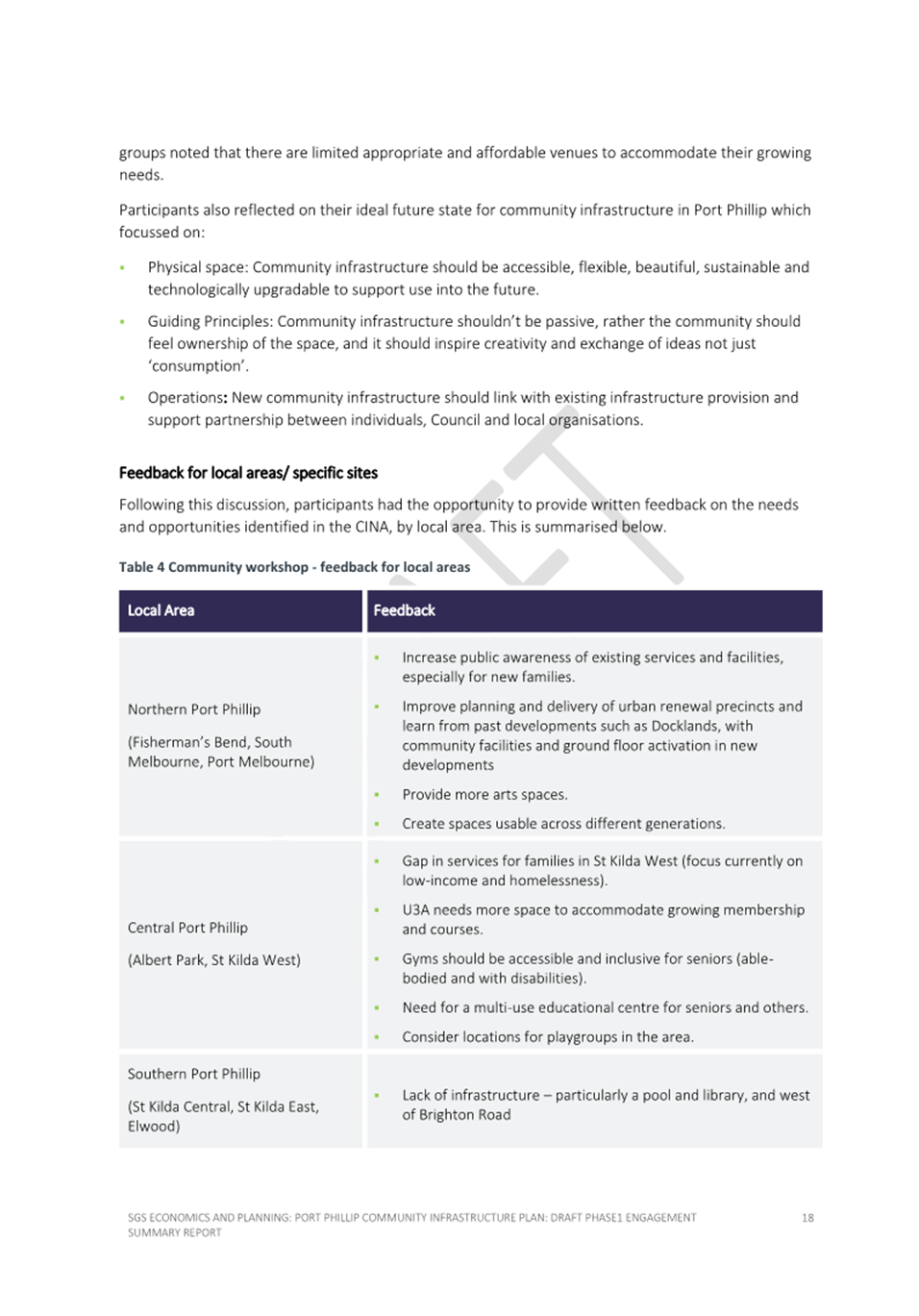
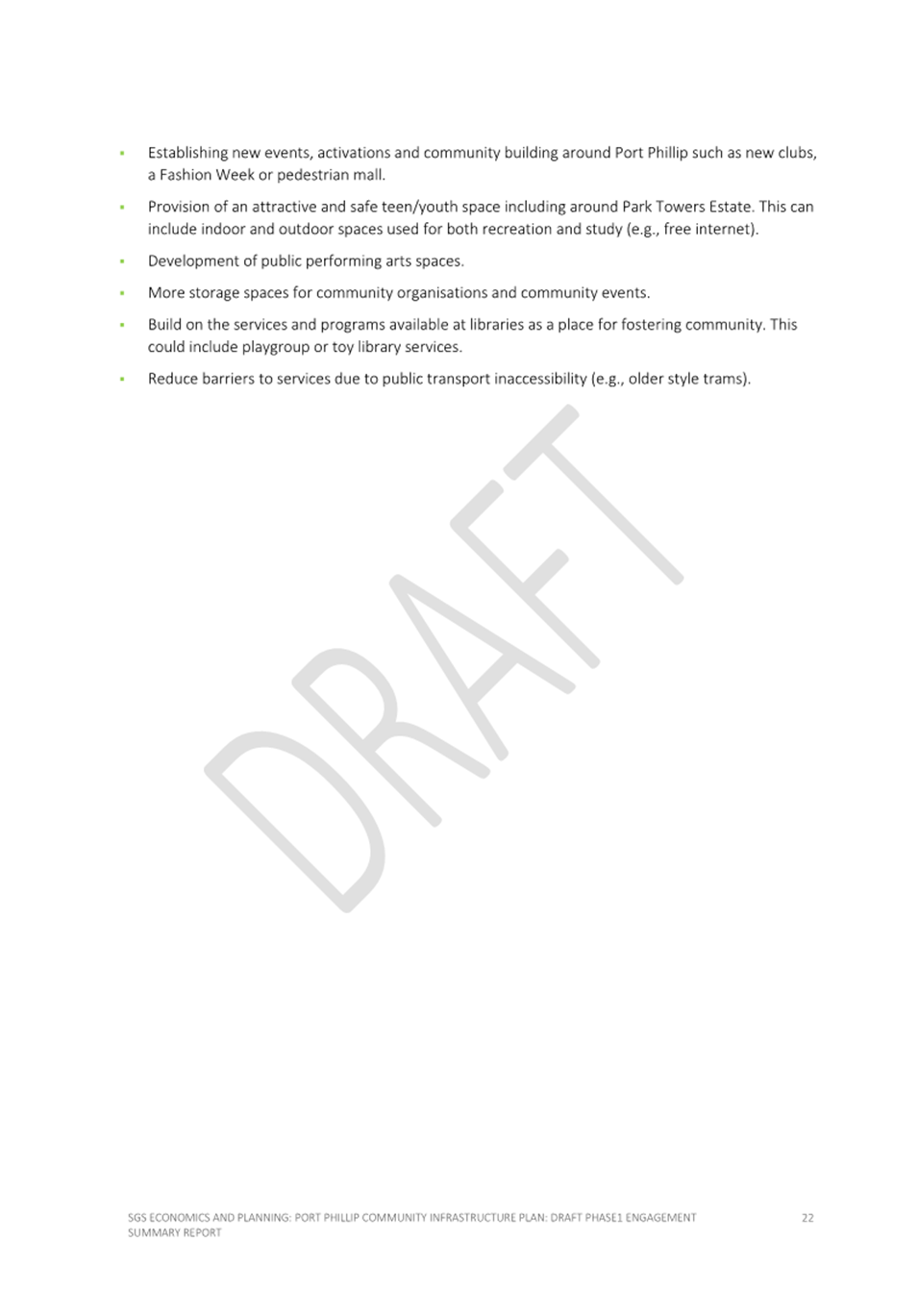
2.6.1 A high‑level background paper summarising the CINA findings to support community input by neighbourhood.
2.6.2 Engagement activities to test current and future community infrastructure needs.
2.7 After phase 1, SGS prepared a community engagement report, and a draft CIP (Attachment 1) was then developed using the CINA findings, community feedback, and other supporting material.
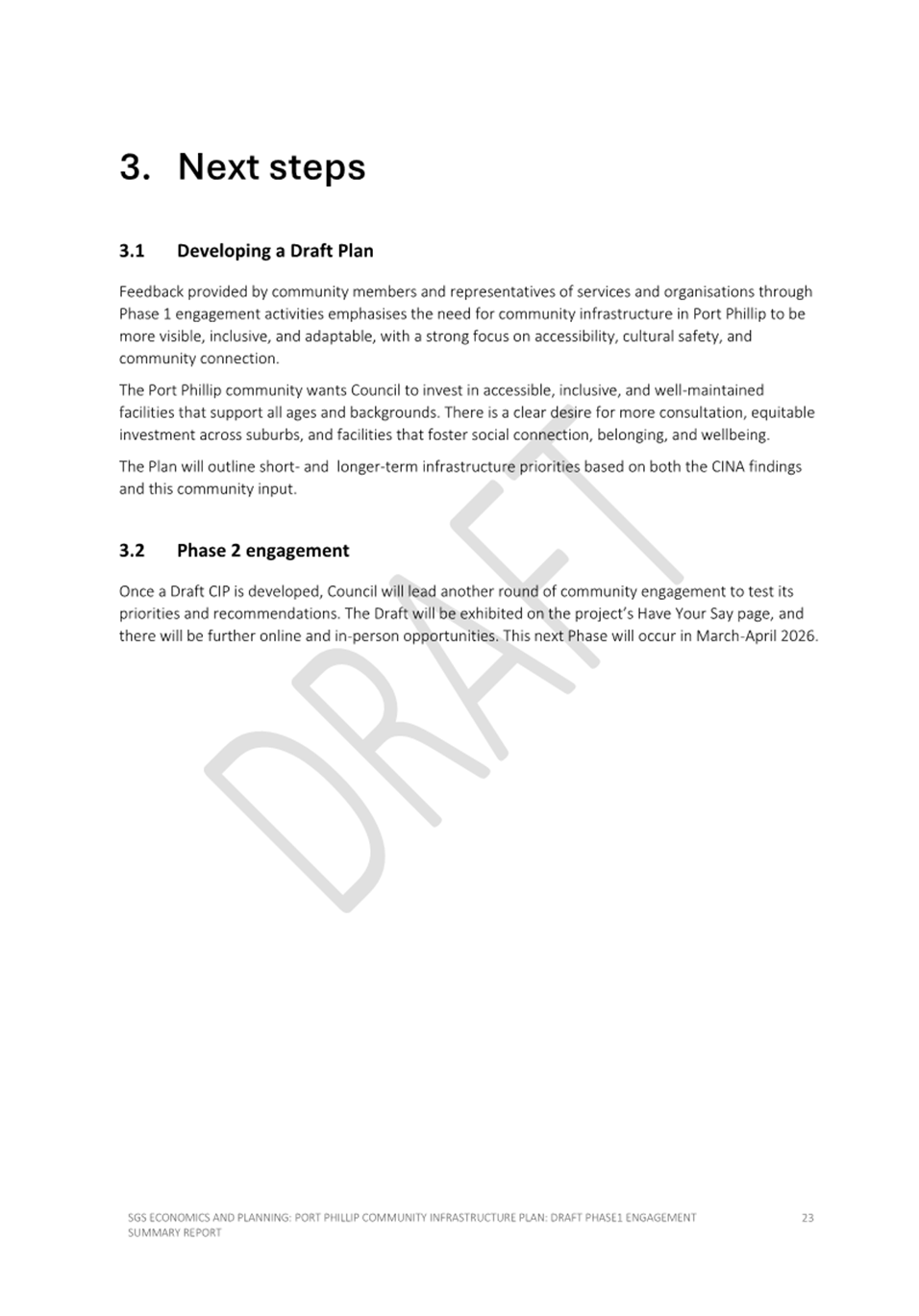
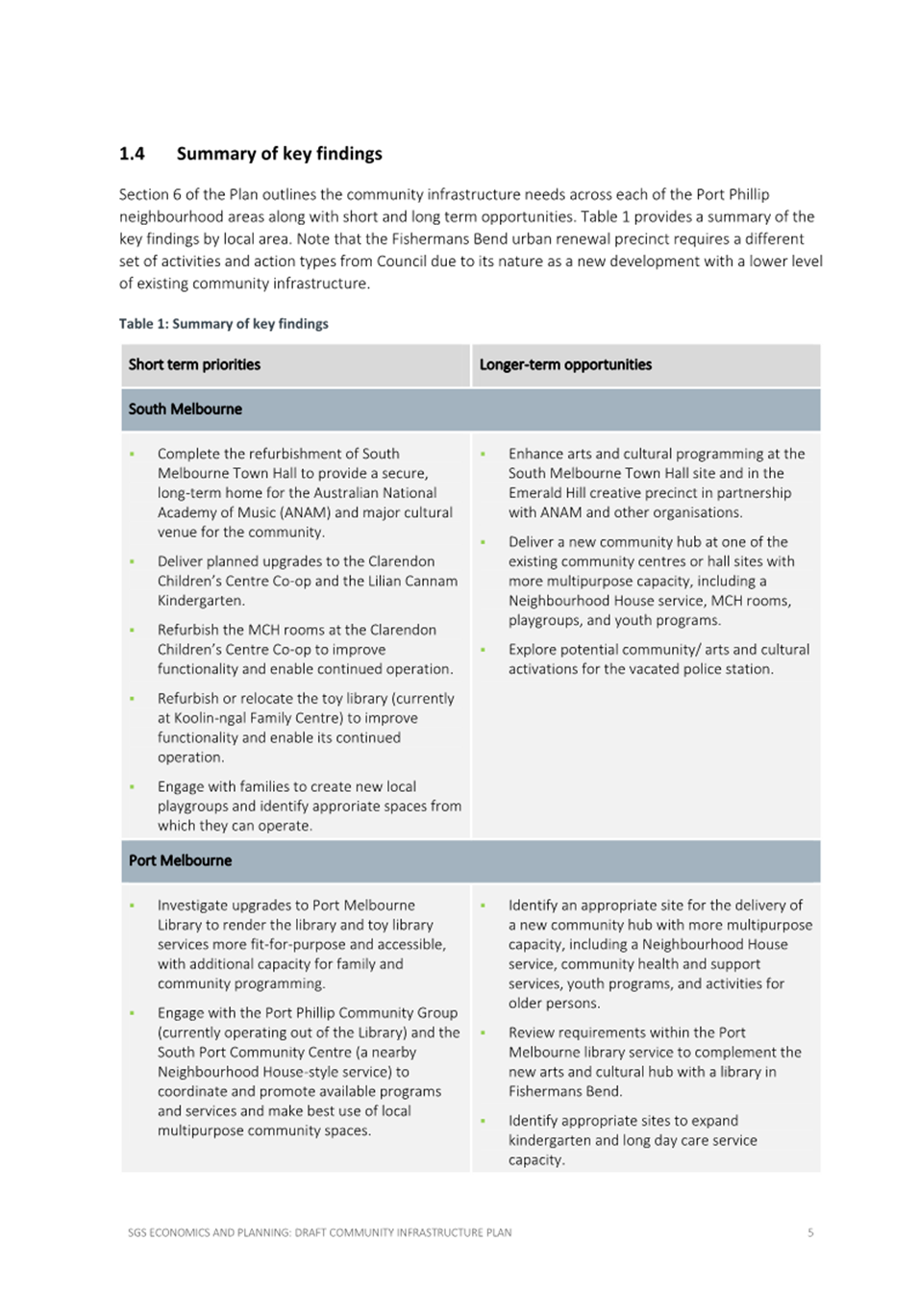
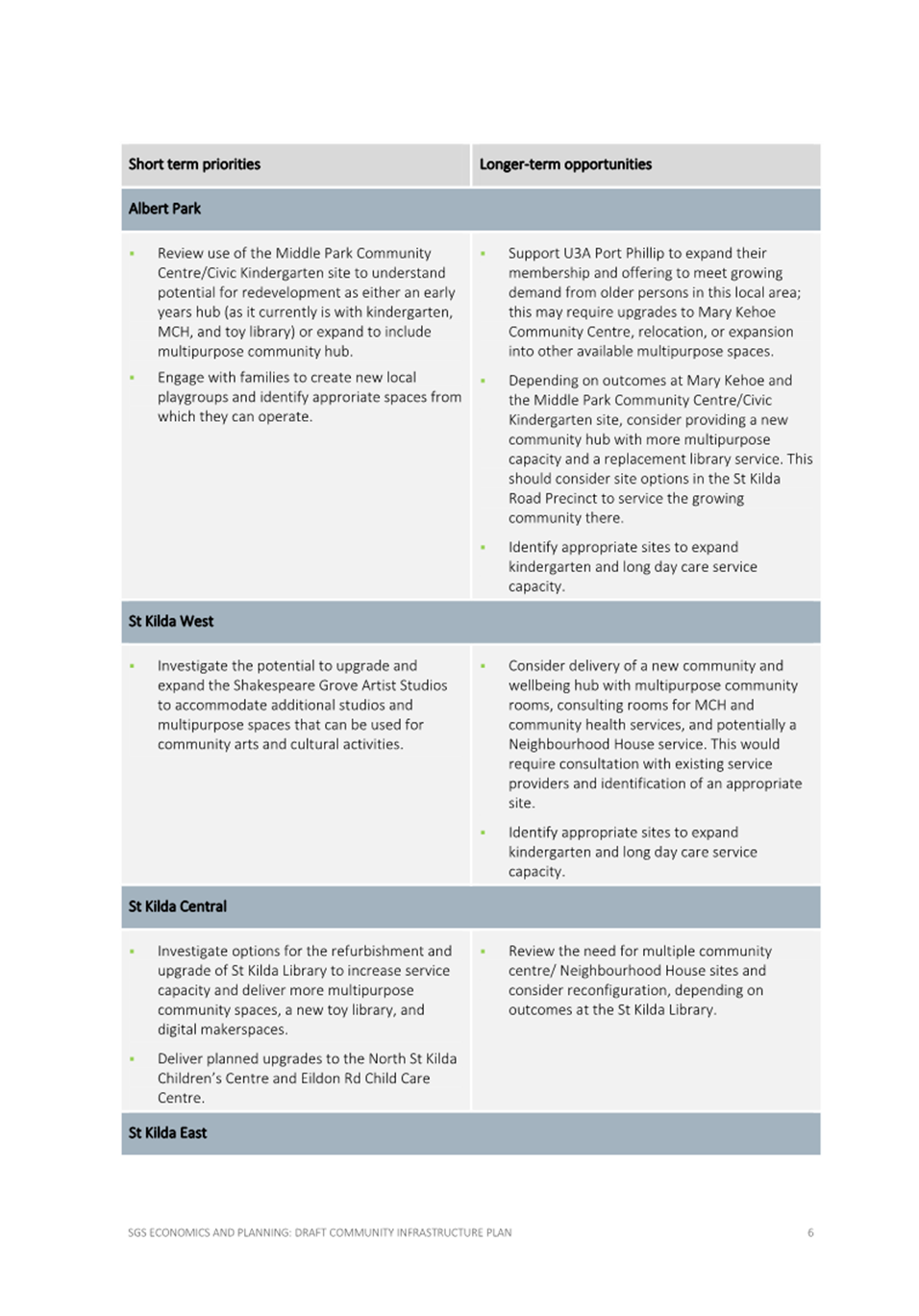
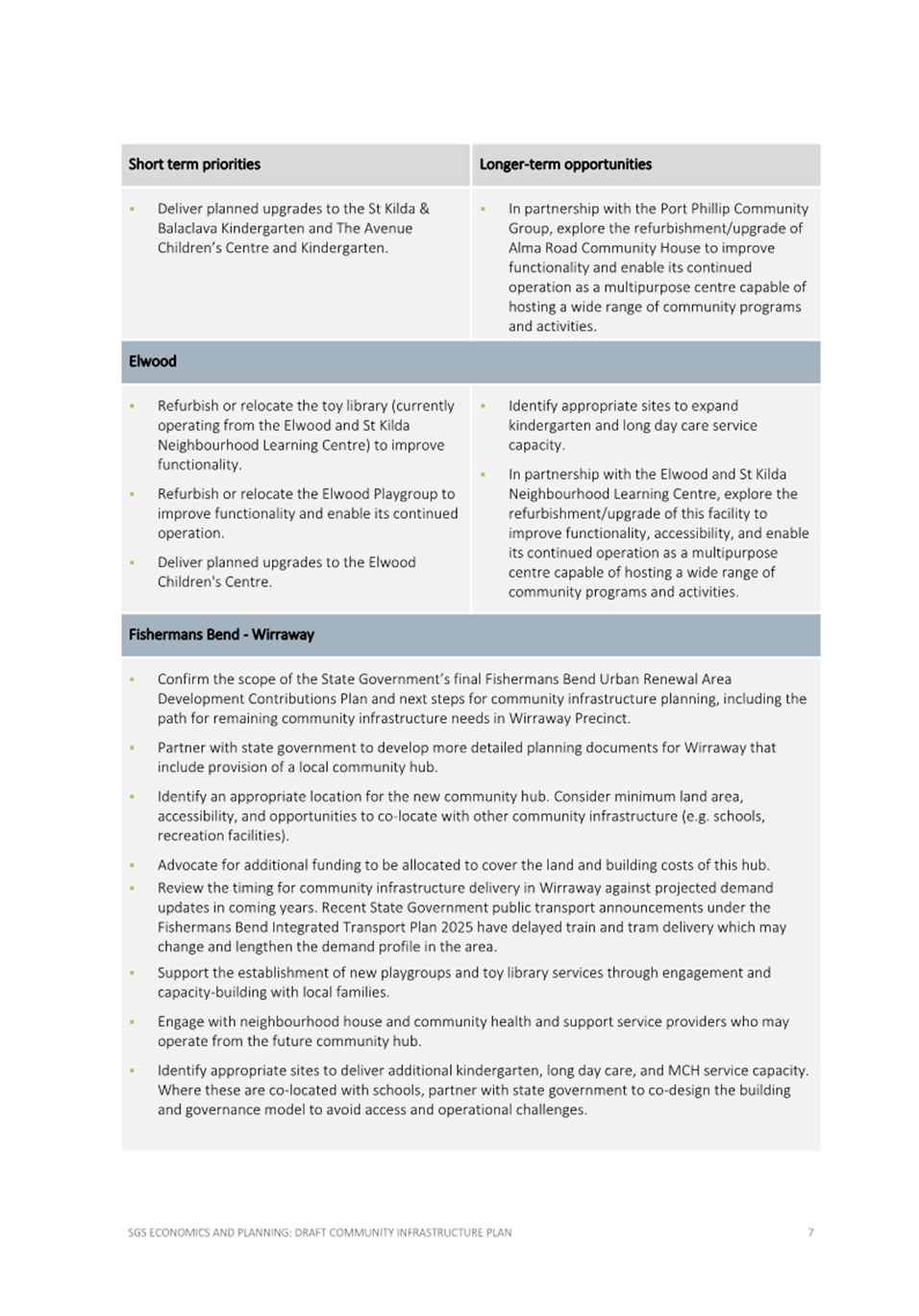
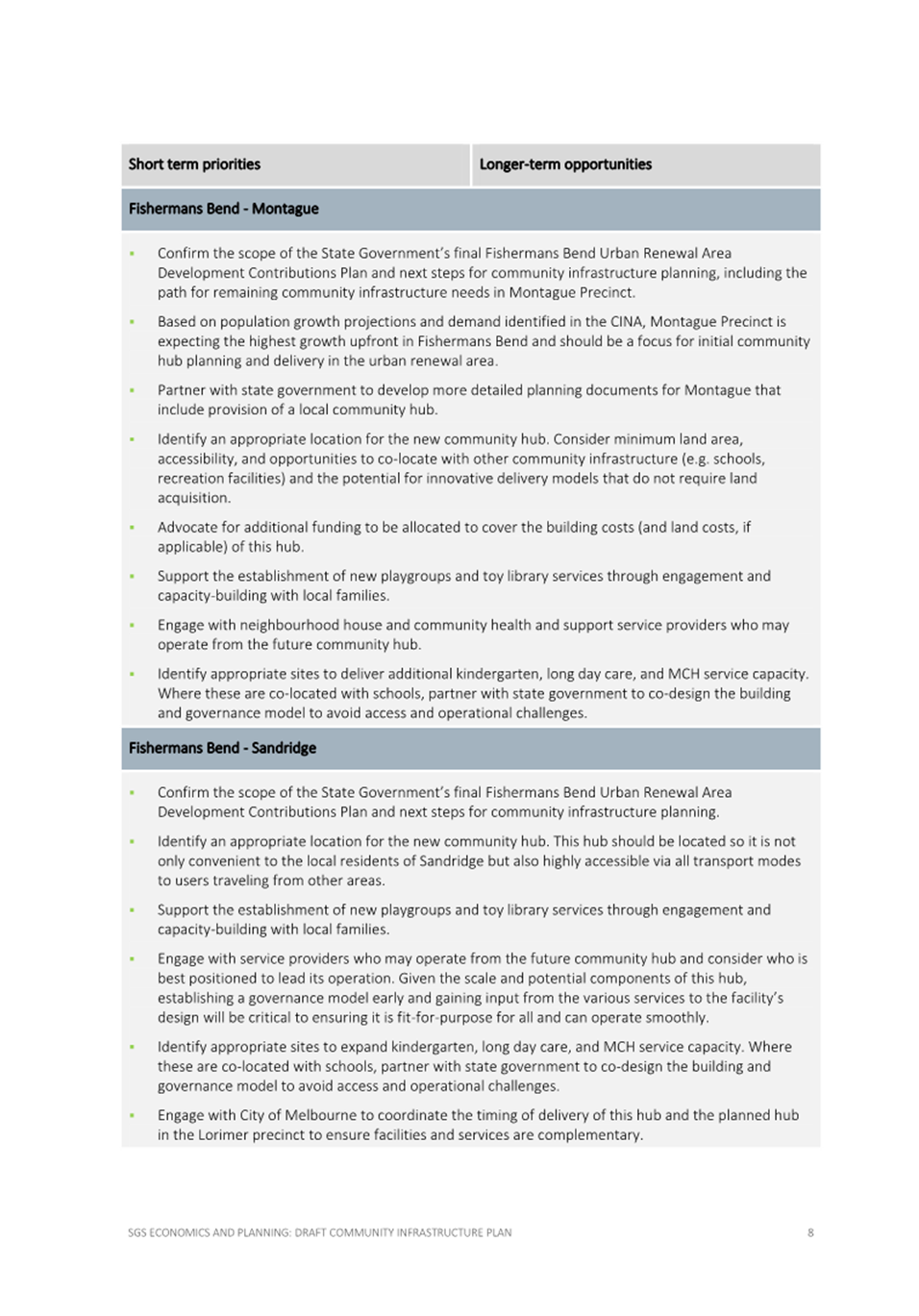
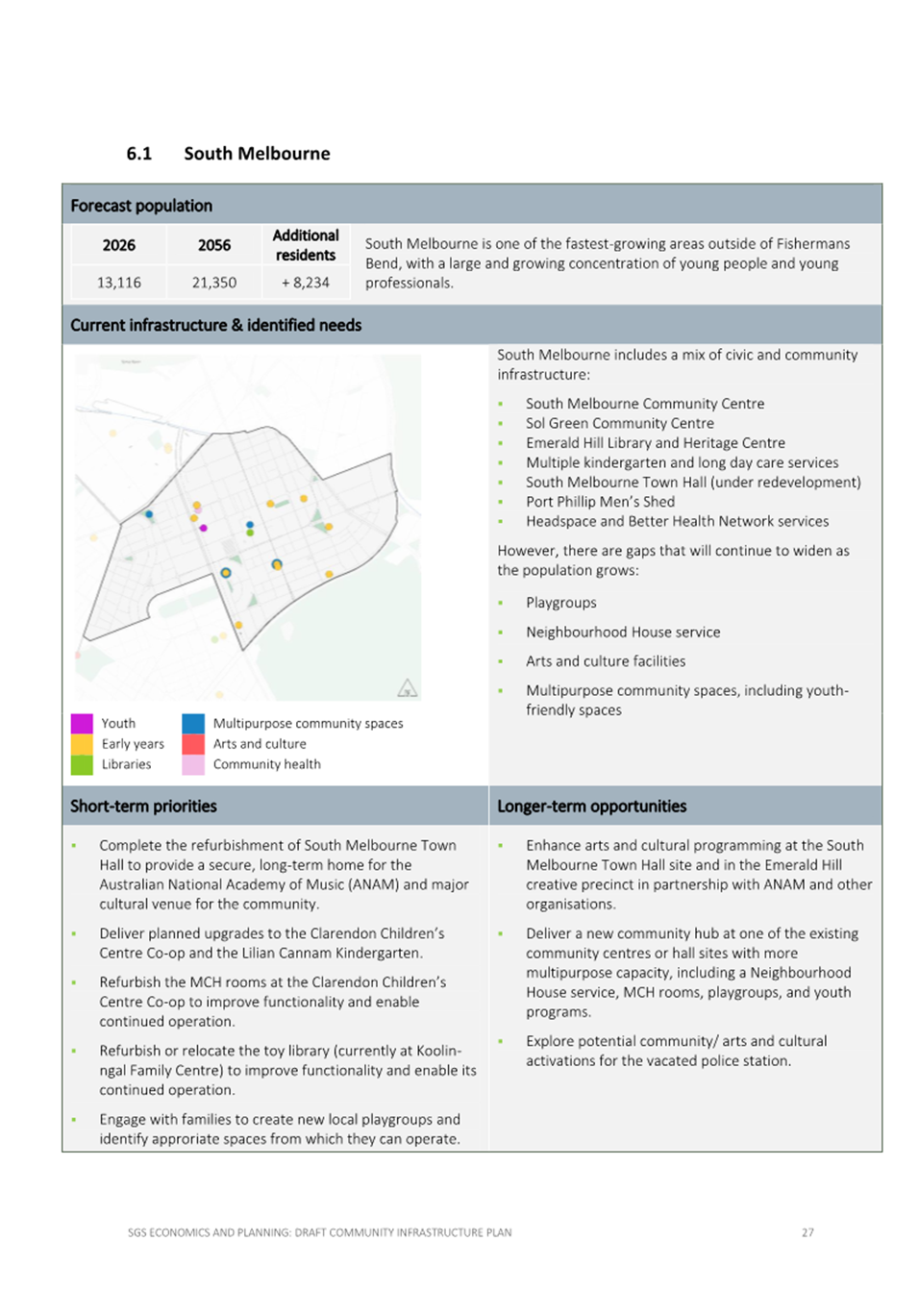
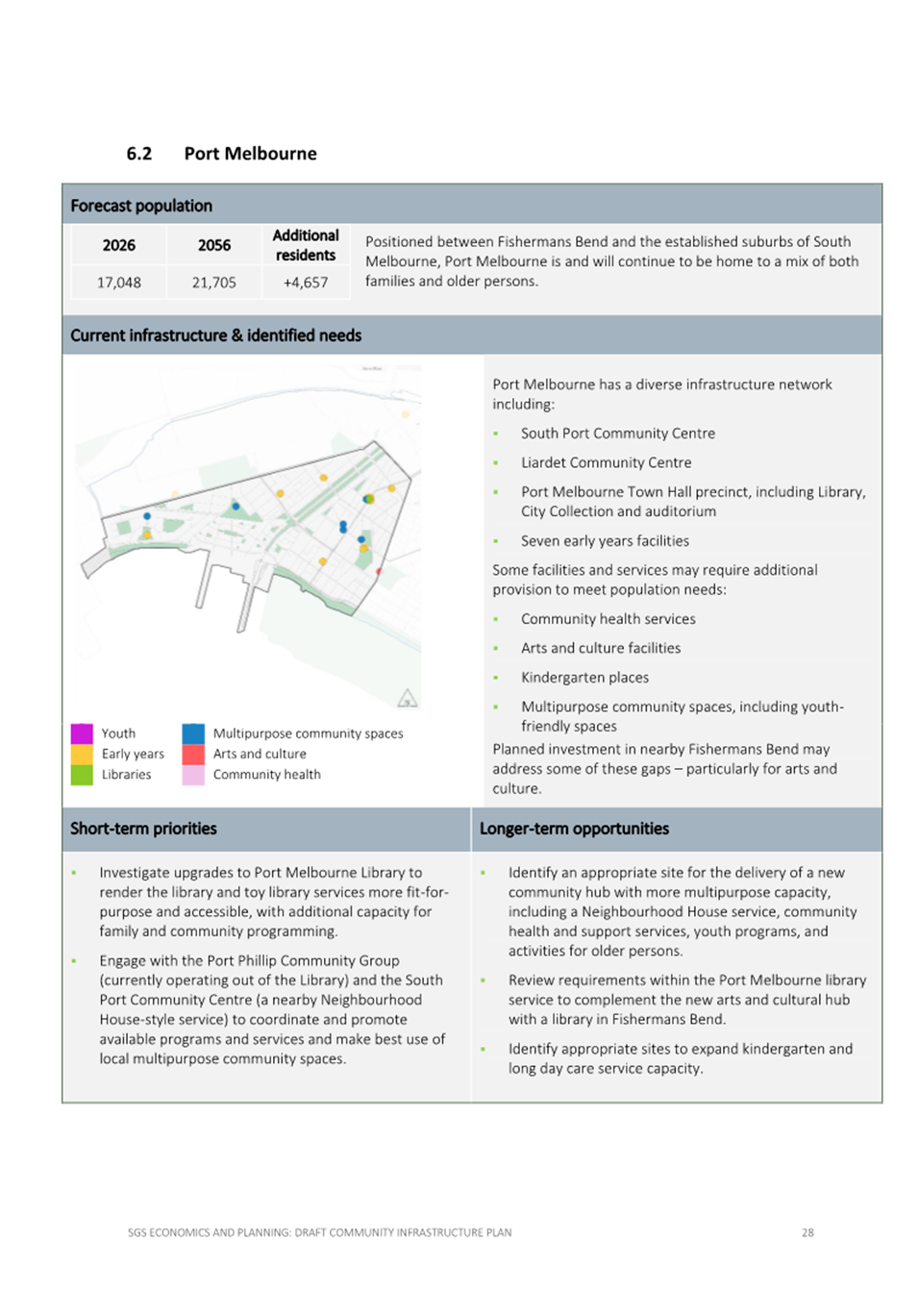
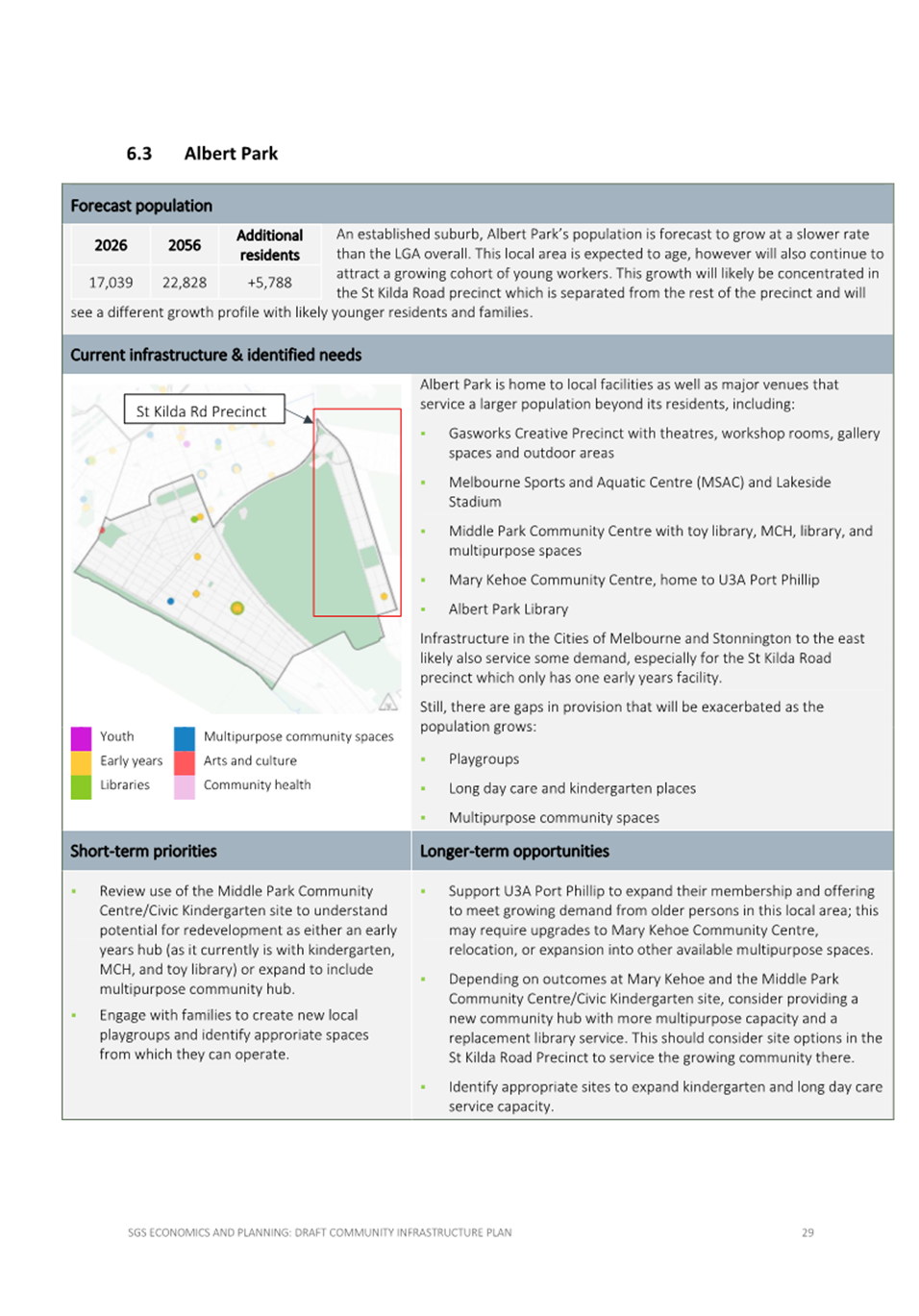
2.8 The proposed draft CIP (Attachment 2) outlines the vision, principles and short term (1-5 years) and longer term (5 years plus) community infrastructure priorities at both the municipal level and by neighbourhood. It also outlines potential advocacy, partnership and co-funding pathways for exploration.
2.9 Phase two of community engagement will test the proposed draft CIP with the community including:
2.9.1 A Have Your Say survey promoted through Divercity, community networks, staff networks, social media, postcards and other channels.
2.9.2 Qualitative follow-up interviews with participants who expressed interest in providing more detailed feedback.
2.9.3 Distribution of engagement material to all individuals and groups involved in Phase one to ensure continuity and further opportunity to participate.
2.9.4 Engagement with the Youth Advisory Committee.
2.10 If endorsed to proceed, phase
2 community consultation will occur from 23 March to
5 May to allow a 6-week engagement period over school and Easter holidays.
2.11 Officers are also developing a stand-alone CIP advocacy plan and incorporating community infrastructure needs into Council’s broader advocacy plan. The CIP advocacy plan will look to take a precinct approach (to align community infrastructure needs by precinct), a regional approach (to seek advocacy partnerships with neighbouring Councils) and will also seek to incorporate more community facilities in new state-owned infrastructure such as schools.
|
That Council: 3.1 Thanks, all community members and service providers who contributed to the first phase of community engagement and notes the findings documented in the Community Infrastructure Plan Engagement Summary (Attachment 1). 3.2 Endorses the draft Community Infrastructure Plan (Attachment 2) to enable the next phase of community engagement to take place and authorises the Chief Executive Officer (or their delegate) to make minor editorial amendments that do not materially alter the intent of the draft document. 3.3 Endorses undertaking community engagement on the draft Community Infrastructure Plan for a period of four weeks to fast track the development of the document to help position Council’s State Election advocacy activities with evidenced community need. |
4. KEY POINTS/ISSUES
Advocacy Priorities and Partnership Opportunities
4.1 Delivery of community infrastructure is not the responsibility of Council alone, and the CIP highlights several priority areas where successful outcomes will rely on collaboration, partnership and sustained advocacy. The Plan identifies community needs across early years services, libraries, arts and cultural spaces, community centres and multipurpose facilities, but these are not prescriptive delivery commitments; they are strategic signals of what the community requires and where Council should focus its influence. How these needs are met will depend on the collective efforts of Council, State Government, other local governments and community partners.
4.2 While the CIP may appear direct in outlining required infrastructure, it is intentionally high‑level and does not dictate the delivery model. Instead, it provides a clear evidence base that Council can use to explore a wide range of implementation pathways, including partnering, co‑locating, leveraging external investment, collaborating with neighbouring councils and engaging the State Government. These pathways allow Council to respond flexibly while still meeting the needs identified by the community.
Alignment to Council property pipeline
4.3 A next step will be ensuring that community infrastructure needs identified in the CIP are embedded within Council’s existing and planned infrastructure upgrade programs. Many of the required improvements, such as expanding early years capacity, increasing multipurpose space availability, or enhancing libraries and community hubs, can be partly addressed through renewal, refurbishment or co‑investment opportunities already underway.
4.4 Integrating CIP priorities into the Property Roadmap and capital works planning ensures Council can maximise value from existing investment, align upgrades with emerging needs and avoid missed opportunities where a standard renewal could instead deliver a higher community benefit. This is particularly important given the CIP’s long‑term focus and the substantial timing, financial and partnership considerations involved in new builds.
Regional advocacy approach
4.5 Beyond Council’s direct infrastructure pipeline, there is strong potential to pursue a regional approach to community infrastructure planning.
4.6 Neighbouring councils, including Kingston, Melbourne and Glen Eira, are in the process of developing or finalising their own Community Infrastructure Plans. This alignment in timing presents a unique opportunity to collaborate on shared priorities and advocate collectively to the State Government across infrastructure categories.
4.7 A regional lens strengthens advocacy, avoids duplication, improves service distribution across borders and enables joint delivery where appropriate.
Embedding community infrastructure in State-owned infrastructure
4.8 There is also significant potential to leverage State‑owned infrastructure, particularly school sites.
4.9 As the State Government is responsible for school development and renewal, Council has an opportunity to advocate for the integration of community infrastructure, such as early years spaces, shared libraries, multipurpose community rooms and sports facilities, within school designs and masterplans. This approach is already emerging through Narrarrang Primary School, where school leadership has proactively engaged Council on shared‑use arrangements for community rooms (for maternal and child health services), library programming and sports facilities. These examples demonstrate how embedding community facilities within State projects can provide cost‑effective, locally accessible outcomes while strengthening community partnerships.
4.10 Taken together, the CIP provides the foundation for a more coordinated, collaborative and strategic approach to community infrastructure delivery, one that integrates advocacy, partnerships and practical opportunities within Council’s existing renewal and upgrade cycles to maximise community benefit over time.
Development of the Proposed Draft Community Infrastructure Plan (CIP)
4.11 A number of key documents have informed the development of the CIP which are outlined below.
The Community Infrastructure Needs Assessment (CINA)
4.12 The CINA provides a strategic, evidence-based foundation for understanding how well existing community infrastructure can meet the needs of a growing and diverse population. It identifies short, medium and long-term requirements across three-time horizons: Immediate term – 2025, Medium term – 2041 and Long term – 2056.
4.13 A working draft was presented to Councillors at a briefing in August 2025. High-level findings were subsequently tested with the community through the background paper and supporting maps released as part of Phase one engagement.
4.14 The CINA has been a critical input to the CIP, supplying the underlying evidence base for understanding existing supply, projected demand, and the resulting service gaps.
Phase One Community engagement
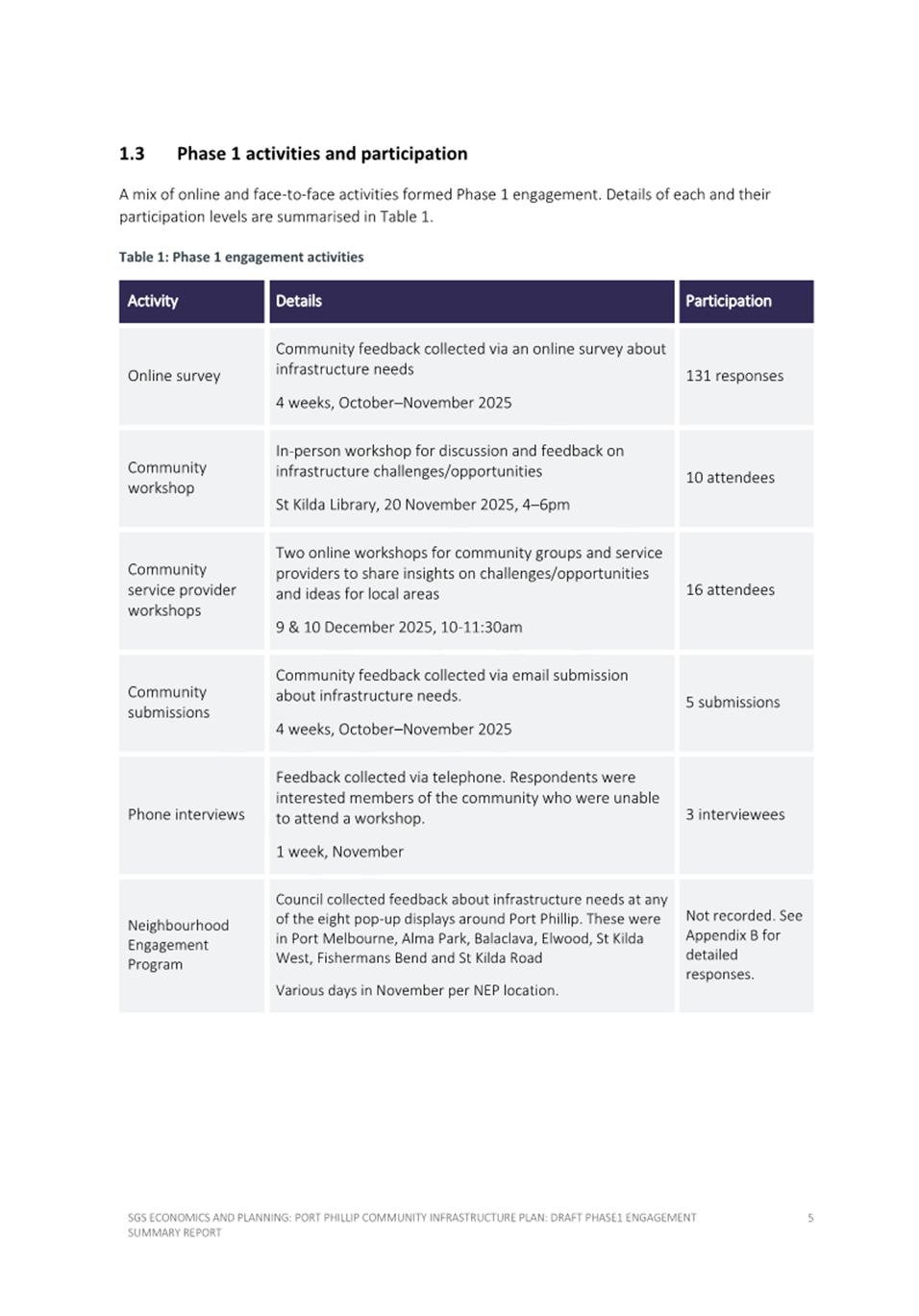
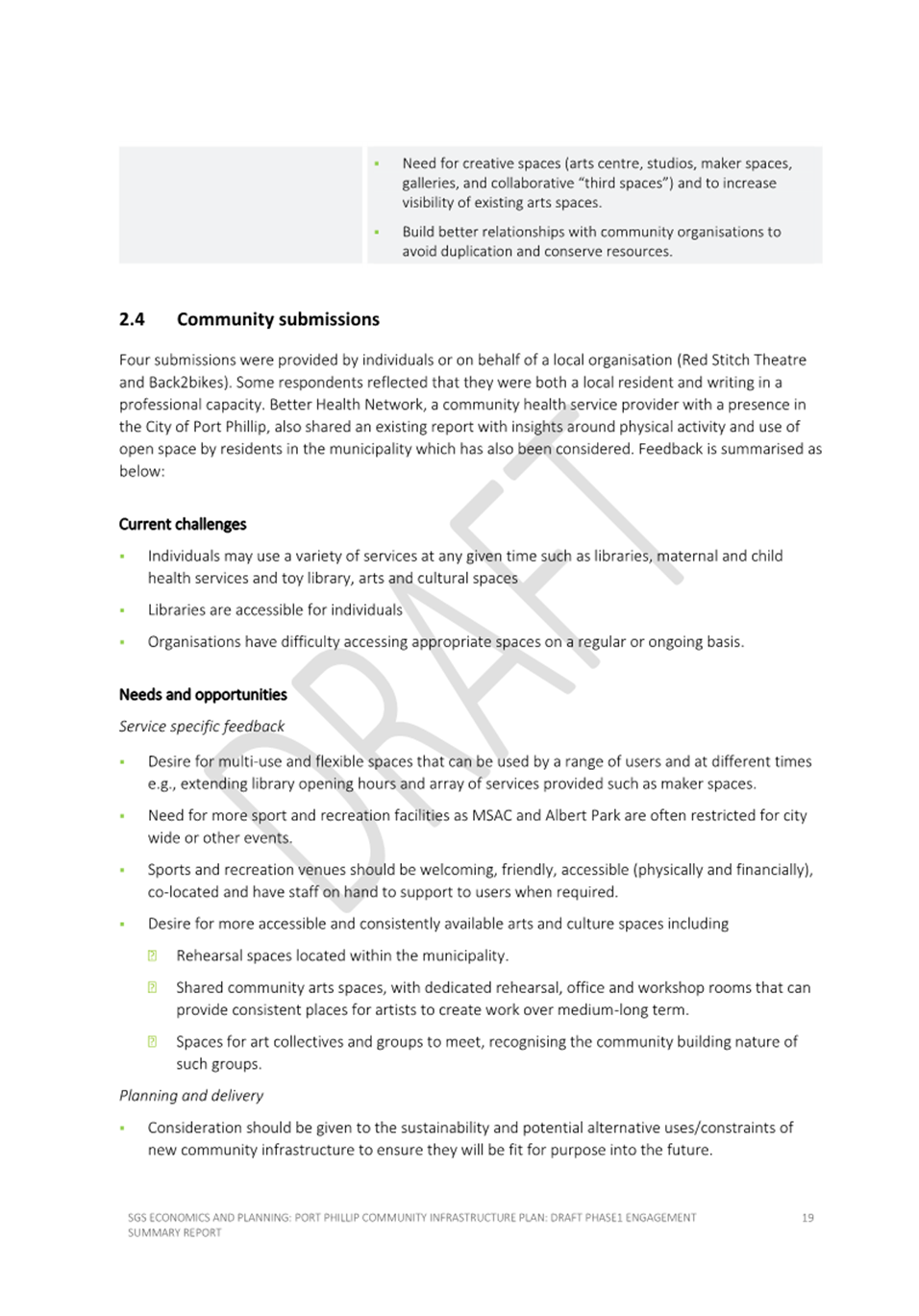
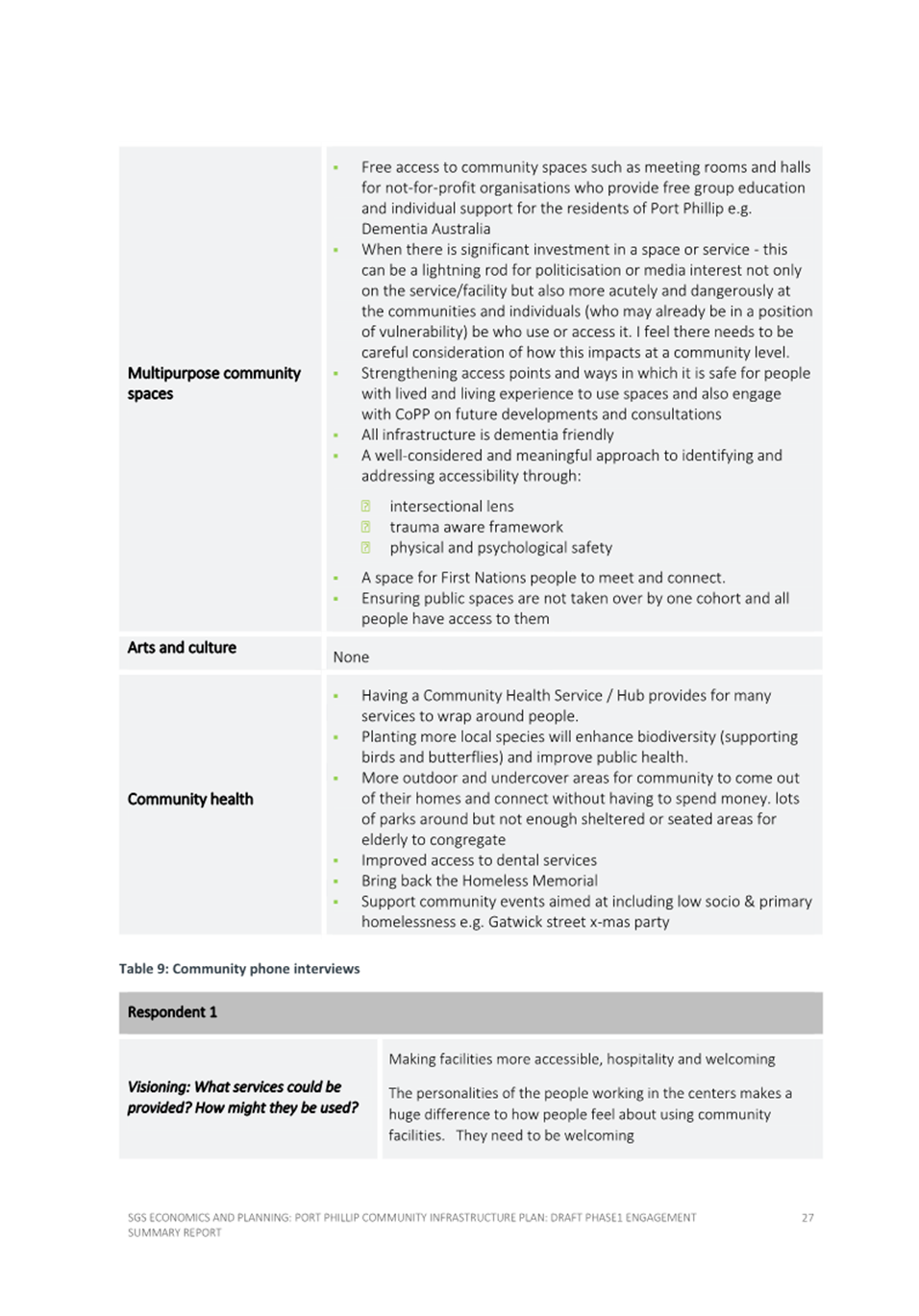
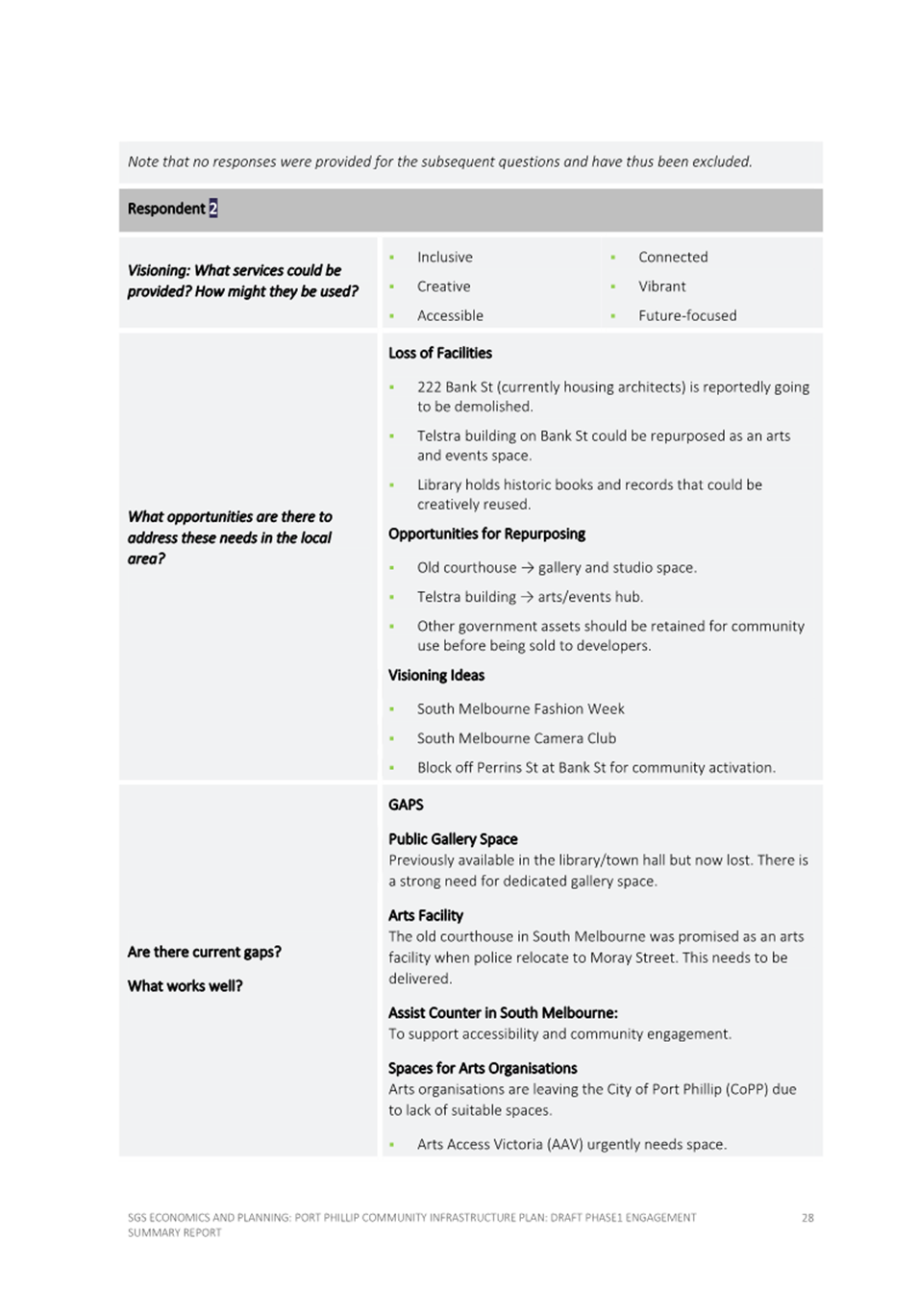
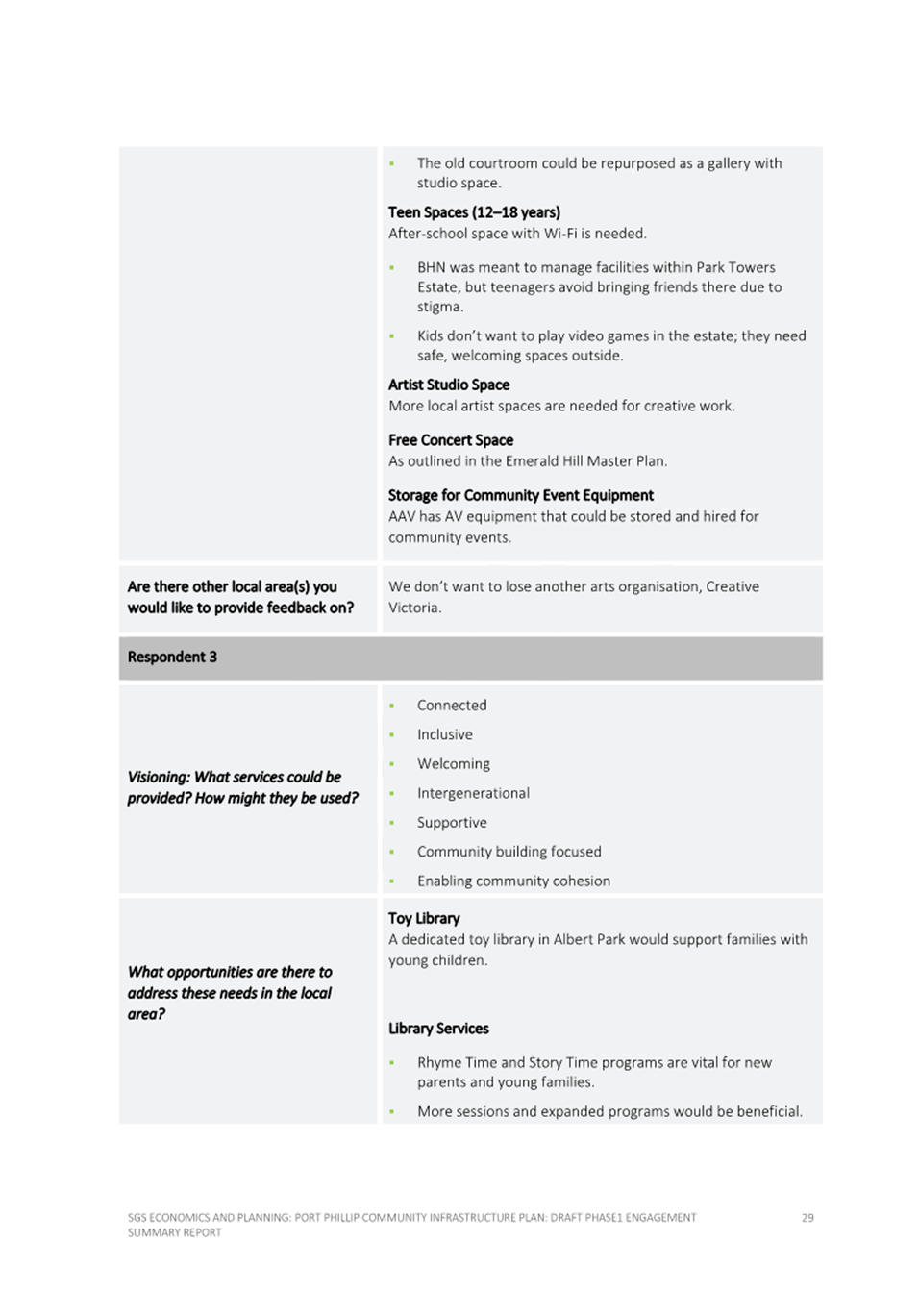
4.15 Phase one used a mix of online and in person methods to validate the CINA findings and gather community insights about current and future community infrastructure needs. Activities included:
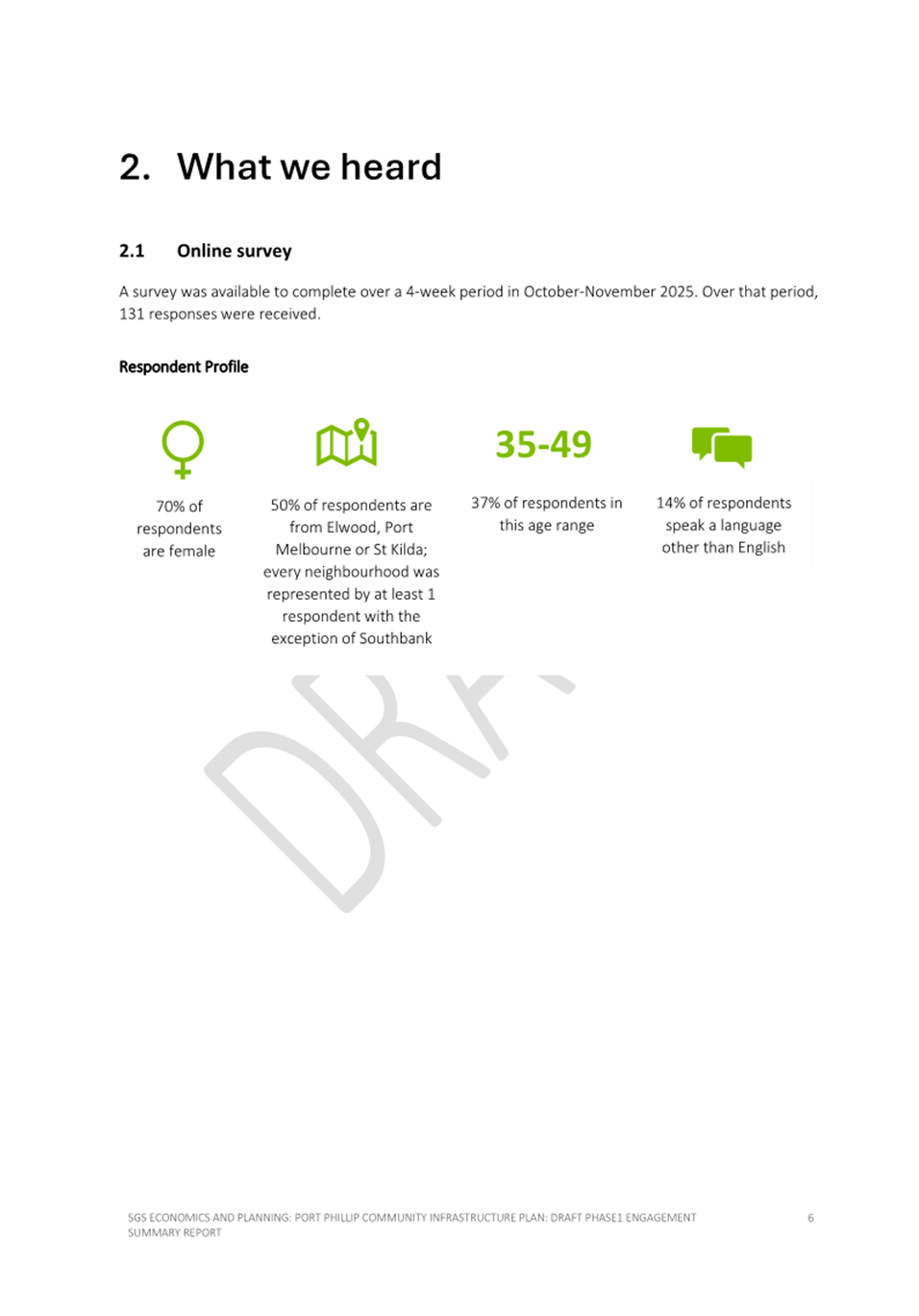
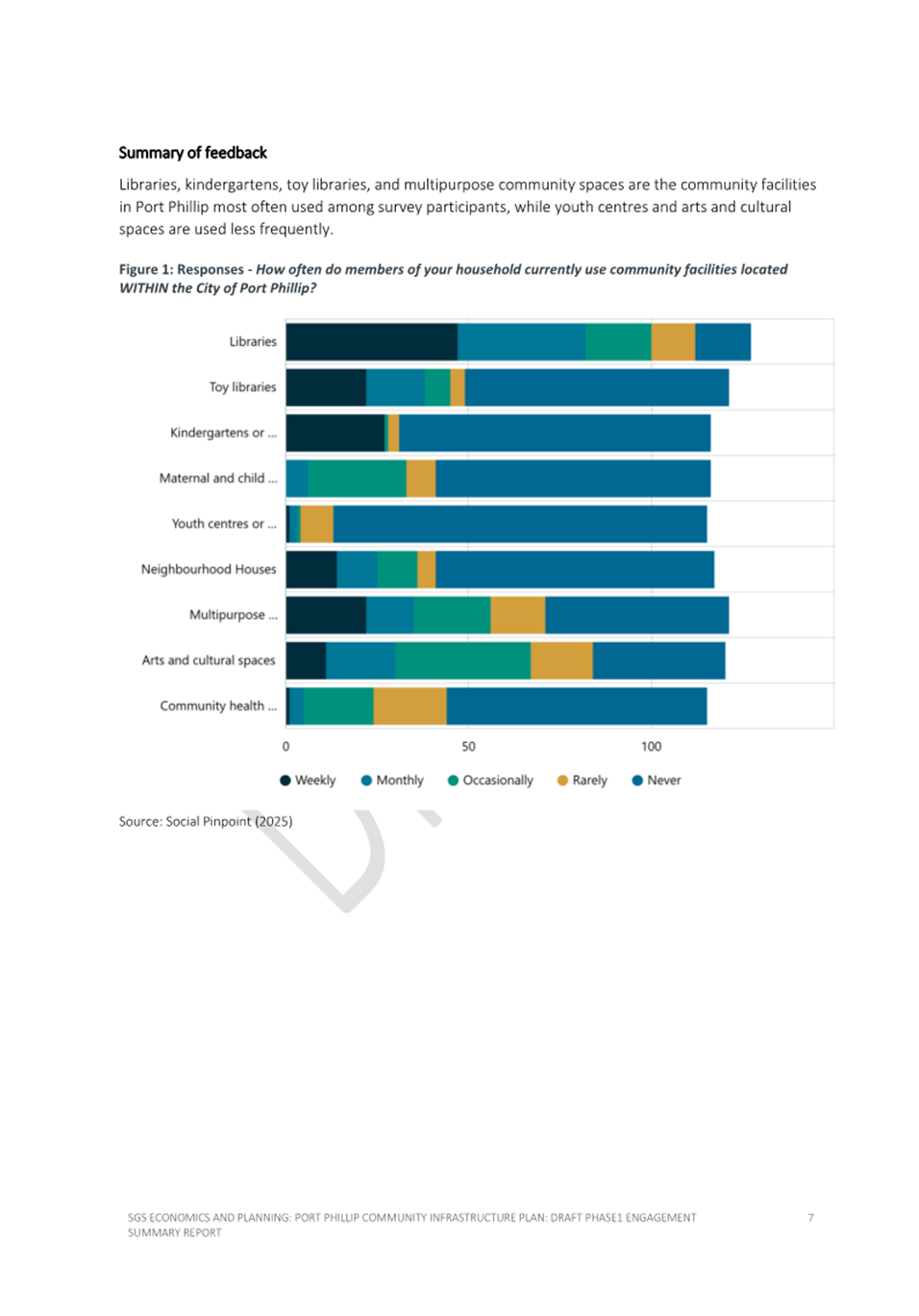
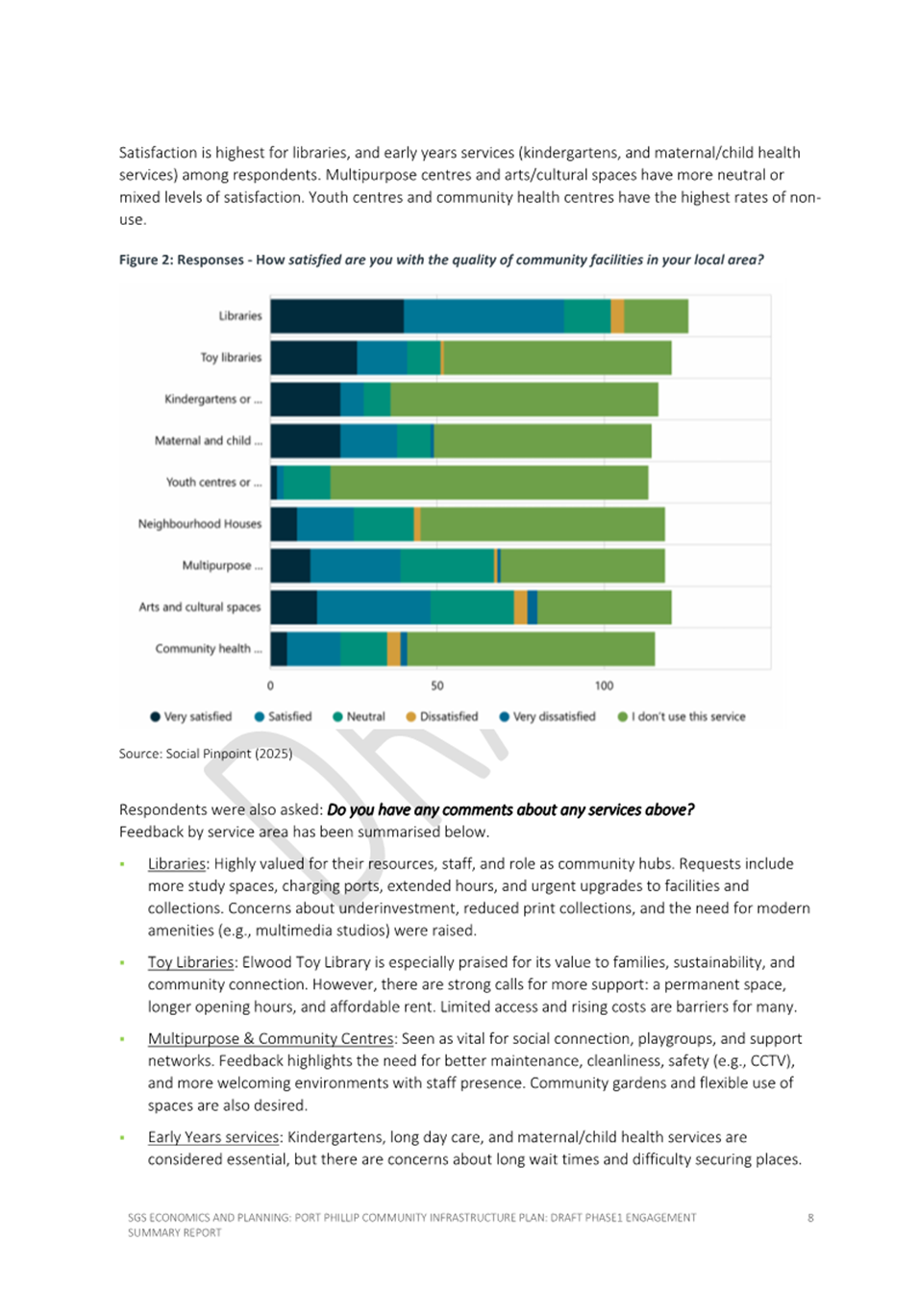
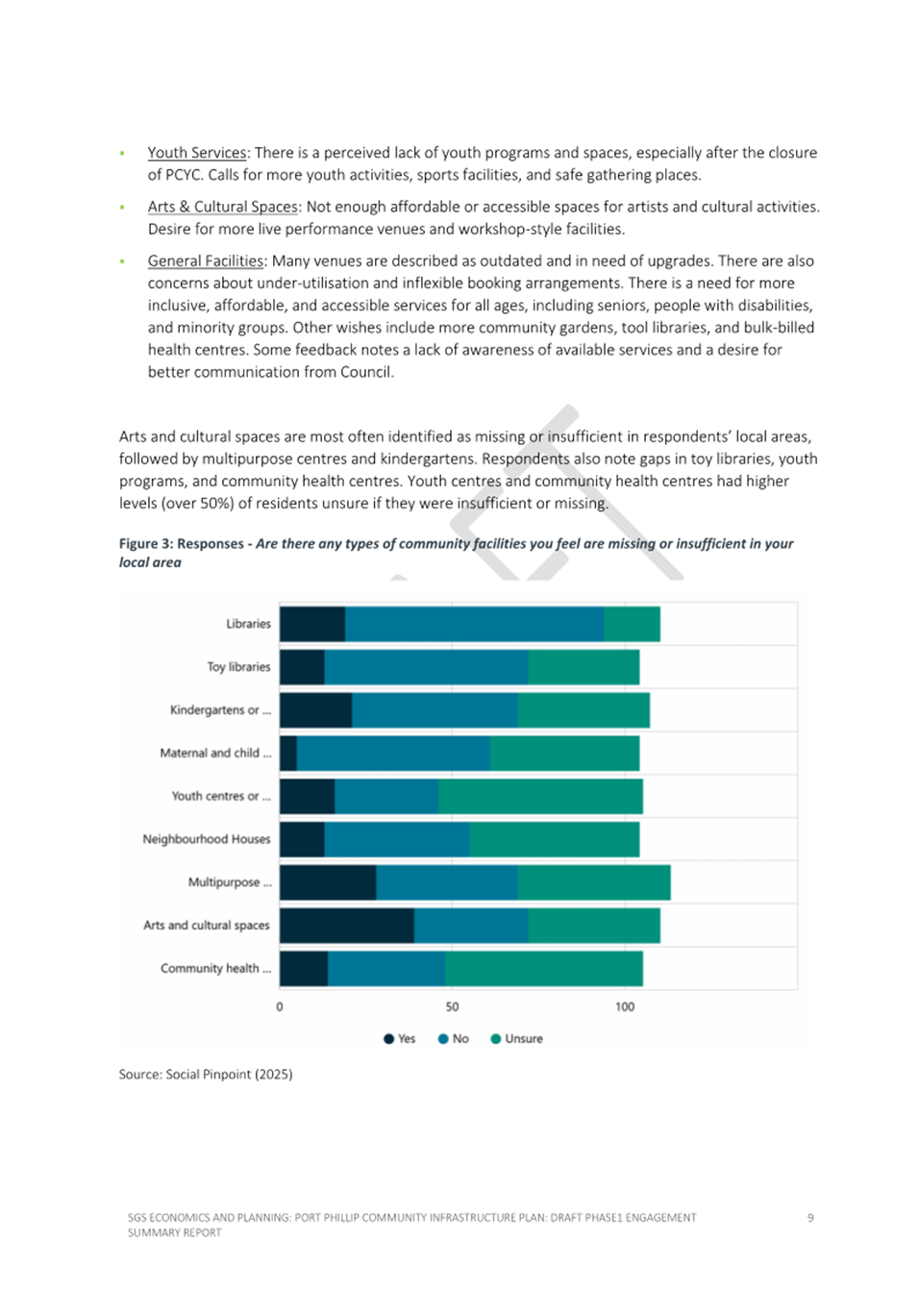
· Online Have Your Say survey (131 respondents) to identify usage, satisfaction and gaps in existing community infrastructure, gather priorities for short and long-term investment and understand access barriers and location specific needs.
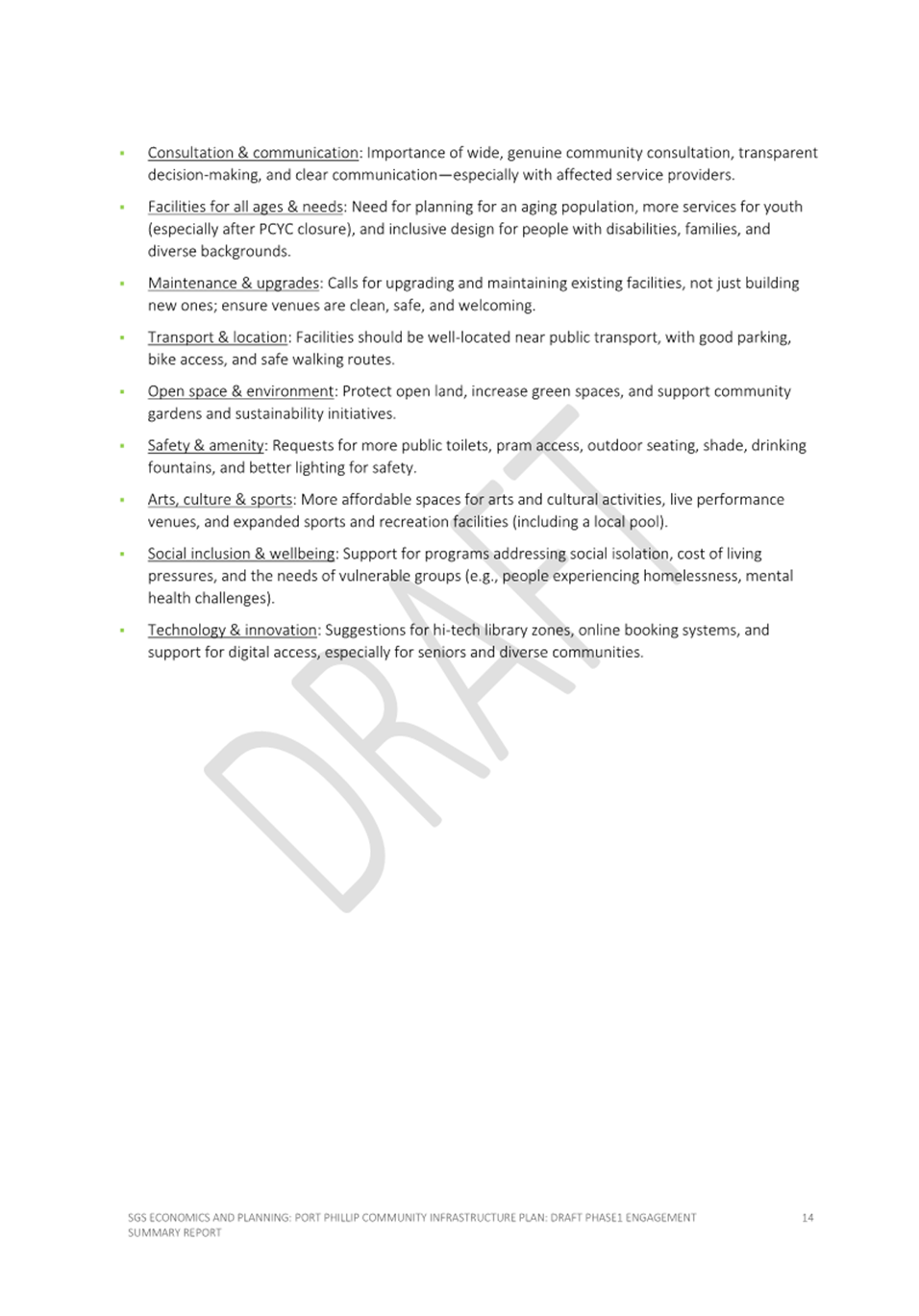
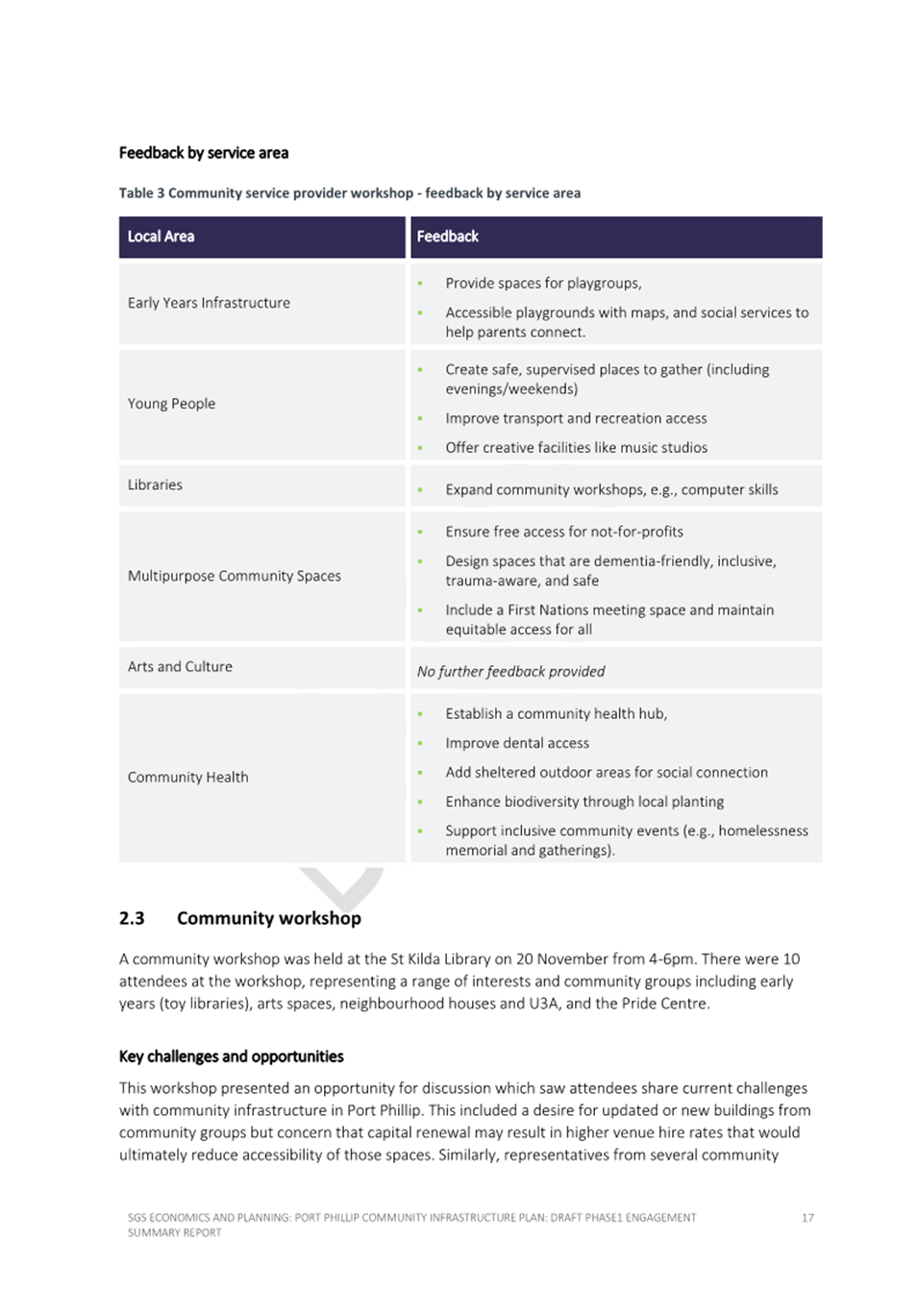
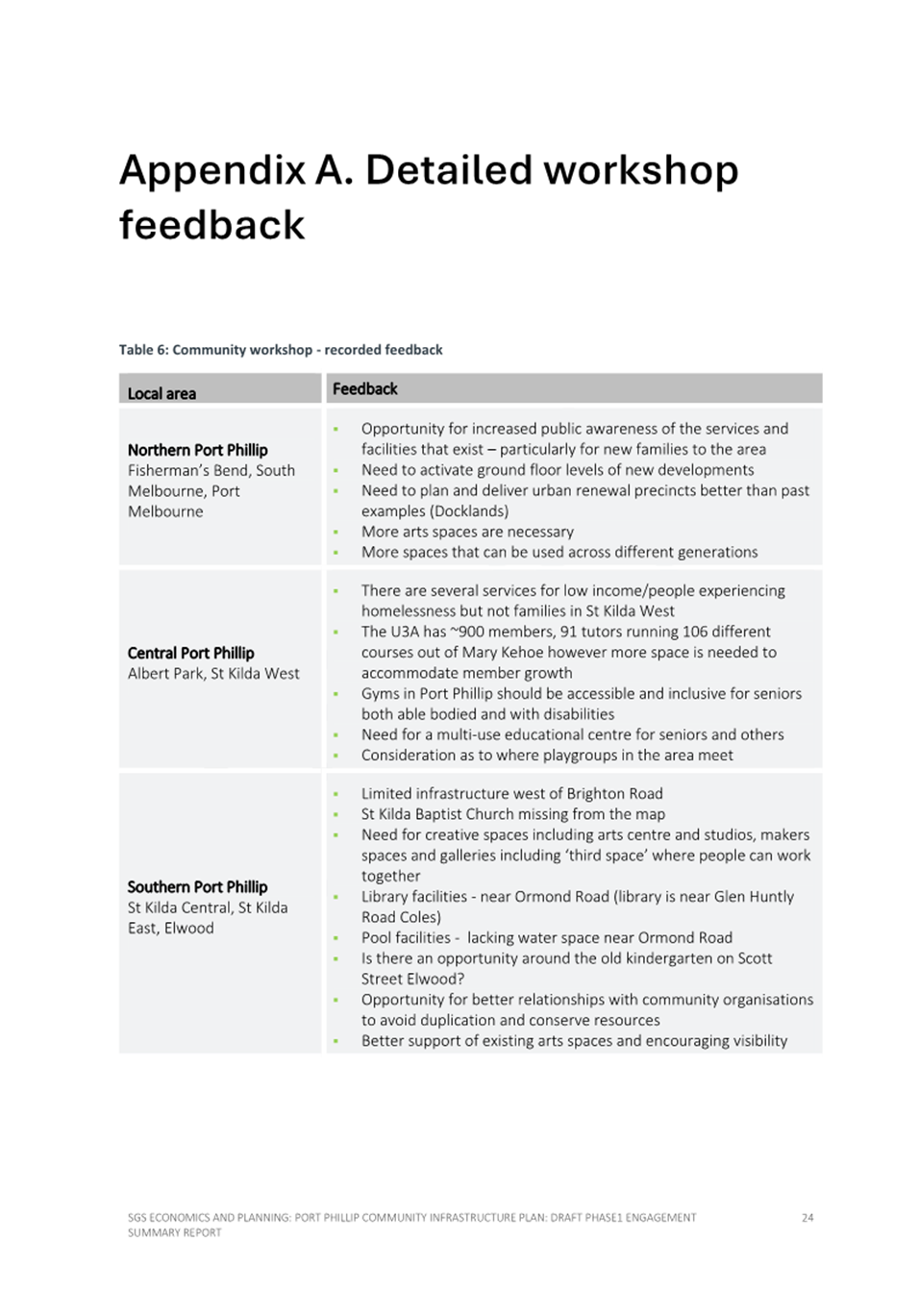
· In-person community workshop at St Kilda Library for 10 attendees to explore challenges and opportunities through discussion, develop a shared vision for future community infrastructure and provide site and neighbourhood specific feedback.
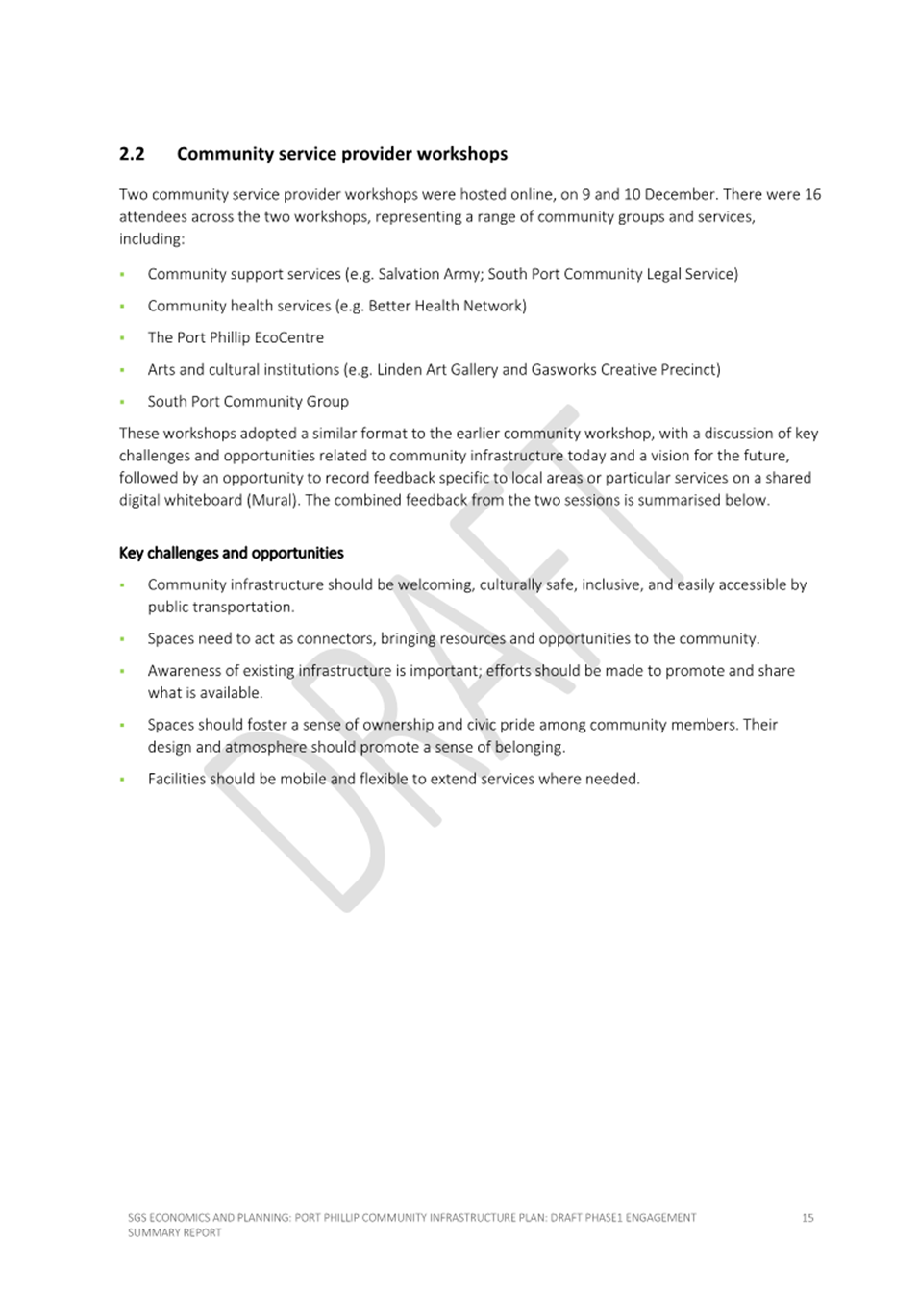
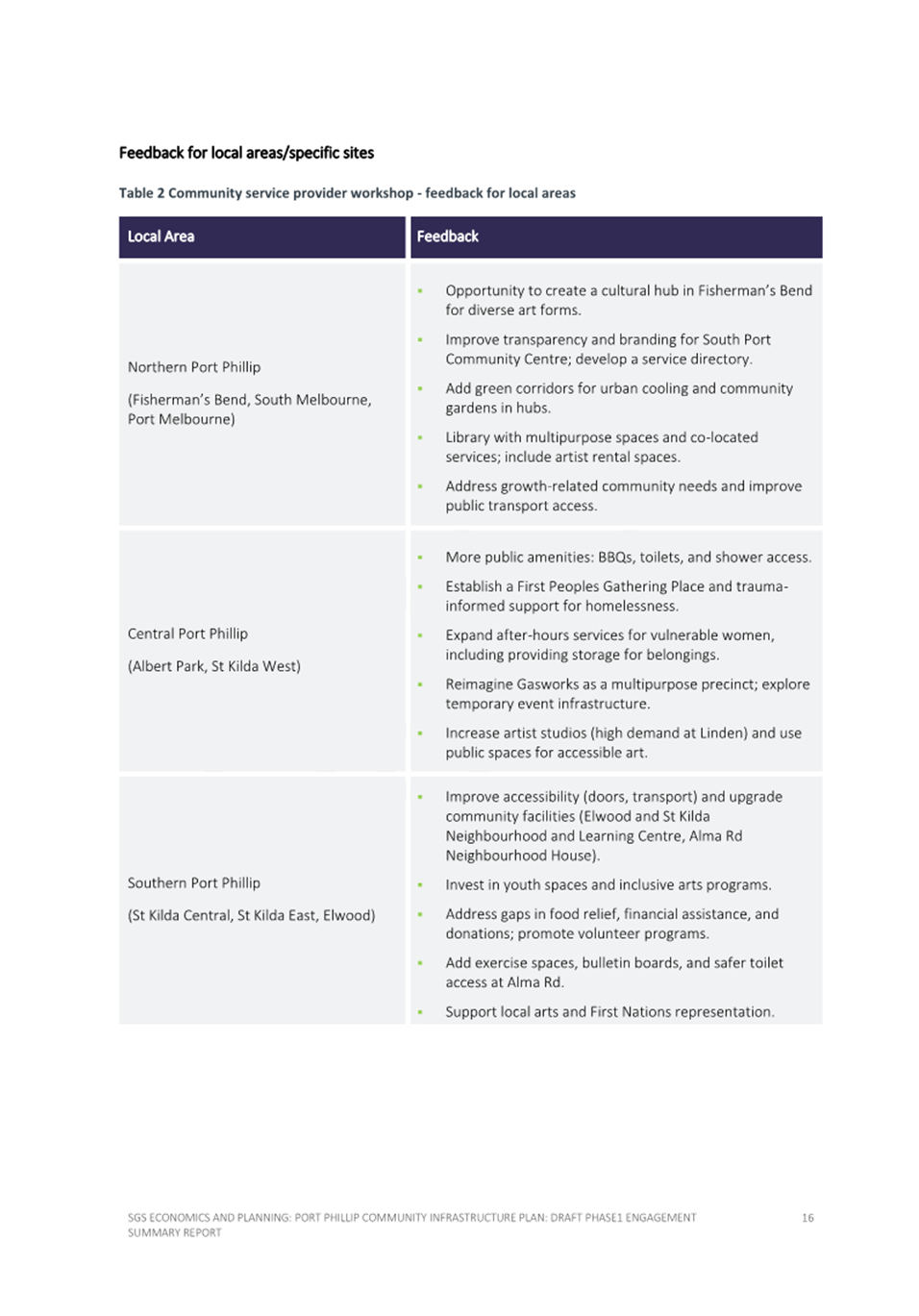
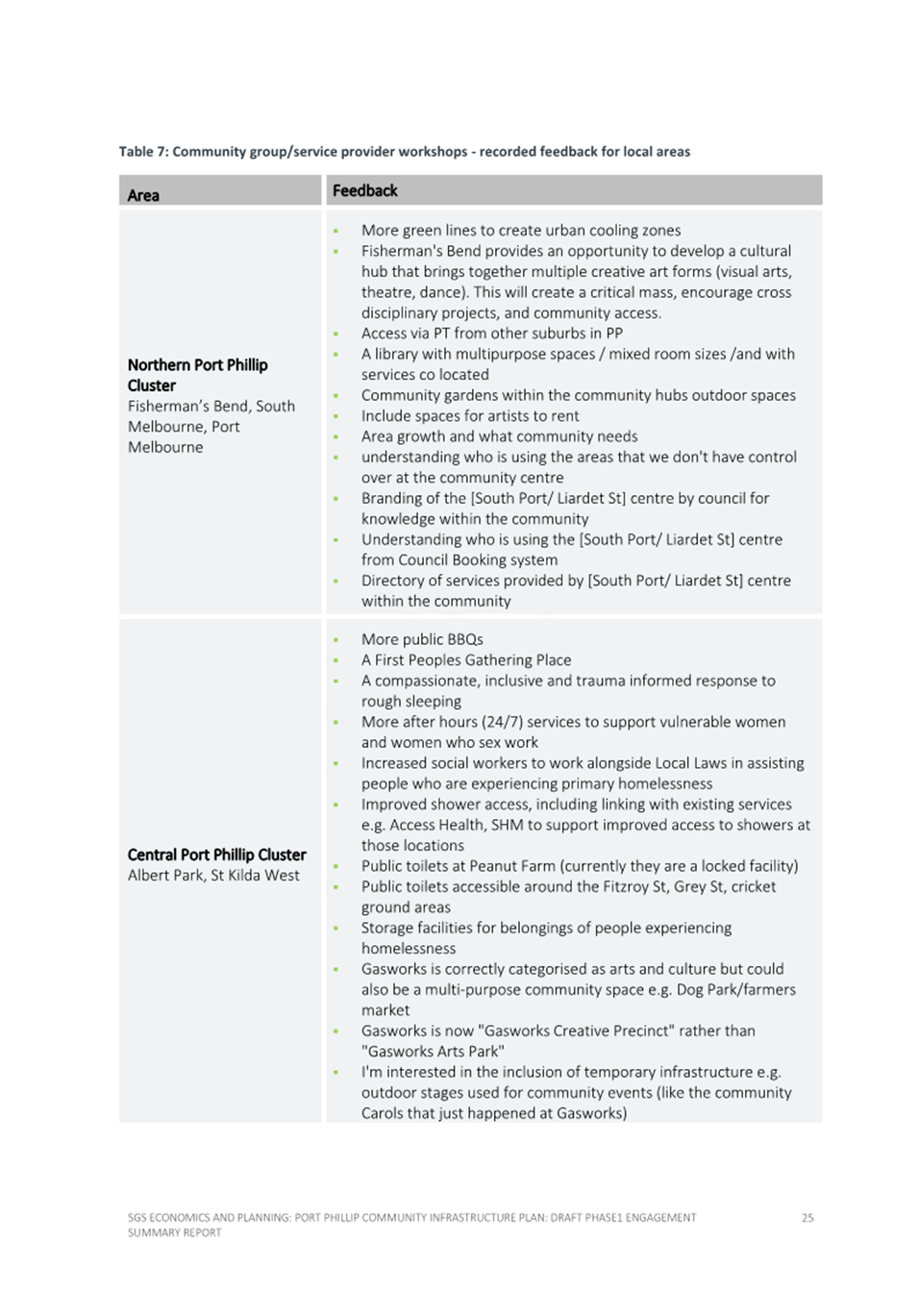
· Two Online Community Service Provider roundtables with 16 attendees across community support services (e.g., Salvation Army), community health providers, EcoCentre and arts precincts and legal and social services. The workshops sought to gather insights from organisations delivering services, identify operational, accessibility and service‑level gaps and capture local area needs (Northern, Central, Southern clusters).
· Paper surveys at libraries and ASSIST counters.
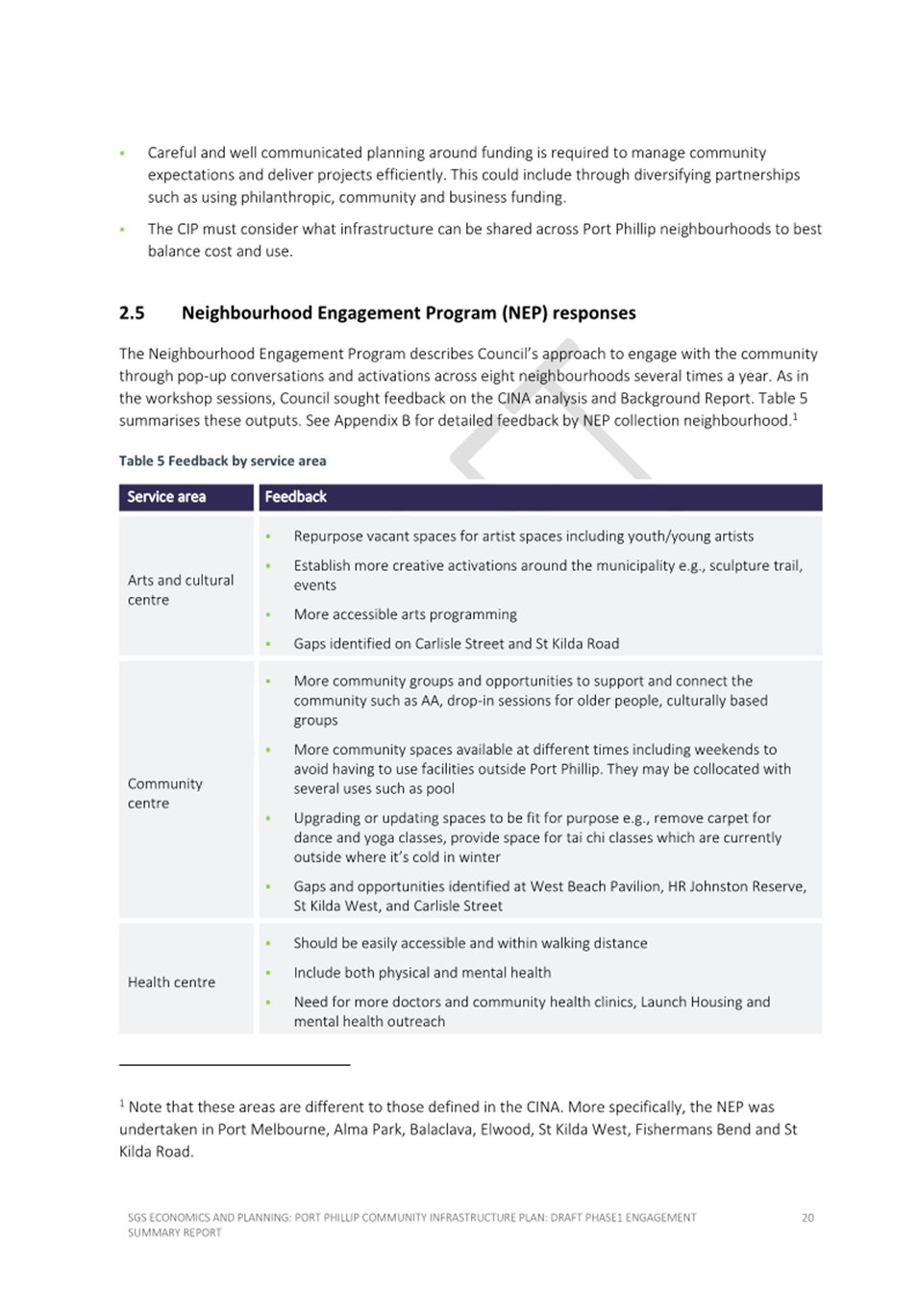
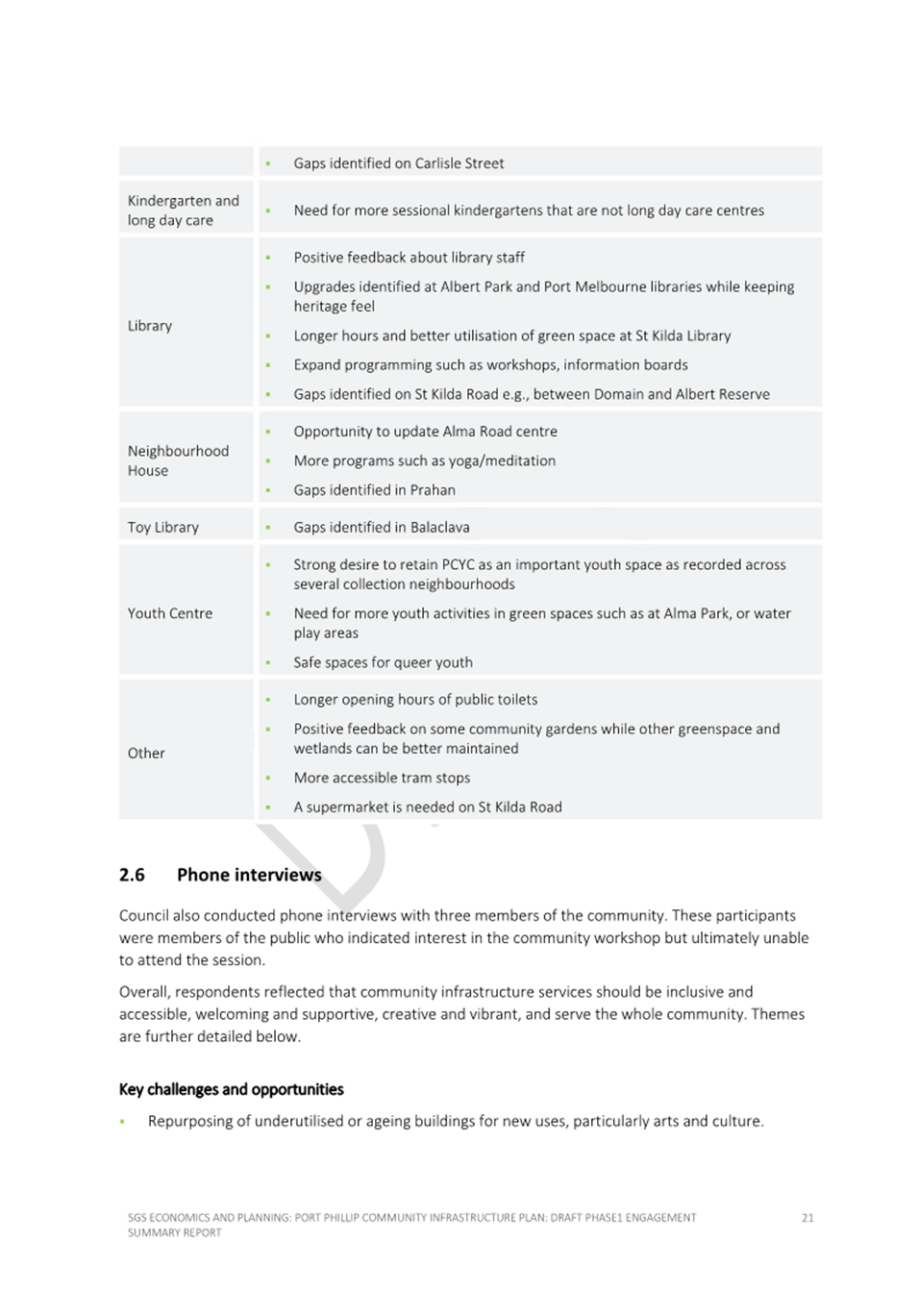
· Community pop-ups through the Neighbourhood Engagement Program and targeted outreach via service networks.
· Phone interviews with those unable to attend the workshop.
· Internal engagement with relevant Council teams, including the Urban Renewal Team (focusing on Fishermans Bend).
Other inputs to the CIP
4.16 In addition to the CINA and Phase 1 engagement, the CIP has been informed by:
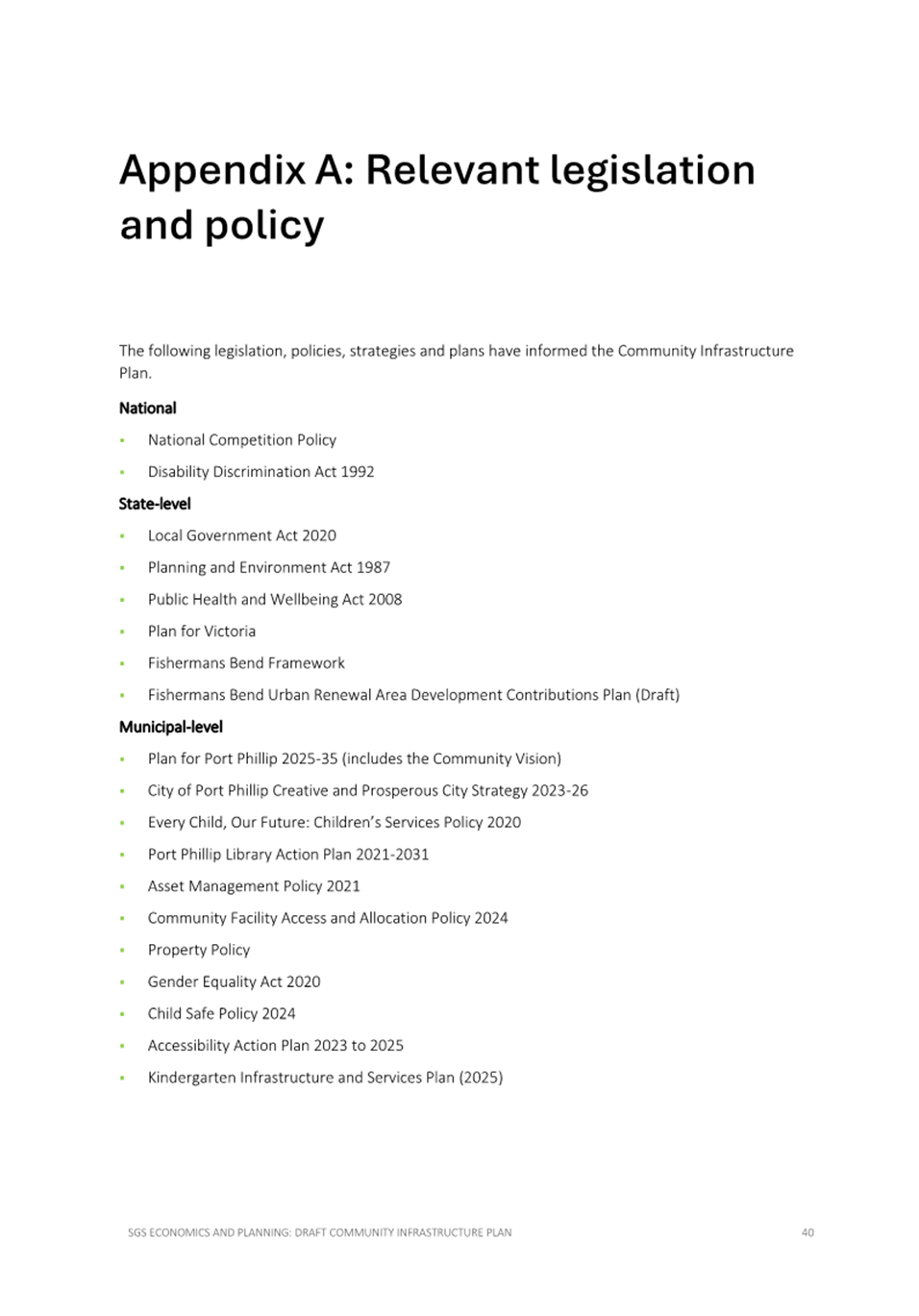
· Desktop review of Council strategies, policies and plans: This includes alignment with broader state and federal legislation, strategic frameworks and infrastructure-related plans.
· Property Roadmap Insights: Property team officers provided relevant content from the Property Roadmap to identify short-term priorities for upgrades or repairs. Where facilities were identified for early renewal, these sites were tested against community expectations to confirm alignment.
· Gender impact assessment (GIA): to identify impacts on people of different genders, backgrounds and identities and assess options for embedding equity in the CIP.
4.17 Key internal stakeholders have been consulted for their subject matter expertise across community infrastructure including the following teams Property, Venues, Finance, Corporate Planning, Governance, Fishermans Bend, Youth, Maternal Child Health, Children’s Services and Libraries.
Content of the Proposed Draft Community Infrastructure Plan (CIP)
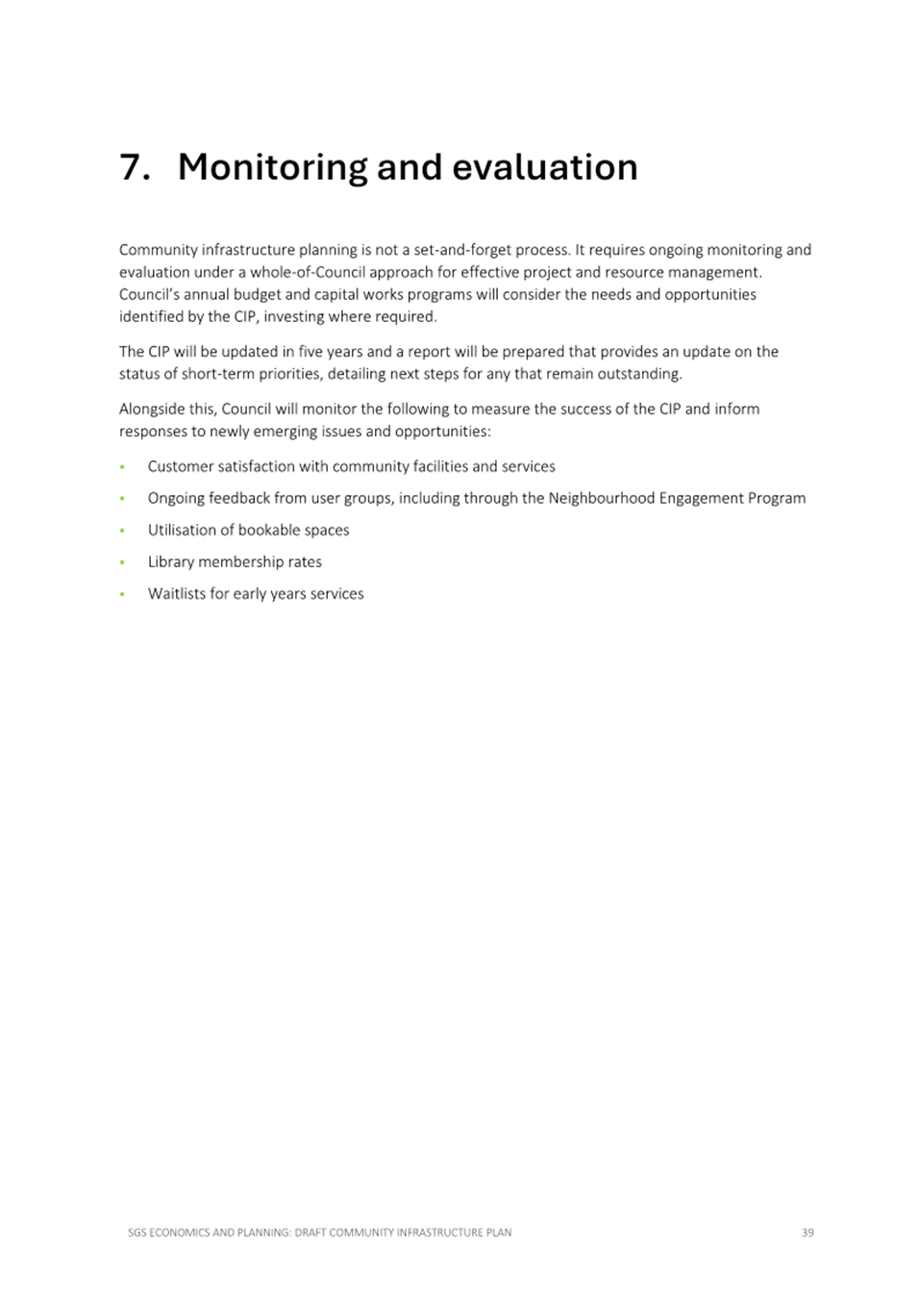
4.18 The CIP highlights the evolving needs of Port Phillip’s diverse community and emphasises that delivering effective community infrastructure will rely on strong State Government partnerships, a clear advocacy plan, and flexible, future‑ready design principles. It also stresses the importance of ongoing monitoring and five‑year reviews to ensure infrastructure keeps pace with population changes, development timing and community expectations.
4.19 The framework for the CIP includes the Vision, Principles, Needs and Opportunities and Council’s role.
Proposed Vision
4.20 The CIP outlines Council’s proposed vision for community infrastructure in Port Phillip as:
4.21 A network of high-performing community infrastructure that supports the wellbeing and connectedness of our diverse community and reinforces Port Phillip as a thriving cultural hub and great place to live.
Proposed Principles
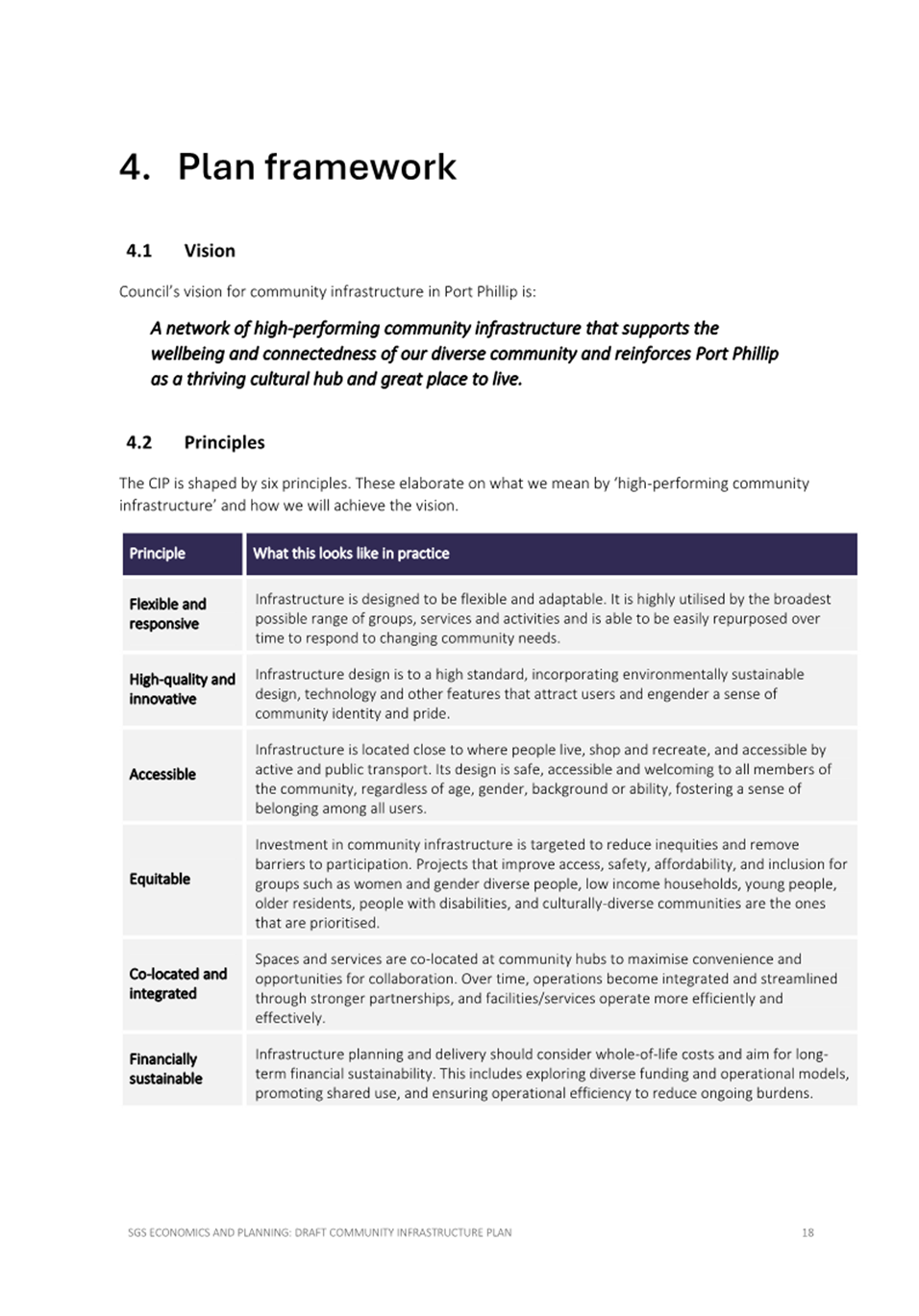
4.22 The CIP also outlines a number of proposed key principles, developed and tested through community engagement, designed to ensure community infrastructure is planned, delivered and managed in a way that supports a growing and diverse community. These principles emphasise flexible and responsive design, high-quality and innovative outcomes, and safe, accessible facilities that are well-located and welcoming to all. The Plan prioritises equity by directing investment toward addressing social and gender disadvantage, promotes colocation and integration of services through community hubs, and focuses on long-term financial sustainability by considering whole-of-life costs, shared use and efficient operational models.
Needs and opportunities
4.23 In summarising the future community infrastructure requirements, the CIP outlines a proposed dual approach that addresses short-term deficits (next five years) while establishing a long-term framework for an expanded, integrated hub-based network:
· In the short-term, priorities include upgrading existing community centres, expanding kindergartens and libraries (both already being planned), securing early years capacity in schools, and activating underutilised multipurpose spaces.
· Longer term, the emphasis shifts to new community hubs, particularly in Fishermans Bend.
Council’s role
4.24 Council’s role in delivering future community infrastructure is to act as a provider, partner and advocate, ensuring facilities are upgraded, expanded or co‑located to meet growing demand—particularly across early years, youth, multipurpose community spaces, arts, libraries and community health services. Across all categories, Council focuses on improving fitness‑for‑purpose of existing assets, enabling other providers to deliver new services, co‑locating functions within hubs, and advocating to the State Government for infrastructure funding, school‑based early years provision, and equitable community health and social support services.
5. CONSULTATION AND STAKEHOLDERS
5.1 Engagement on the draft CIP is proposed to be undertaken for a four-week period as the document is largely technical in nature, the purpose of second phase engagement is to test the draft rather than gathering broad based input and earlier completion of the CIP better positions Council’s advocacy in the lead up to the State Election. This will require Council to vary its policy position as typically a six-week consultation period would be undertaken for any engagement falling over a school holiday period.
5.2 Phase two community engagement activities are proposed to include:
· Have your Say survey with the broad community and distributed via DiverCity, staff networks, social media, postcards and other channels.
· Qualitative follow-up with interviews with those interested.
· Distribution of engagement material to all individuals involved in phase one engagement.
· Possible engagement with Youth Advisory Committee.
5.3 Following phase 2 engagement, the CIP will be finalised and presented to Councillor briefing ahead of endorsement by 30 June 2026.
6. LEGAL AND RISK IMPLICATIONS
6.1 Development Contributions Plan (DCP): Final timing is yet to be confirmed. Releasing the CIP beforehand may raise community expectations about infrastructure delivery that may not be funded through the DCP.
6.2 Property Roadmap Alignment: The current roadmap prioritises facilities needing repair, without factoring in future community needs as outlined through a CIP. Over time the CIP may recommend changes to better align infrastructure investment with projected demand.
7. FINANCIAL IMPACT
7.1 Council allocated a budget of $60,000 through the 25/26 Council Budget. This was used to engage a consultant to develop the CIP and deliver some of the engagement activities. This budget also includes the development of communications collateral.
8. ENVIRONMENTAL IMPACT
8.1 A CIP offers a number of opportunities to support environmental sustainability:
· Opportunity for Sustainable Design: New infrastructure, especially in growth areas like Fishermans Bend, presents a blank canvas for embedding sustainability options that reduce energy and water consumption whilst enhancing urban biodiversity.
· Promotion of Active and Public Transport: The CIP encourages co-location of services near transport hubs and walkable precincts, reducing reliance on private vehicles and associated emissions.
· Flexible, Multi Use Spaces: Multipurpose hubs reduce the need for multiple standalone buildings, consolidating services and lowering the environmental footprint.
· Supporting Climate Resilience: Infrastructure that fosters social connection and wellbeing—such as libraries, drop-in centres, and community health hubs—also contributes to climate resilience by supporting vulnerable populations during extreme weather events.
9. COMMUNITY IMPACT
9.1 The CIP will have a significant impact on the wellbeing of Port Phillip residents. By identifying and addressing infrastructure gaps, the CIP supports decision making around the provision of equitable access to essential services such as early years care, youth support, health services, and cultural spaces
9.2 Improved access to community health centres and multipurpose hubs will support physical and mental health, reduce social isolation, and foster stronger community connections.
9.3 In high-density areas like Fishermans Bend, where private space is limited, public infrastructure will play a vital role in supporting liveability—offering safe, inclusive spaces for recreation, learning, and social interaction.
9.4 The CIP also supports public safety by promoting well-used, well-designed community spaces that encourage positive engagement and deter antisocial behaviour. For families and vulnerable groups, access to local services reduces pressure on housing and transport, and ensures that support is available close to home.
9.5 Ultimately, the community will see the CIP as a commitment to inclusive growth, where infrastructure investment reflects their needs, aspirations, and lived experiences.
10. Gender Impact Assessment
10.1 A Gender Impact Assessment was undertaken prior to the commencement of community consultation activities and findings incorporated into the proposed draft CIP.
11. ALIGNMENT TO COUNCIL PLAN AND COUNCIL POLICY
11.1 The draft proposed CIP aligns to the strategic direction “a healthy and connected community”.
12. IMPLEMENTATION STRATEGY
12.1 TIMELINE
12.1.1 An implementation Plan will be developed to sit alongside the Strategy.
12.1.2 If Council resolves to release the draft Strategy for community consultation at the Council meeting on 18 March 2026, the following will occur:
|
March / April |
Draft CIP out for community feedback |
|
April / May |
Consideration of submissions on the draft strategy |
|
May |
Draft engagement report and updated strategy presented at Councillor briefing for final feedback |
|
May / June |
Final proposed CIP presented at the Ordinary Meeting of Council for endorsement and adoption |
13. OFFICER MATERIAL OR GENERAL INTEREST
13.1 No officers involved in the preparation of this report has declared a material or general interest in the matter.
|
ATTACHMENTS |
1. Phase 1 CIP Engagement Summary 2. CoPP Draft Community Infrastructure Plan |
Meeting of the Port Phillip City Council
18 March 2026
9. An Environmentally Sustainable and Resilient City
9.1 Community Electric Vehicle Charging Program......................................................................... 135
9.2 Draft Foreshore Management Plan for Public Consultation..................................................... 171
Meeting of the Port Phillip City Council
18 March 2026
|
Community Electric Vehicle Charging Program |
|
|
Executive Member: |
Brian Tee, General Manager, City Development |
|
PREPARED BY: |
Renae Walton, Principal Climate Adaptation Officer Catherine Comerford, Senior Sustainability and Climate Change Officer Ed Cotter, Head of Sustainability & Climate Change |
1. PURPOSE
1.1 To seek endorsement for the expansion of the private electric vehicle charging pilot to include emerging technology.
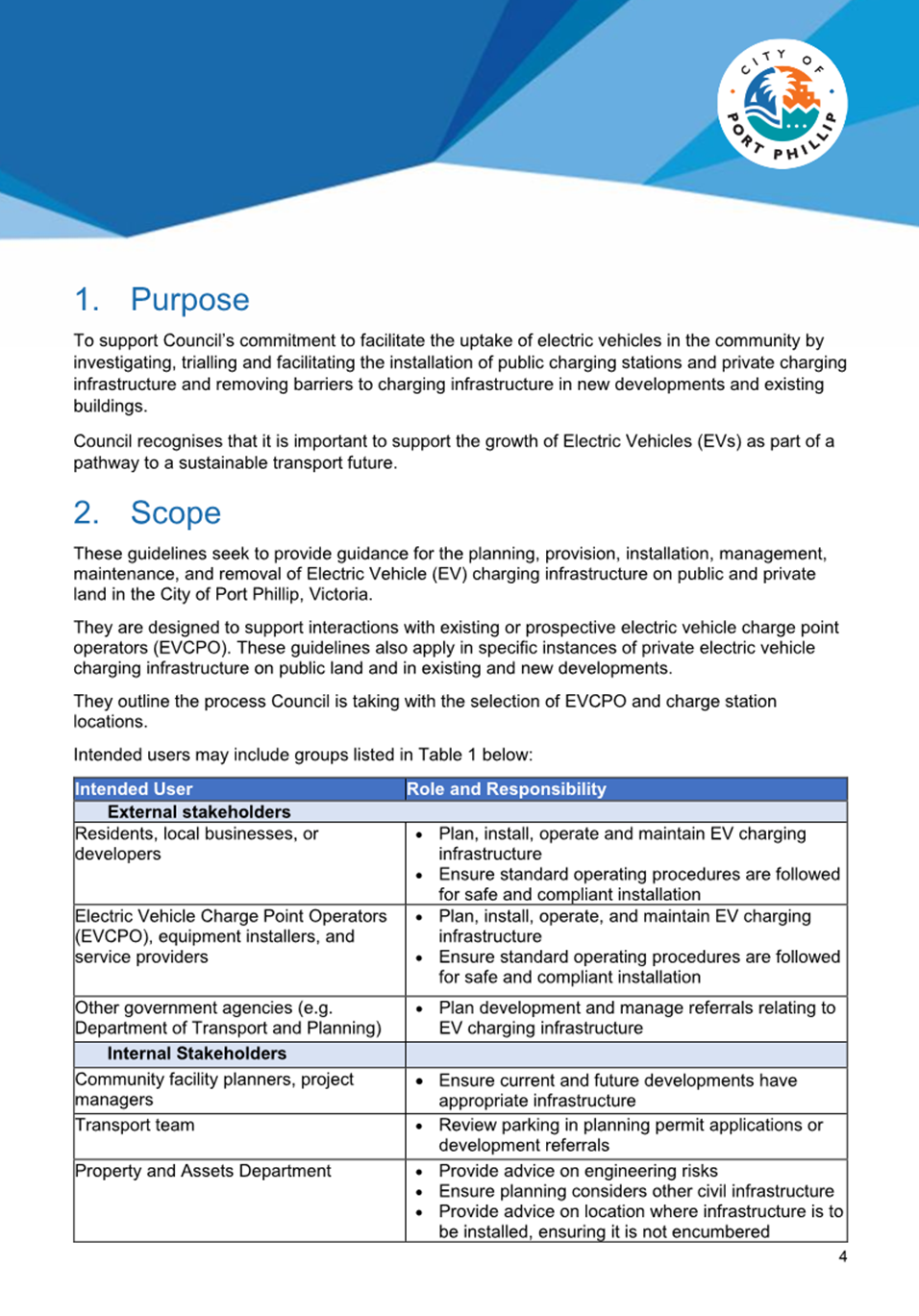
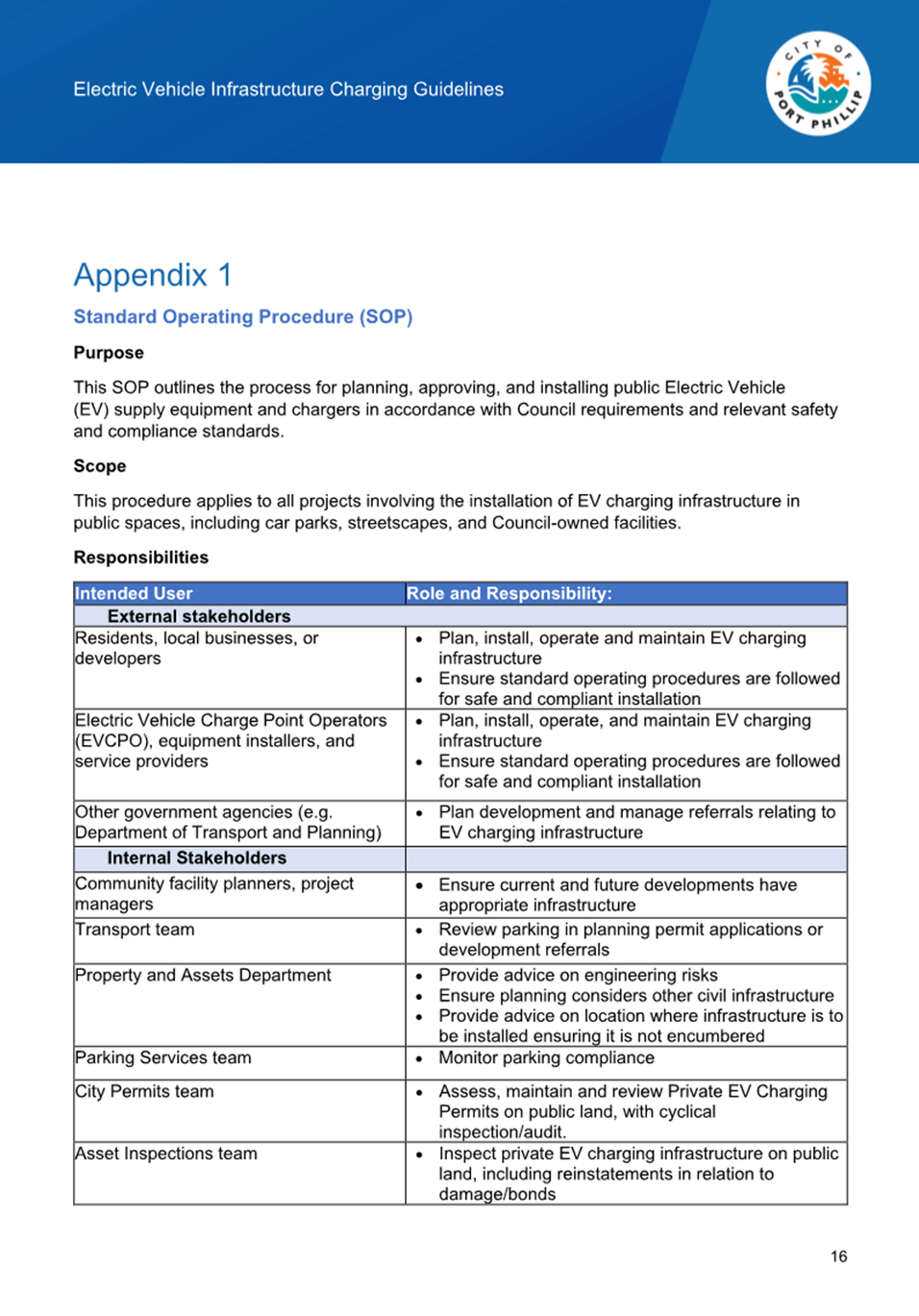
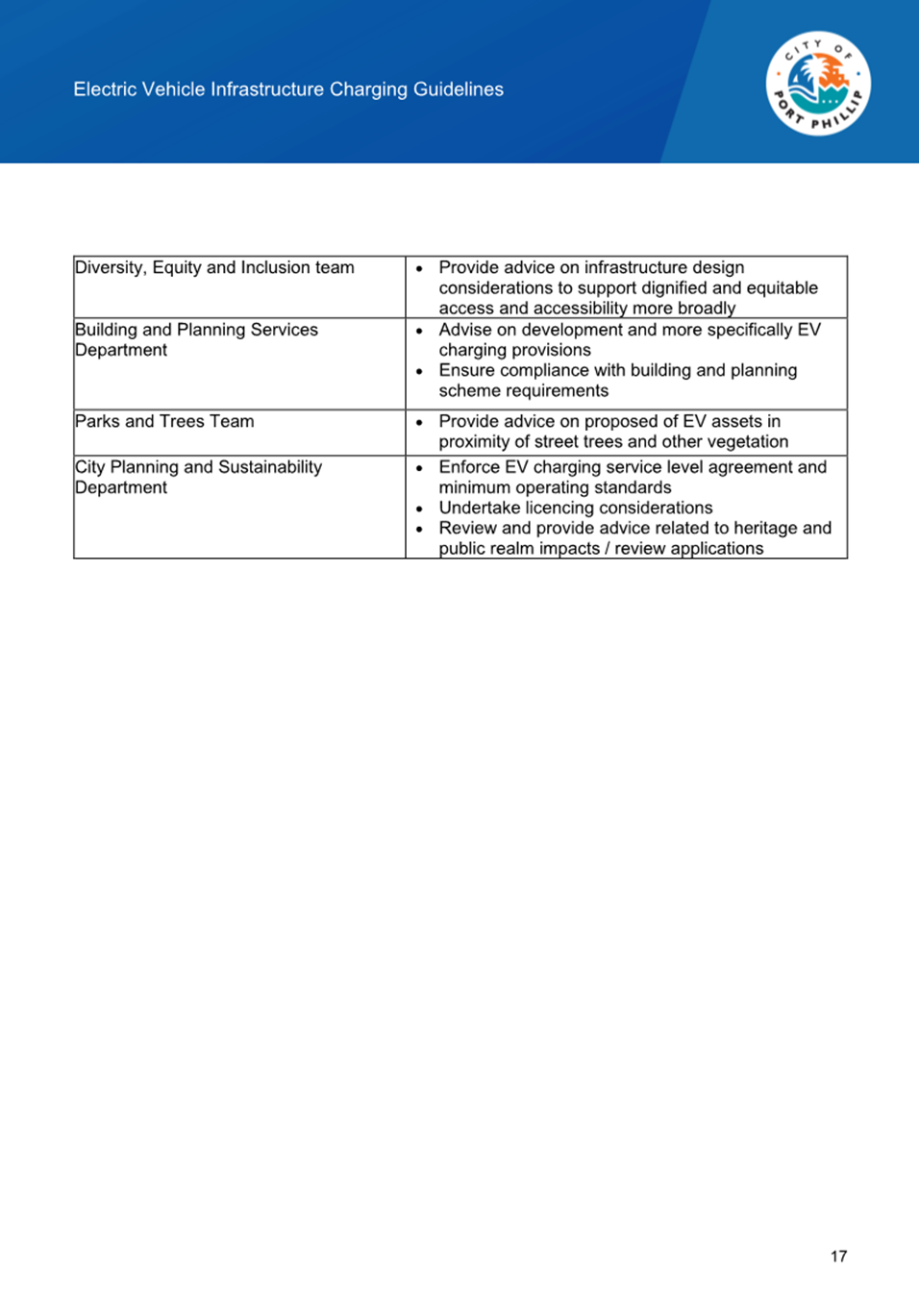
1.2 To seek endorsement for the Electric Vehicle Charging Infrastructure Guidelines.
2. EXECUTIVE Summary
2.1 Council is committed to supporting Electric Vehicle (EV) adoption through the installation of public and private EV charging infrastructure, in line with Initiative 30 of the Act and Adapt Sustainable Environment Strategy 2023-2028.
2.2 The installation of EV charging infrastructure in the City of Port Phillip has gained momentum in the past 12 months with:
· A licence for one public fast charger signed;
· Four public fast charger licences currently in the last stages of negotiation;
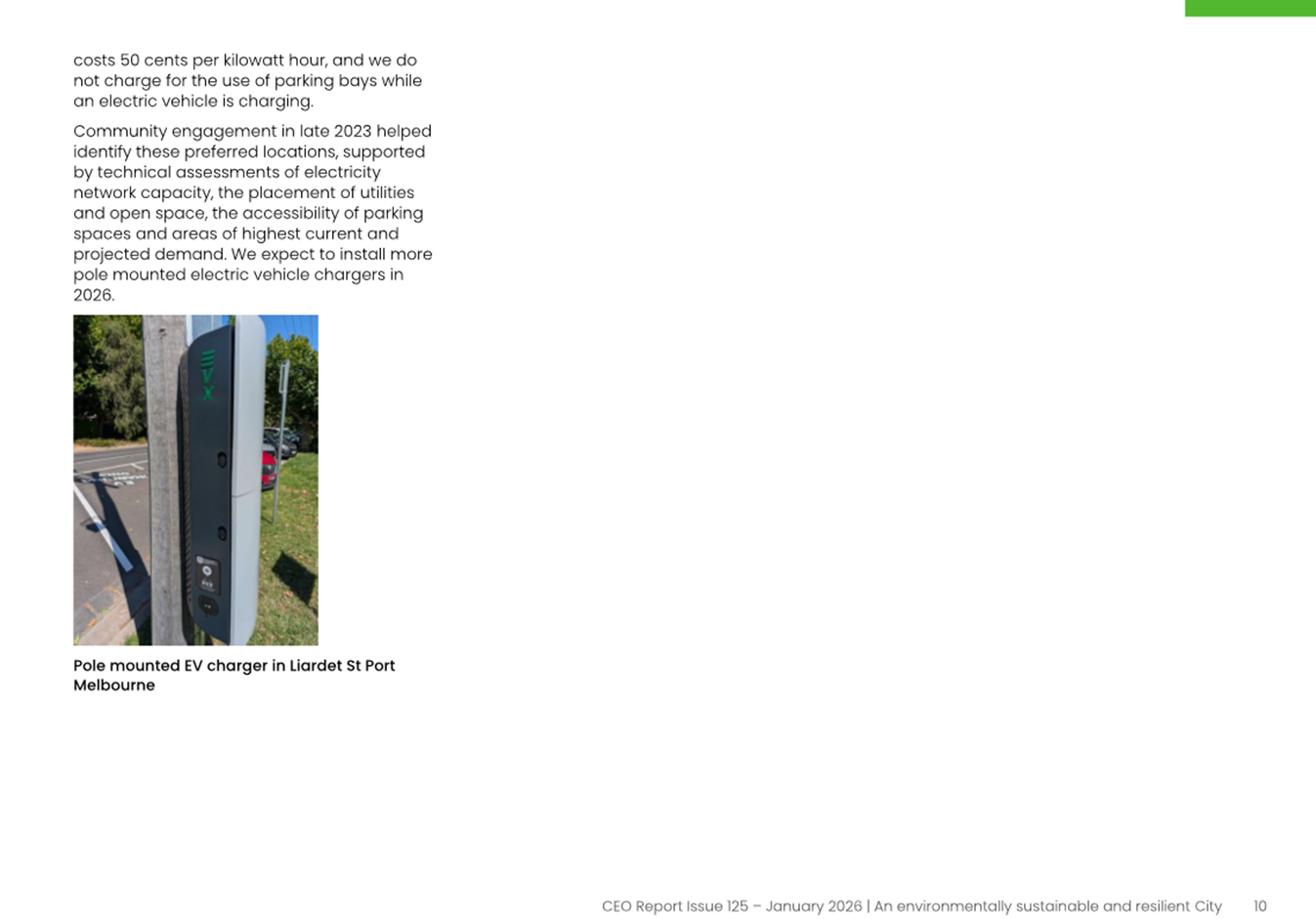
· Three pole mounted chargers installed;
· Further negotiations for additional pole mounted chargers underway; and
· 20 private vehicle charging permits issued.
2.3 To continue this momentum Officers are seeking to:
· expand the private EV charging pilot to including a minimum of two additional devices that will support charging EVs at private homes.
· provide guidance on approval processes, design and safety considerations for EV Charging infrastructure through the development of guidelines.
|
That Council: 3.1 Endorses the Electric Vehicle Charging Infrastructure Guidelines (Attachment 2). 3.2 Authorises the Chief Executive Officer, or delegate, to make non‑material amendments to the EV Charging Guidelines where such changes are required to improve clarity, reflect updated technical standards, or correct minor errors, provided that these amendments do not alter the intent or direction endorsed by Council. 3.3 Endorses Council expanding the types of Private Electric Vehicle Charging devices permitted by Council in response to new charging technology subject to a review of the technology demonstrating compliance with the Electric Vehicle Charging Infrastructure Guidelines and permit conditions. |
4. KEY POINTS/ISSUES
Expansion of the private electric vehicle charging pilot to include emerging technology
4.1 In September 2021 Council endorsed the Kerbside EV Charger Pilot to permit up to ten residents without off-street parking to install private kerb chargers.
4.2 Council supported the pilot with the Kerb Charge product, an EV charger installed in the footpath allowing a resident to charge their car using their own electricity.
4.3 At the 5 June 2024 Council meeting a resolution:
· Extended the trial to four years or 100 chargers, whichever comes first, after which the model will be reviewed.
· Required annual renewal of permits, with audits to ensure compliance of conditions.
· Allowed permit renewals to be declined if the location constrains Council works.
4.4 Over the past five years other types of EV chargers to support at home on-street charging have been used in Australia.
4.5 The current pilot for privately owned chargers on public land has been limited to only Kerb Charge devices.
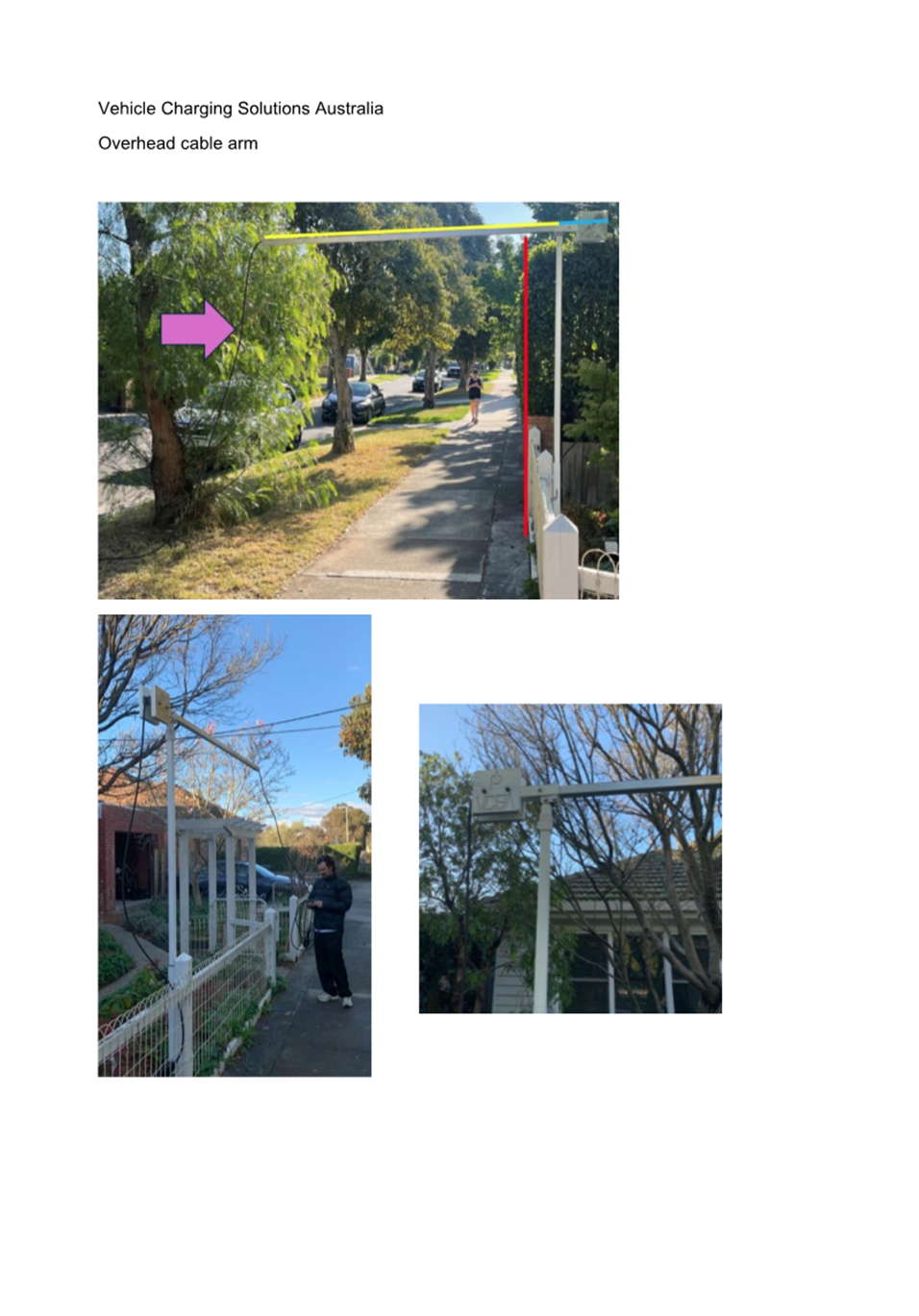
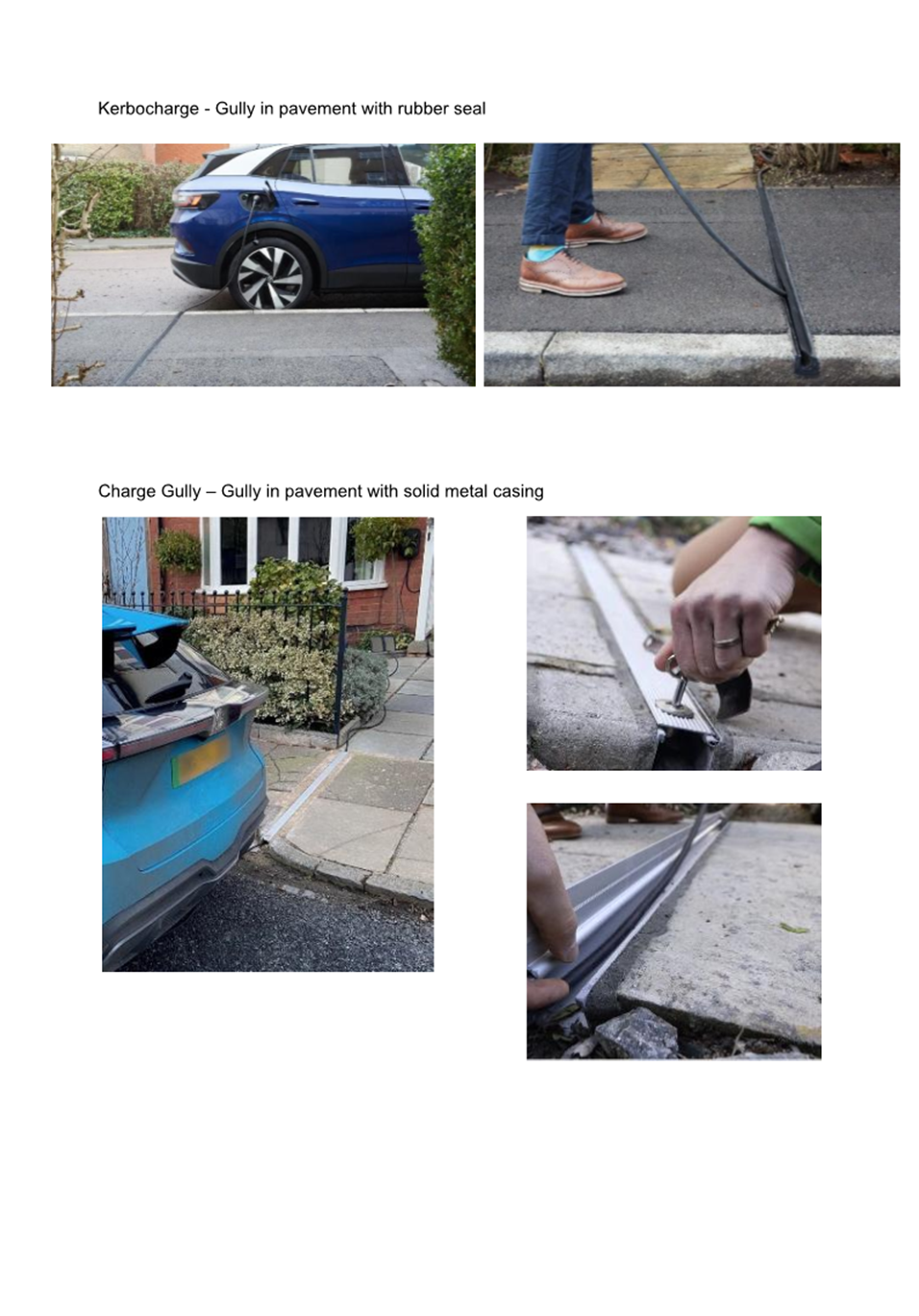
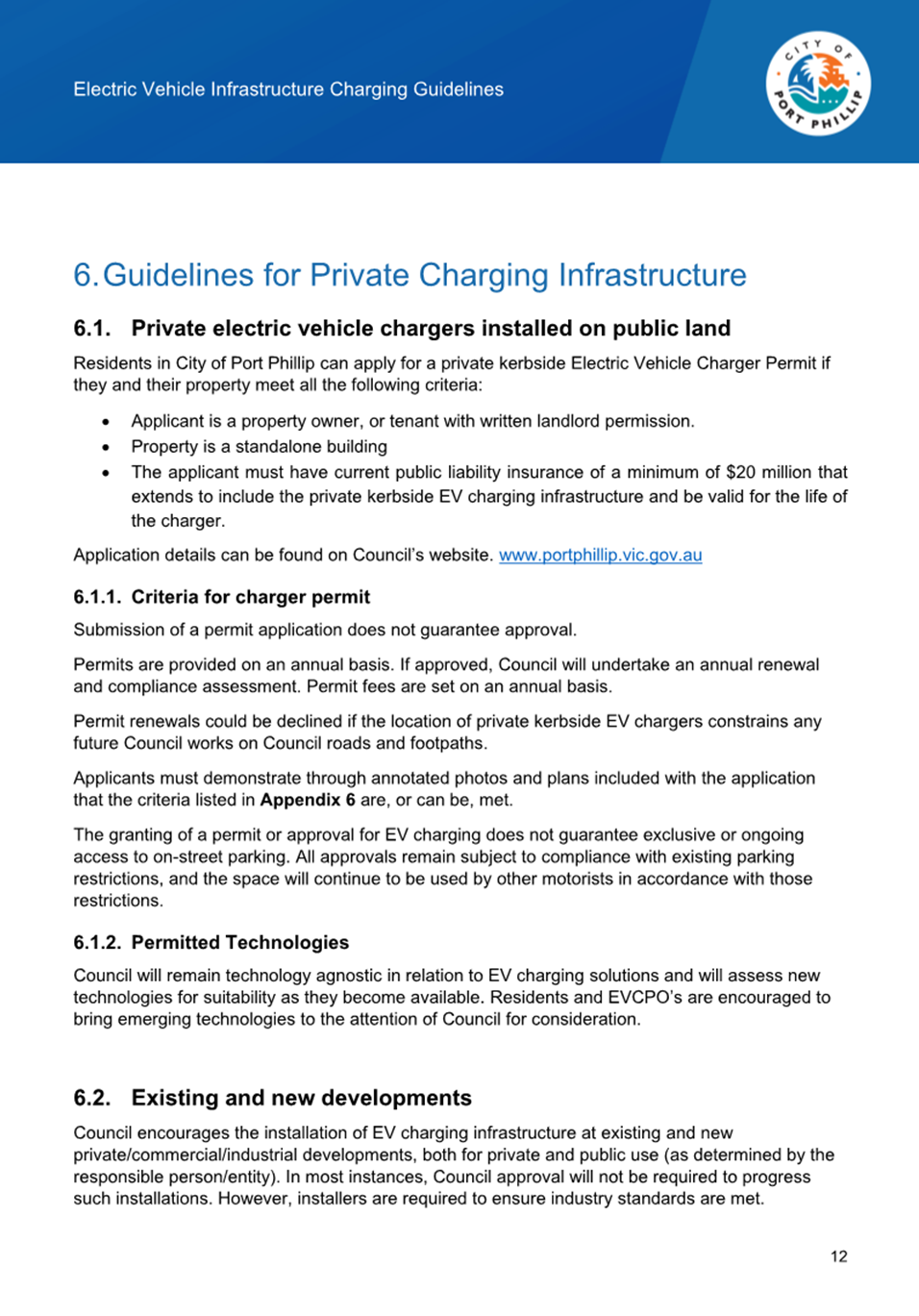
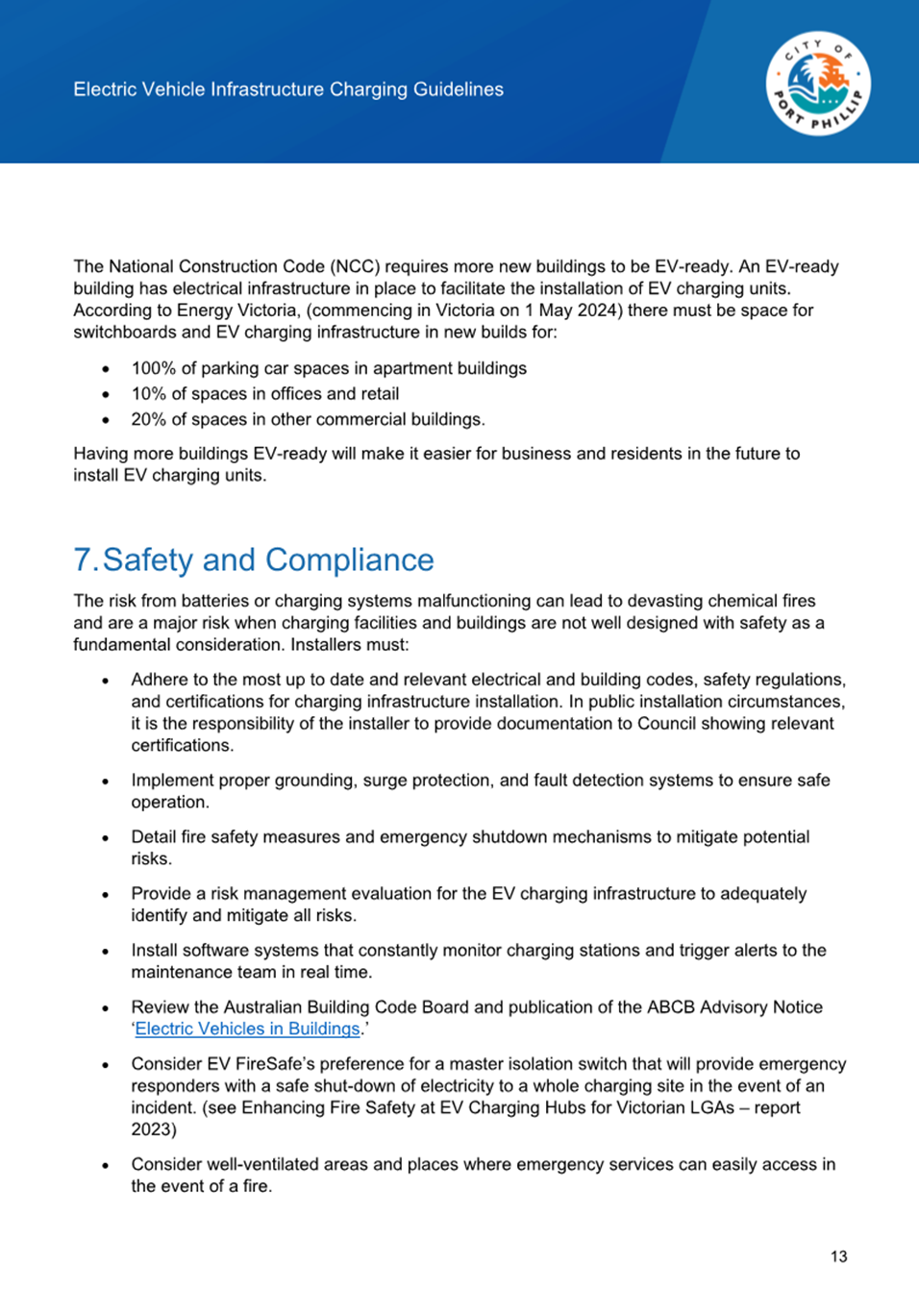
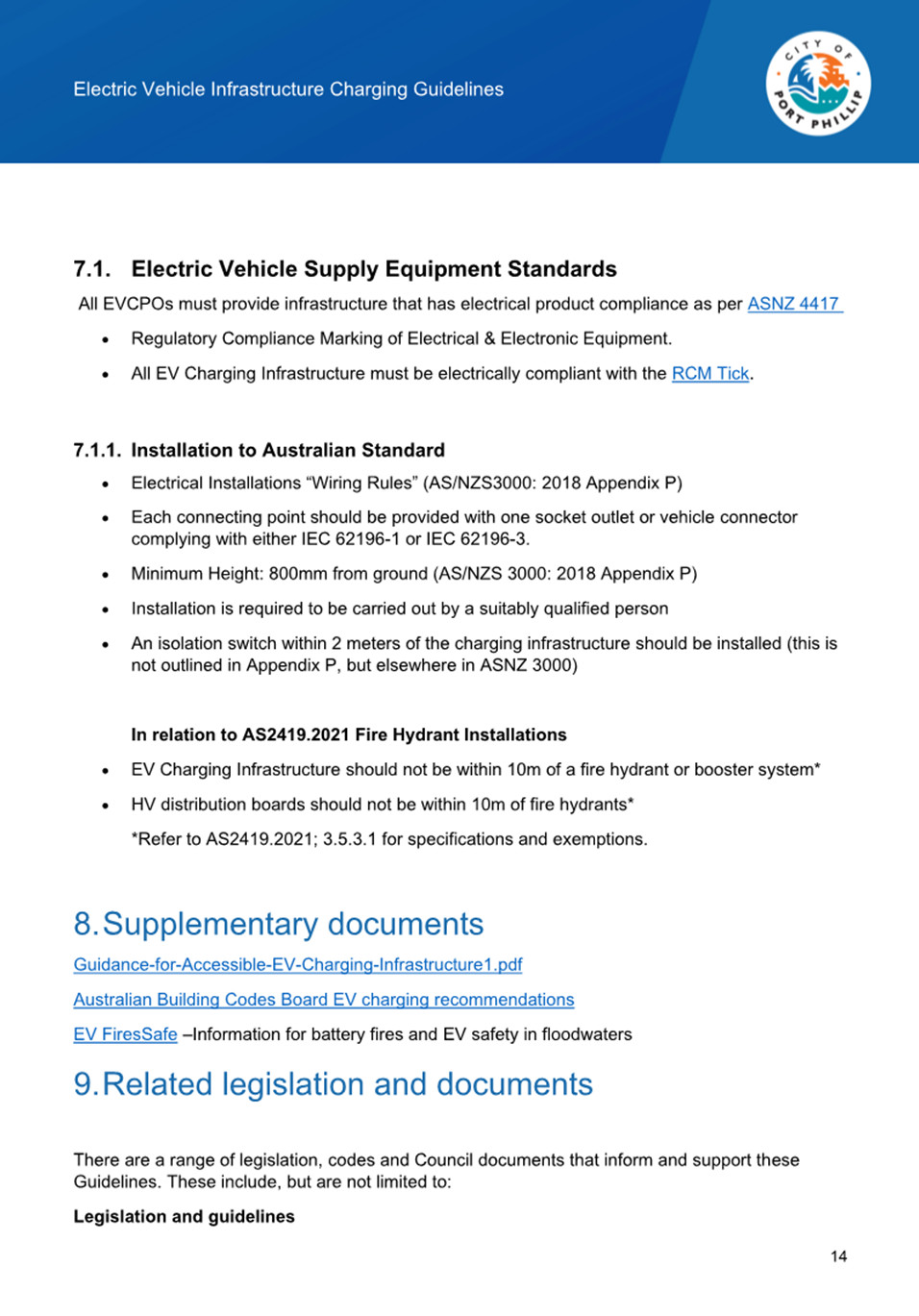
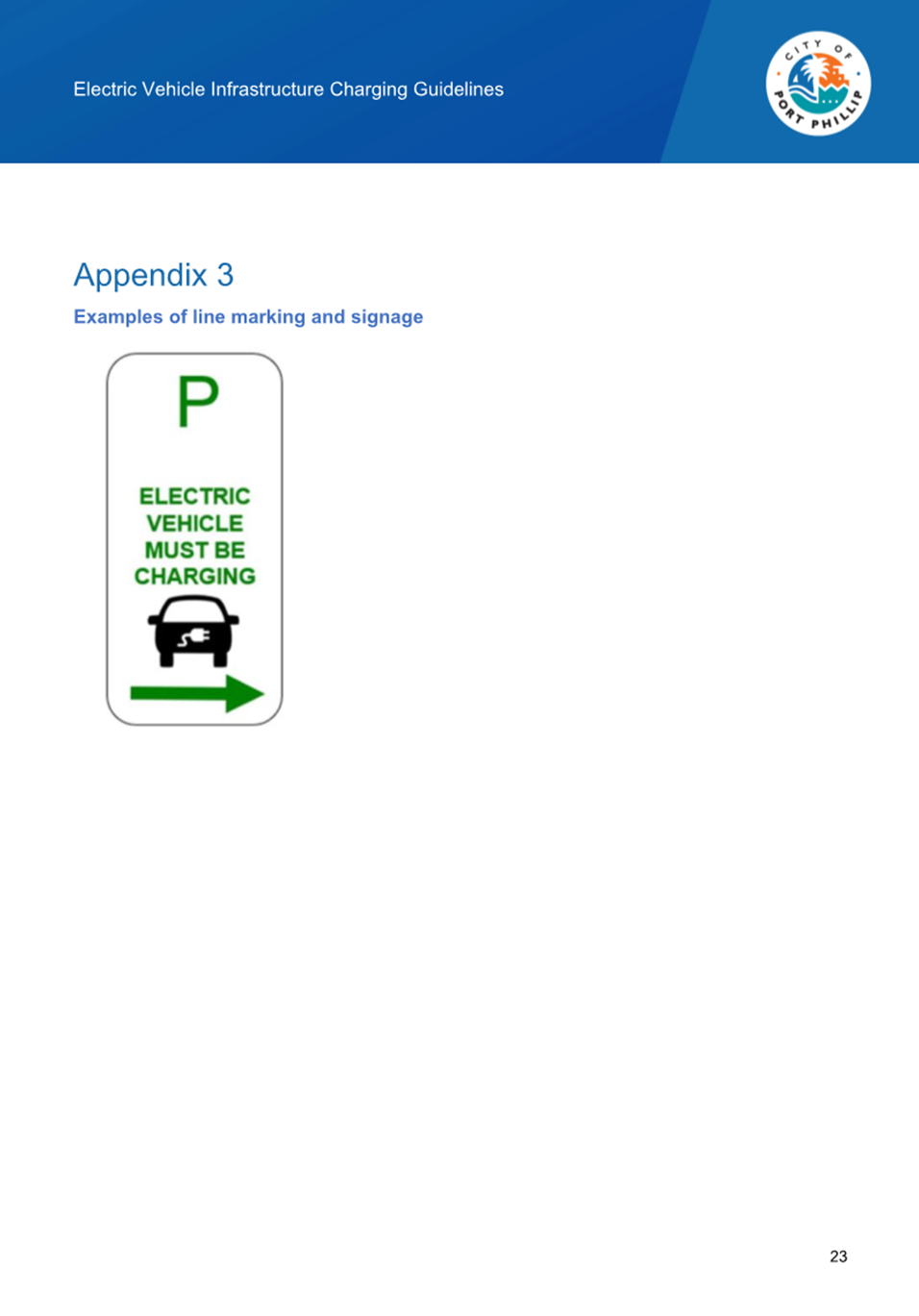
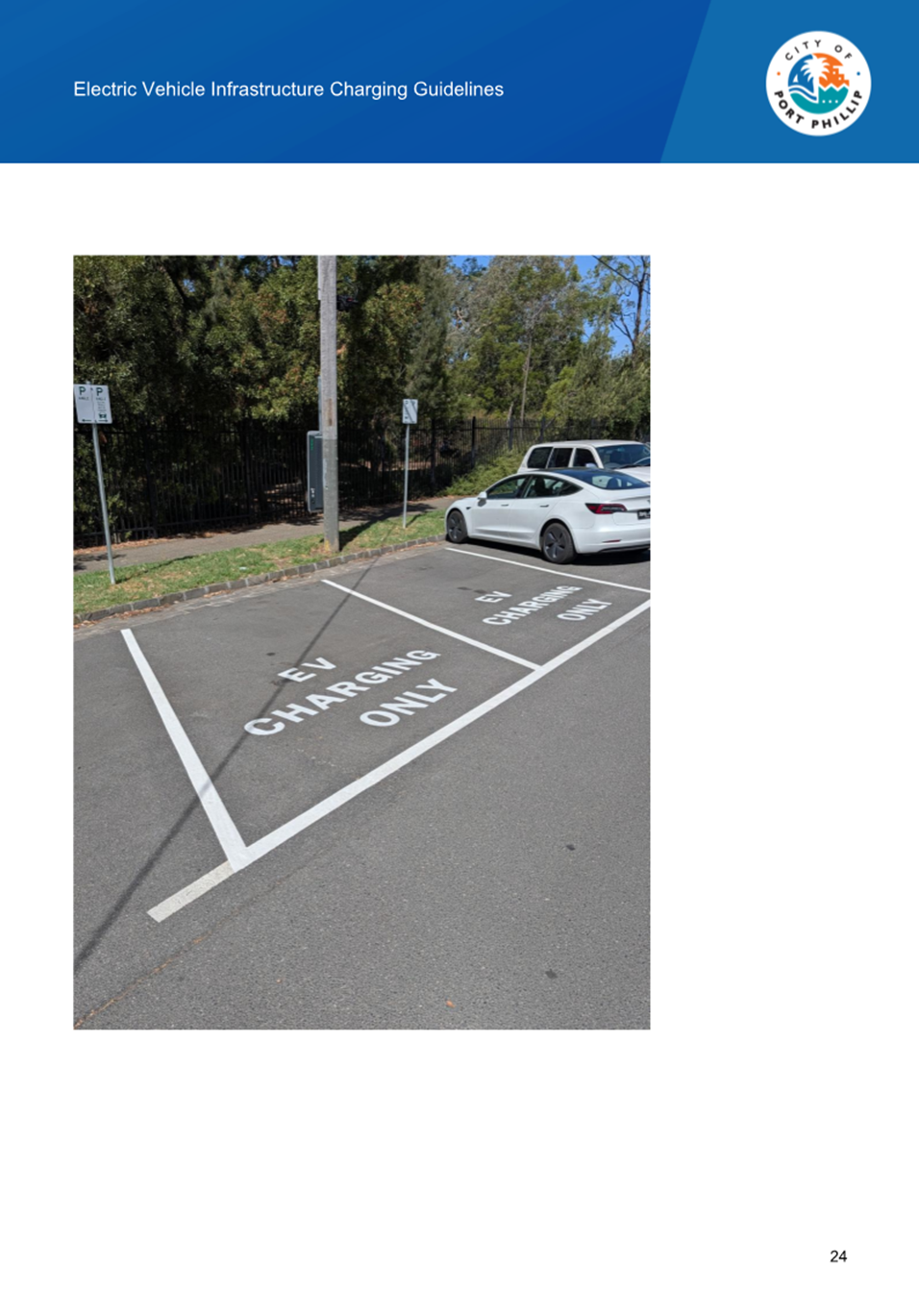
4.6 Officers are proposing to expand the pilot to specifically include two additional devices (attachment 1 for images):
4.6.1 An overhead cable management system, invented by Vehicle Charging Solutions Australia. This is an arm on a swivelling boom that is counterweighted, hinged and mounted on a post within the property boundaries. The boom folds out lifting to a safe height above the pavement. When not in use it is folded back within the property boundaries. It enables a resident to run a charging cable overhead, above the footpath and nature strip to their EV parked on the street. It does not impact Council assets. Merri-bek Council launched a 12-month trial to permit 20 residents to install this equipment on their property.
4.6.2 An inground cable management system, consisting of a gulley recessed into the pavement, so that the EV charging cable is placed in the gulley while charging the car, and removed at all other times. This device is very common in the United Kingdom. There is currently only one supplier of the product in Australia – REA Electrics.
4.7 In expanding the pilot Officers will:
· review the current application criteria and adjust as needed specific to the expanded technology.
· undertake due diligence to ensure that private EV charging providers are reputable and have the necessary insurance.
Electric Vehicle Charging Infrastructure Guidelines
4.8 Council has made a number of decisions about facilitating public and private EV charging including through the Act and Adapt Strategy 2023-2028.
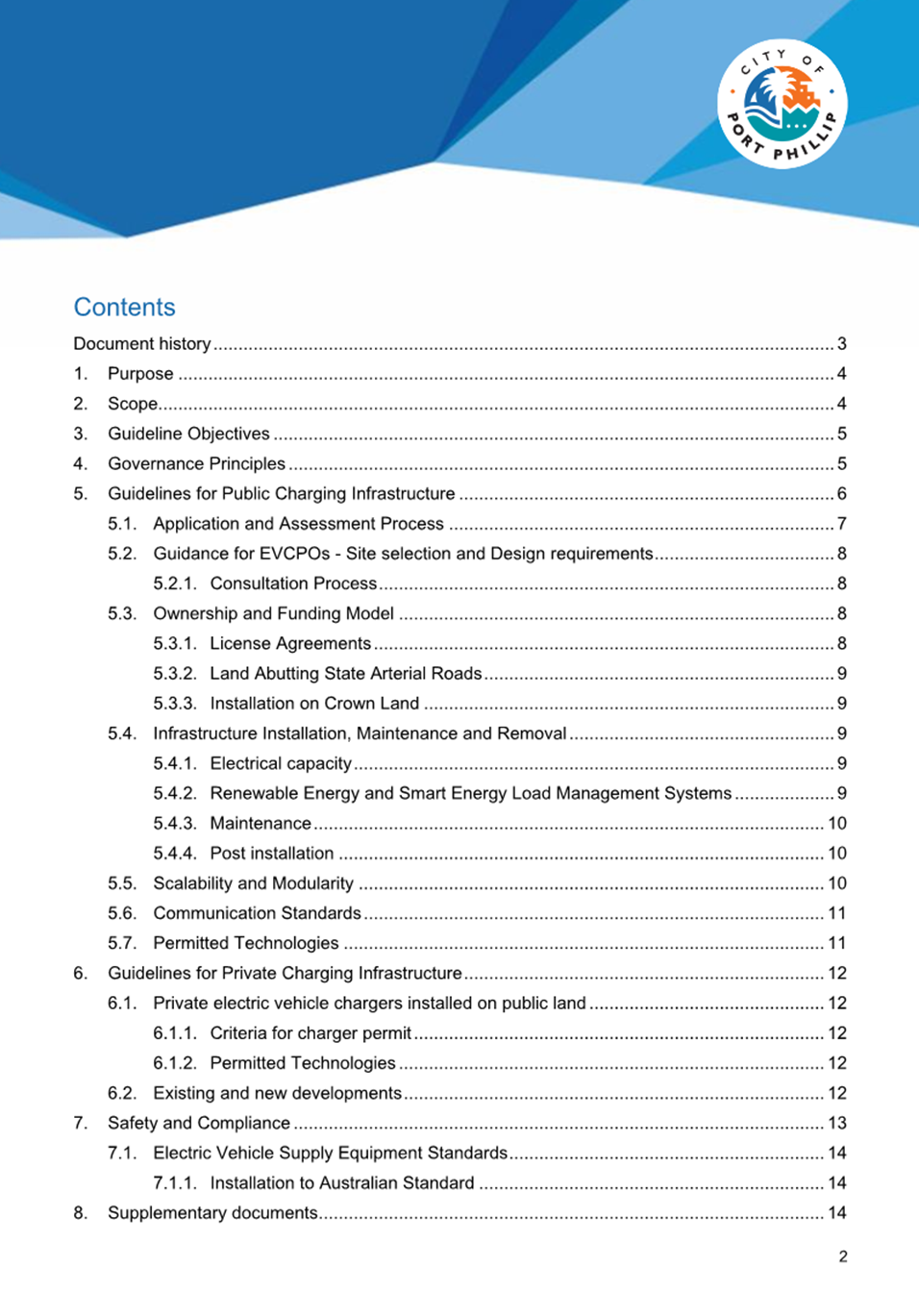
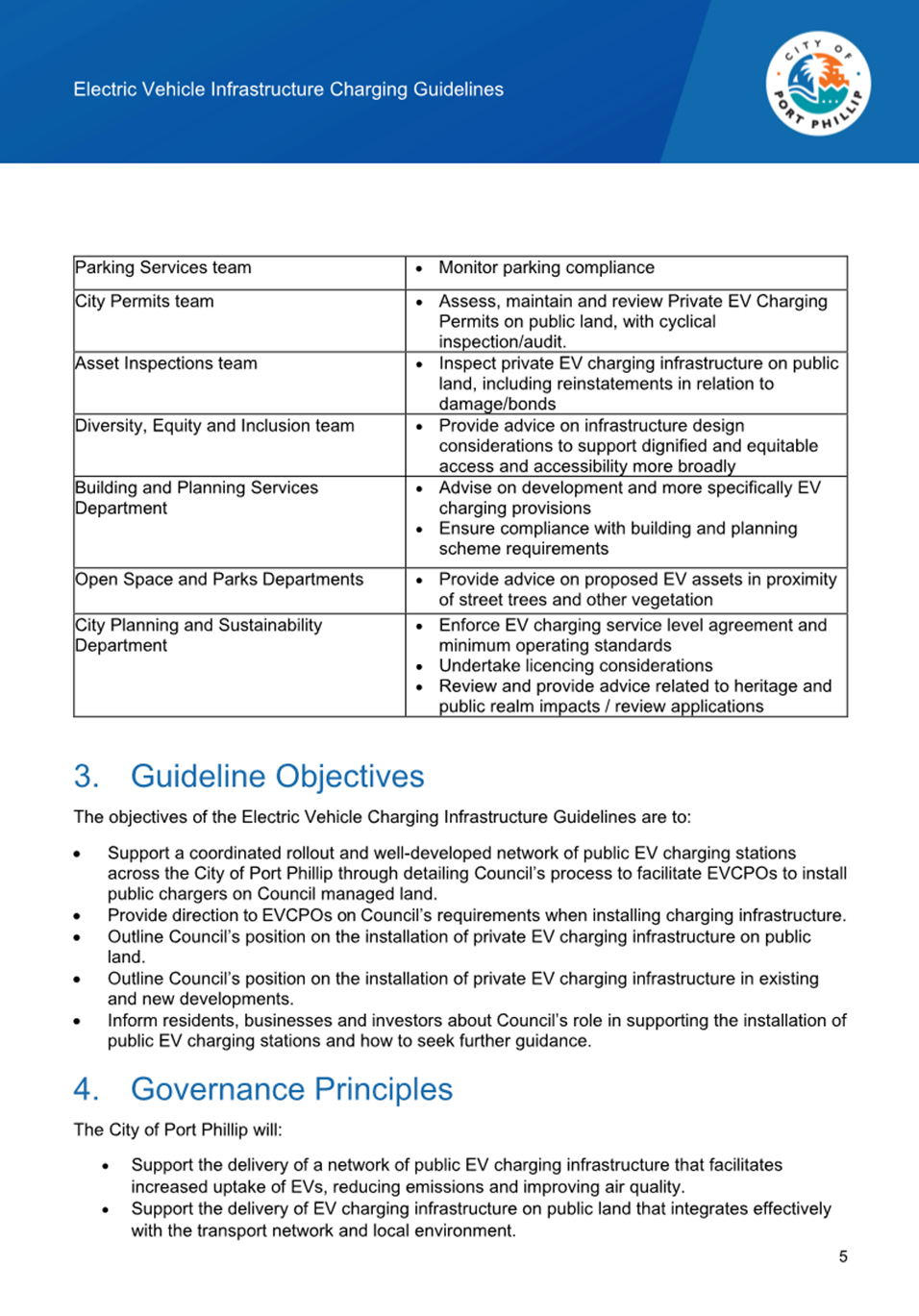
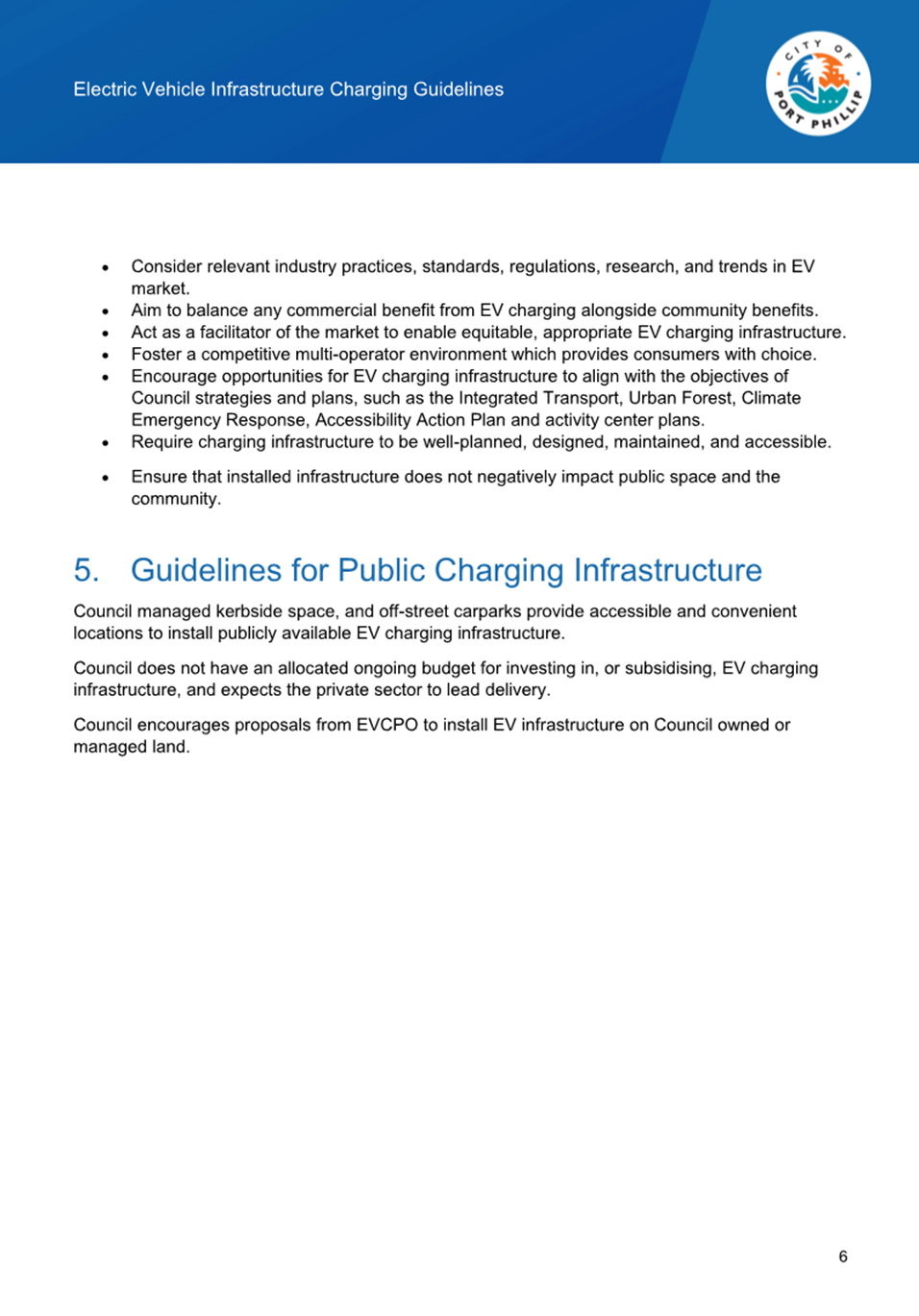
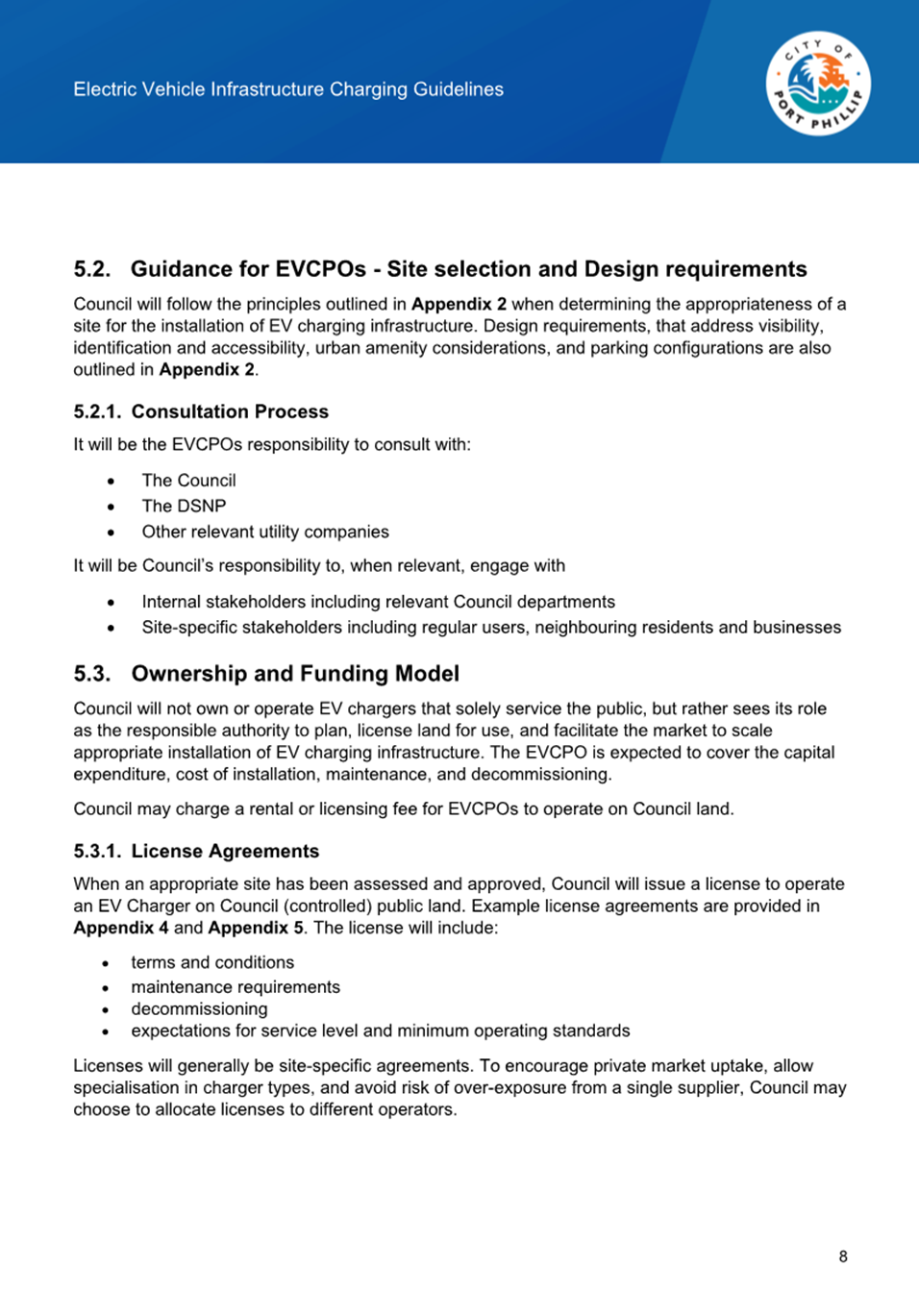
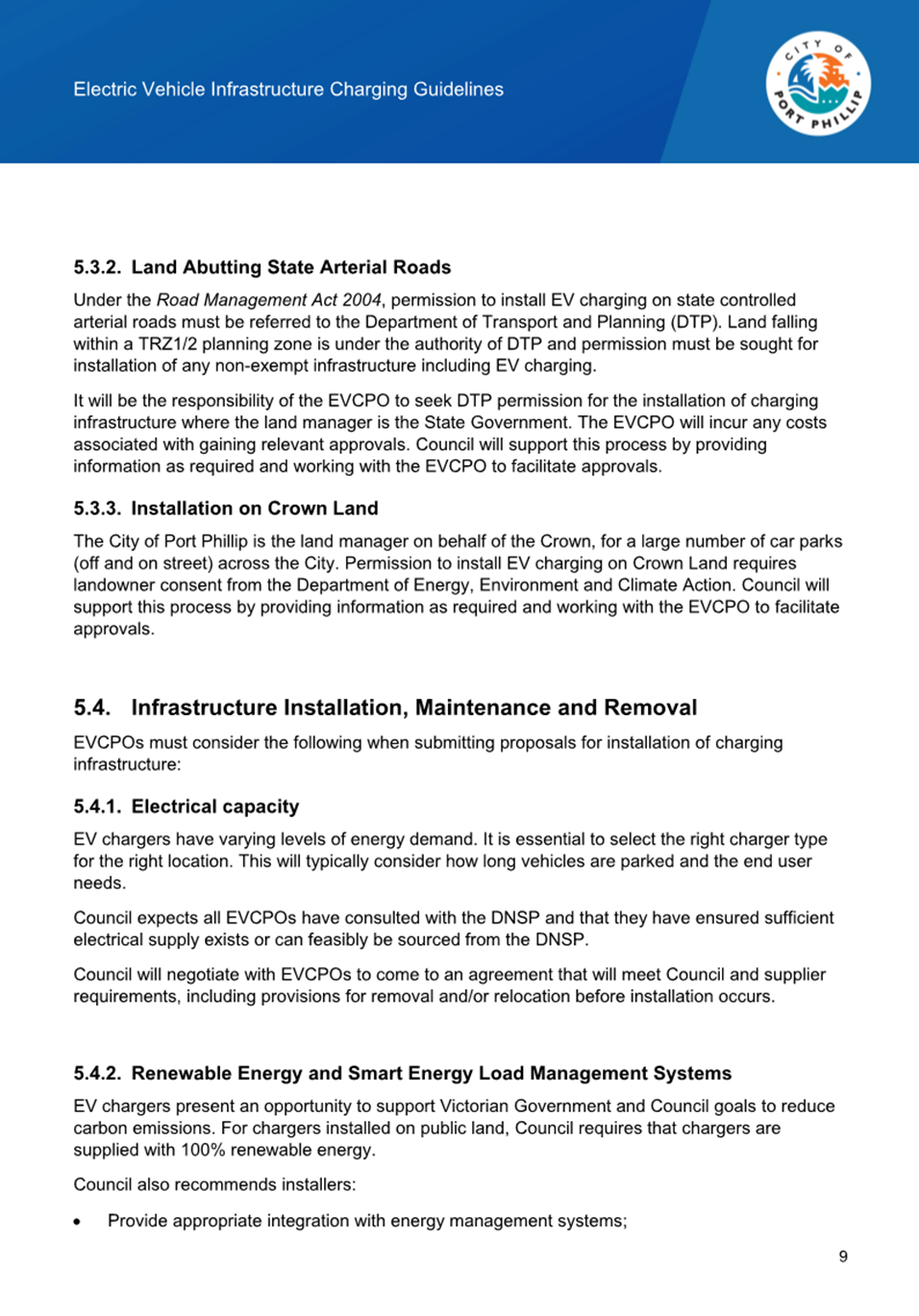
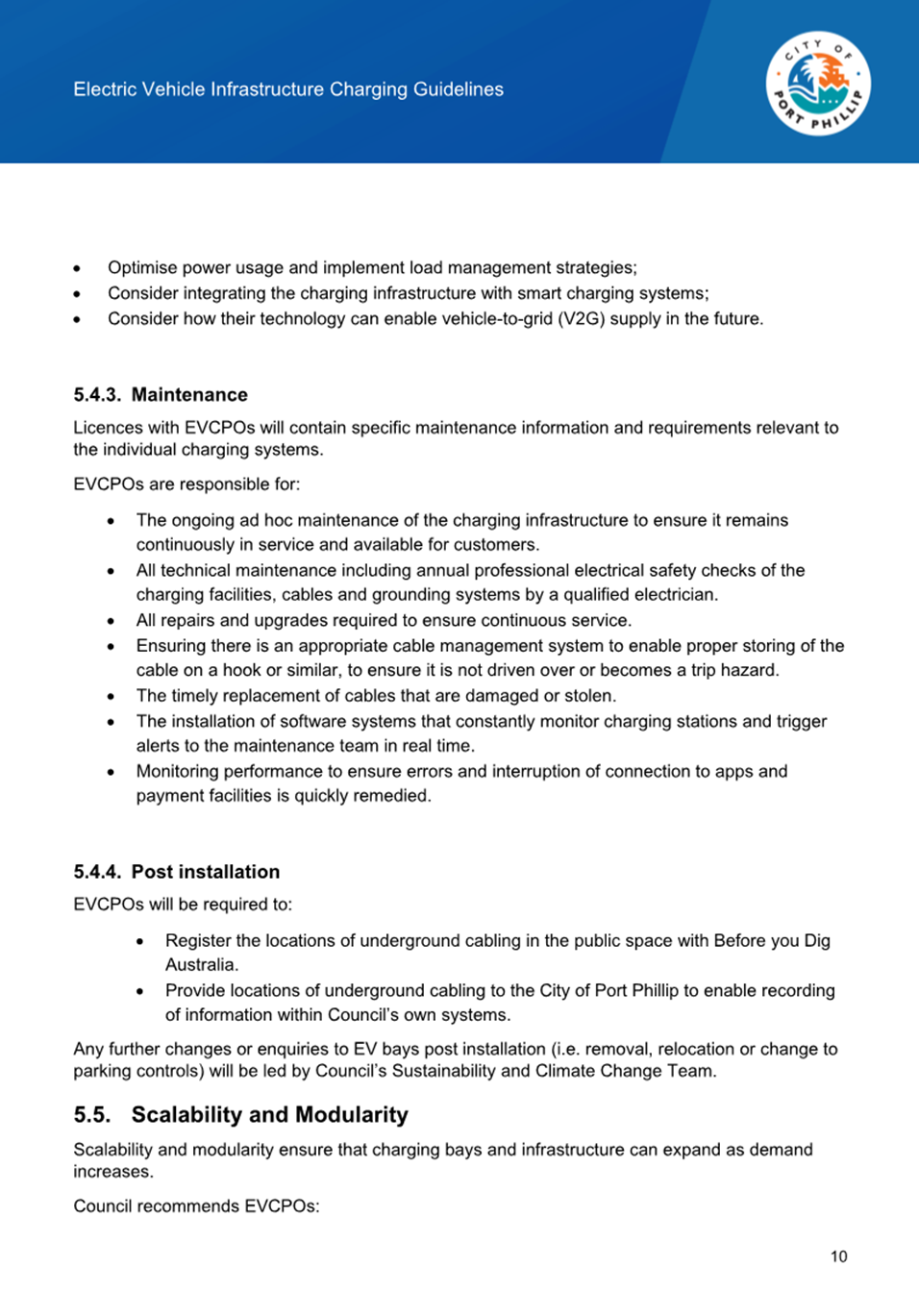
4.9 In order to support understanding of Council’s expectations, Officers have developed Electric Vehicle Charging Infrastructure Guidelines (The Guidelines). The Guidelines capture previous Council decisions and provide direction on:
· The EVCPO selection and installation process for charge station locations
· The management, maintenance and removal of EV chargers
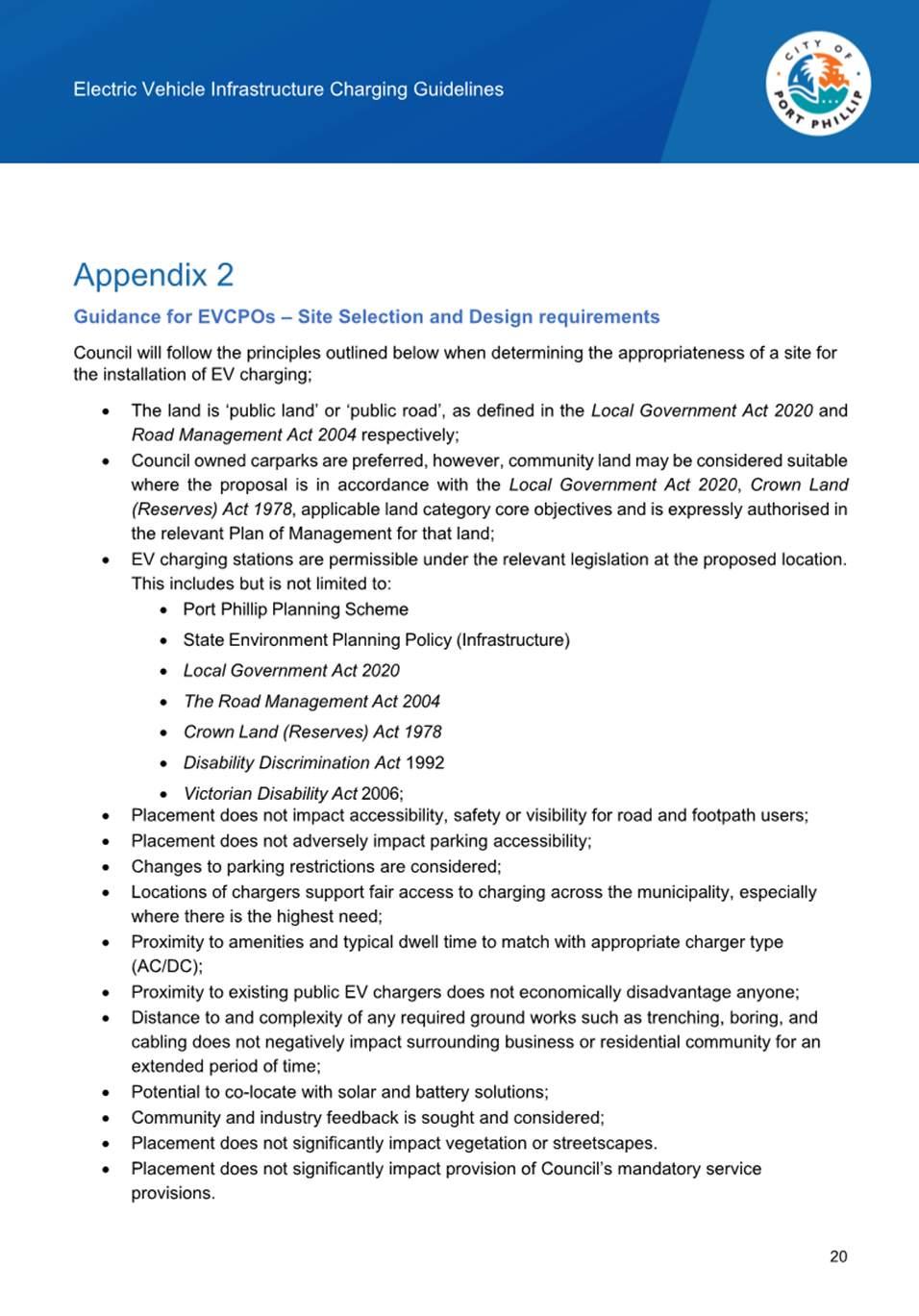
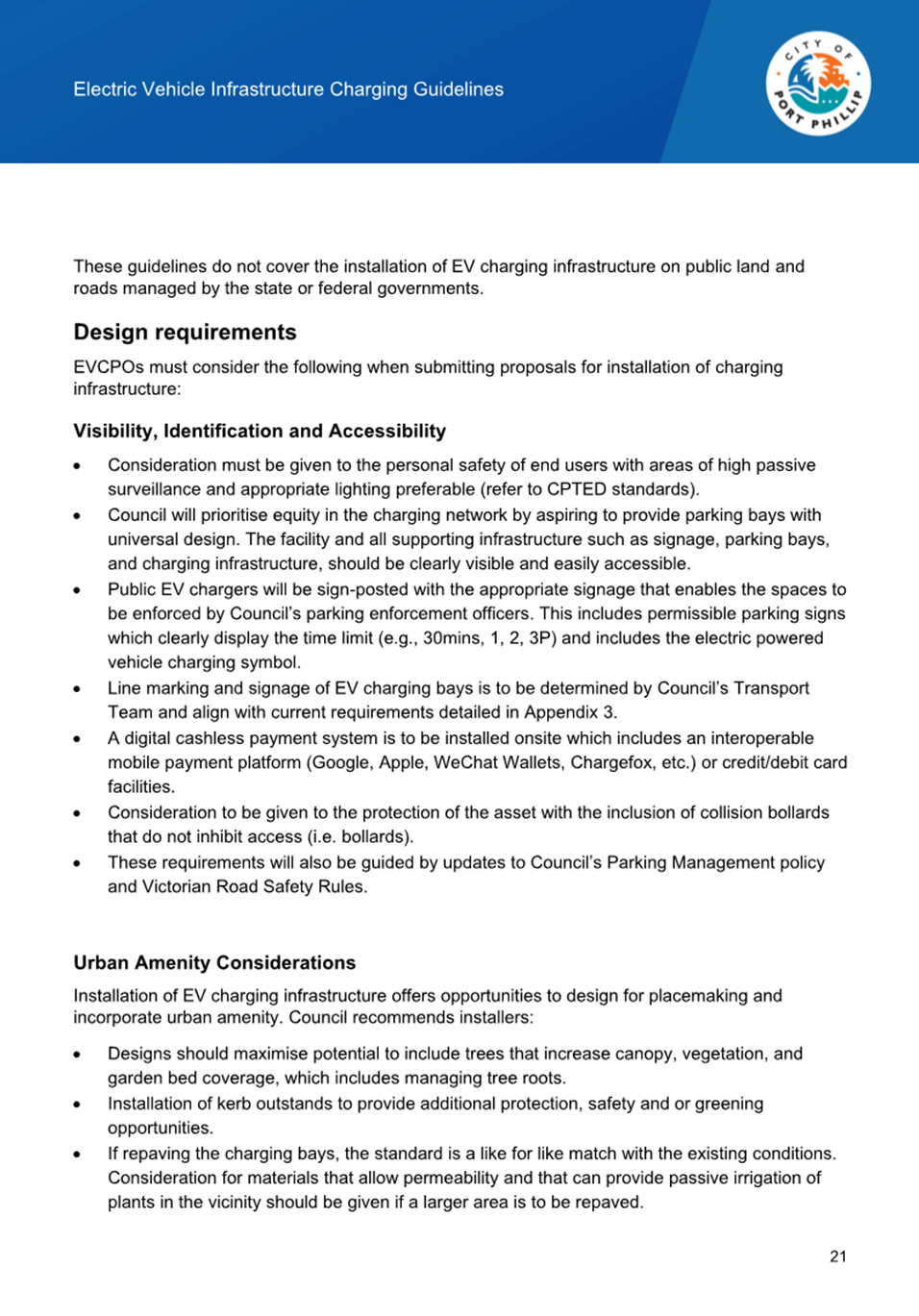
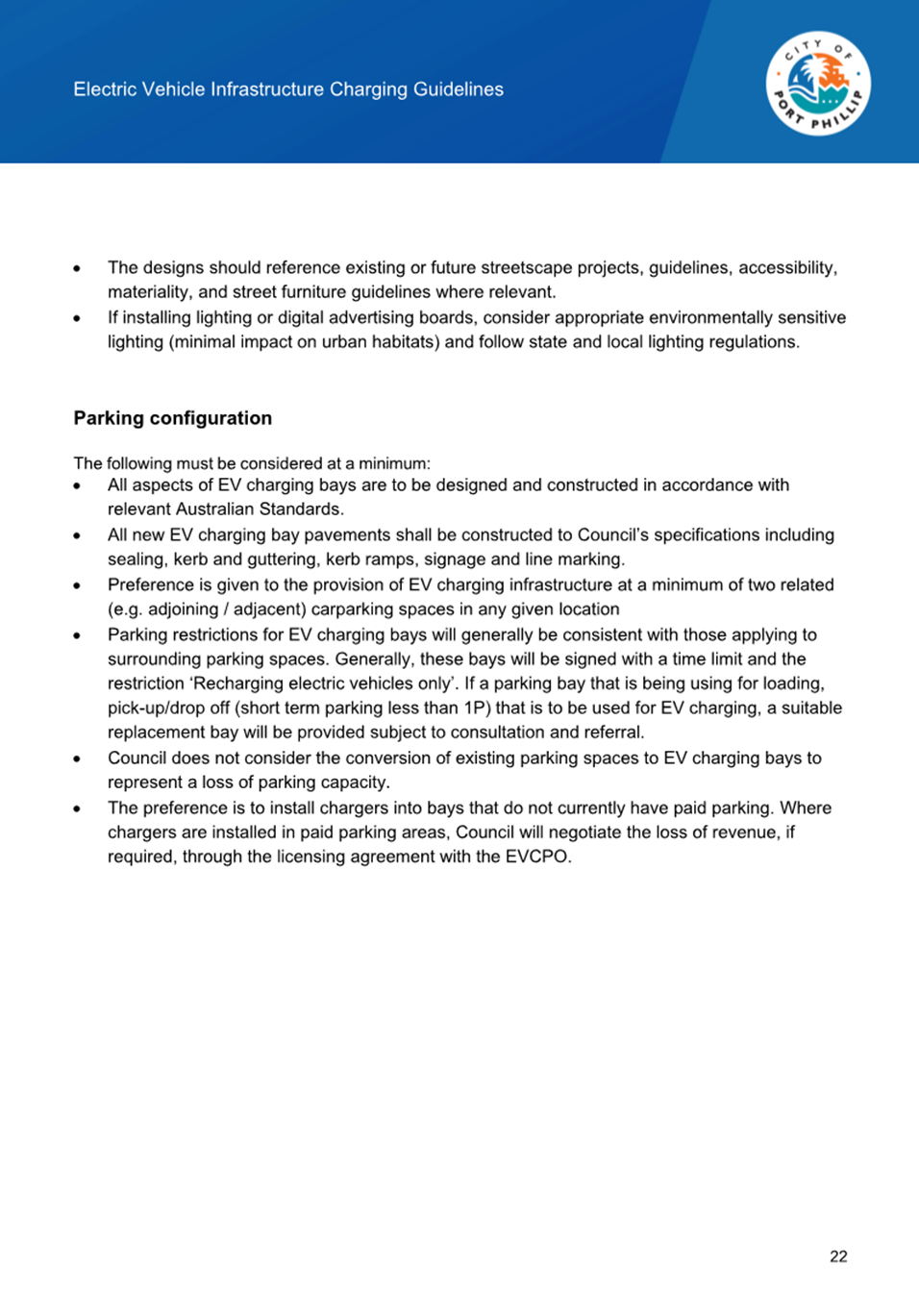
· Urban design requirements and siting considerations
· Ownership and funding models
· Communication and data standards
· Safety and compliance requirements.
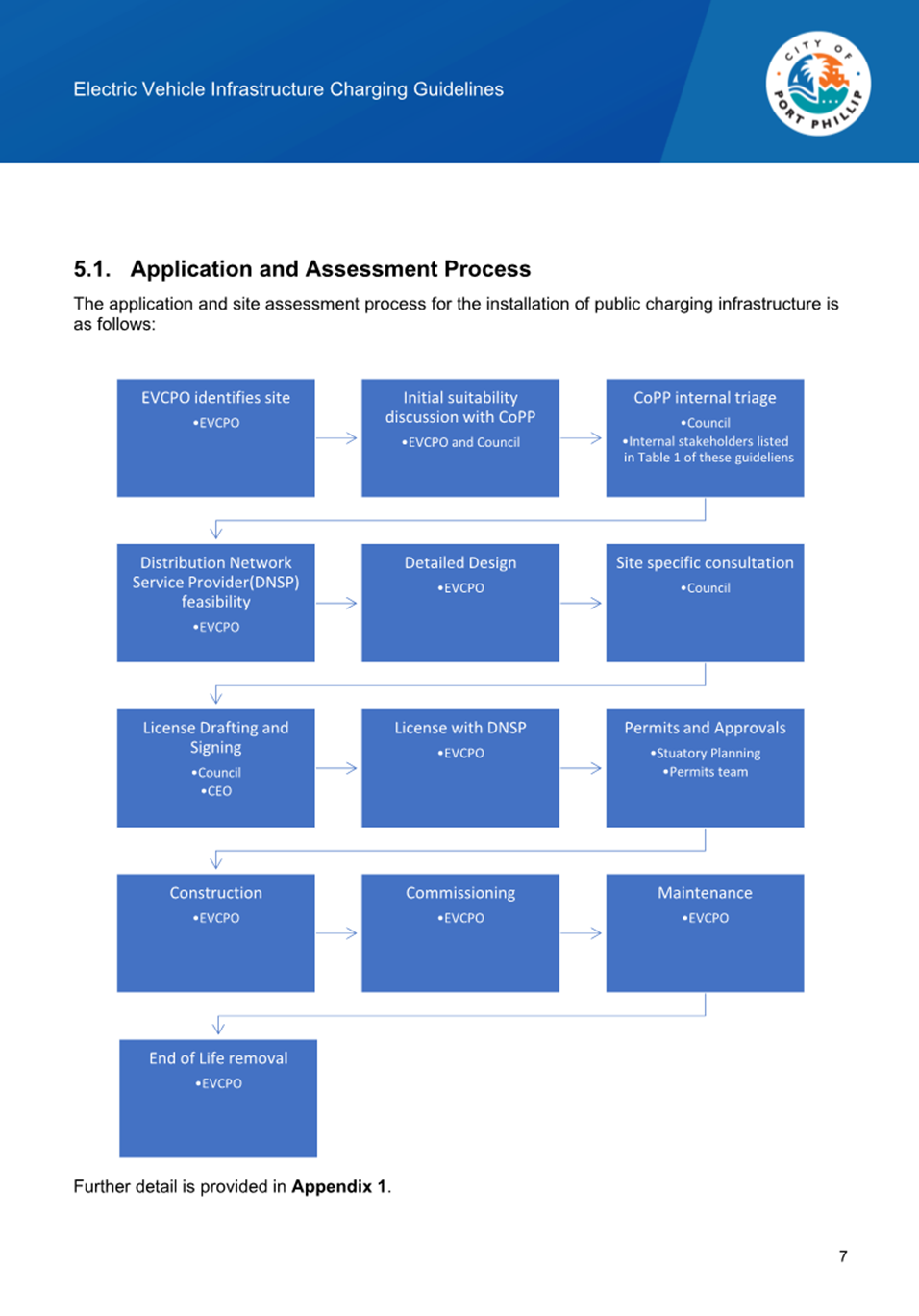
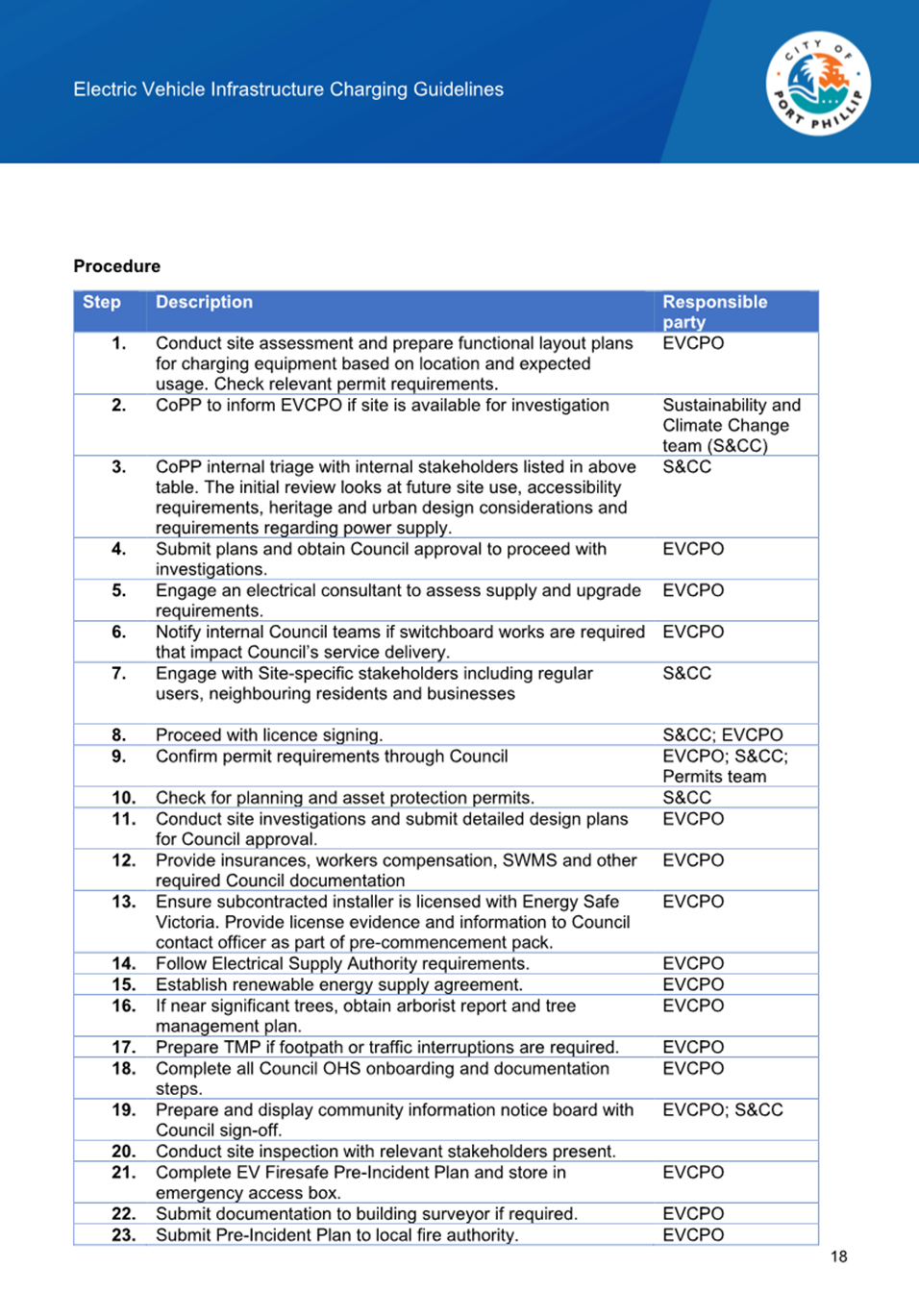
4.10 The Guidelines cover the current application and assessment process which is outlined on page 7 of the Guidelines and is detailed below.
· Provider identifies a location and discusses suitability with Council.
· Once a provider has identified a site, it is recorded in our database. If additional providers identify the same location, they are informed that it is under review and they will be told if it becomes available for investigation.
· Council provides an initial response based on an internal referral process that looks at future site use, accessibility requirements, heritage and urban design considerations.
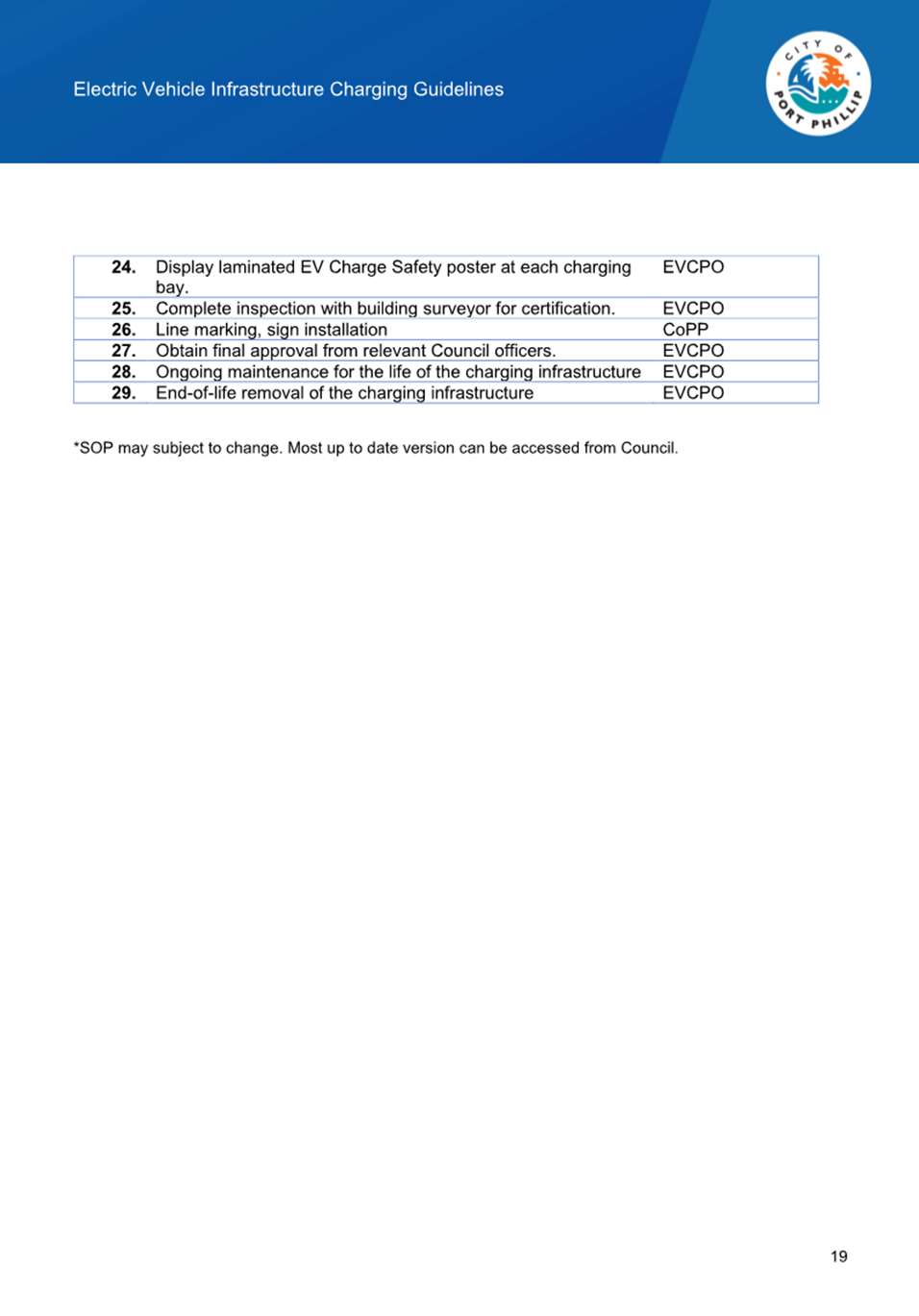
· The provider undertakes a site analysis for power suitability with the Distribution Network Service Provider (DNSP).
· If the site is deemed suitable by Council and the DNSP, Council will draft a license agreement with the EVCPO. The EVCPO is responsible for entering into a license agreement with the DNSP.
· Once ready for signing, a report is brought to Council requesting that Council authorise the CEO (or delegate) to execute the license agreement.
5. CONSULTATION AND STAKEHOLDERS
Expansion of private electric vehicle charging pilot
5.1 Officers have engaged internally across Council to identify concerns with expanding the pilot. No concerns were raised.
5.2 Community feedback will form part of the review and evaluation of the proposed expansion for new technologies.
Electric Vehicle Charging Infrastructure Guidelines
5.3 Officers have engaged extensively across Council internally with feedback incorporated into the guidelines.
6. LEGAL AND RISK IMPLICATIONS
6.1 The provision of both public and private EV charging infrastructure presents distinct legal and operational risks that require careful management.
6.2 The Guidelines contain expectations regarding installation of charging infrastructure. This further aims to reduce a range of risks related to safety and compliance and commercial risks.
Expansion of private kerbside EV charger pilot
6.3 The permit conditions are an important tool to manage risk. The permit conditions regulate and manage works and infrastructure within Council-managed road reserves, ensuring public safety, asset protection, and minimise disruption to the community. They aim to:
6.3.1 Ensure
Safe and Orderly Works
The conditions set out requirements for how works must be conducted, including timelines,
site cleanliness, traffic and pedestrian management, and reinstatement
obligations. This helps ensure the activities are undertaken safely,
efficiently, and with minimal risk to the public.
6.3.2 Protect
Council Infrastructure and Assets
The permit-holder is responsible for any damage to roads, footpaths,
drains, trees, and other Council assets, and must carry out reinstatement to
Council standards. This safeguards the long-term integrity of municipal
infrastructure.
6.3.3 Manage
Community and Traffic Impacts
Through mandated traffic management plans, peak period restrictions, and
pedestrian access requirements, the conditions reduce disruption to road users,
public transport, and surrounding residents and businesses.
6.3.4 Set
Clear Responsibilities and Liability
The conditions establish the permit-holder's accountability for the site,
including public liability insurance, compliance with relevant laws, and
maintenance obligations. This reduces risk and ensures that Council is
protected from claims.
6.3.5 Provide
for Council Oversight and Flexibility
Council retains the right to amend or revoke permits and conditions, and to
access or reclaim land for maintenance or operational reasons. This maintains
Council’s control over the public realm and responsive asset management.
6.3.6 Support
Safe EV Charger Use in Public Space
For electric vehicle charger installations, the conditions ensure
appropriate use, prevent monopolisation of public space, and promote safety and
equitable access. Chargers must only be used the resident who owns the system,
must remain flush with footpath and hazard-free when not in use, and must not
interfere with stormwater or footpath uses.
6.4 Residents may provide feedback to Council about the proposed devices to be included in the expanded private kerbside electric vehicle charger pilot. This will be considered during the evaluation process.
Legislative and Regulatory Risk
6.5 To regulate private EV chargers in a way that adequately manages long-term liability, indemnity, and enforcement legal advice was received and recommended the position supported at the 5 June 2024 meeting Council to limit the duration of the trial to 4 years OR the installation of 100 private EV chargers, whichever comes first. Thereafter, Council will consider if private EV chargers are still necessary or if Council can stop supporting private EV chargers because there are viable alternative public charging models.
Liability and Insurance Risk
6.6 Council is indemnified under its municipal insurance policy (MAV Insurance). This coverage does not extend to individual permit holders who install private chargers. As such, in the absence of a robust indemnity agreement, Council may be exposed to third-party claims in the event of injury or damage caused by charger infrastructure. (e.g. electrocution, trips, or damage to vehicles or pedestrians).
6.7 Officers strongly encourage permit holders obtain and maintain public liability insurance, and conditions of the permit clearly acknowledge the resident’s legal liability and maintenance obligations:
· Mandatory $20 million Public Liability Insurance
· Consent-holder accepts all liability by agreeing to conditions
Operational and Infrastructure Risk
6.8 Private chargers installed on nature strips or footpaths may impede Council’s ability to:
· Deliver future infrastructure upgrades (e.g. footpath renewals, kerb realignments, or street tree planting), or respond to emergency or planned utility works
6.9 Conditions applied to permits manage these risks by requiring removal of infrastructure at the resident’s cost.
Environmental and Flood Risk
6.10 Any device installed in the ground is susceptible to inundation through rainfall, blocked drains, burst pipes, irrigation etc. Infrastructure in flood-prone locations carries elevated risks of inundation, but it is critical that permitted devices installed anywhere are electrically safe, have sufficient safeguards and do not pose an unacceptable safety risk to the public.
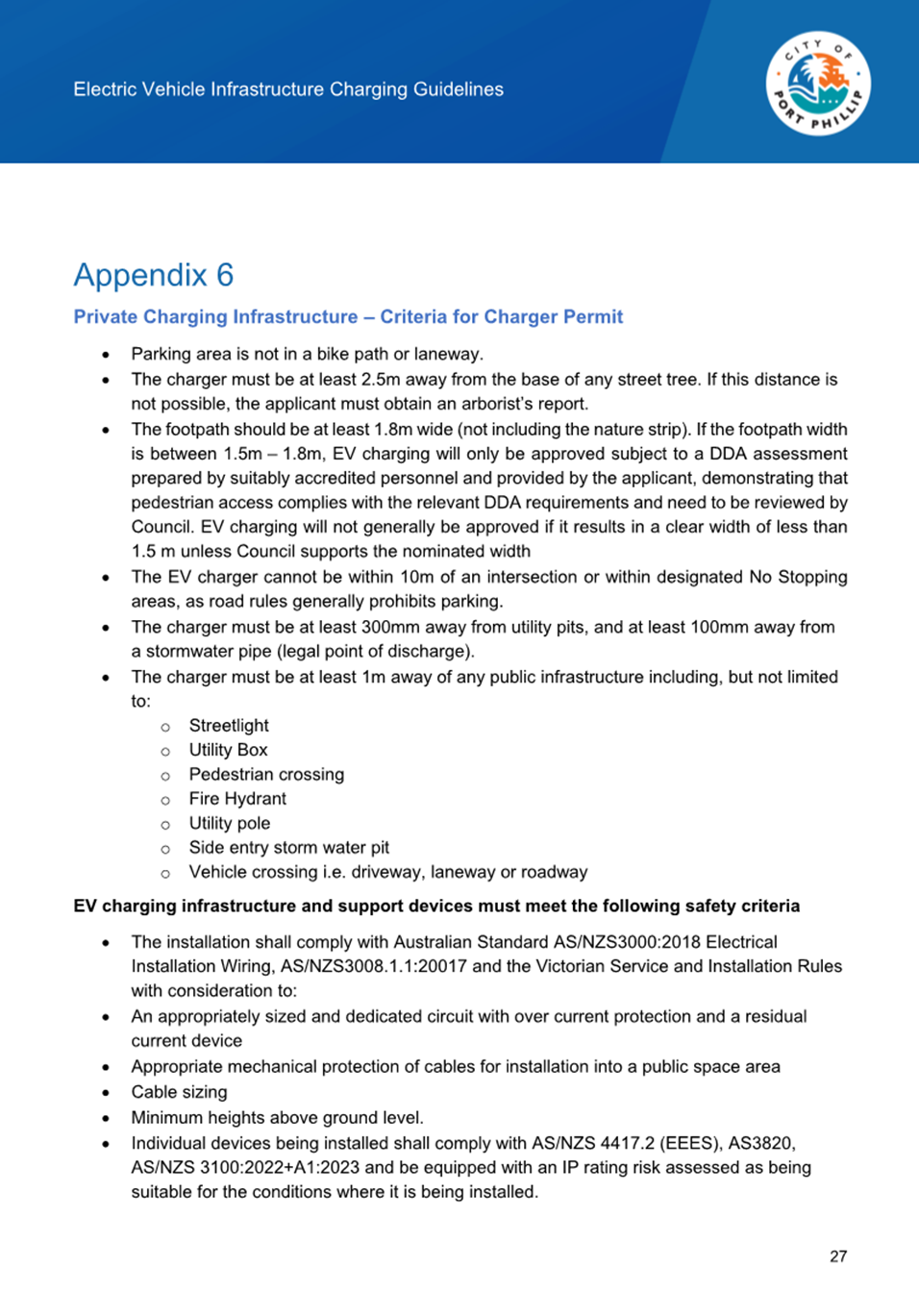
6.11 Council has developed criteria that must be met by private charging providers. These can be found in the Private Kerbside Electric Vehicle Charging Infrastructure Application
Procurement and Market Access Risk
6.12 The initial pilot was delivered working closely with a single supplier. By expanding the pilot to include additional suppliers Council is reducing perceived risk of exclusivity or conflict with Council’s procurement policy under the Local Government Act 2020.
6.13 Council is not procuring any goods or services through the pilot and is ‘technology agnostic’ in the sense that it has not prohibited other technology providers.
OHS Risk
6.14 Council staff or contractors working on public land or assets in the vicinity of the chargers would be covered under Council’s workplace OHS insurance, and Council could be liable for any injury caused because of a fault in the private infrastructure.
6.15 Several conditions ensure that the devices are well constructed, installed, and maintained (waterproof, sturdy build), that defects and damage is promptly fixed, and public assets (footpaths, drainage, trees) remain protected over the life of the installation.
6.16 Council governs contractors’ safety management systems ensuring they have safe work method statements. Council can ensure contract managers inform contractors they will be working in areas that might be near the chargers, and ensure they have adequate systems in place.
6.17 In addition to registration with Before You Dig Australia, flags can be added to Council’s GIS system to identify properties with chargers. This will then make it easier to highlight to contractors that there is a device in the vicinity.
7. FINANCIAL IMPACT
7.1 The expansion of the private kerbside EV charger pilot will be covered within the current resources.
7.2 To offset part of the Council costs, permit application fees were increased in June 2024 to $500 from $132.
7.3 Officers have the option to assess applications in batches. The low number of applications has meant this approach has not been needed to date.
8. ENVIRONMENTAL IMPACT
8.1 The transition to EVs will lead to lower community greenhouse gas emissions and improved air quality.
8.2 Emissions reductions depend on the electricity source; however, as the grid continues to decarbonise, the environmental benefit will increase over time.
8.3 The transition to EVs will lead to less localised air pollution (e.g. nitrogen oxides, particulate matter) improving urban air quality, benefiting public health.
8.4 EVs are quieter than petrol and diesel vehicles, contributing to lower noise pollution.
9. COMMUNITY IMPACT
9.1 Increasing the number of charging devices supported through the private kerbside EV charging program, may make the charging of EVs directly from a resident’s home more accessible and affordable. This benefit will increase if solar or batteries are also being used.
10. Gender Impact Assessment
10.1 Women and gender-diverse people are more likely to consider personal safety when using public spaces, particularly at night. Public EV chargers that are poorly lit, isolated, or in car parks with limited visibility may deter use. Designing charging locations with passive surveillance, good lighting, clear sightlines, and proximity to activity centres helps create a safer and more inclusive environment.
10.2 Women, on average, are more likely to be trip-chaining (e.g. combining work, school drop-off, errands). This means that public charger locations near key destinations (i.e. schools, shops, childcare, health services), or private chargers at home, can better support their travel patterns.
11. ALIGNMENT TO COUNCIL PLAN AND COUNCIL POLICY
11.1 Council is committed to supporting EV adoption through investigation, facilitation, and both public and private EV charging infrastructure, in line with Initiative 30 of the Act and Adapt Sustainable Environment Strategy 2023–28.
12. IMPLEMENTATION STRATEGY
12.1 TIMELINE
12.1.1 Following a decision on the recommendations, Officers would:
· Start the process to expand the private vehicle pilot to include additional devices.
· Make the Electric Vehicle Charging Infrastructure Guidelines final and include a review date of no later than 2 years from endorsement.
12.2 COMMUNICATION
12.2.1 Communicate, via Council’s website, the expansion of the private kerbside electric vehicle charger pilot to include the permitting of additional devices.
12.2.2 Make public the Electric Vehicle Charging Guidelines by placing them on Council’s website.
13. OFFICER MATERIAL OR GENERAL INTEREST
13.1 No officers involved in the preparation of this report has declared a material or general interest in the matter.
|
ATTACHMENTS |
1. Examples of infrastructure to support EV Charging 2. EV Infrastructure Charging Guidelines 2026 |
Meeting of the Port Phillip City Council
18 March 2026
|
Draft Foreshore Management Plan for Public Consultation |
|
|
Executive Member: |
Kylie Bennetts, General Manager, Community Wellbeing |
|
PREPARED BY: |
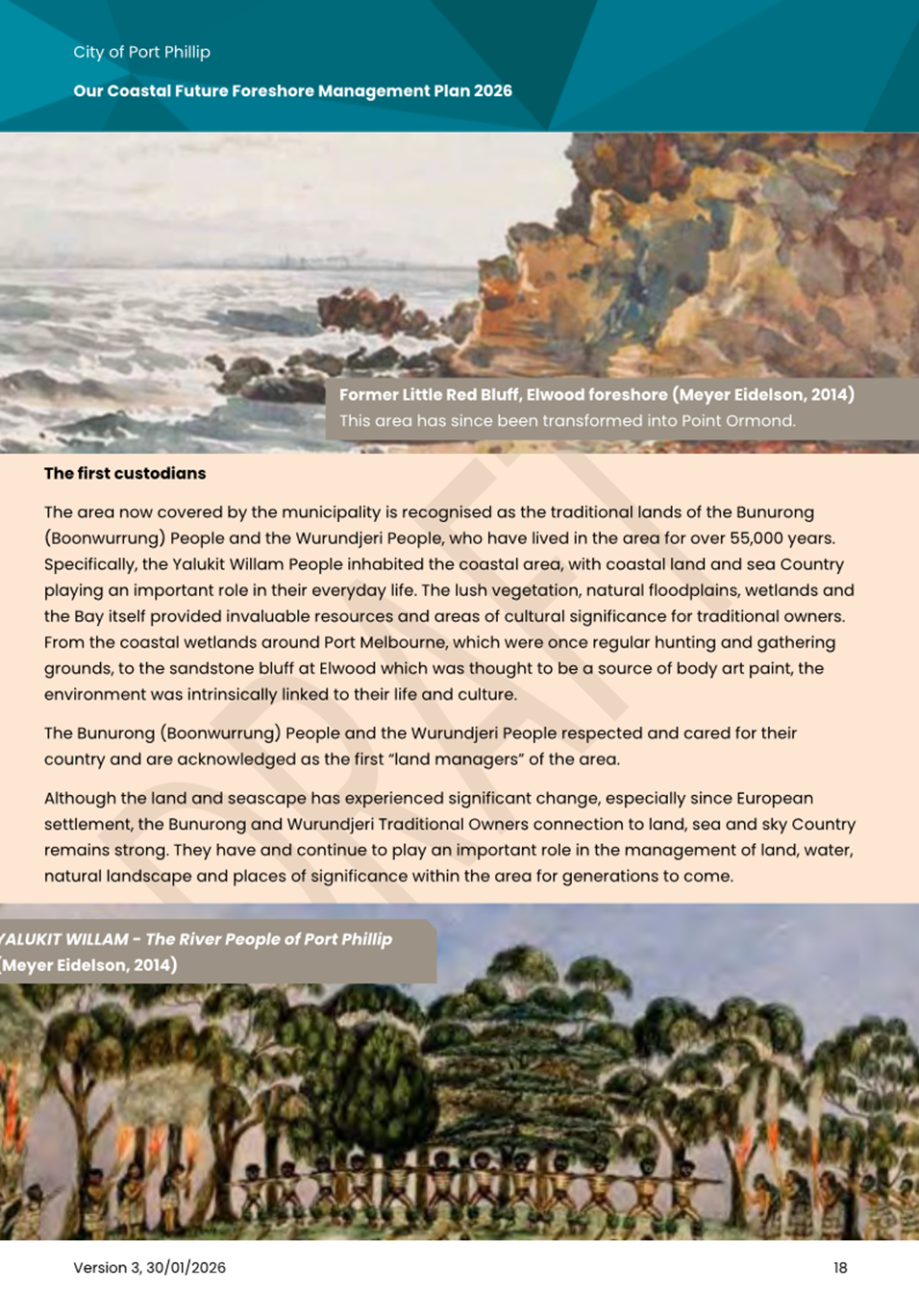
David Hehir, Coordinator Foreshore Monica Qing, Coastal Project Manager (Strategic & Capital) |
1. PURPOSE
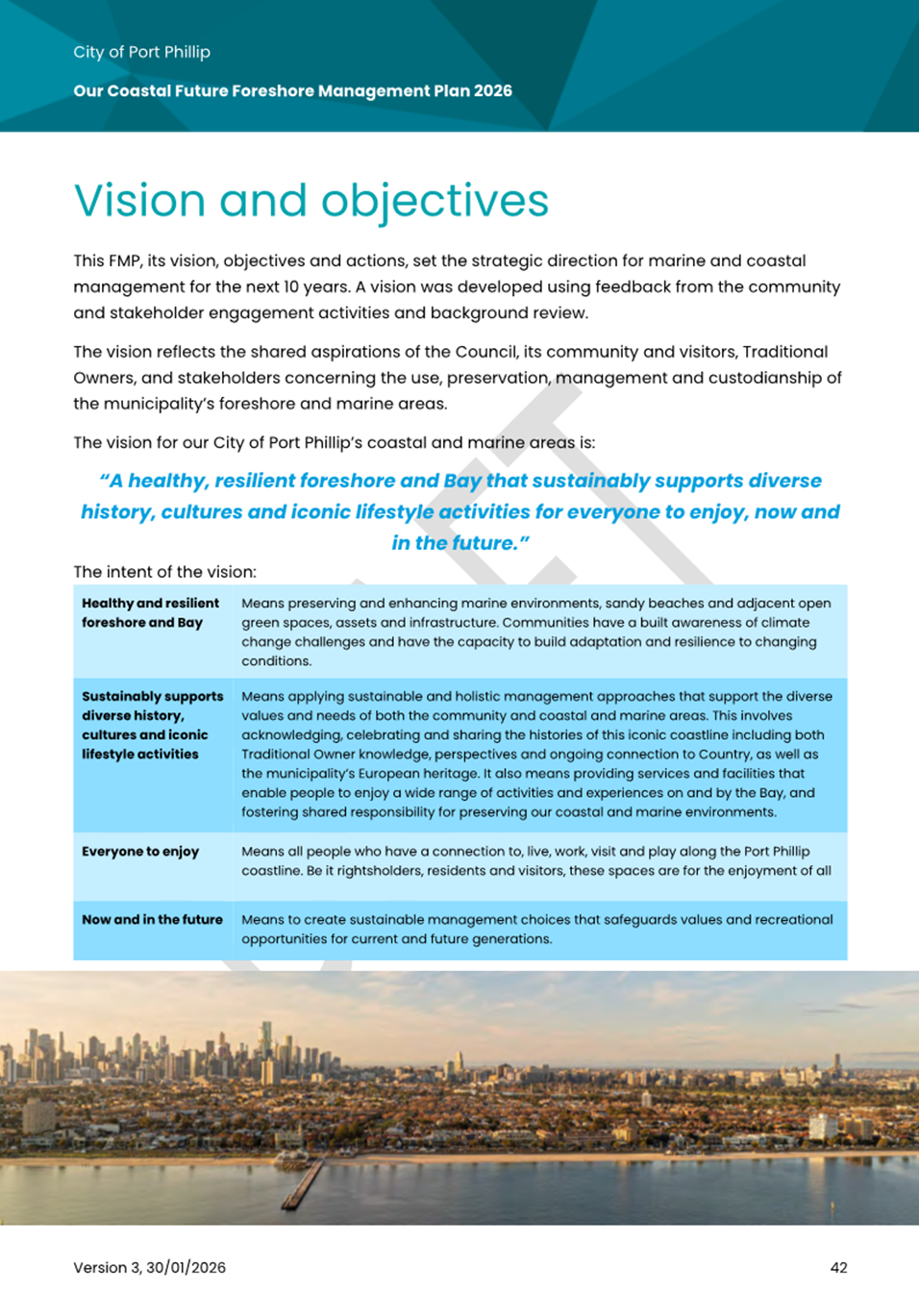
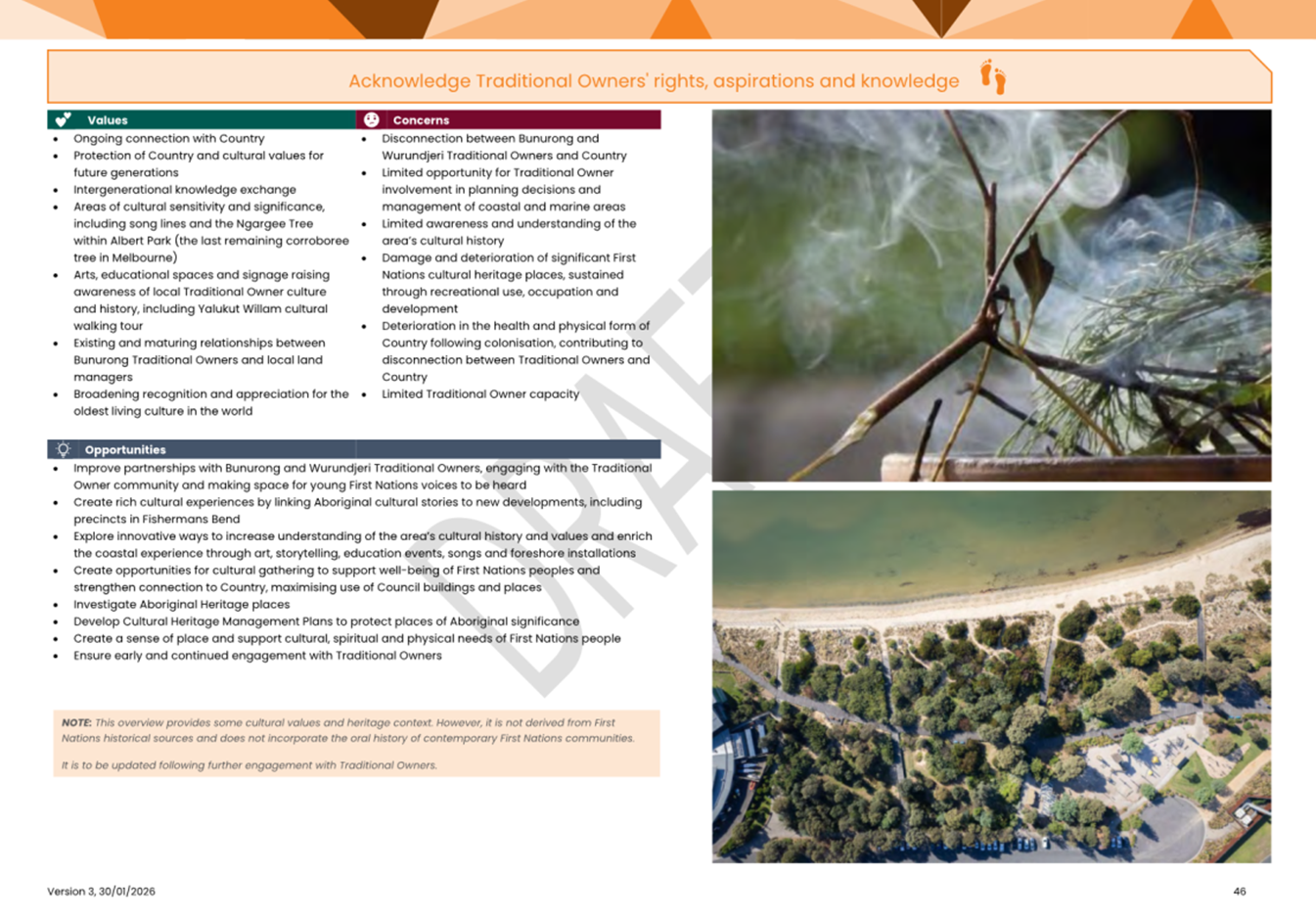
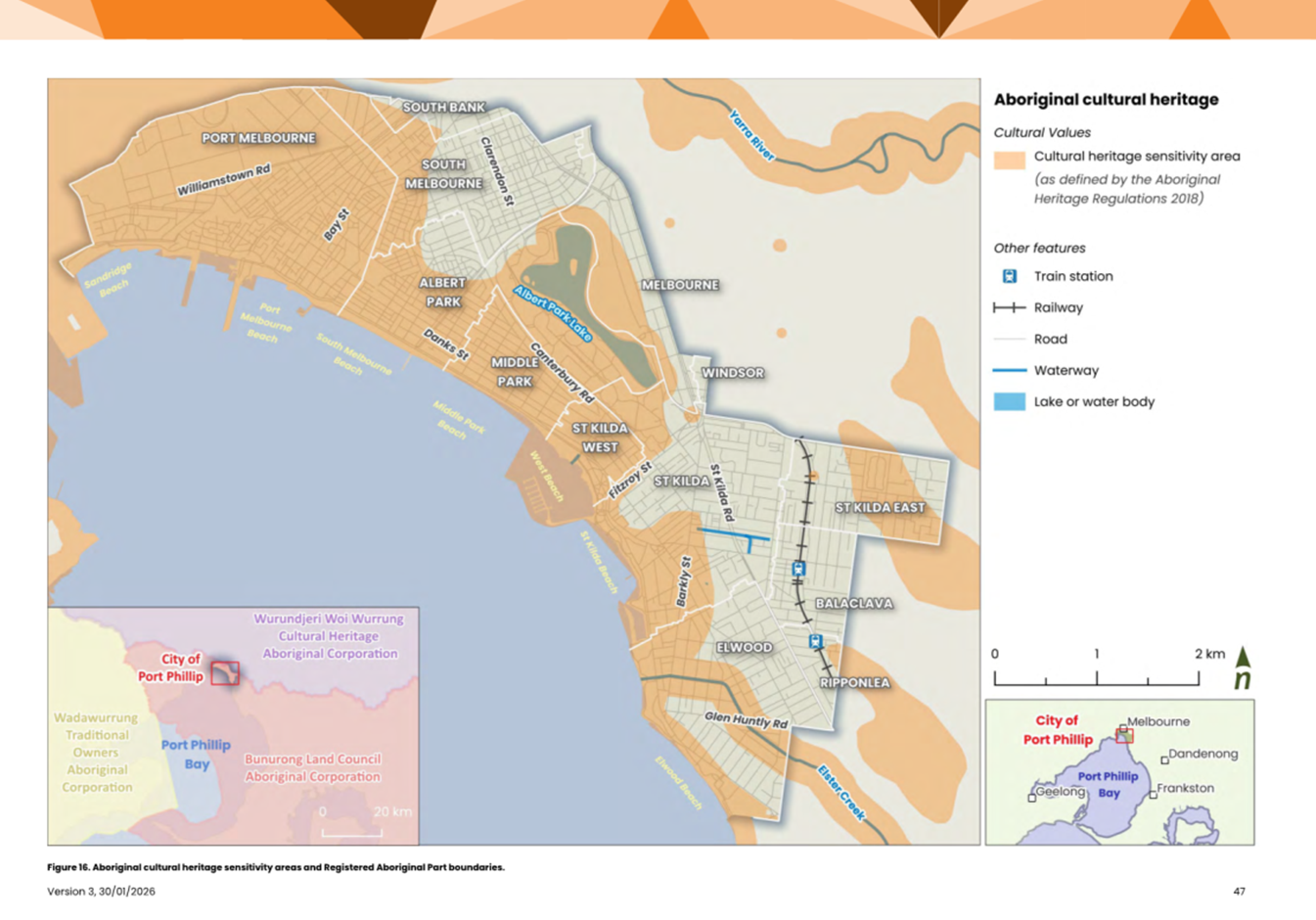
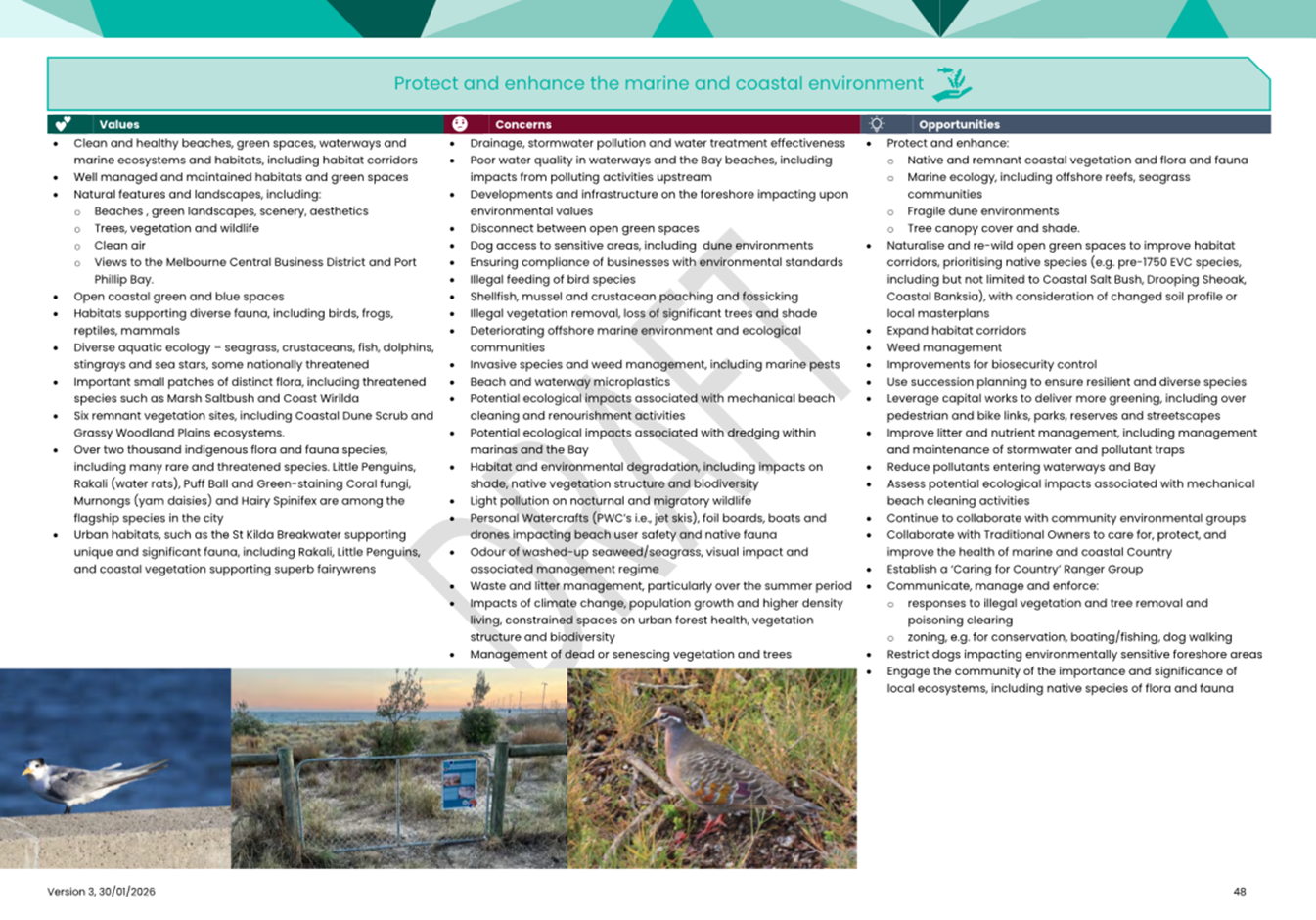
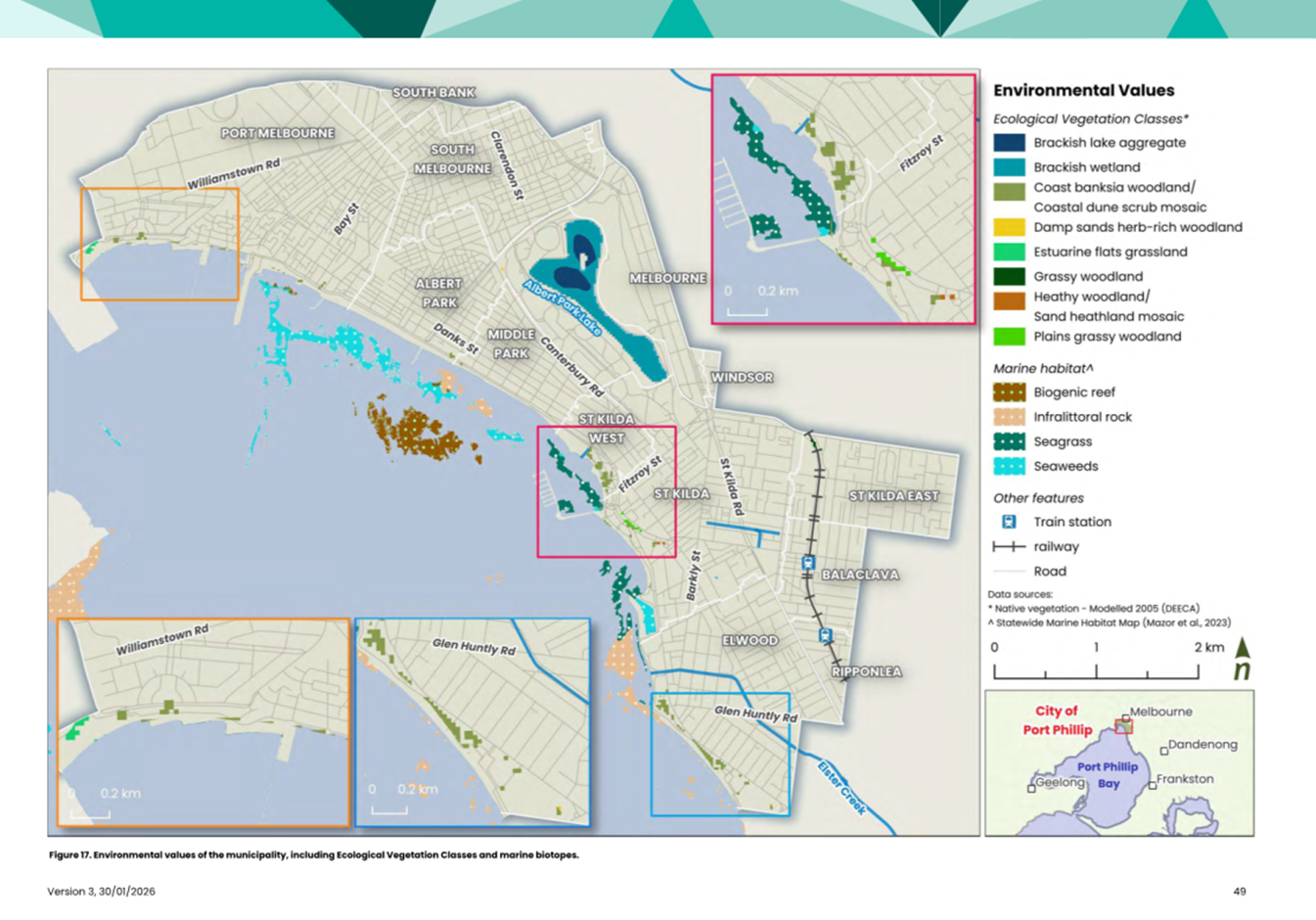
1.1 To present the Draft Foreshore Management Plan (FMP) to Councillors and seek approval to proceed with community engagement.
2. EXECUTIVE Summary
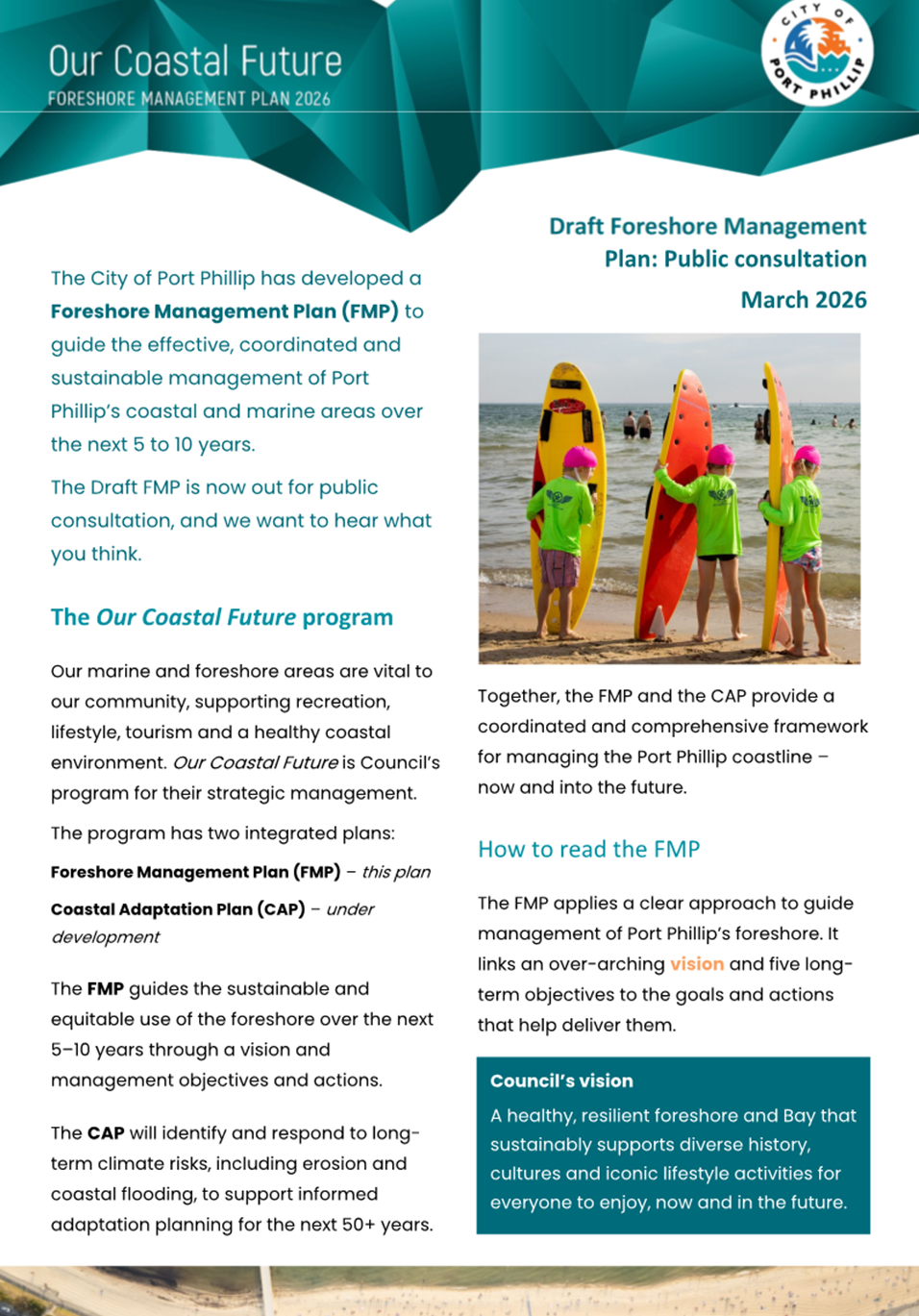
2.1 The Our Coastal Future Program is designed to strategically manage the coastline and ensure we are better prepared for the future in line with the State Government’s legislative requirements.
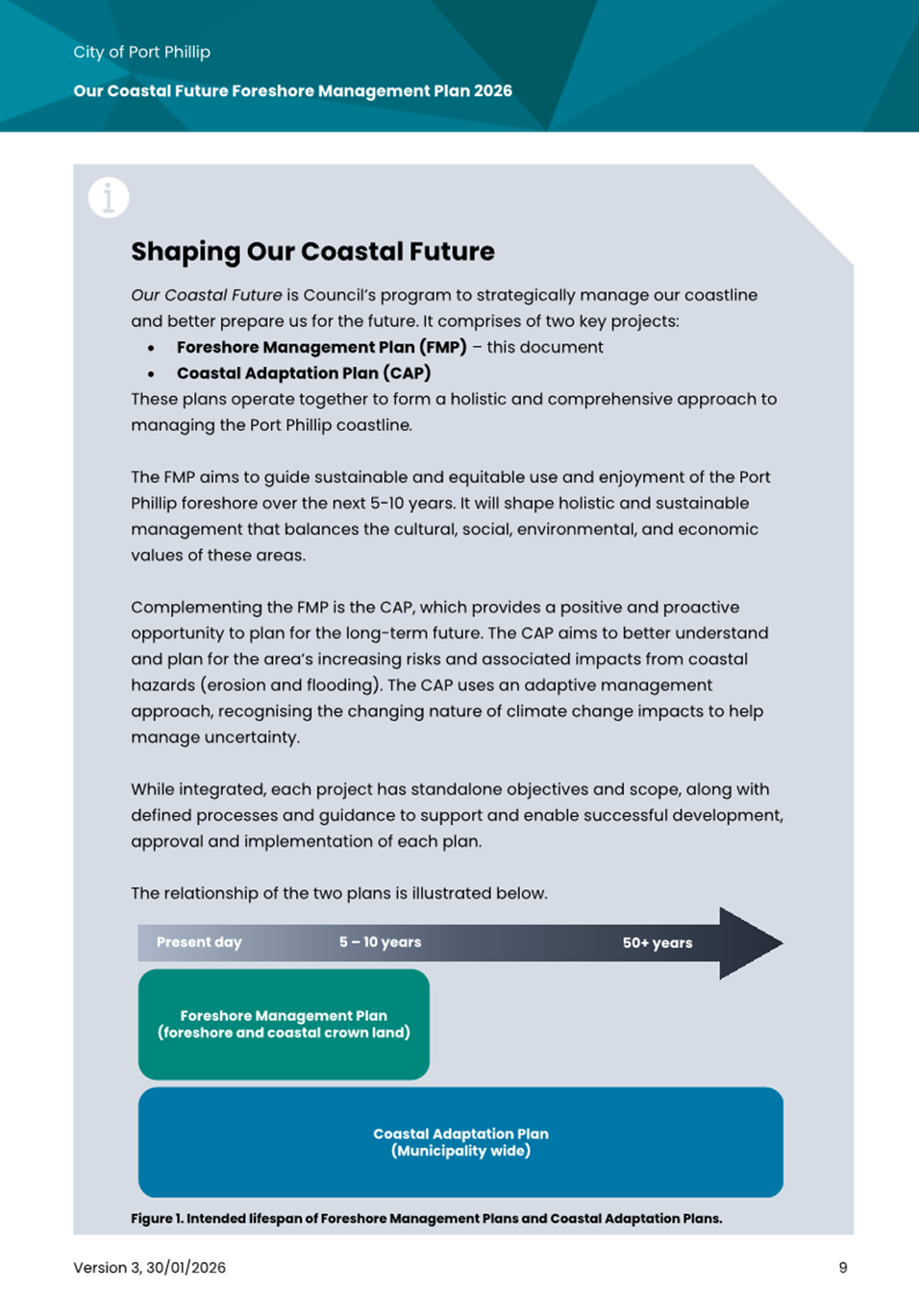
2.2 The Our Coastal Future Program will deliver an updated Foreshore Management Plan (FMP) and a new Coastal Adaptation Plan.
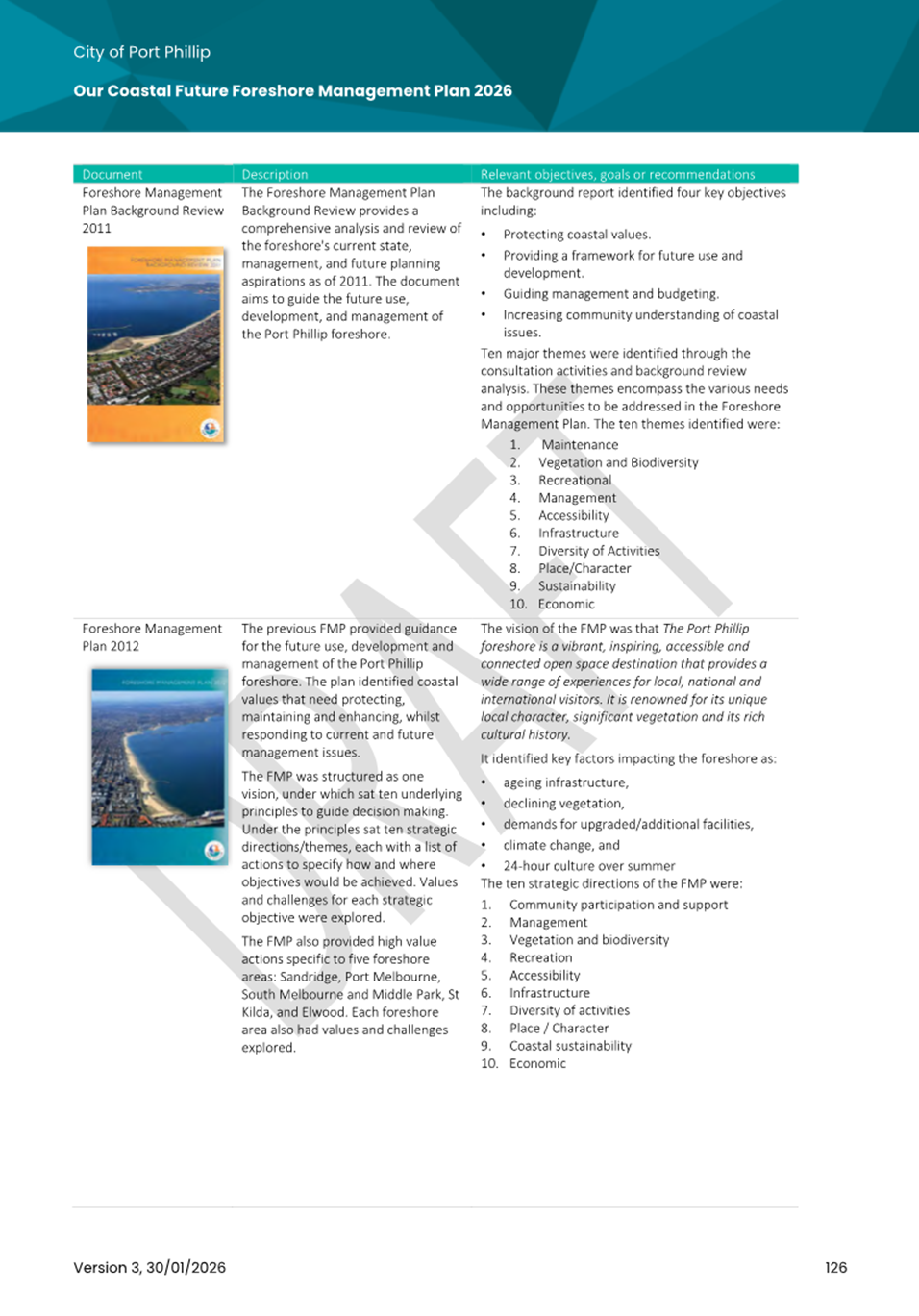
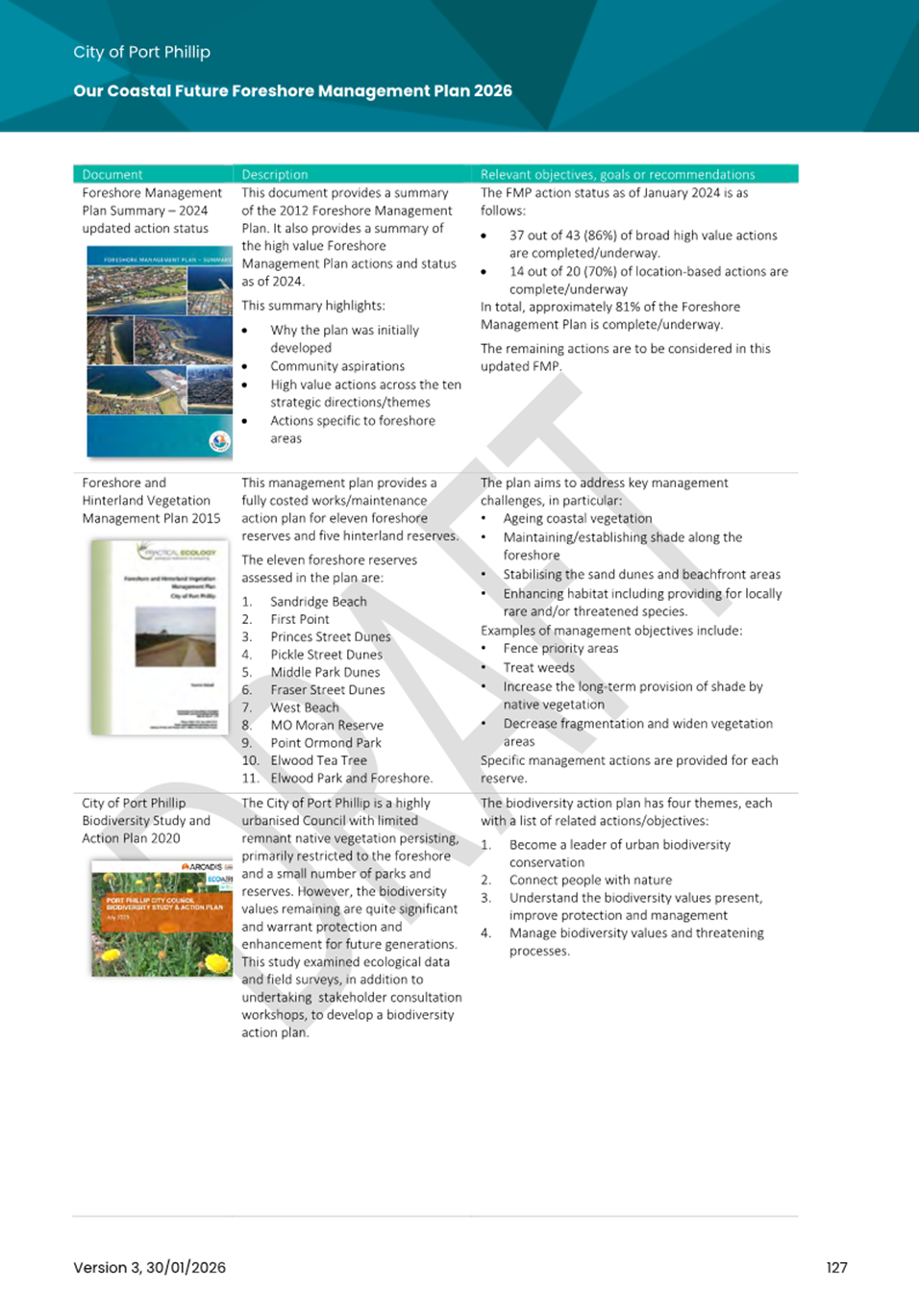
2.3 Published late 2025, the FMP Background Issues and Opportunities Report provides the background context for the project.
2.4 This Report presents to Council the draft FMP – Attachment 1.
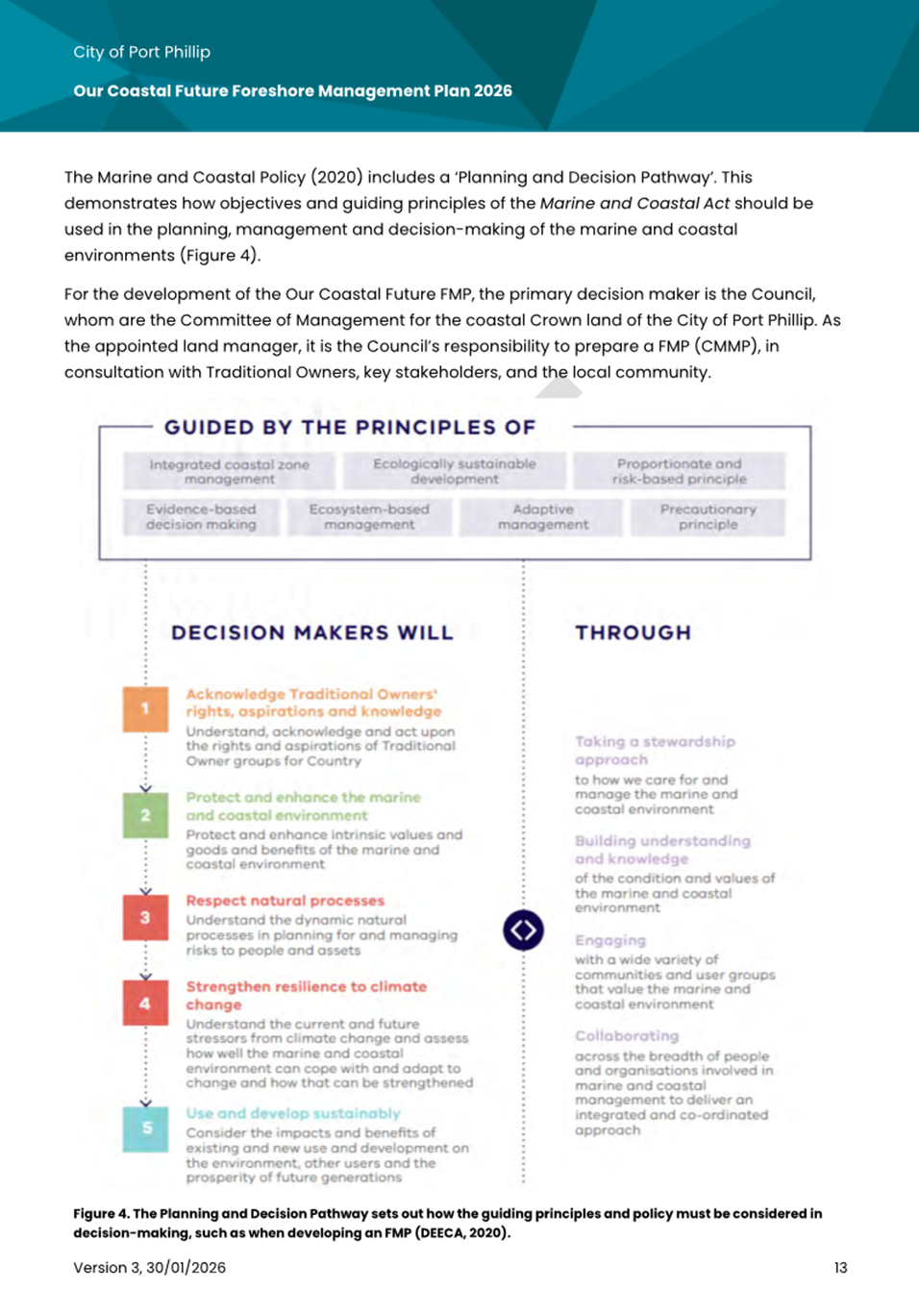
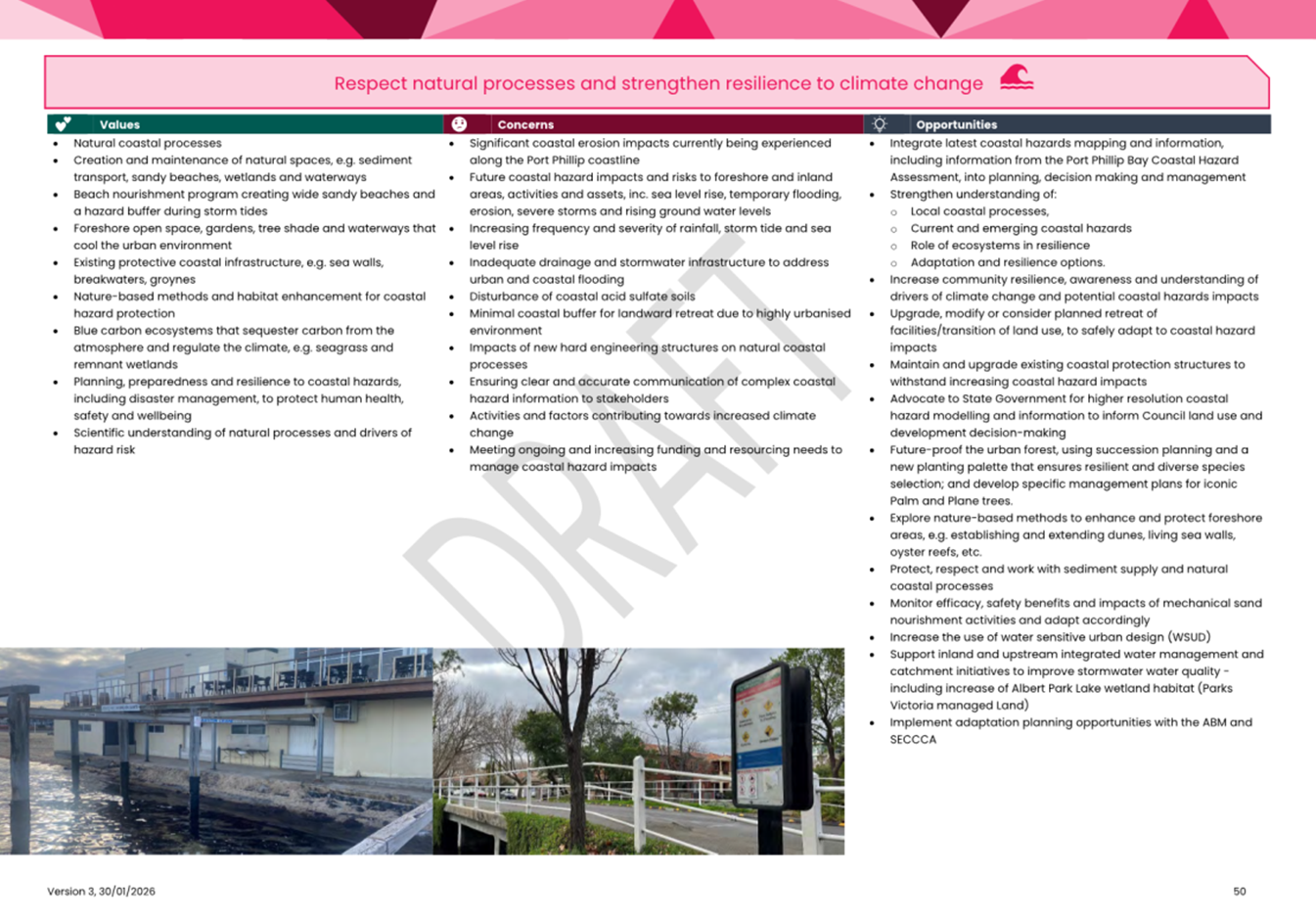
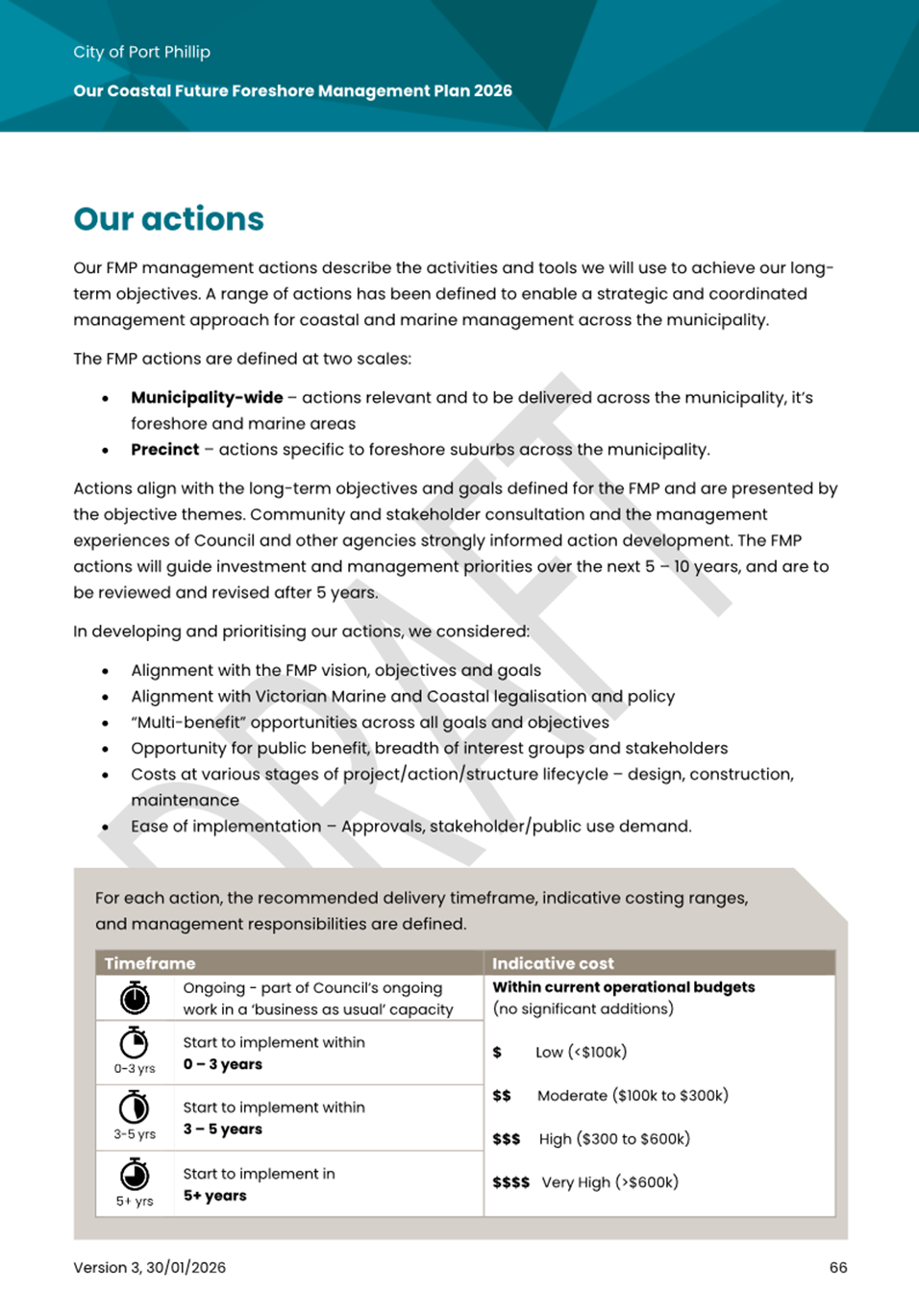
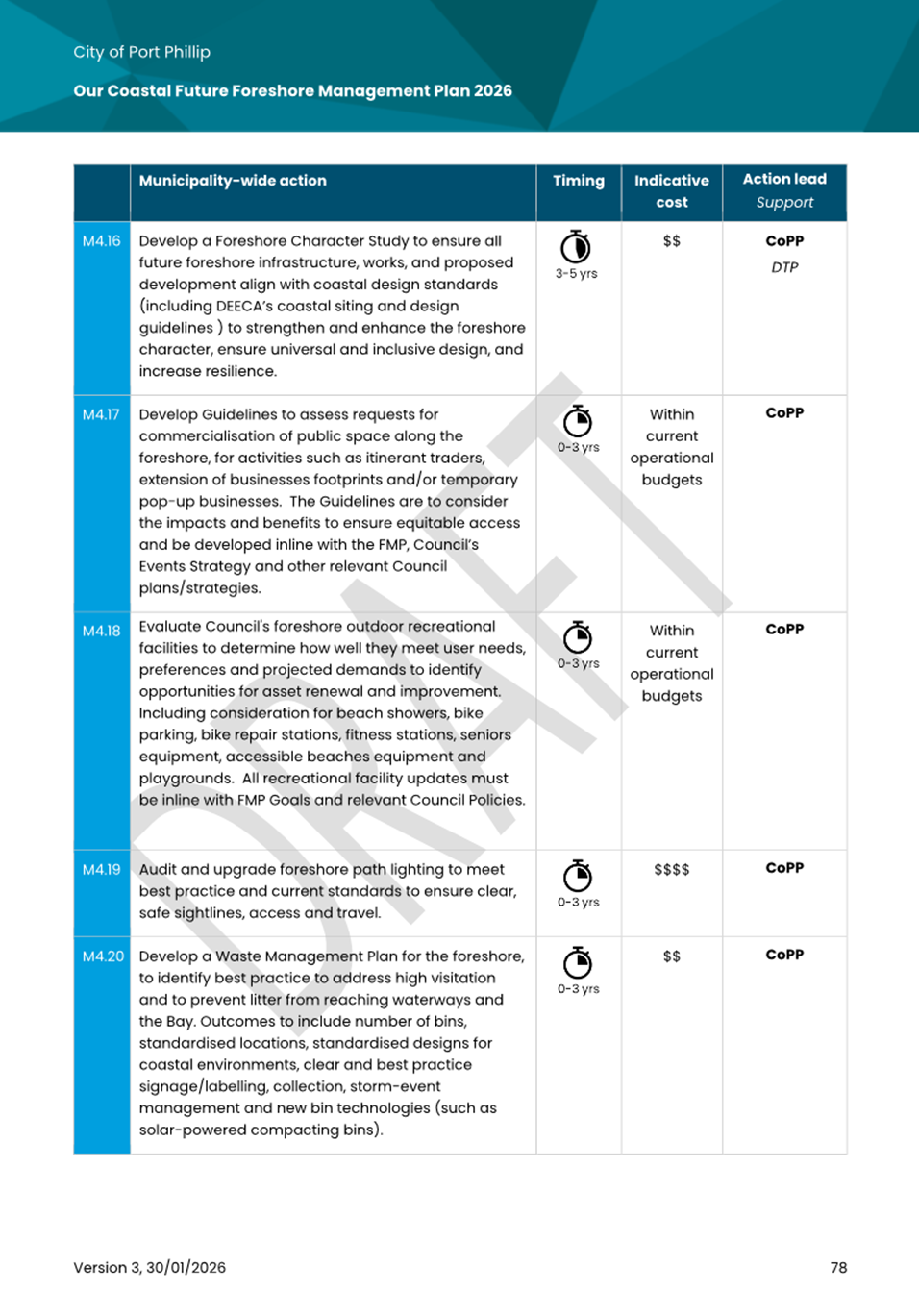
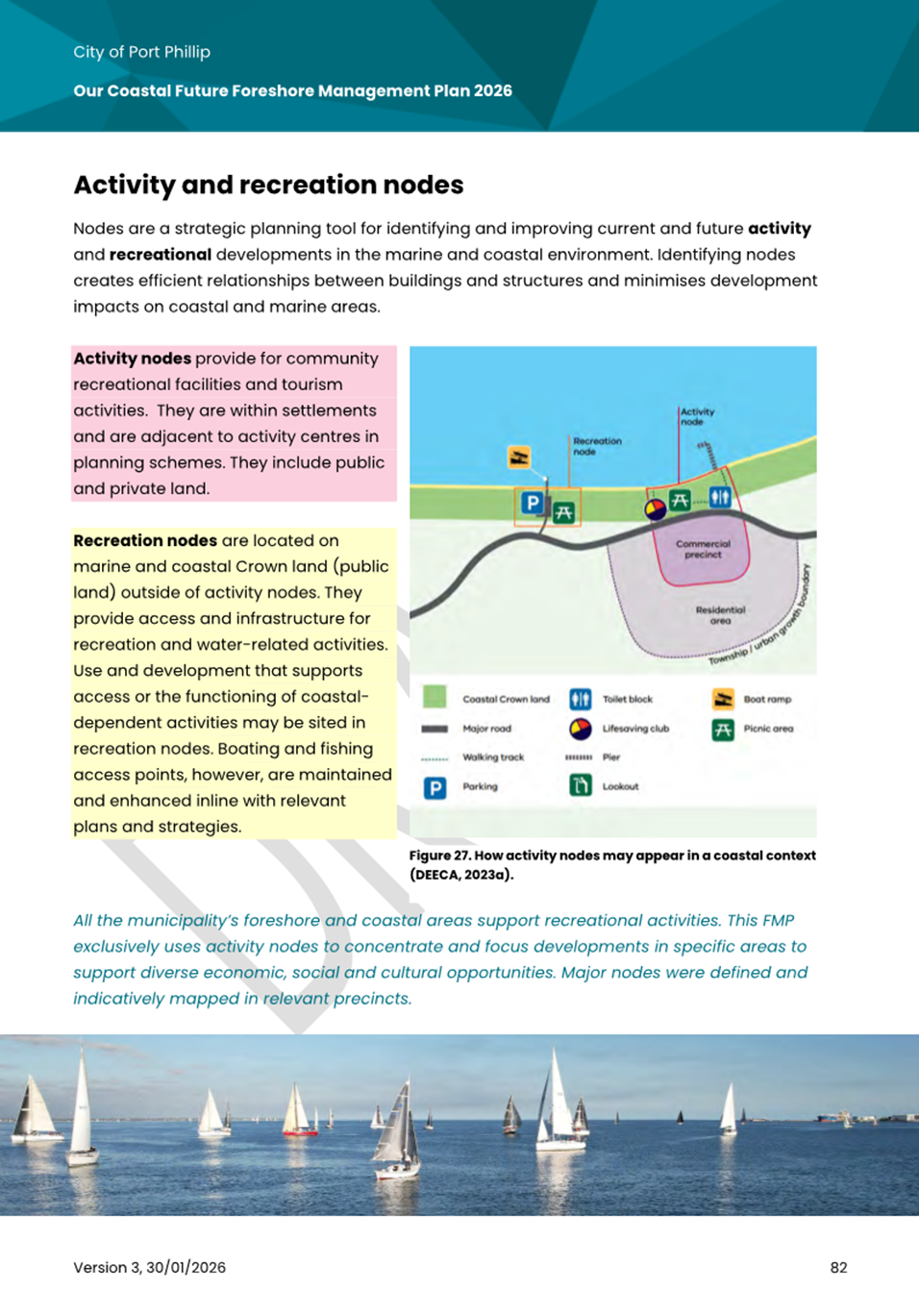
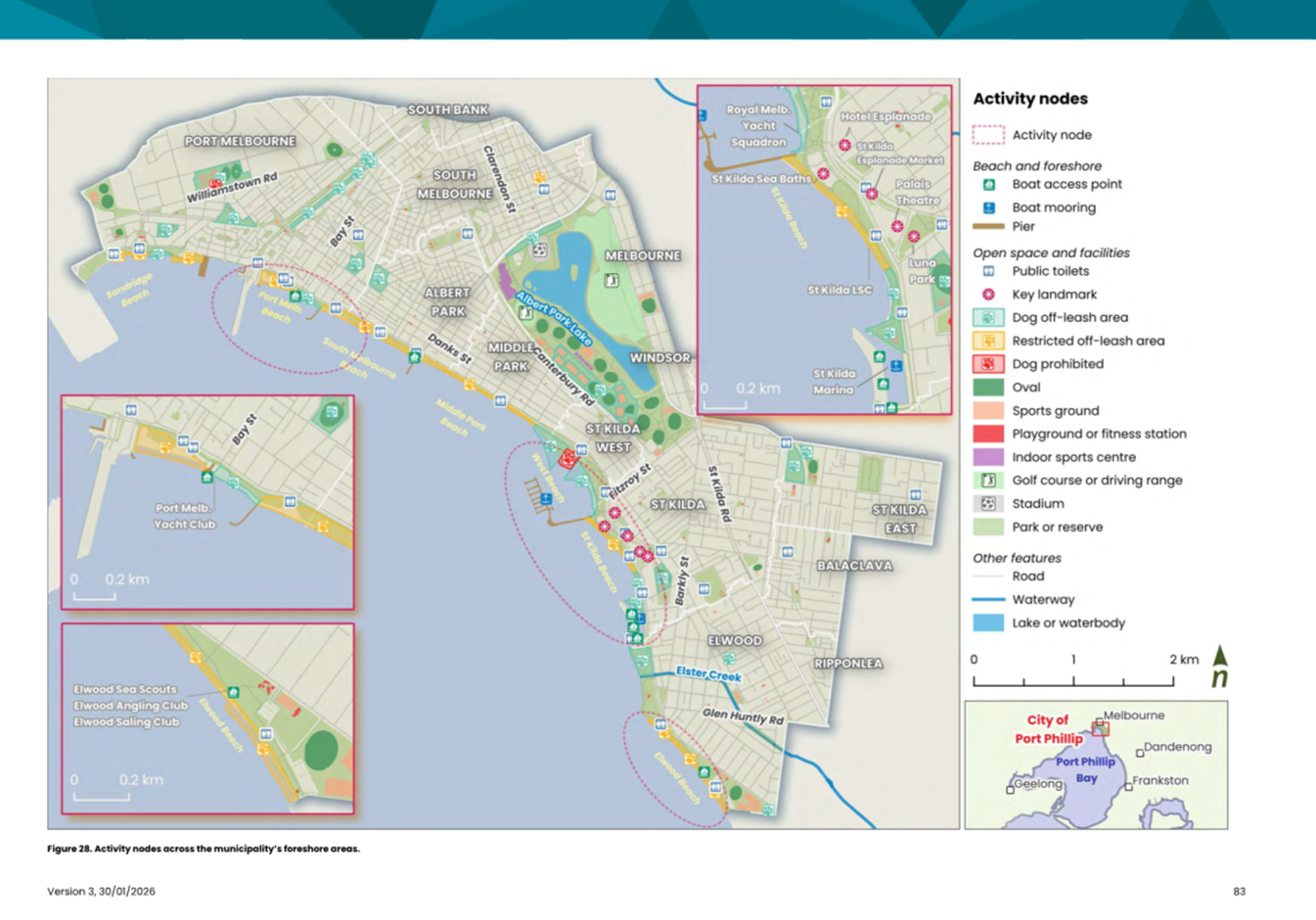
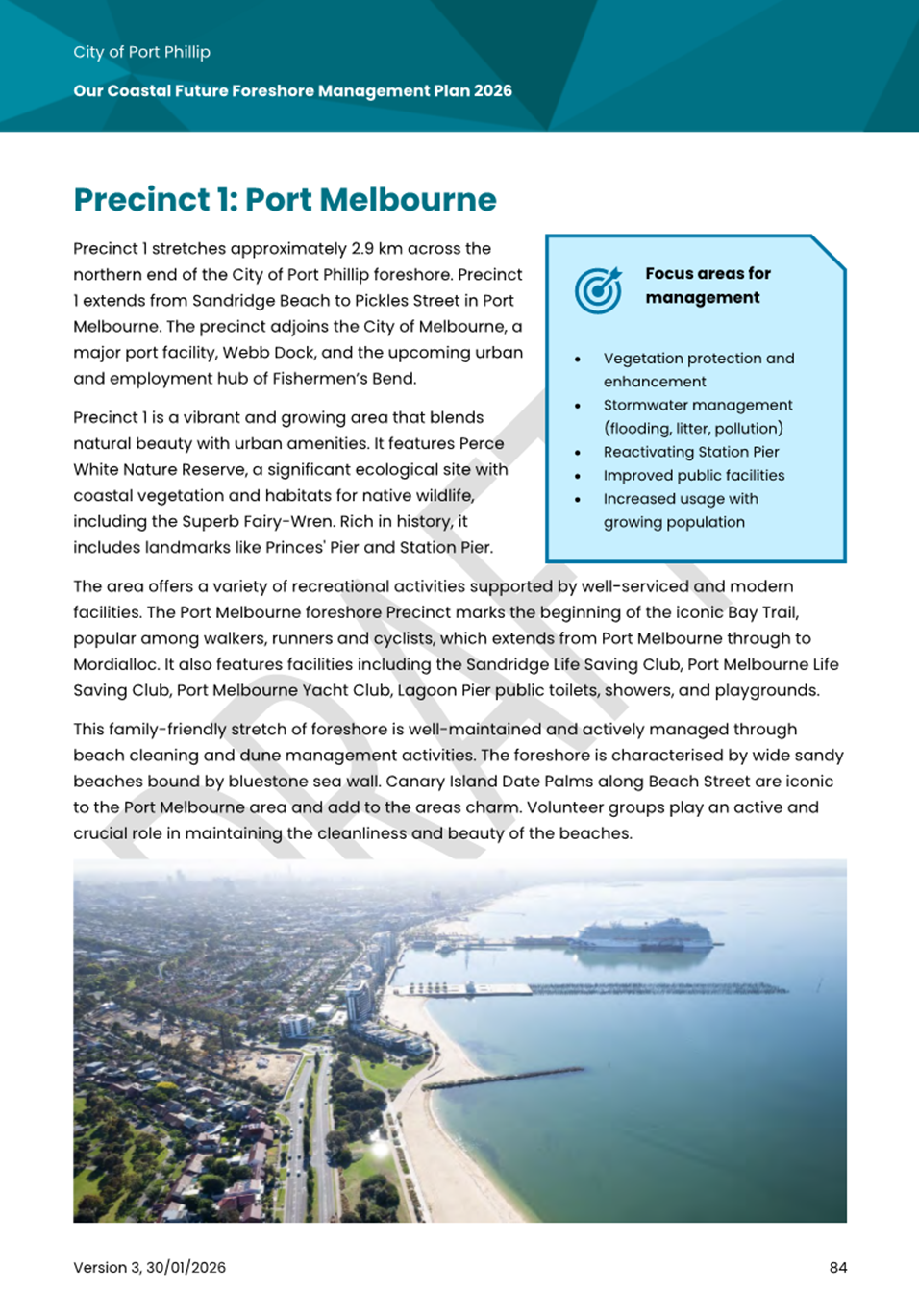
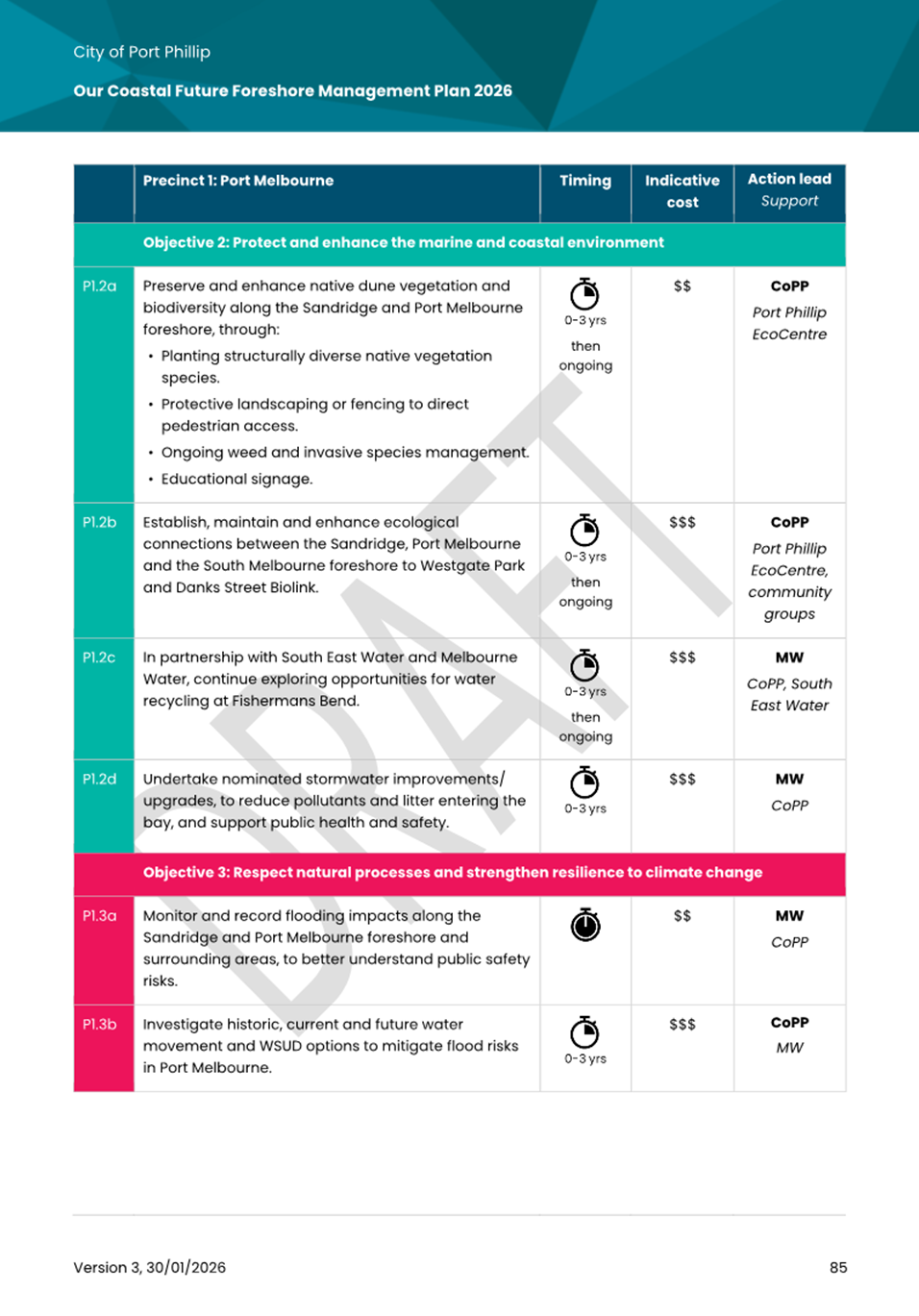
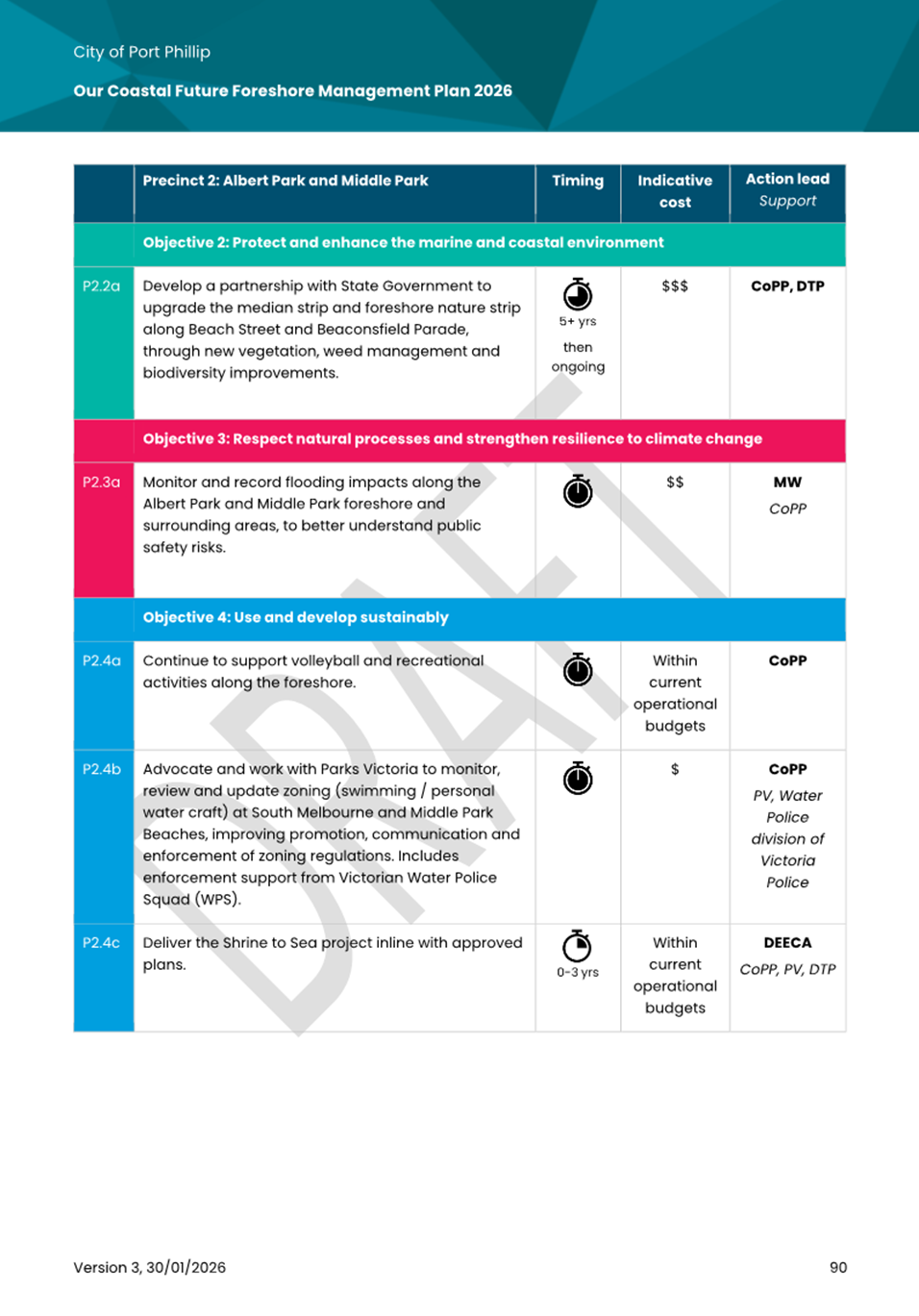
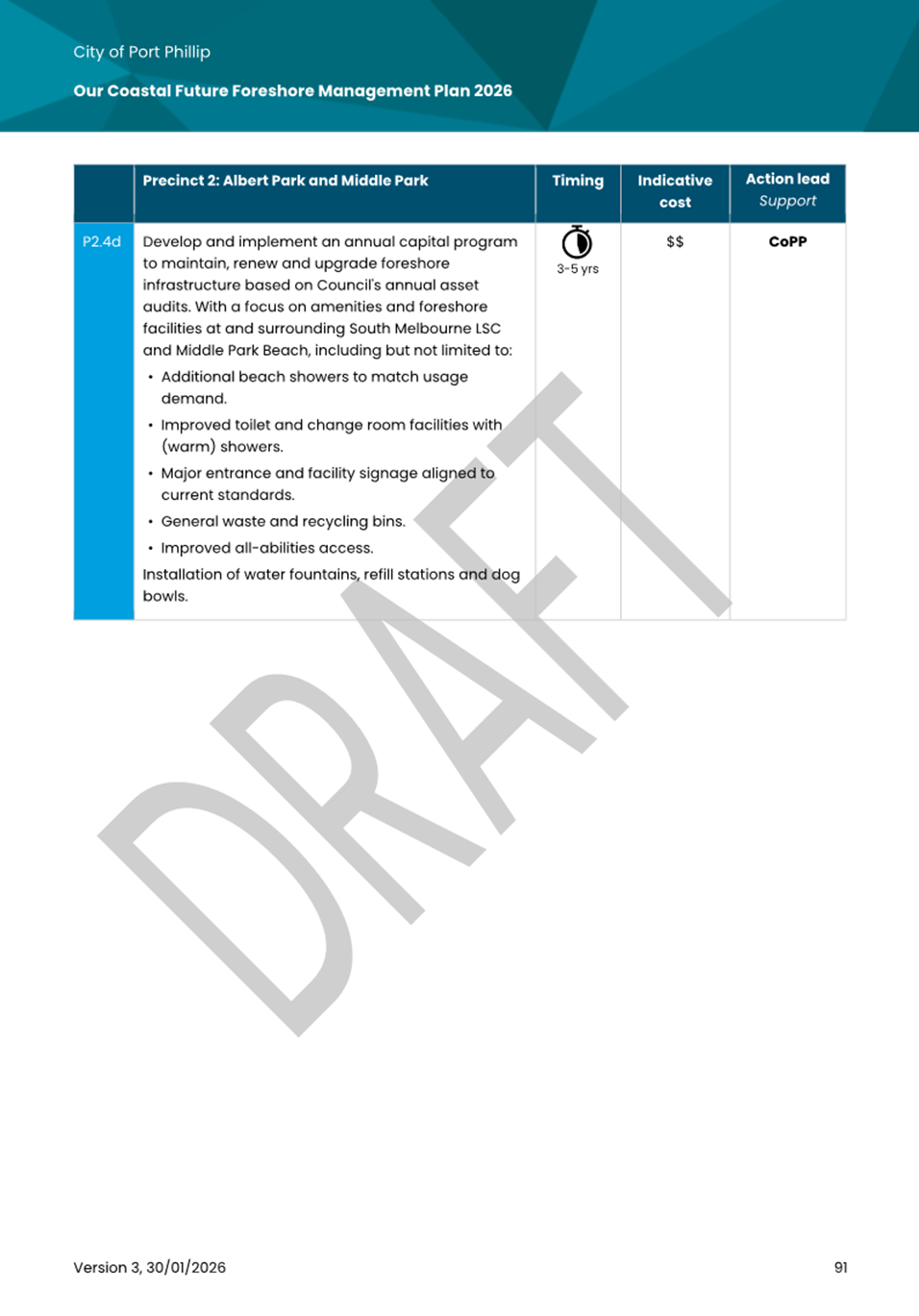
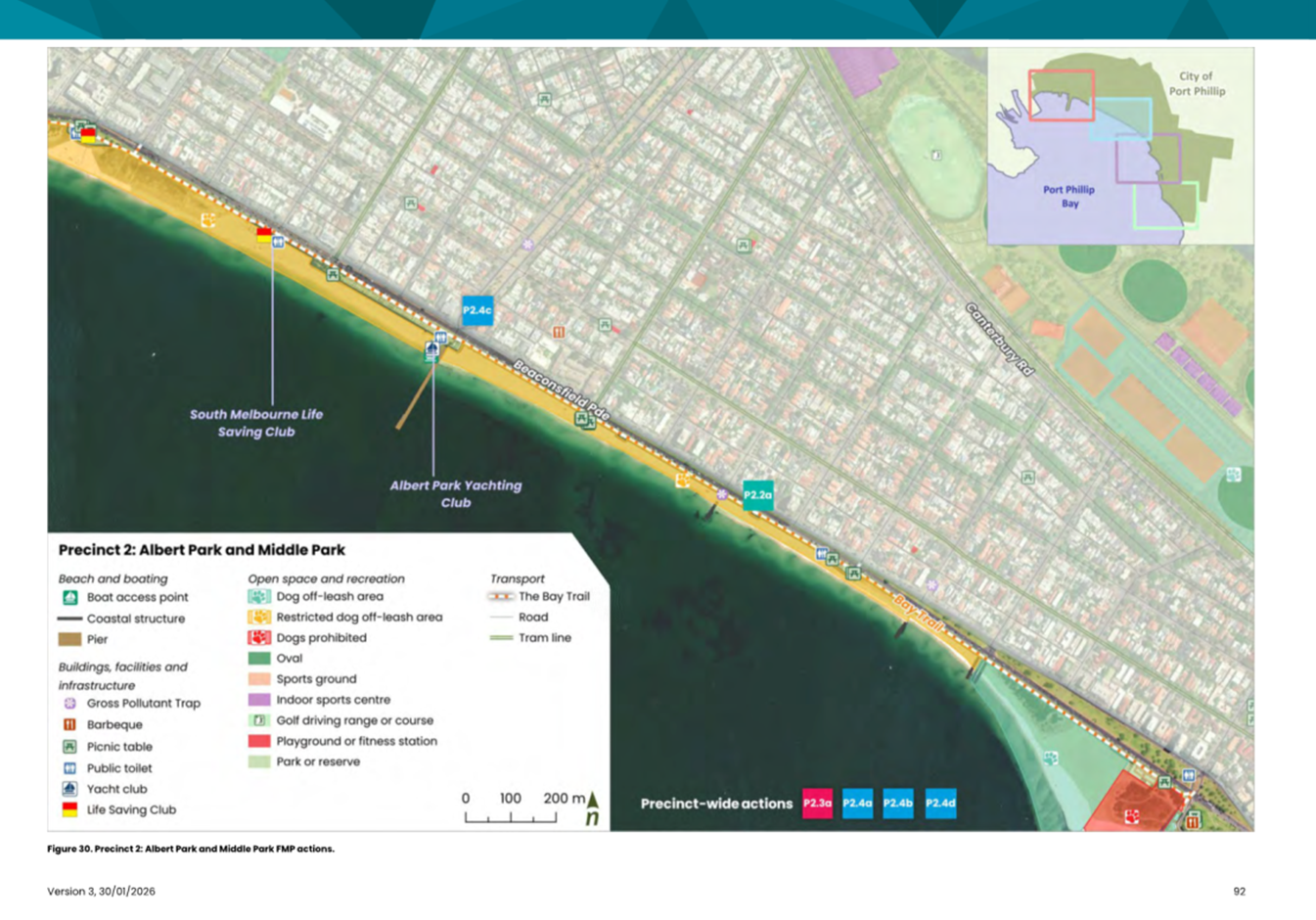
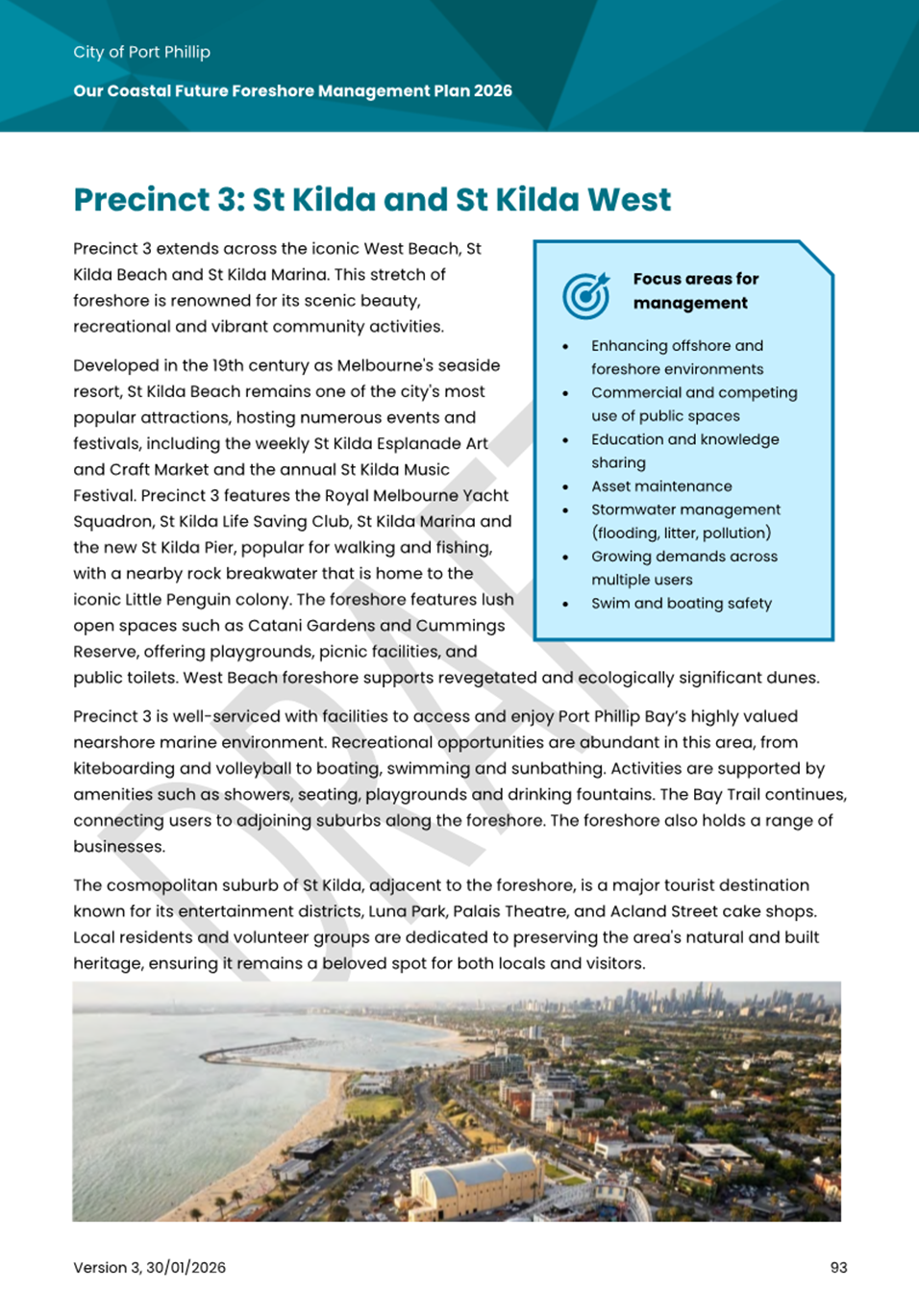
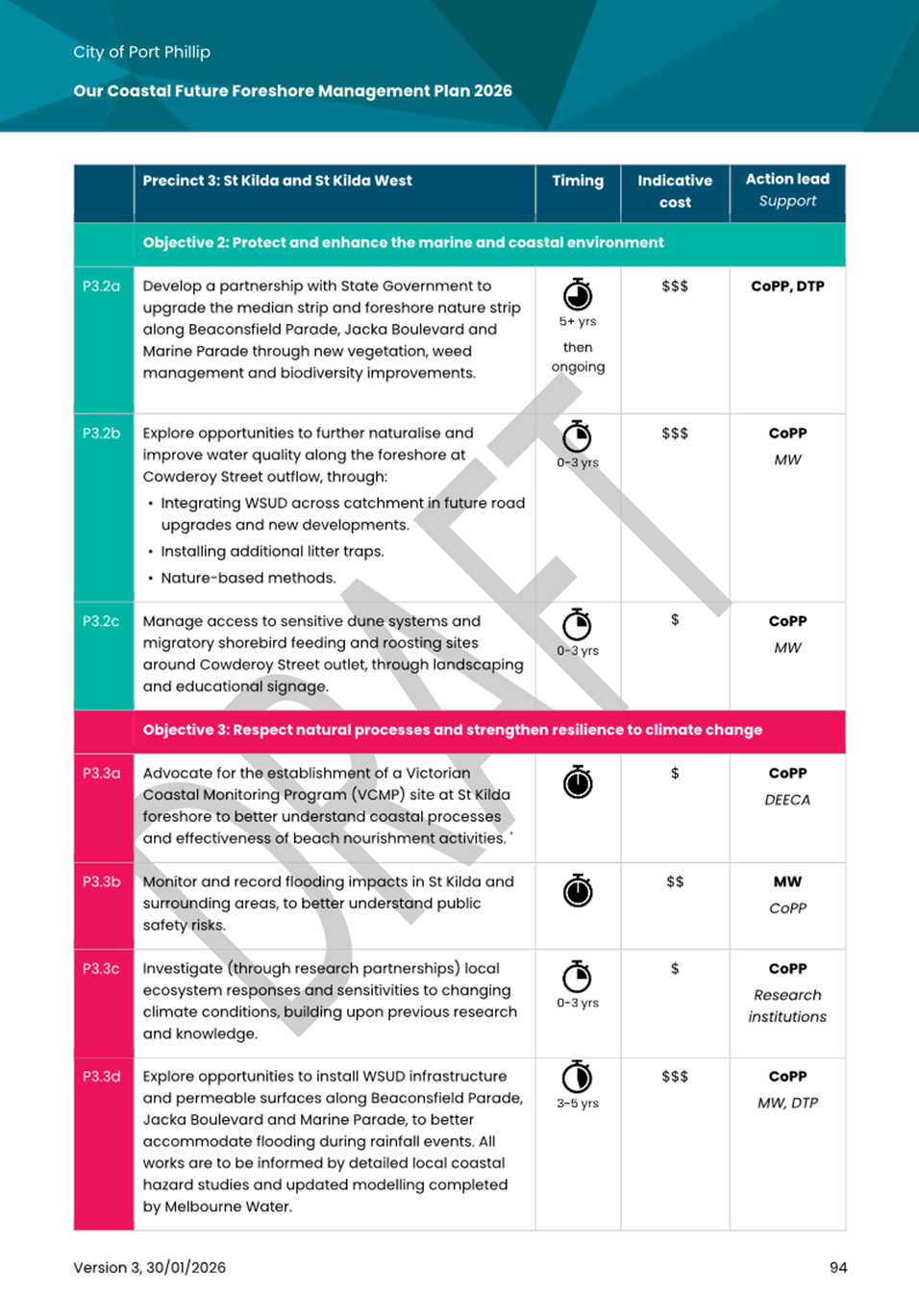
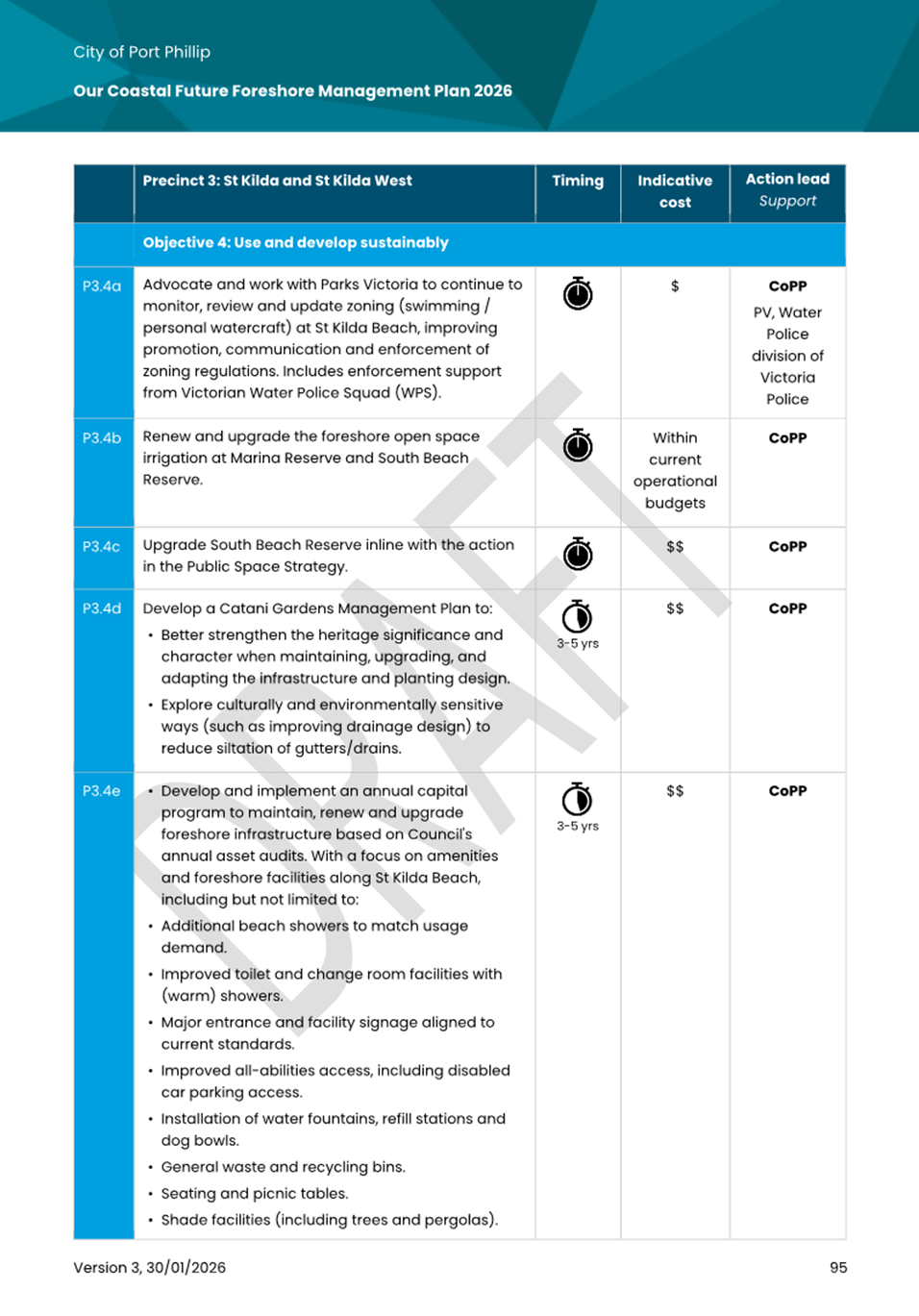
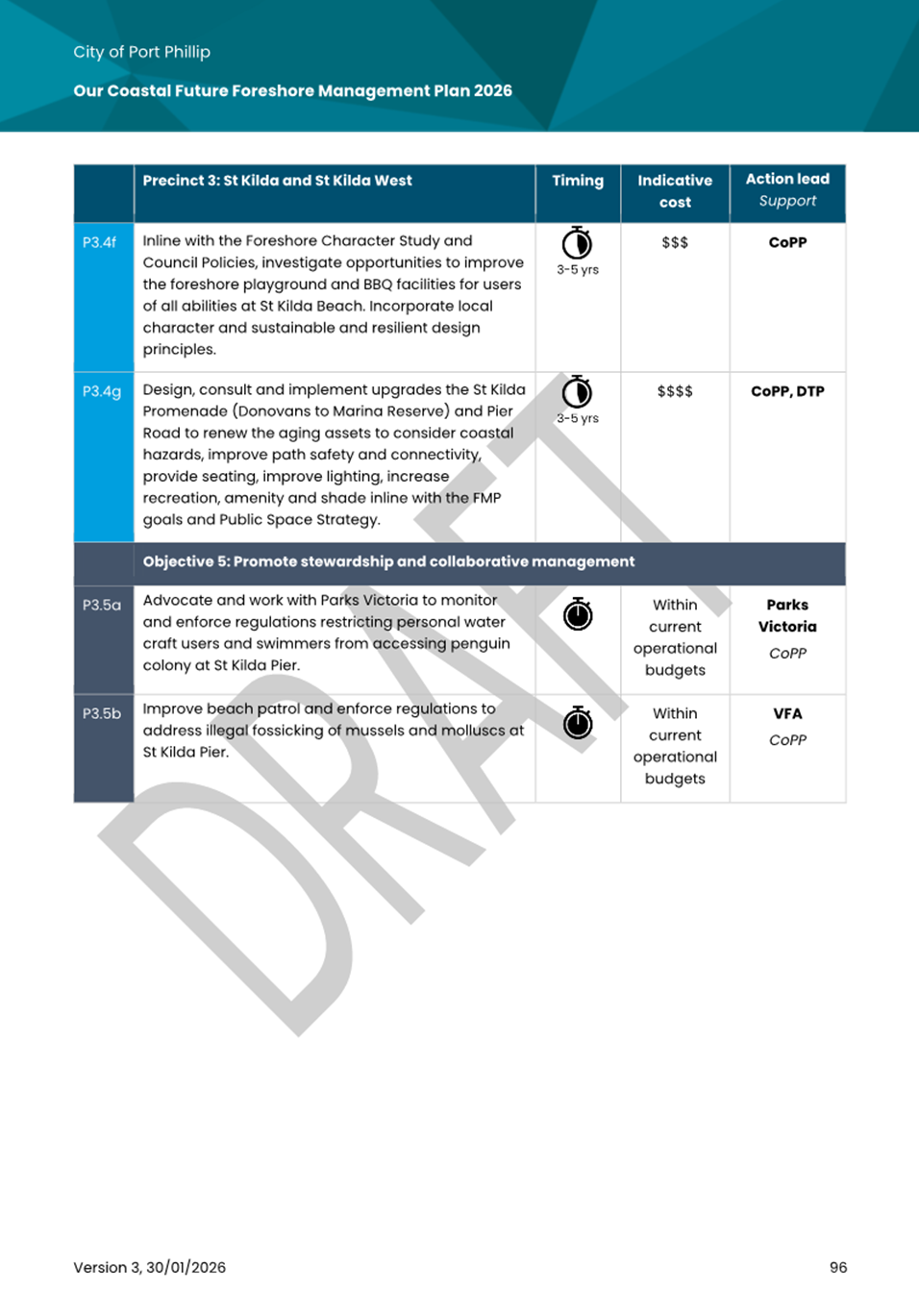
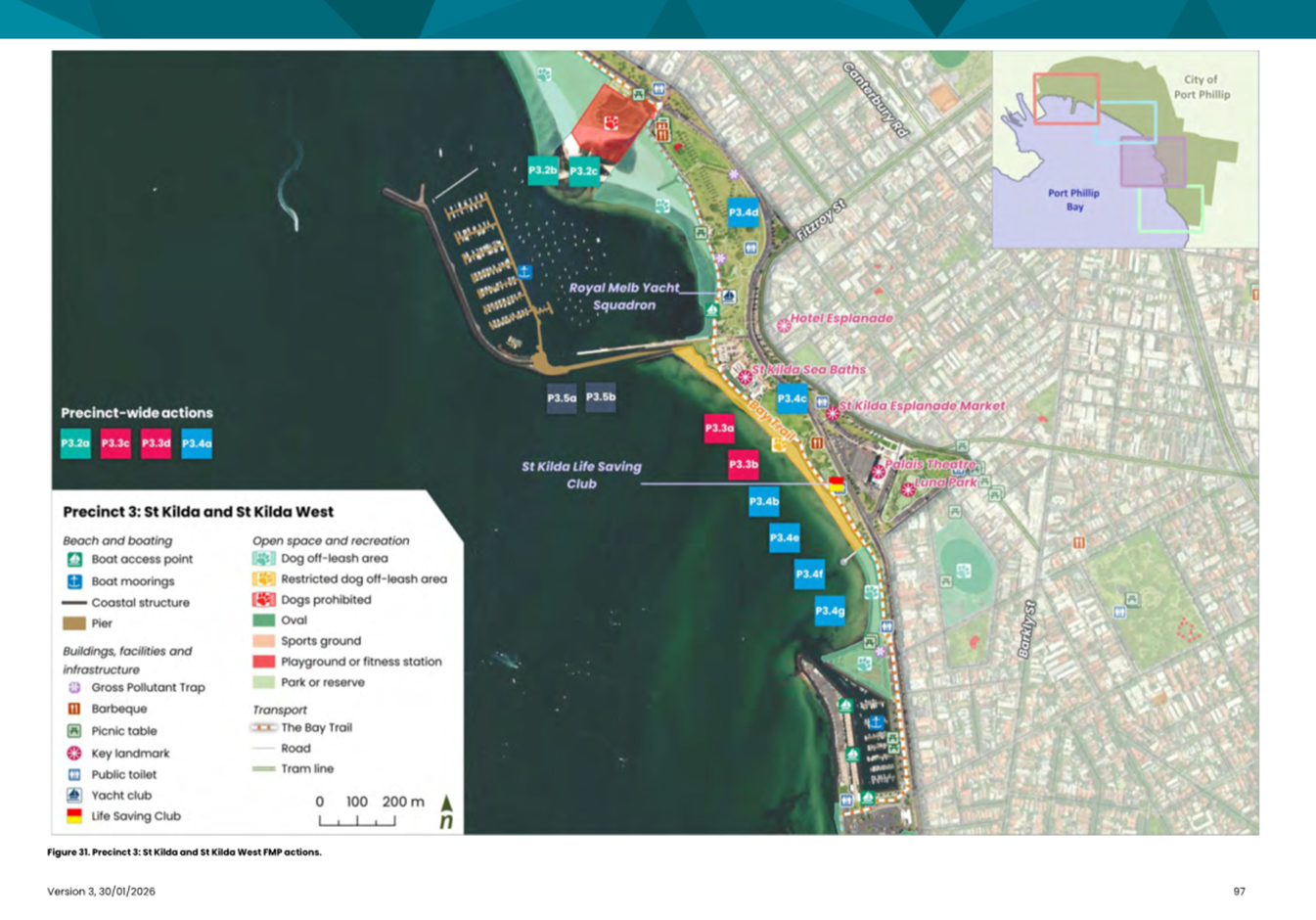
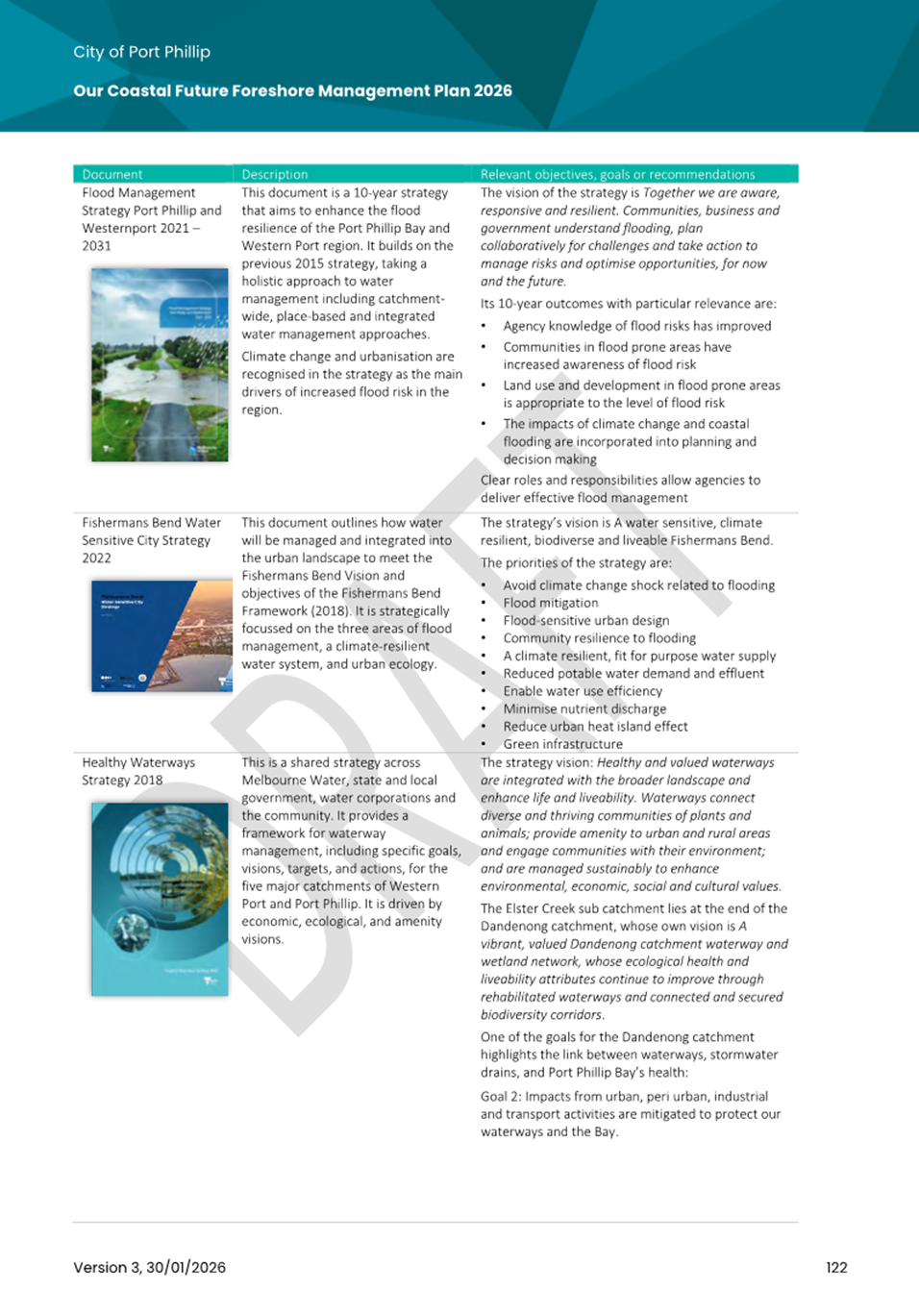
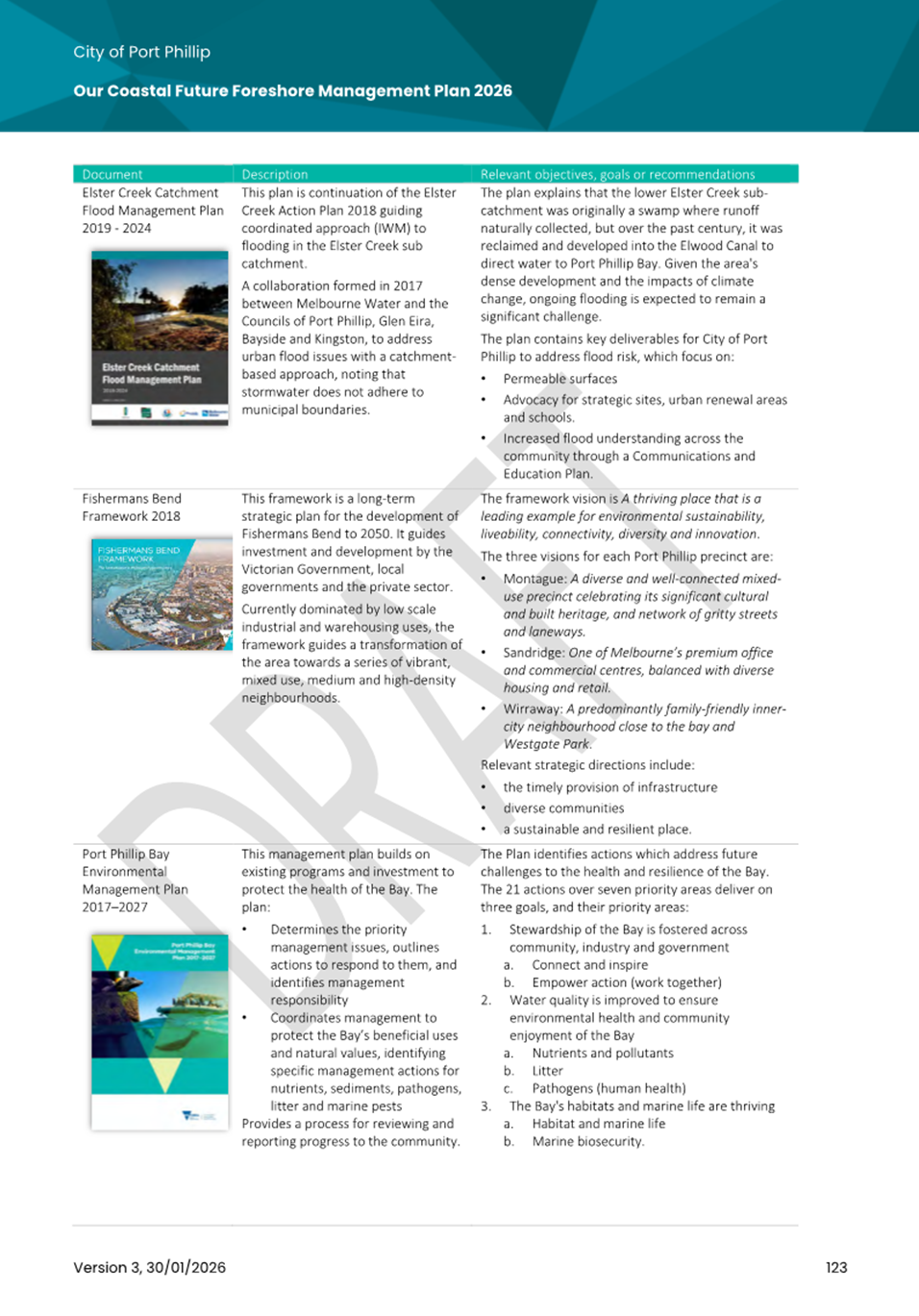
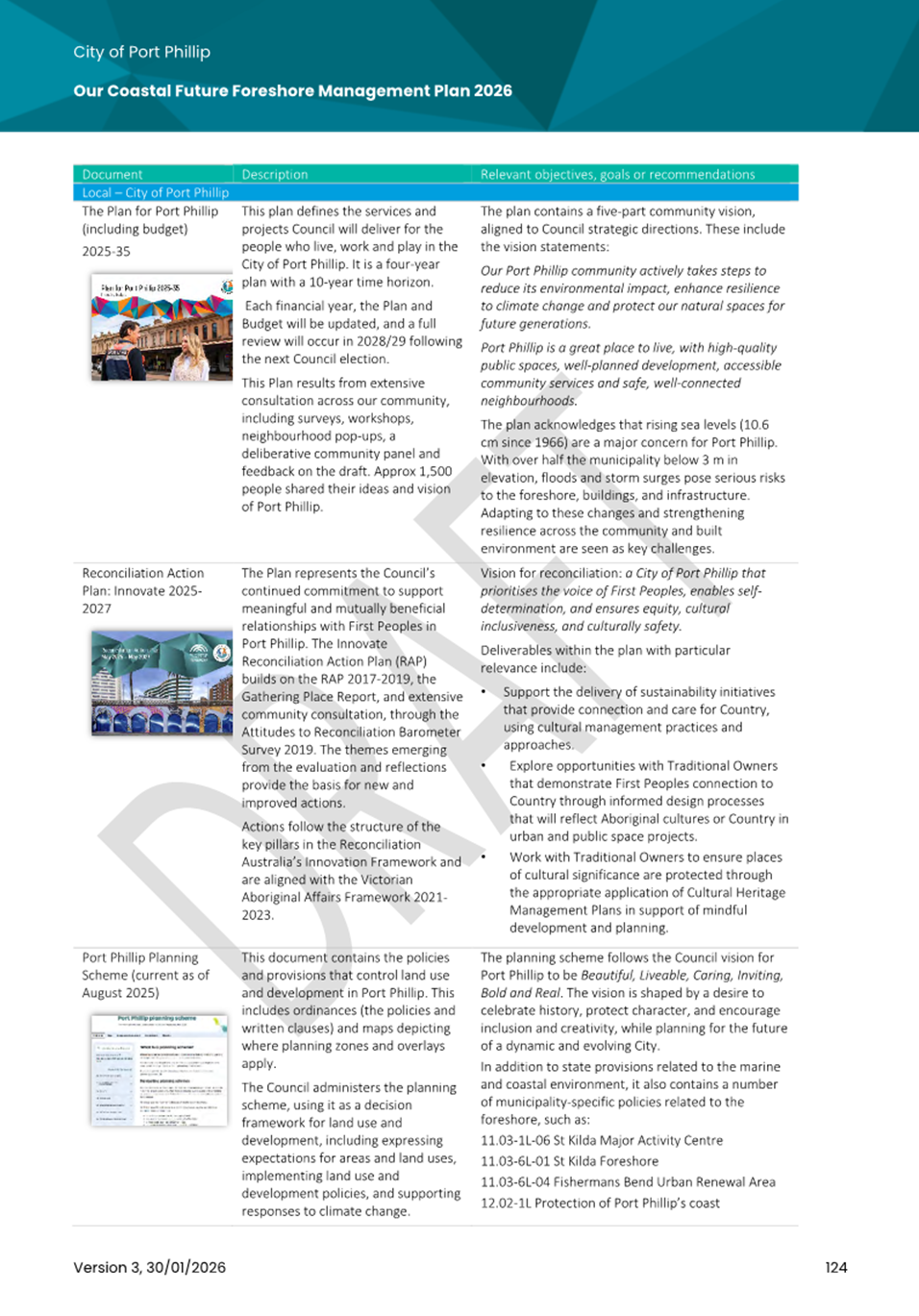
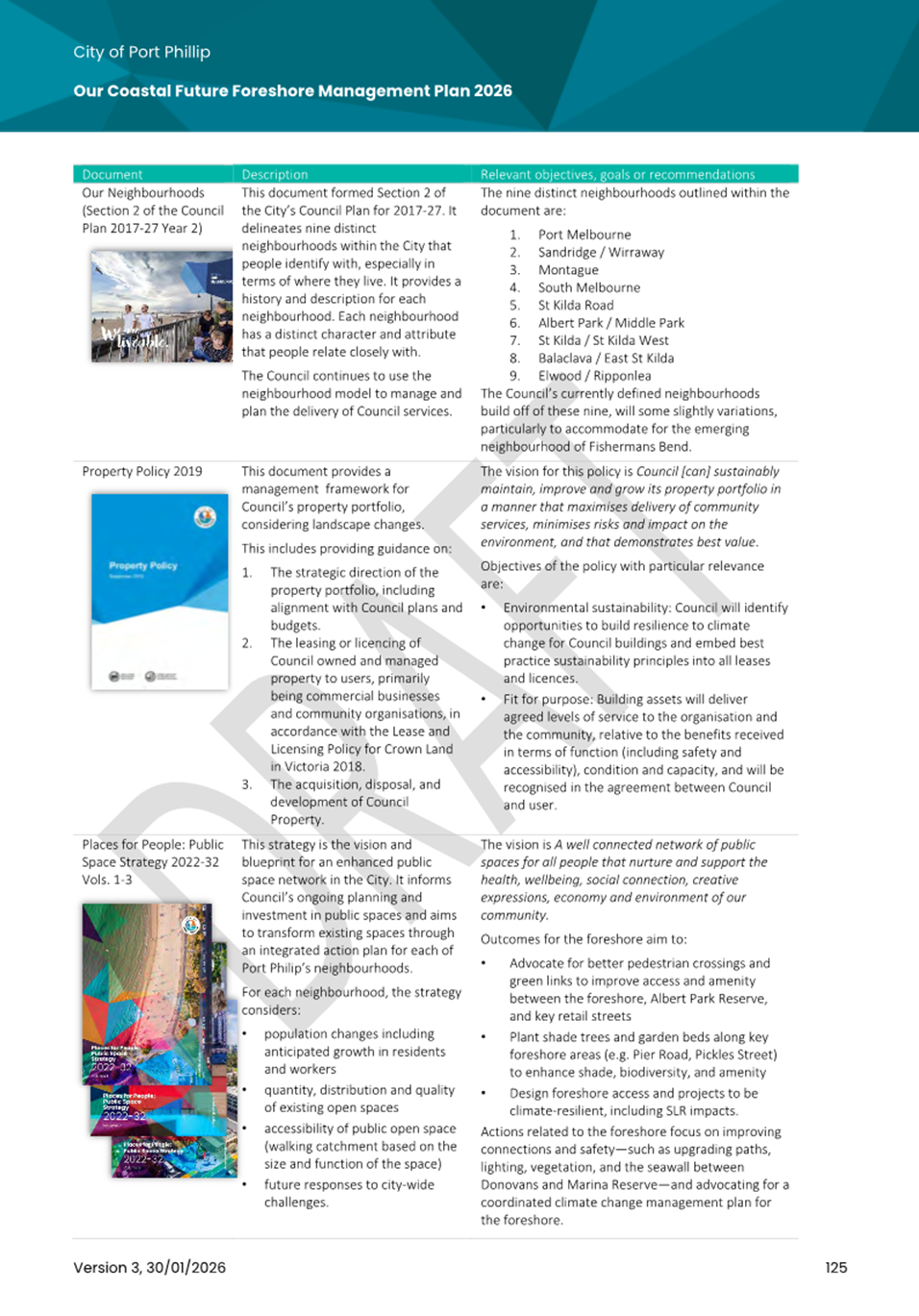
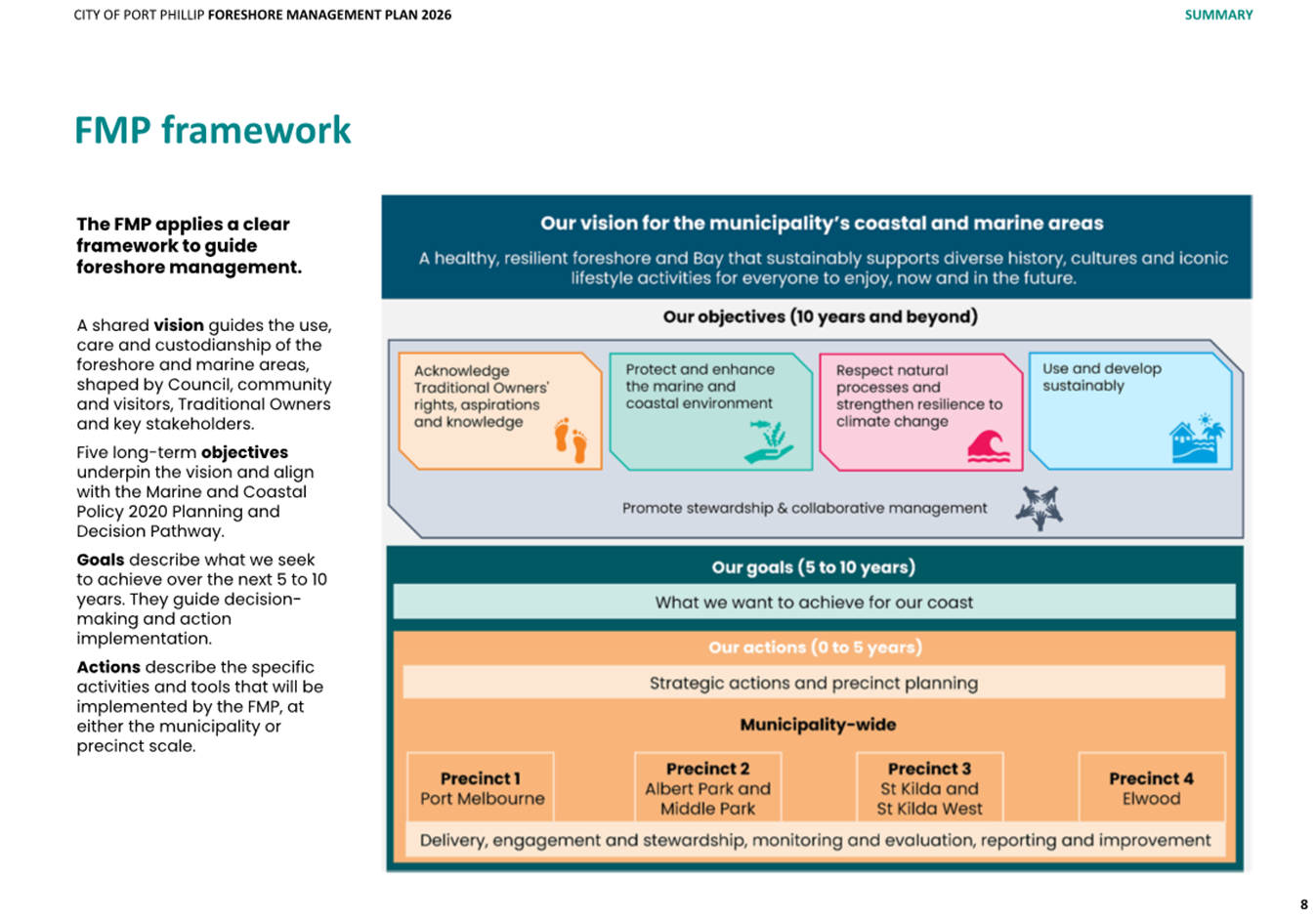
2.5 The draft FMP provides strategic guidance on how Council uses, maintains, and manages the foreshore Crown land and the associated marine and coastal environment.
2.6 The FMP has a focus on delivering on-ground actions over the next 10 years, and it responds to identified emerging issues and opportunities.
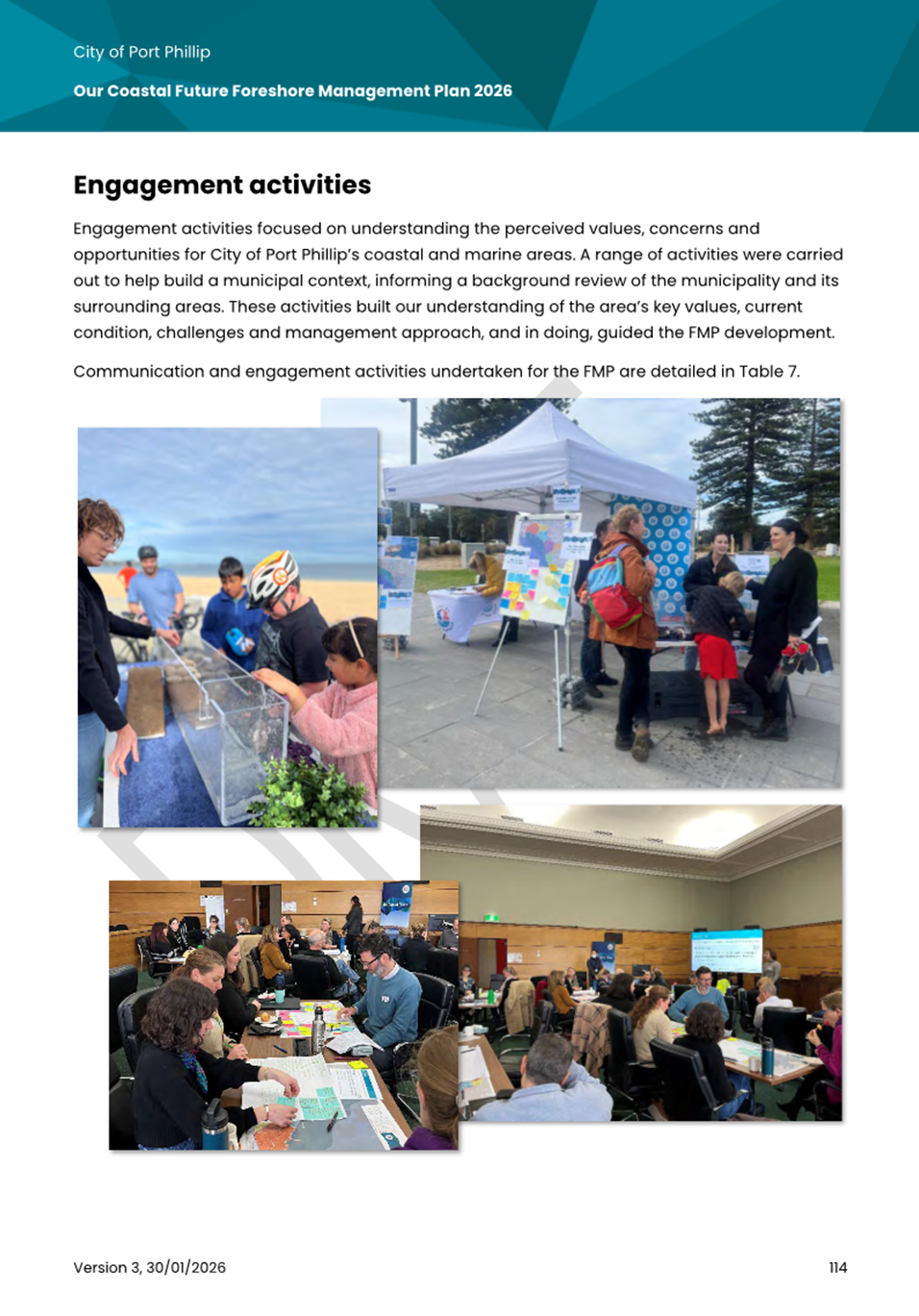
2.7 Feedback has been gathered through a variety of engagements to inform the draft FMP.
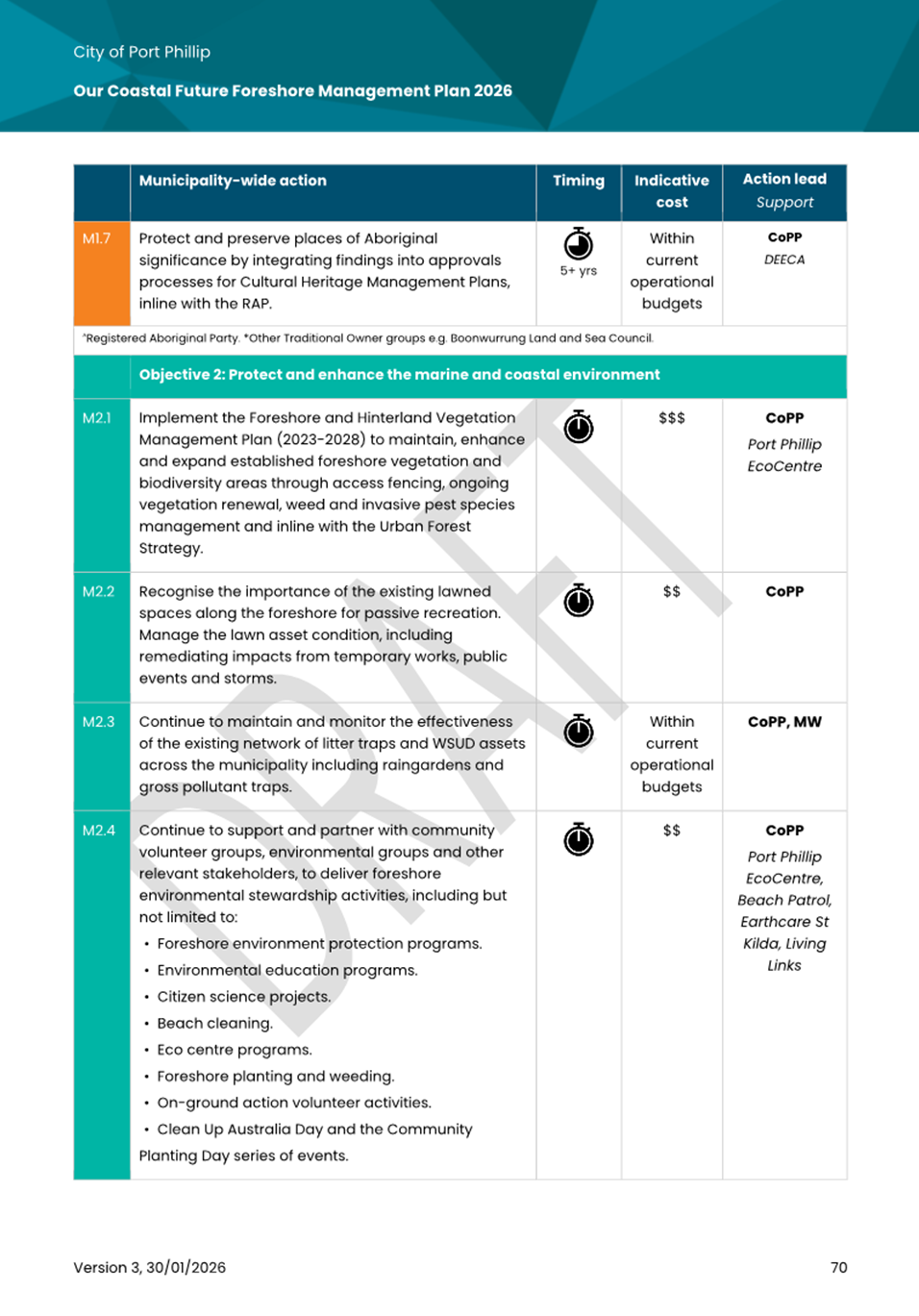
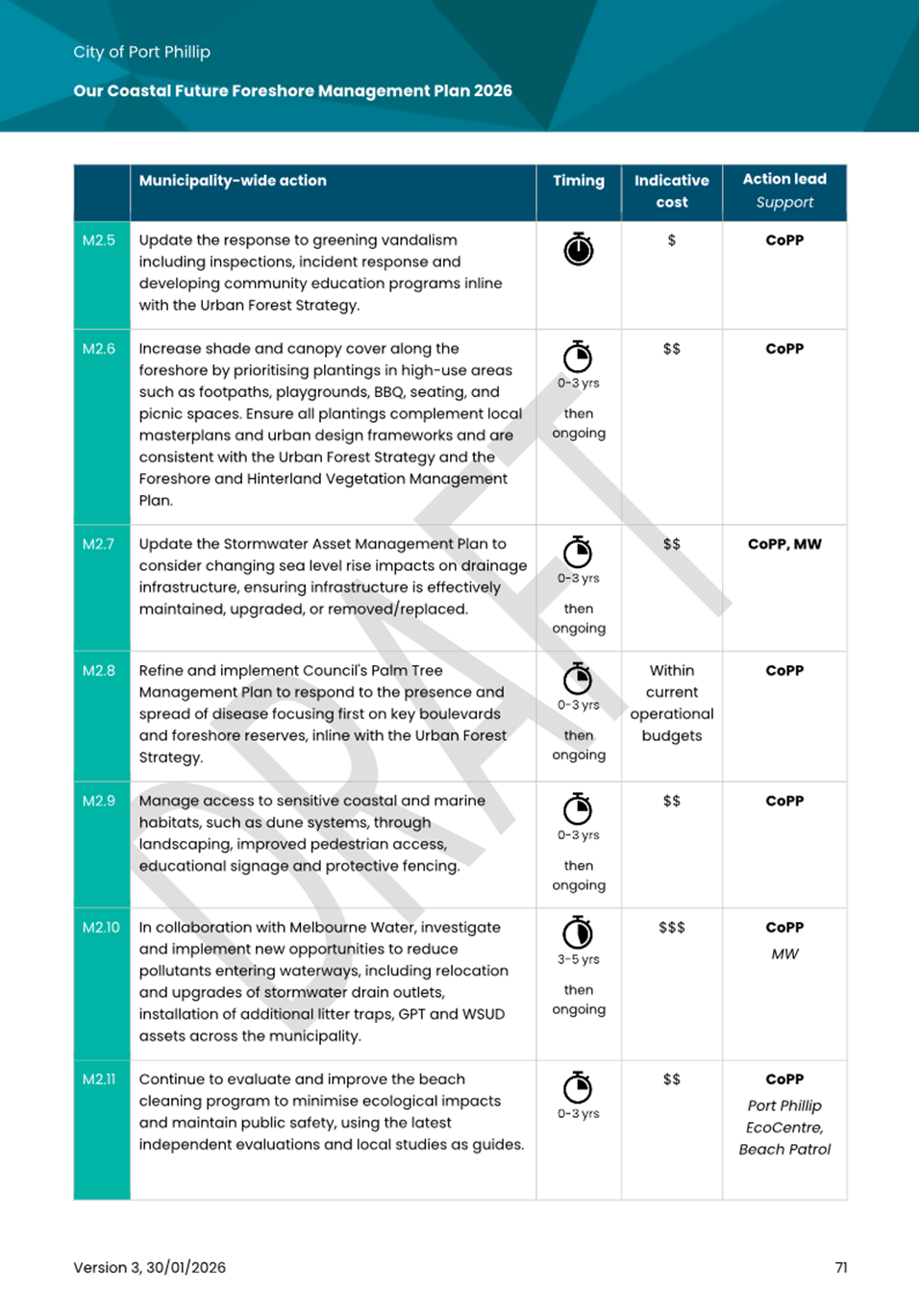
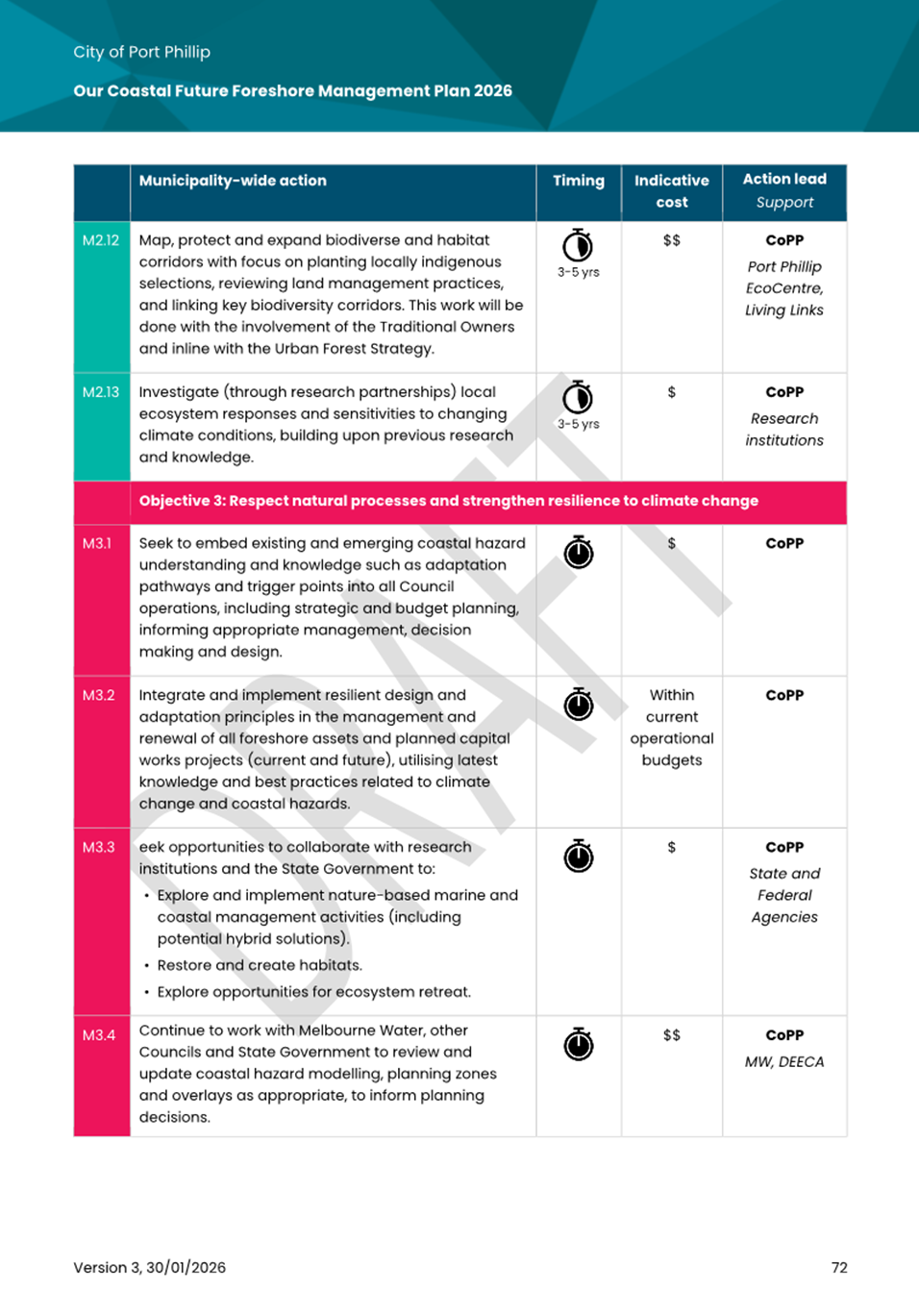
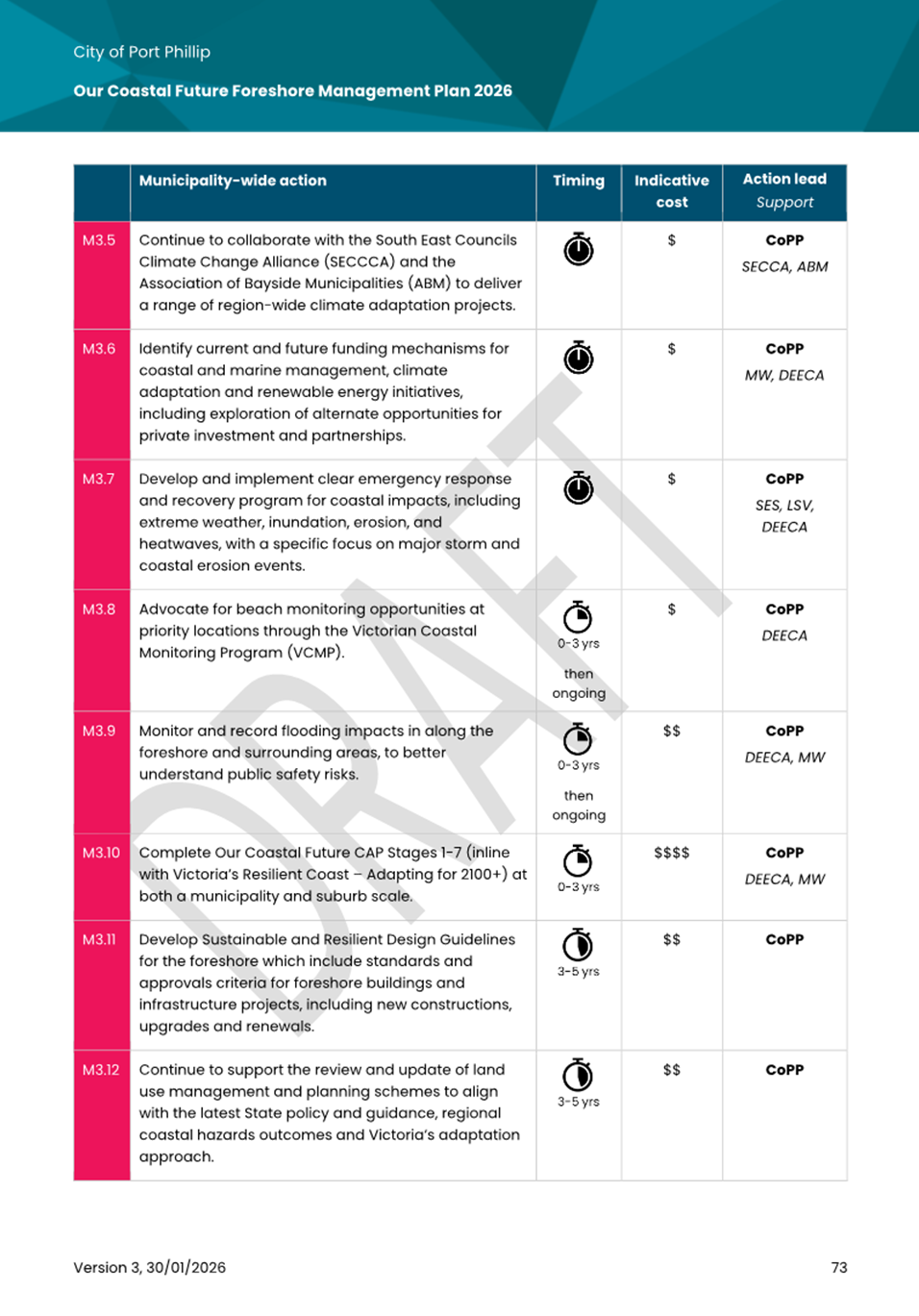
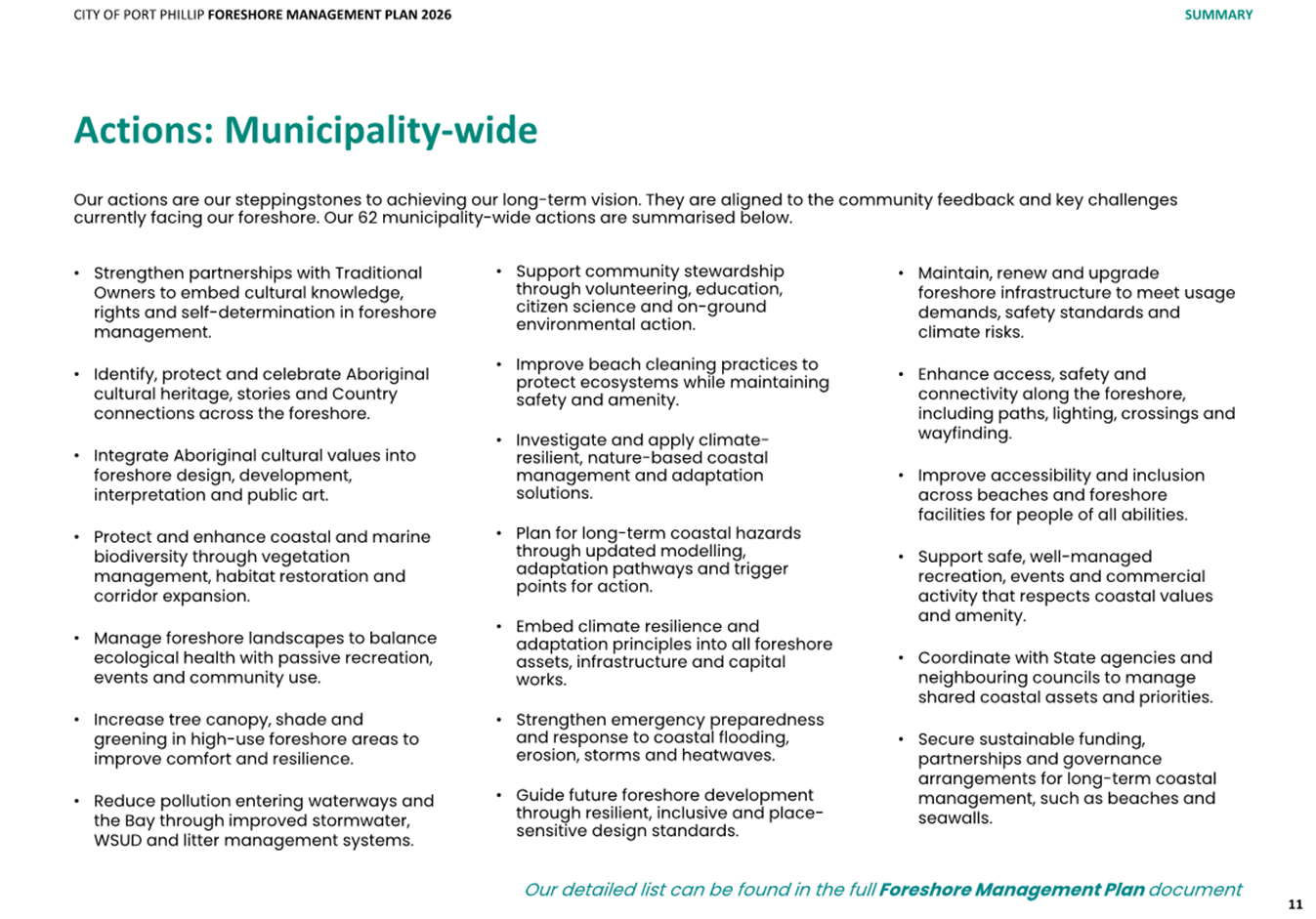
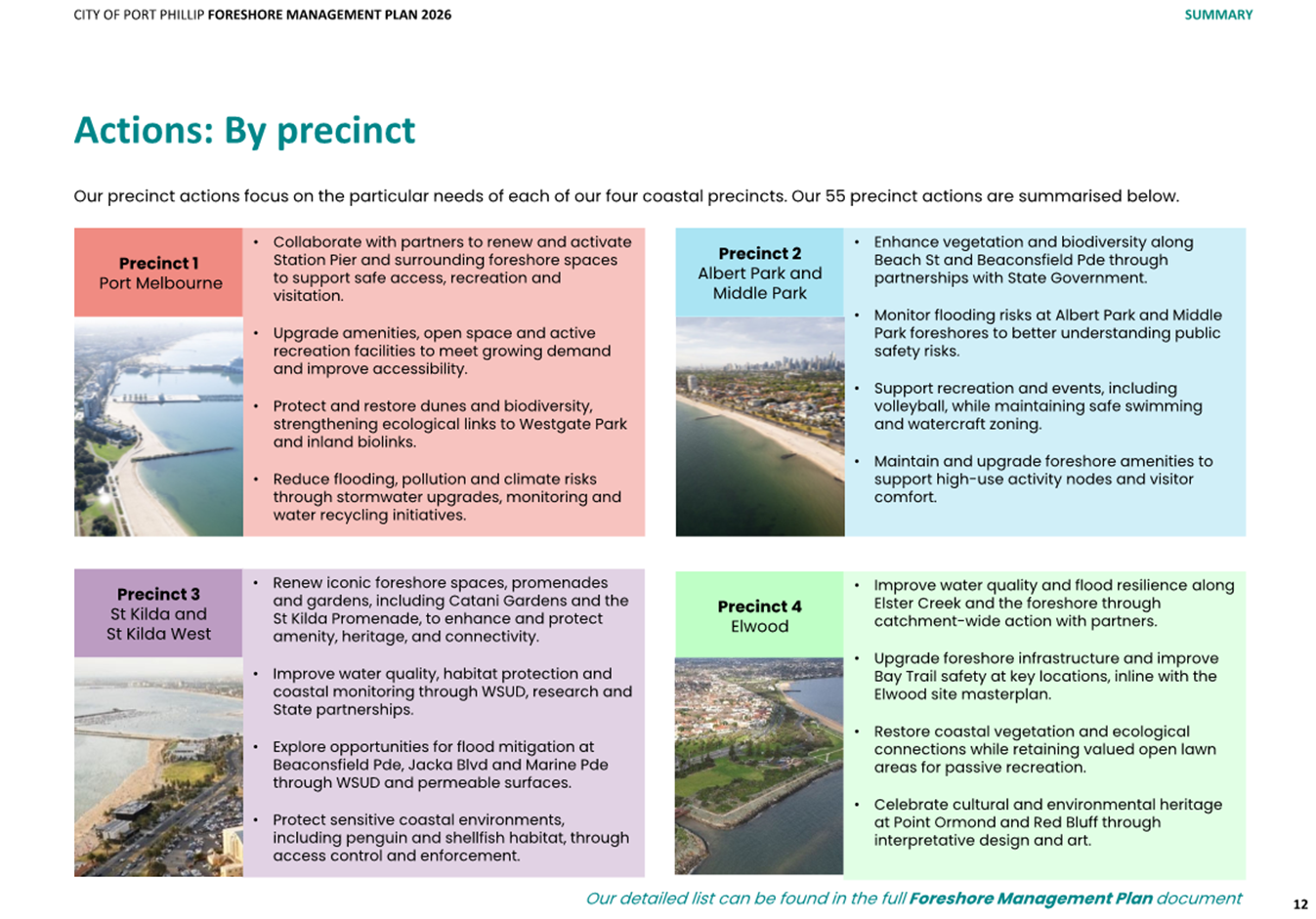
2.8 A total of 62 proposed actions have been identified through the engagement.
2.9 The next stage of engagement is proposed for March 2026.
2.10 A Summary document (Attachment 2) and a fact sheet update (Attachment 3) have also been prepared to provide summaries of the documents.
2.11 The FMP must follow relevant legislation, frameworks and templates, in order to be endorsed by the State Minister.
2.12 The FMP is due to be presented to Council for adoption in June 2026.
|
That Council: 3.1 Thanks the Bunurong Land Council Aboriginal Corporation, Community Reference Group members, and all community members who have helped inform the draft Foreshore Management Plan to date. 3.2 Releases the draft Foreshore Management Plan as outlined in Attachment 1 for community engagement for a period of four weeks. 3.3 Authorises the Chief Executive Officer, or their delegate the ability to make minor editorial changes to the draft Foreshore Management Plan that do not materially alter its intent, to facilitate community engagement. |
4. KEY POINTS/ISSUES
Background
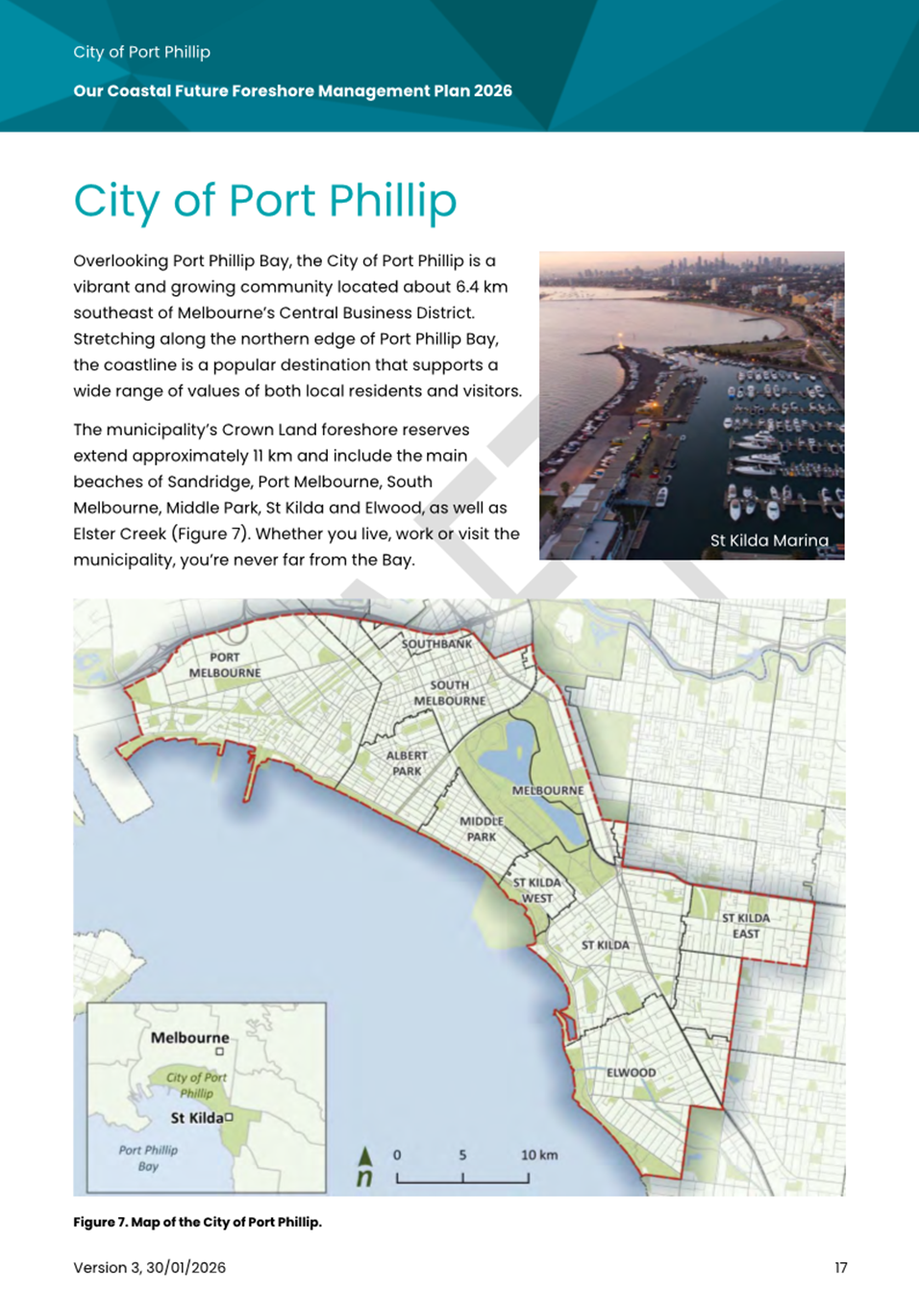
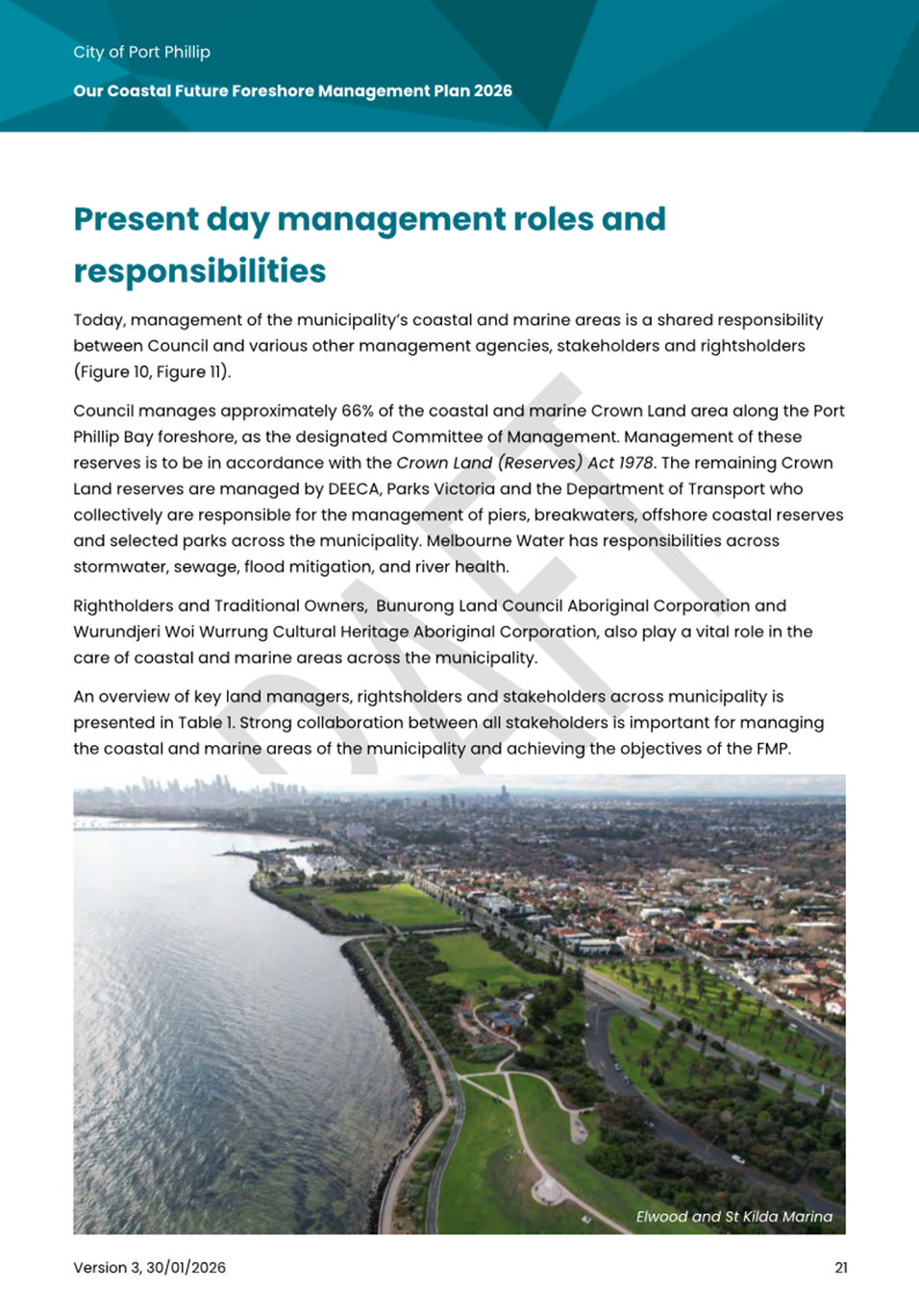
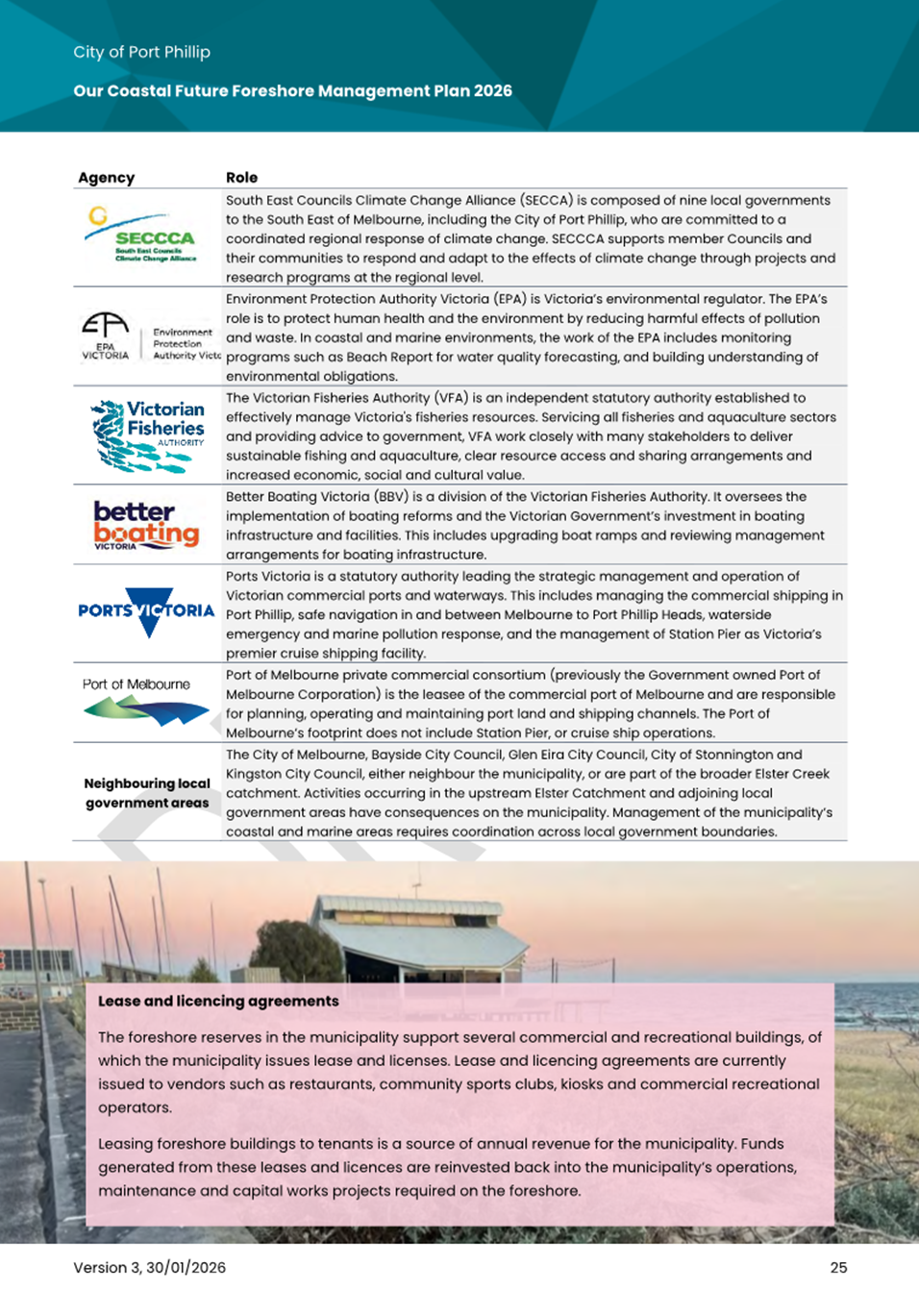
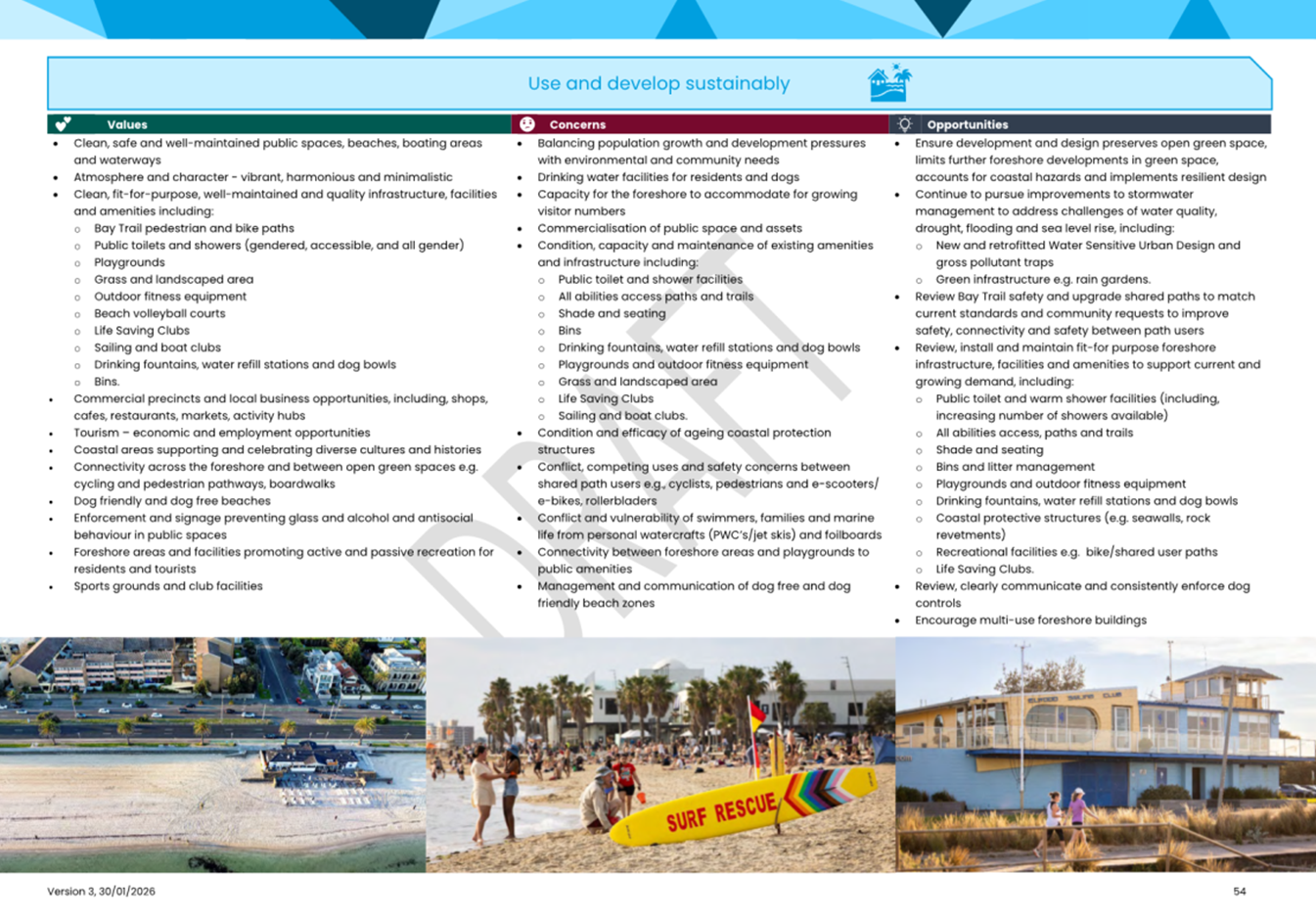
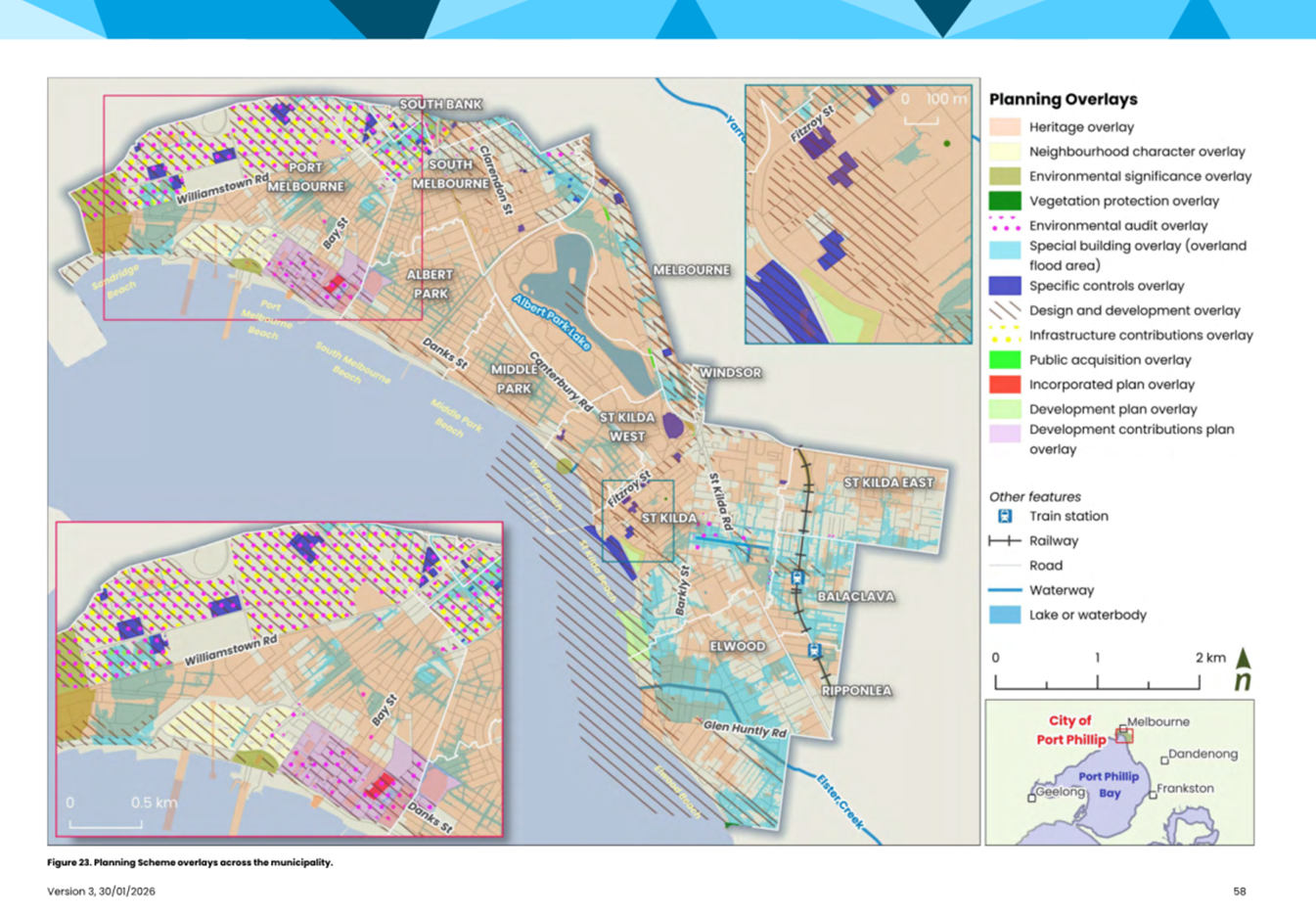
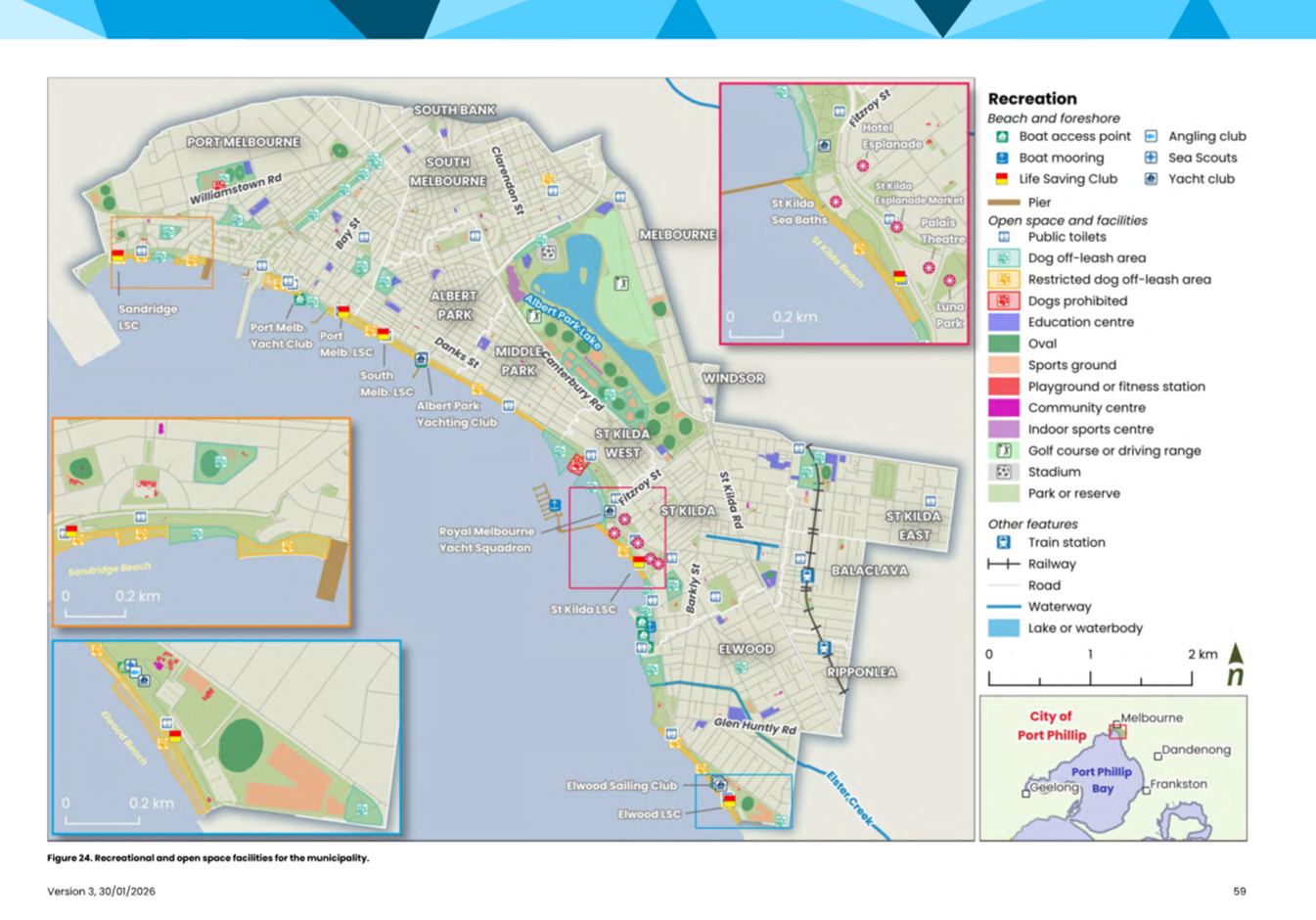
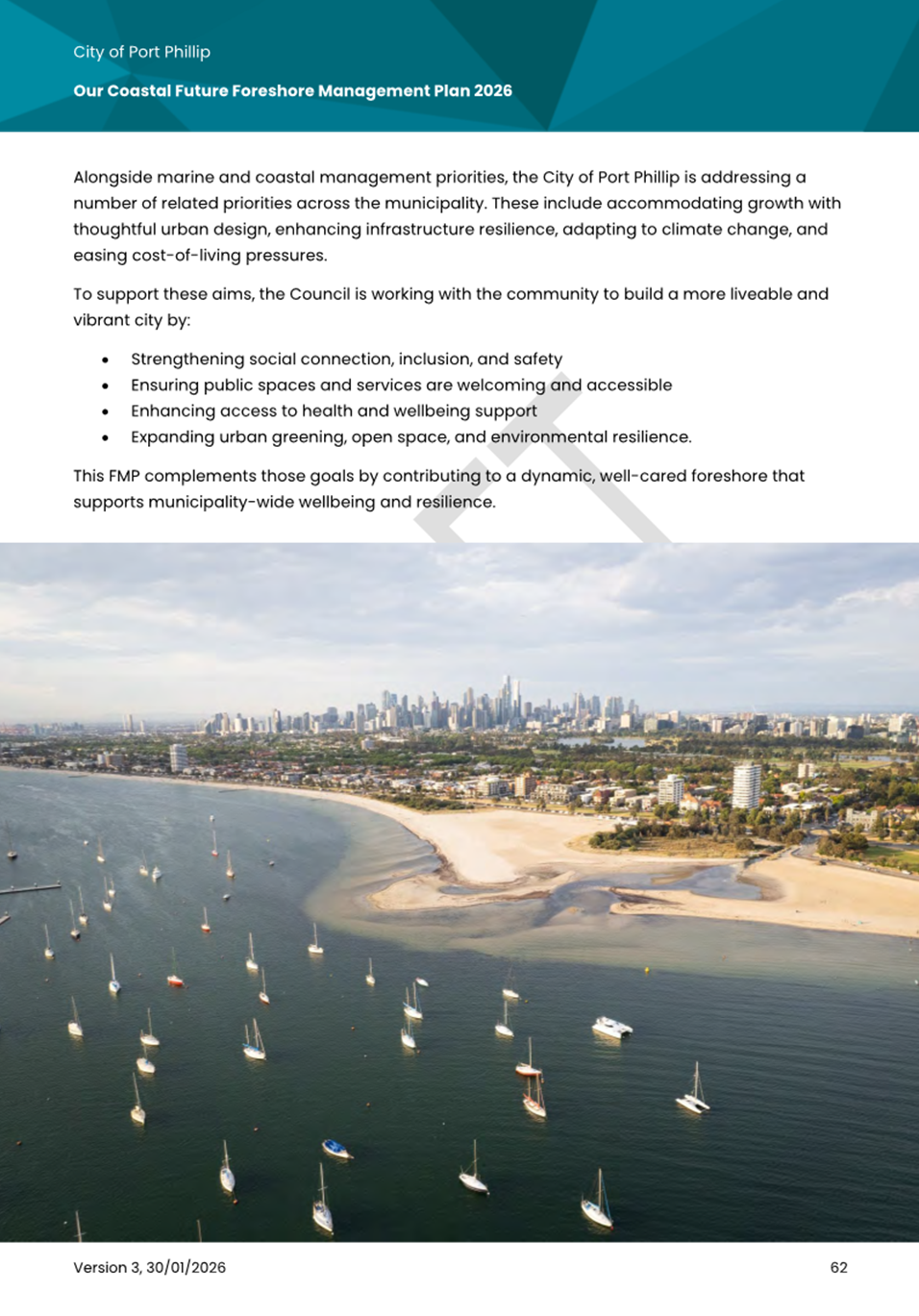
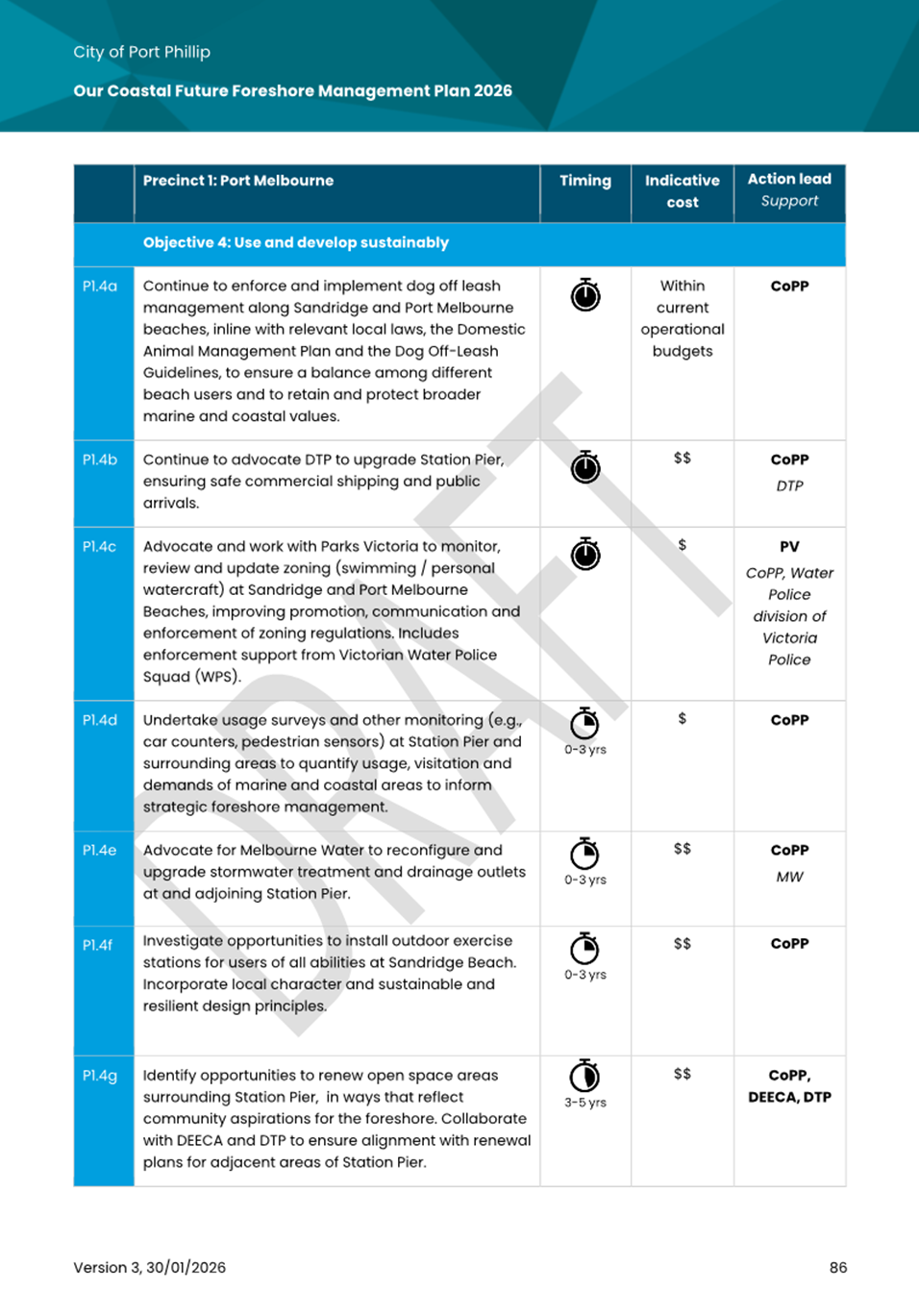
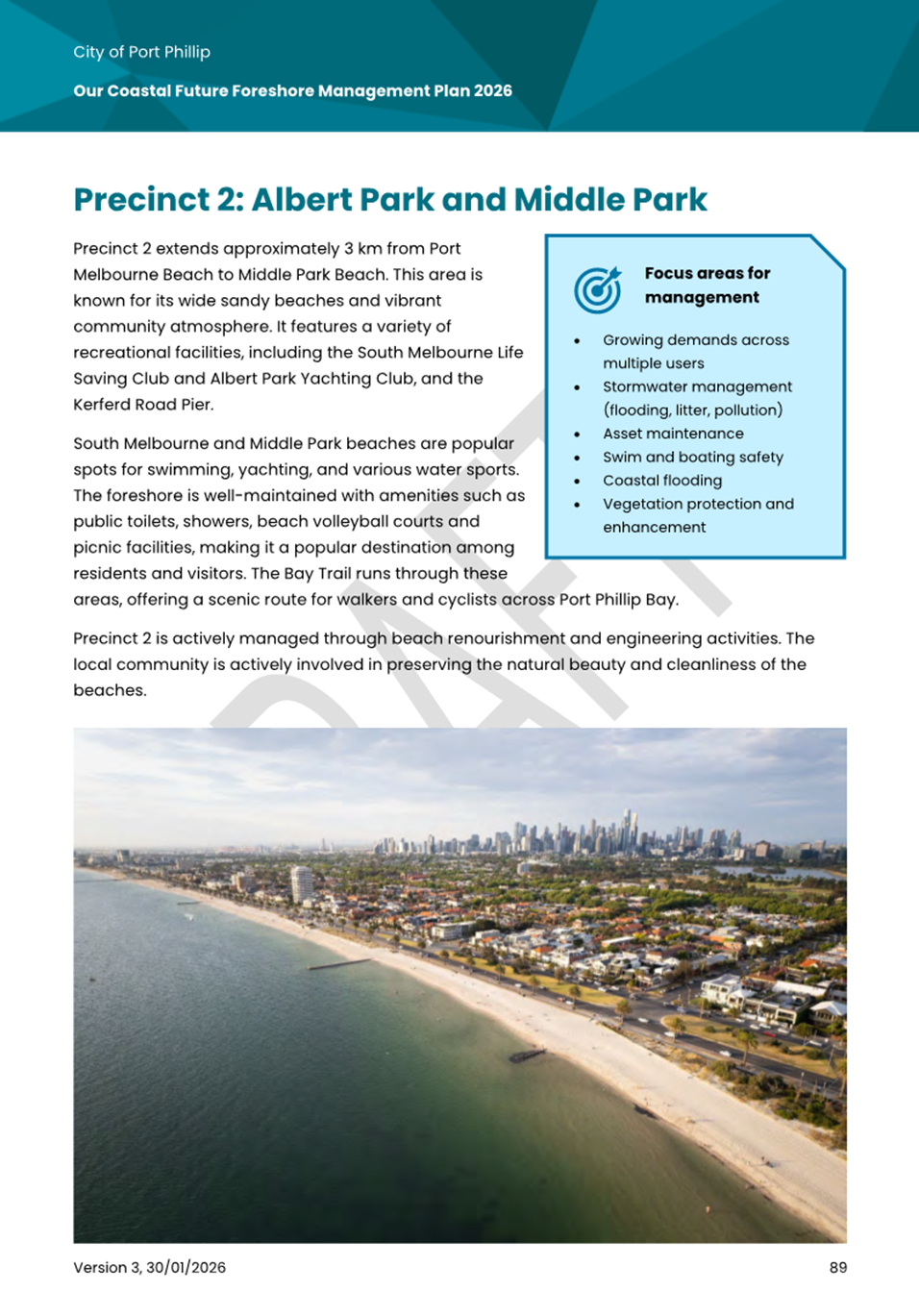
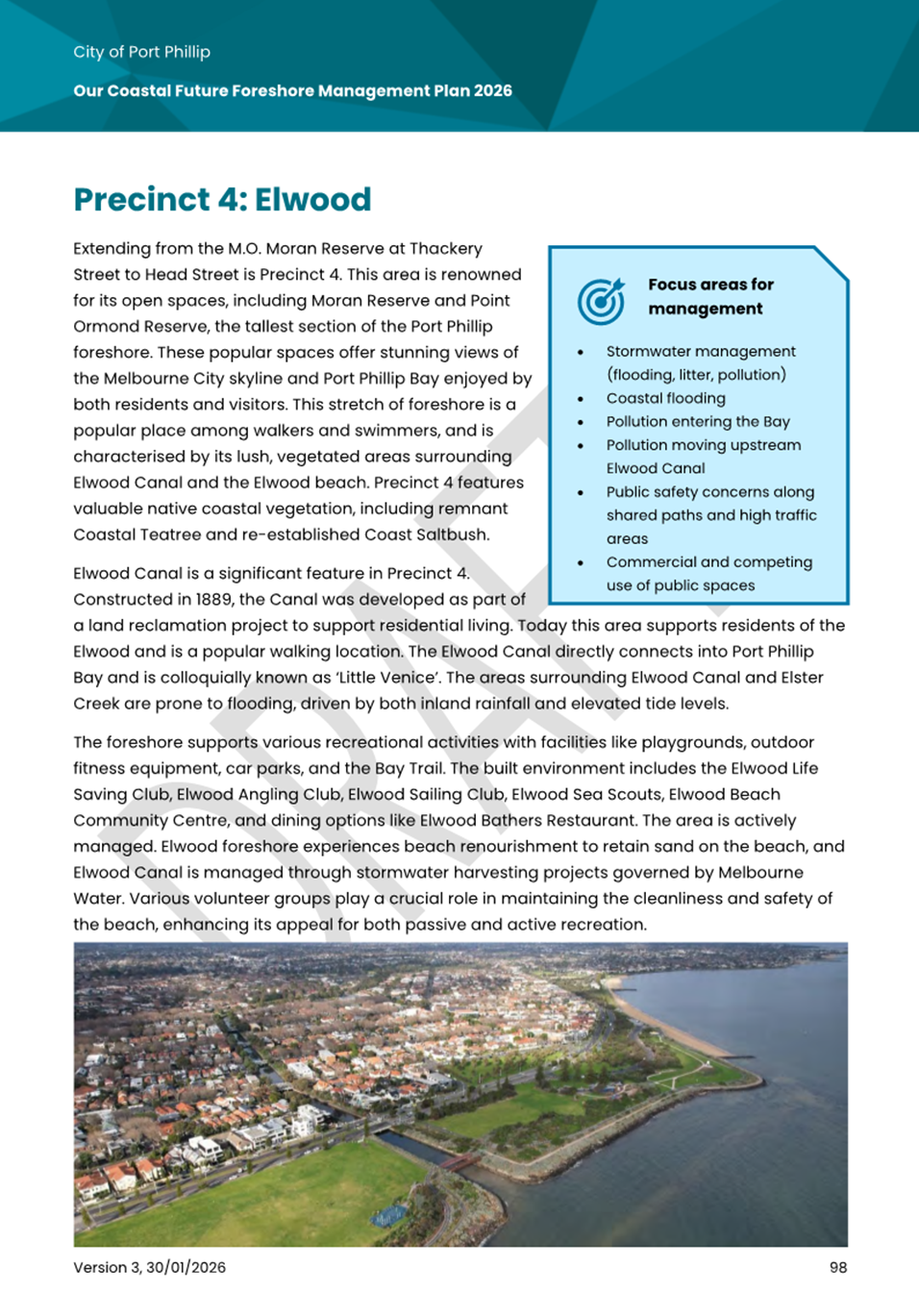
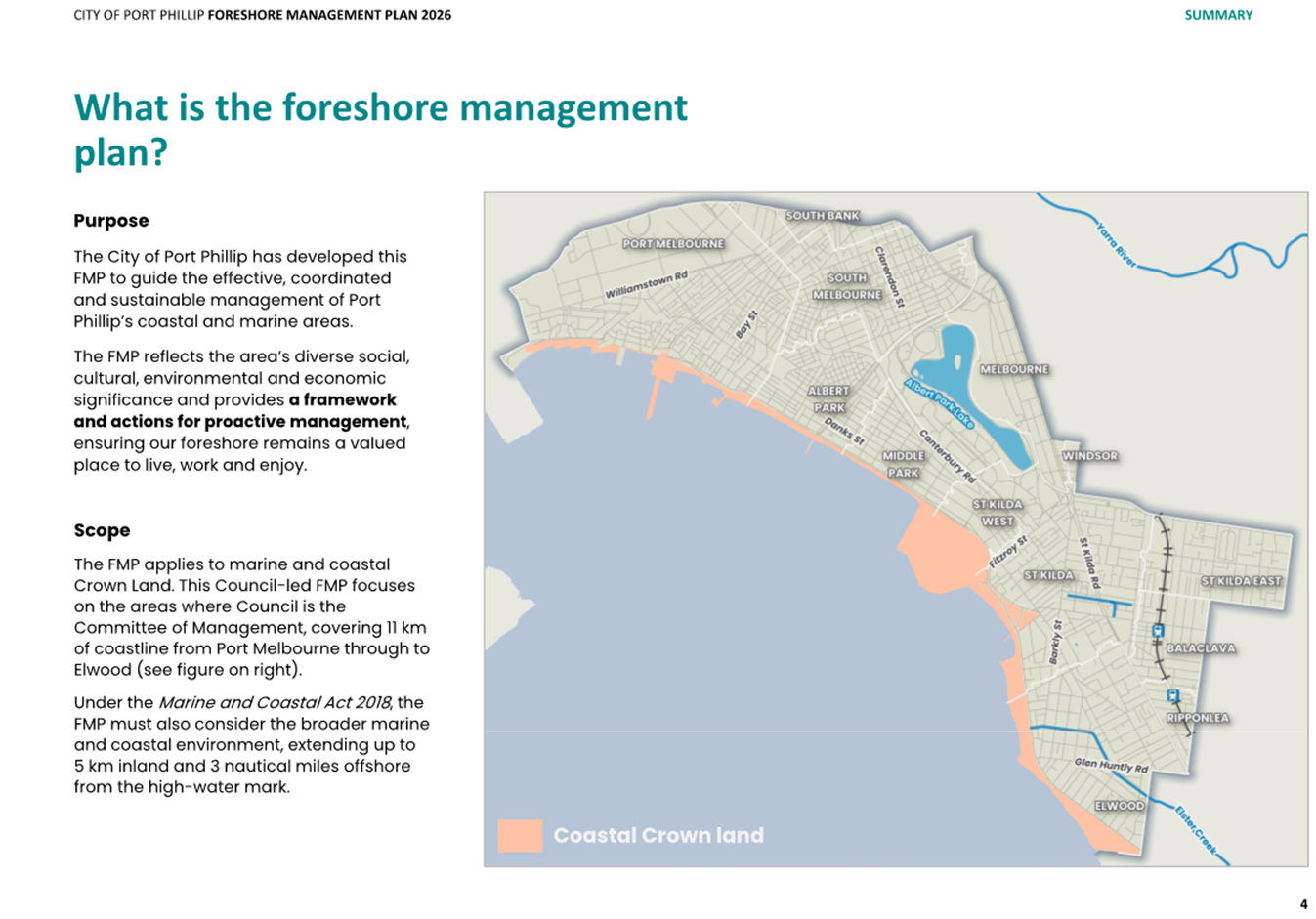
4.1 There are 11km of foreshore within the municipality.
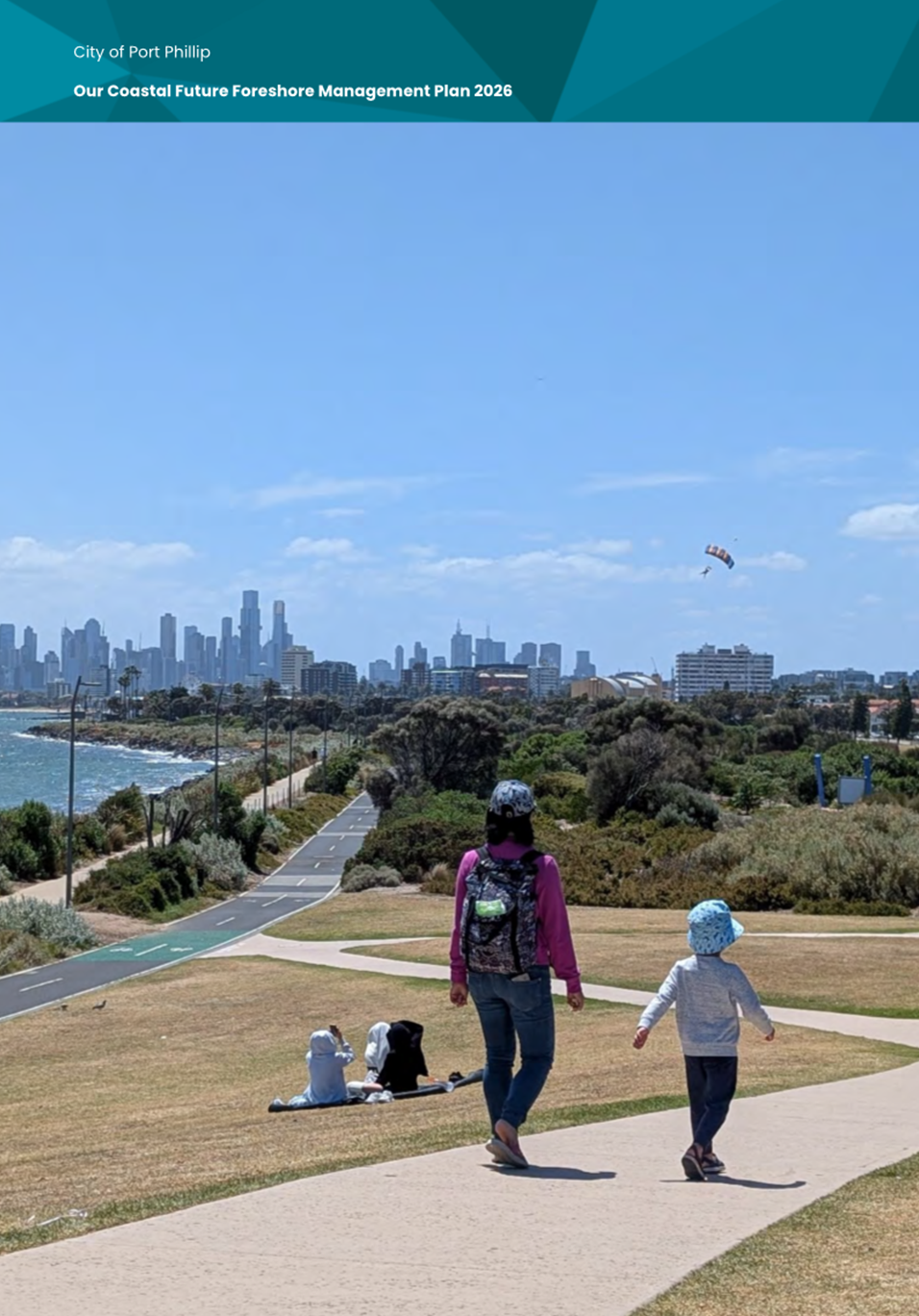
4.2 Our Marine and foreshore areas are vital to our community, supporting recreation, lifestyle, tourism and a healthy coastal environment.
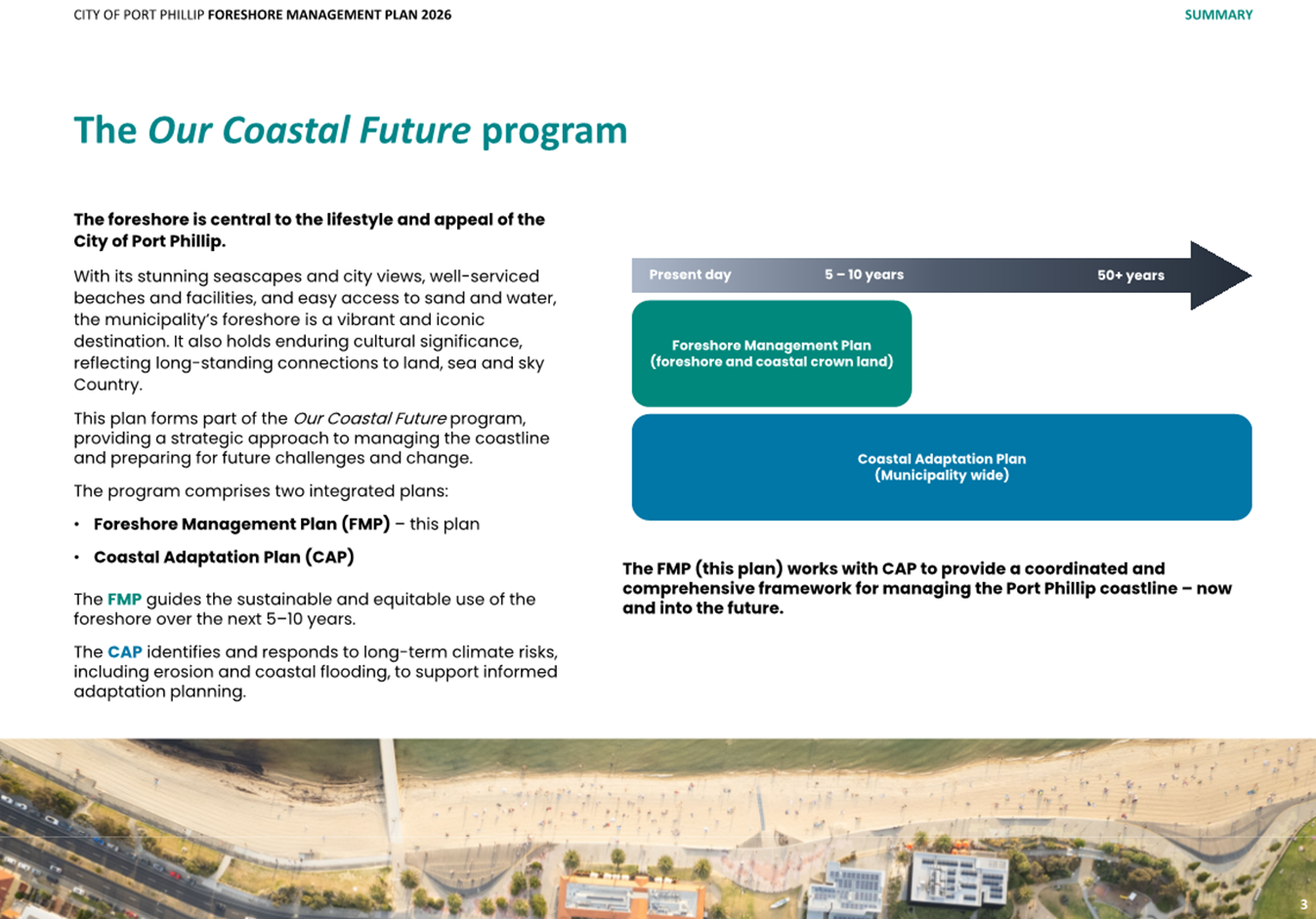
4.3 Our Coastal Future is Council’s program for the strategic management of this foreshore. The program has two integrated plans:
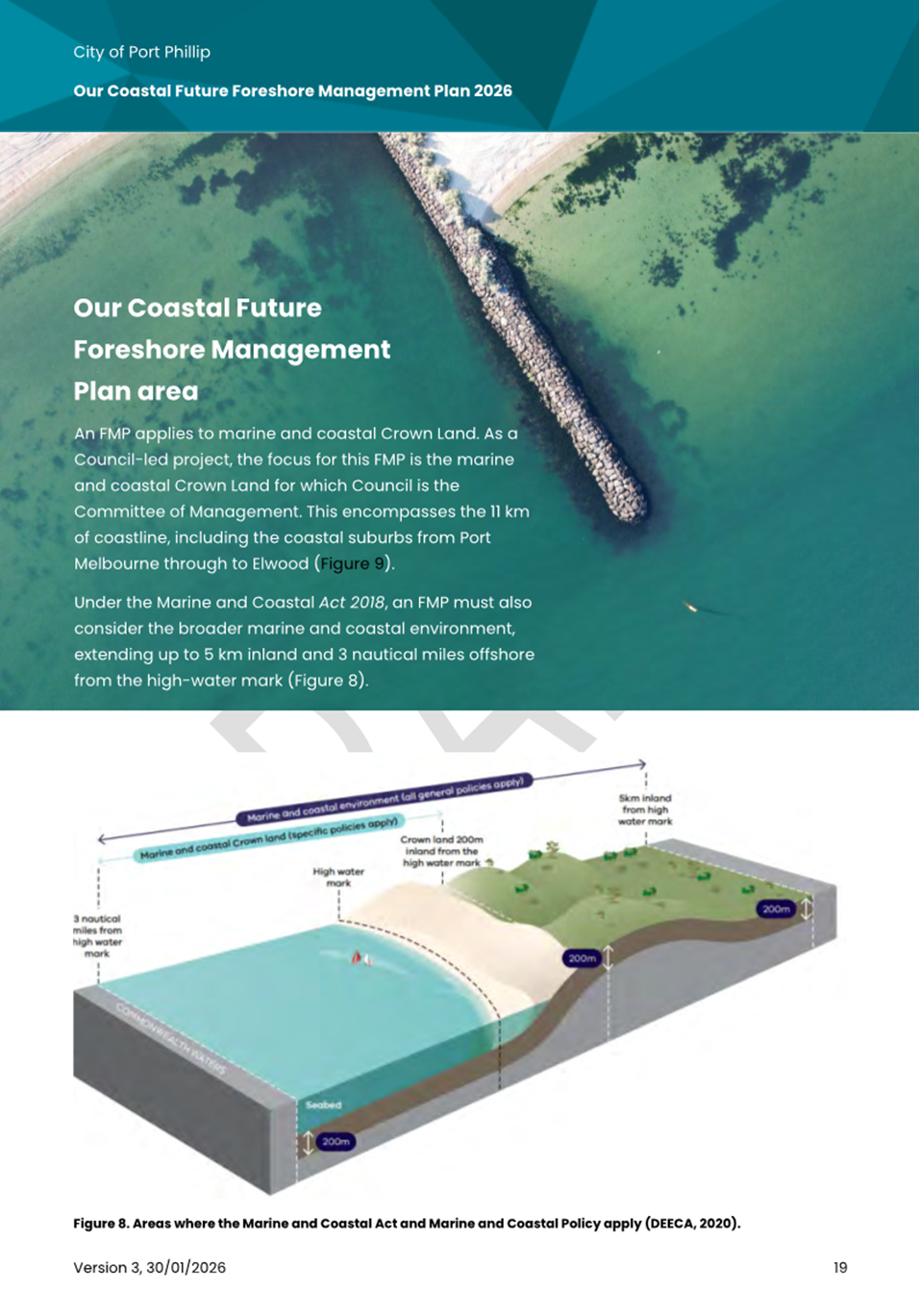
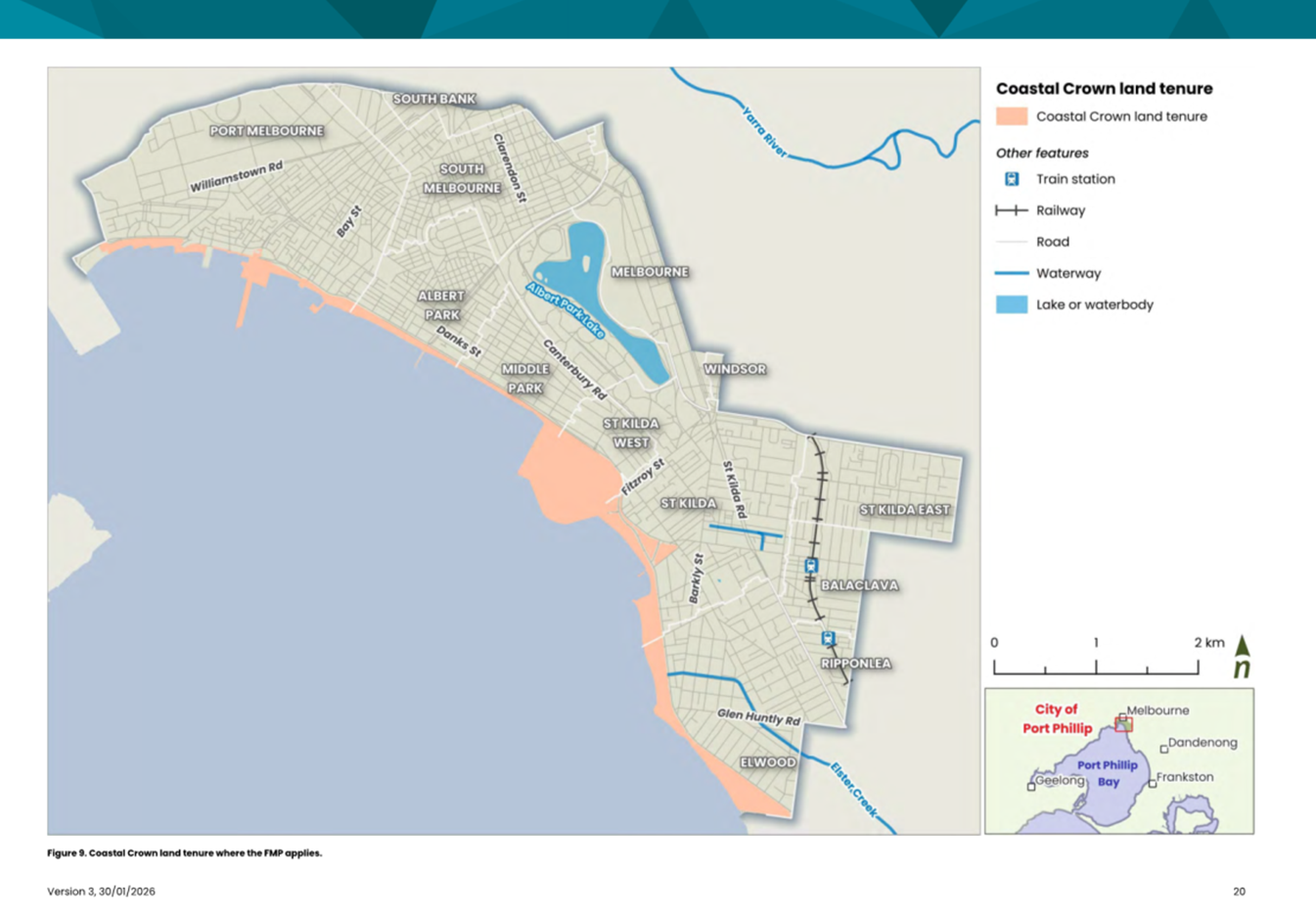
· Foreshore Management Plan (FMP), this report and attached plan. The FMP will provide strategic guidance on how Council uses, maintains and manages the 11km foreshore public Crown land and the associated marine and coastal environment.
· The Coastal Adaptation Plan (CAP), which is under development. The CAP provides an integrated and long-term approach to understand and manage the increasing coastal hazards, vulnerabilities and risks across the entire municipality.
4.4 The FMP works with the CAP to provide a coordinated and comprehensive framework for managing the Port Phillip coastline - now and into the future.
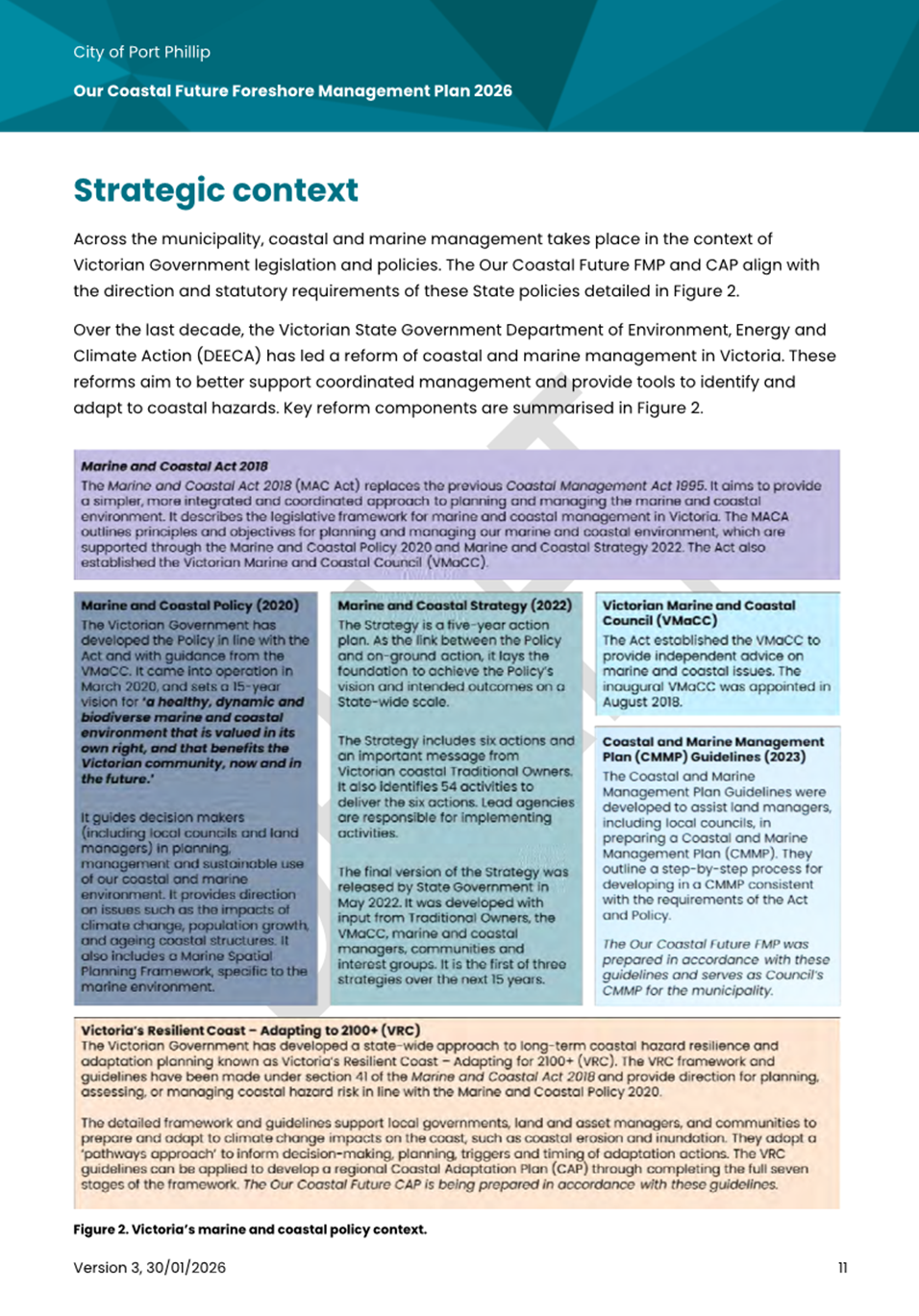
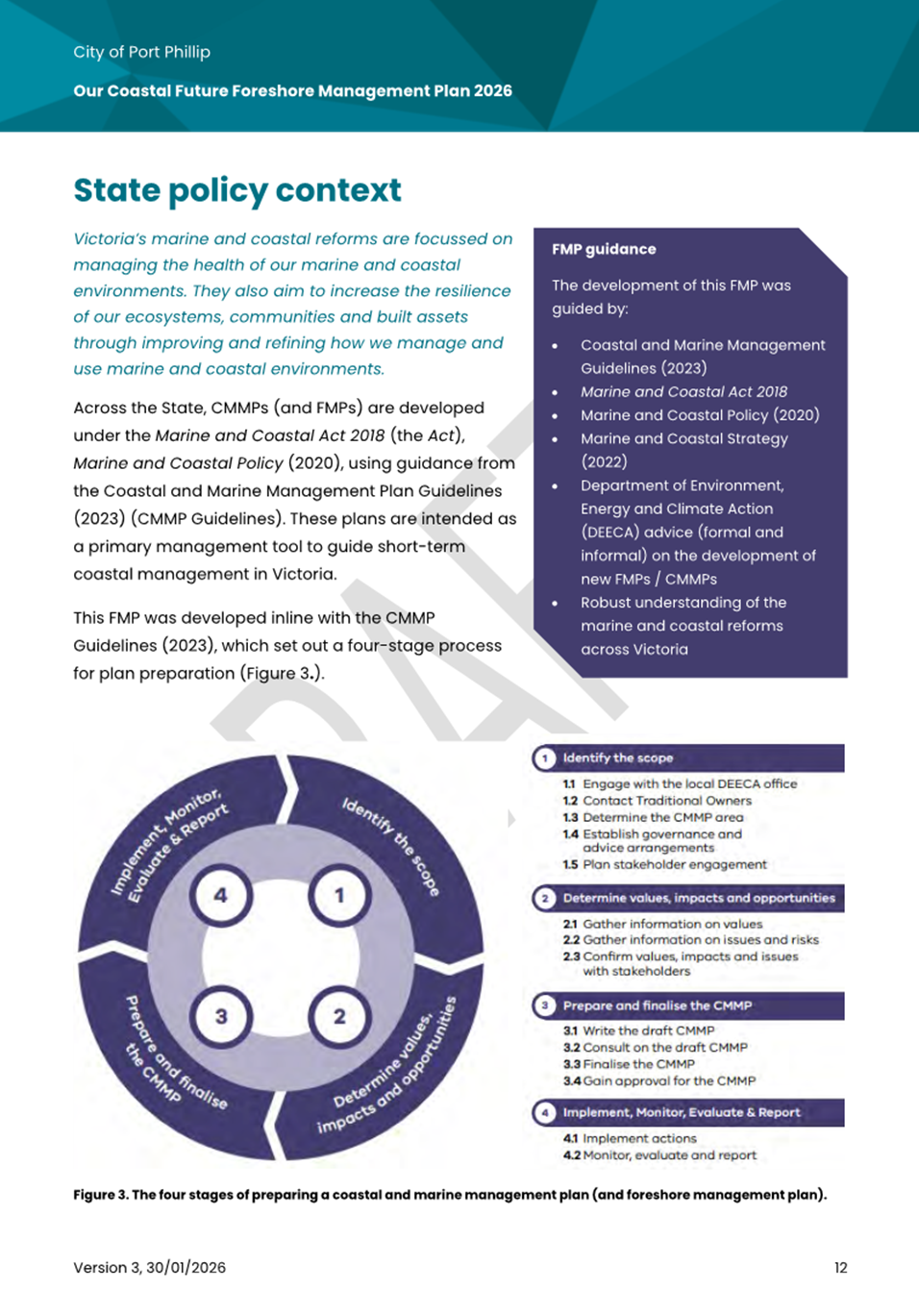
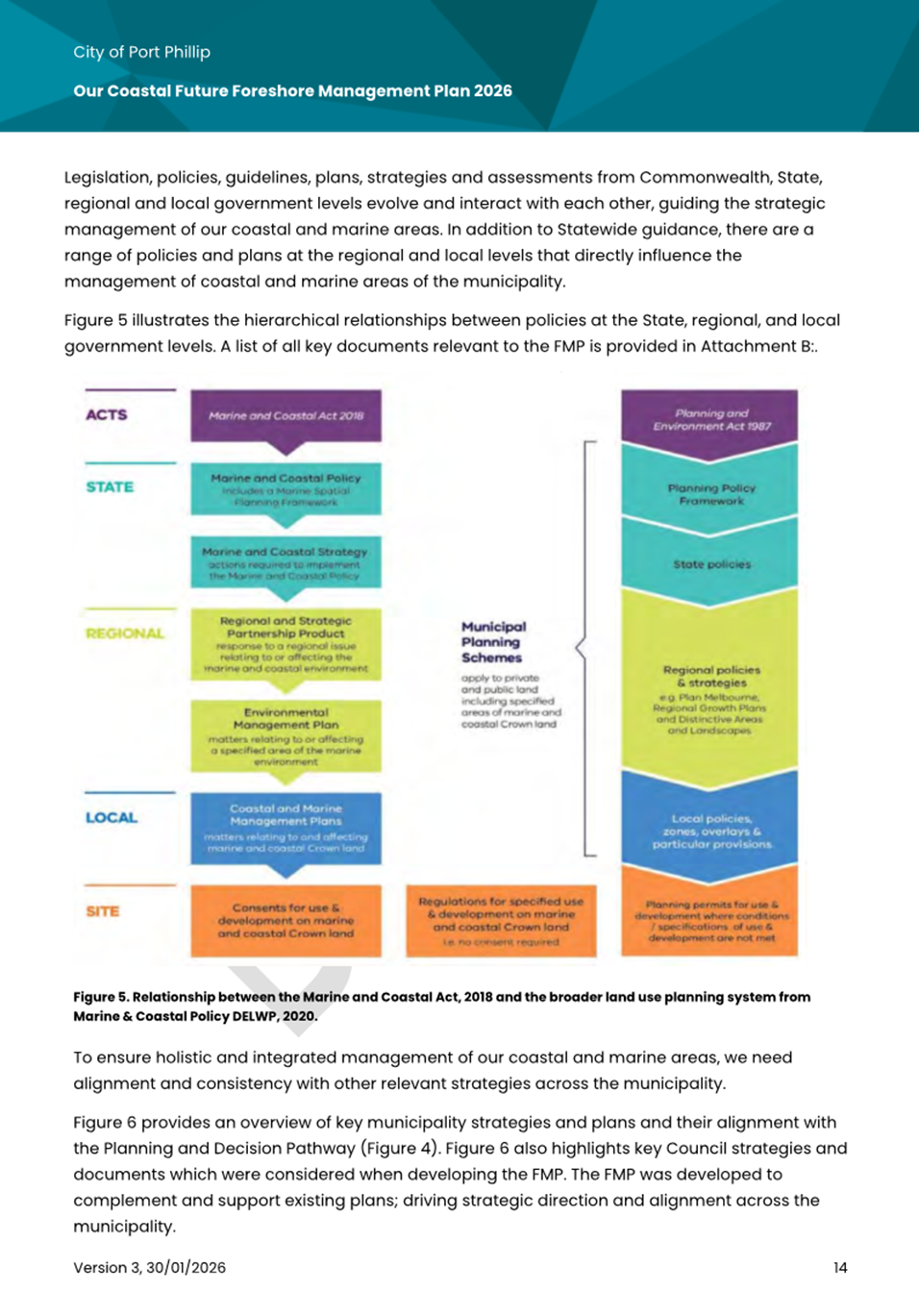
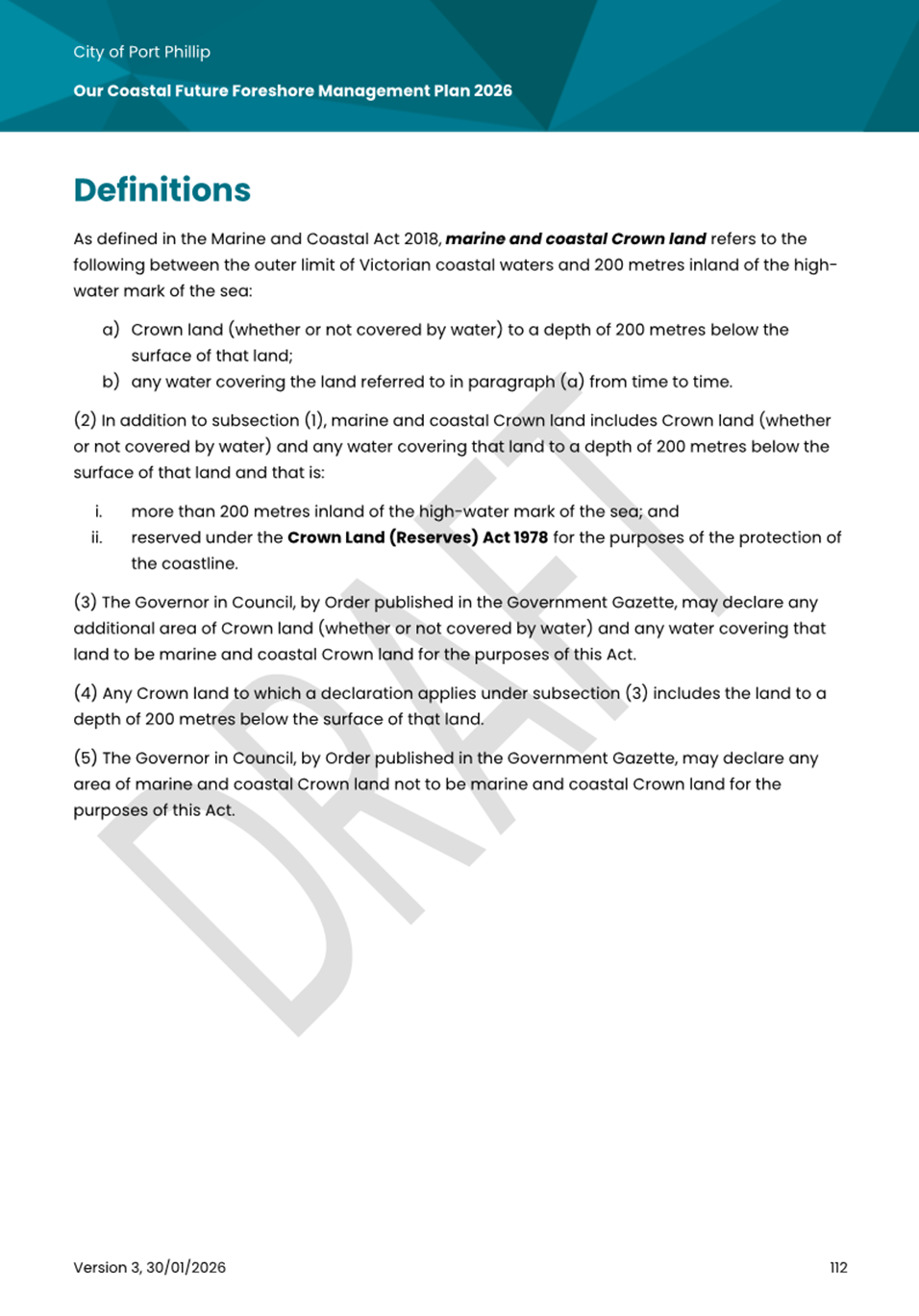
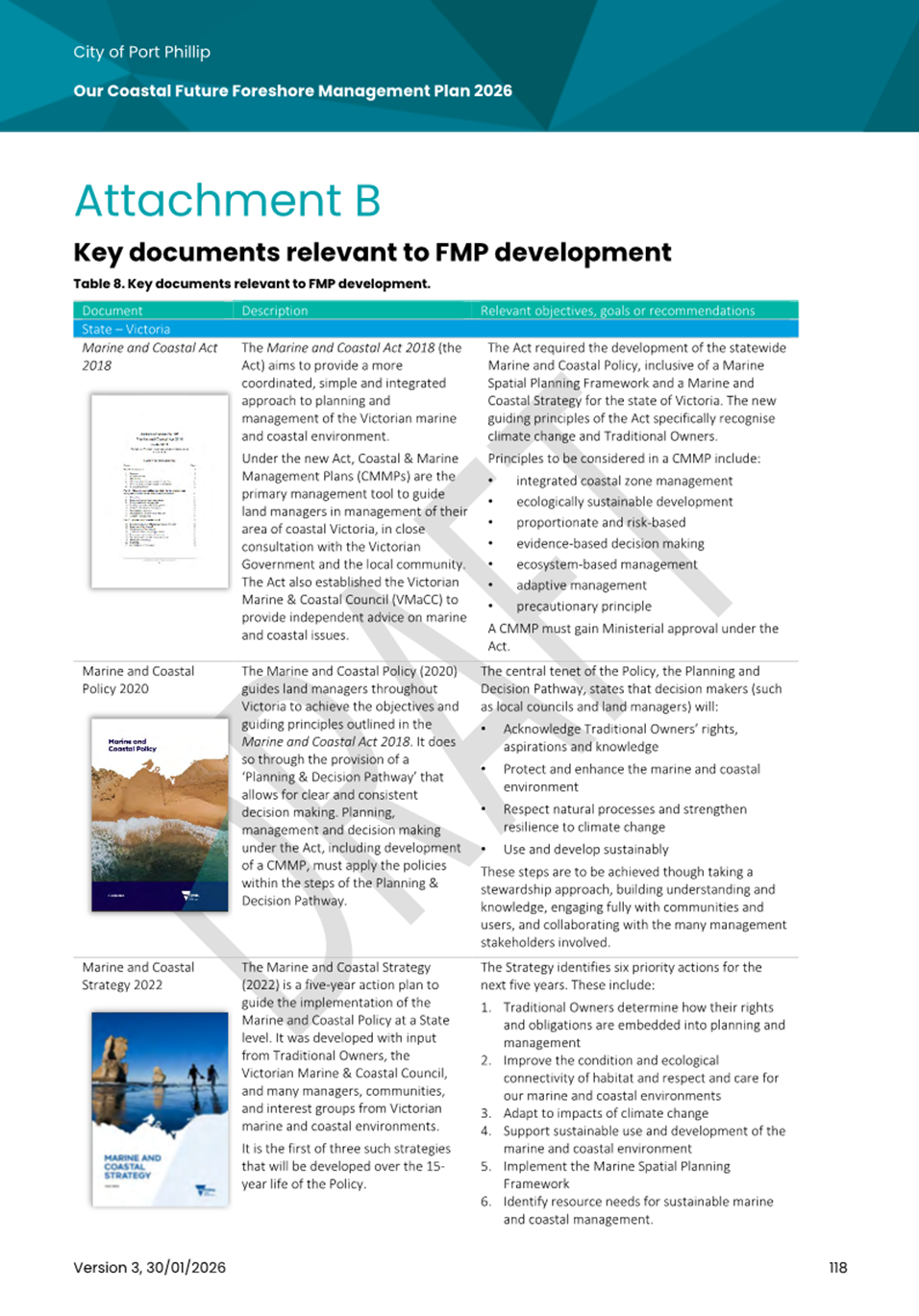
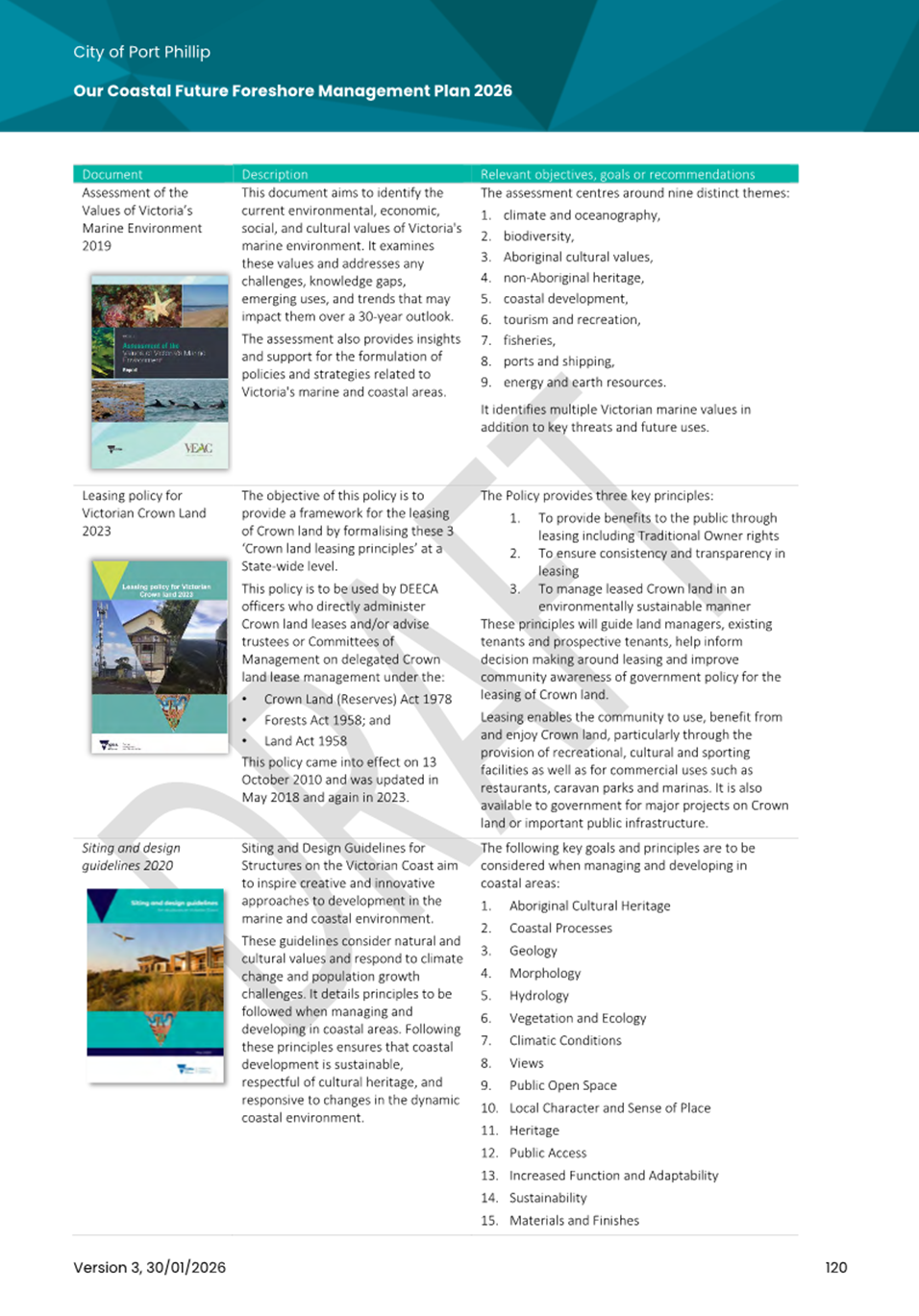
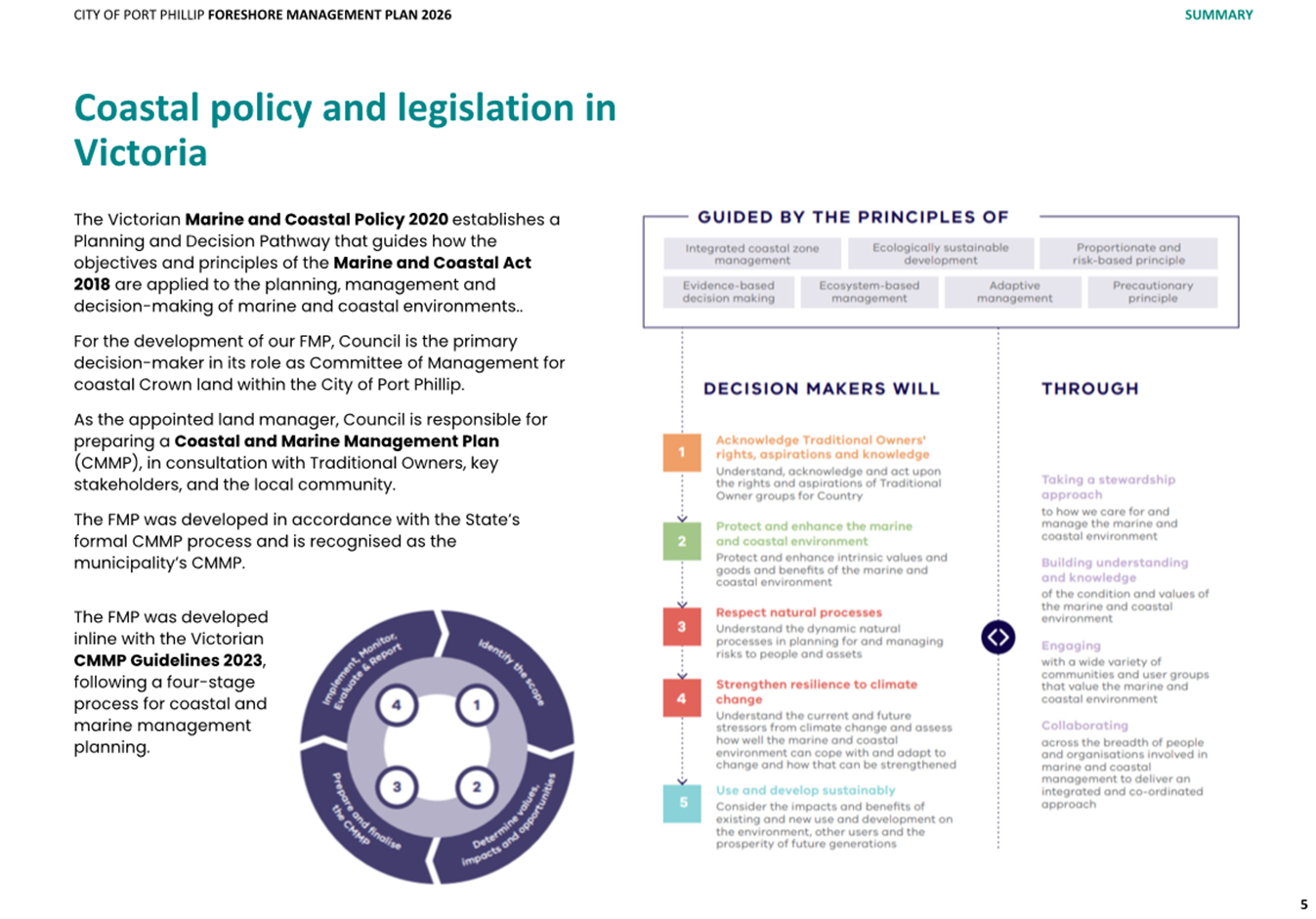
4.5 It is a regulatory requirement that both plans (FMP and CAP) are implemented under the Marine and Coastal Act 2018 (Vic) and associated marine and coastal policies, strategies and guidelines. This includes following the State Government Guidelines, the Marine and Coastal Policy as well as the State Coastal Strategy.
4.6 The FMP is also used to support future funding applications and allow State consent for any coastal works.
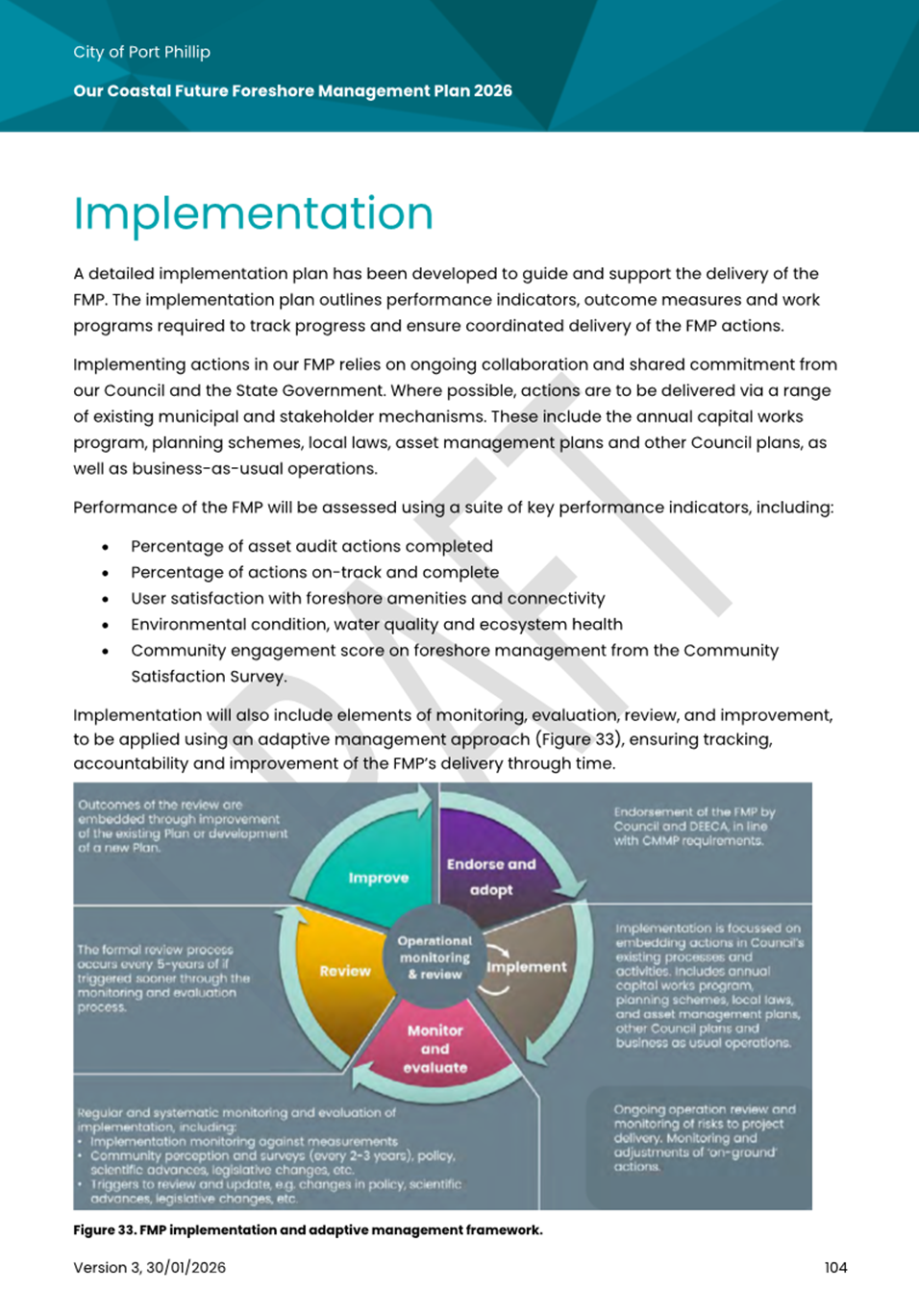
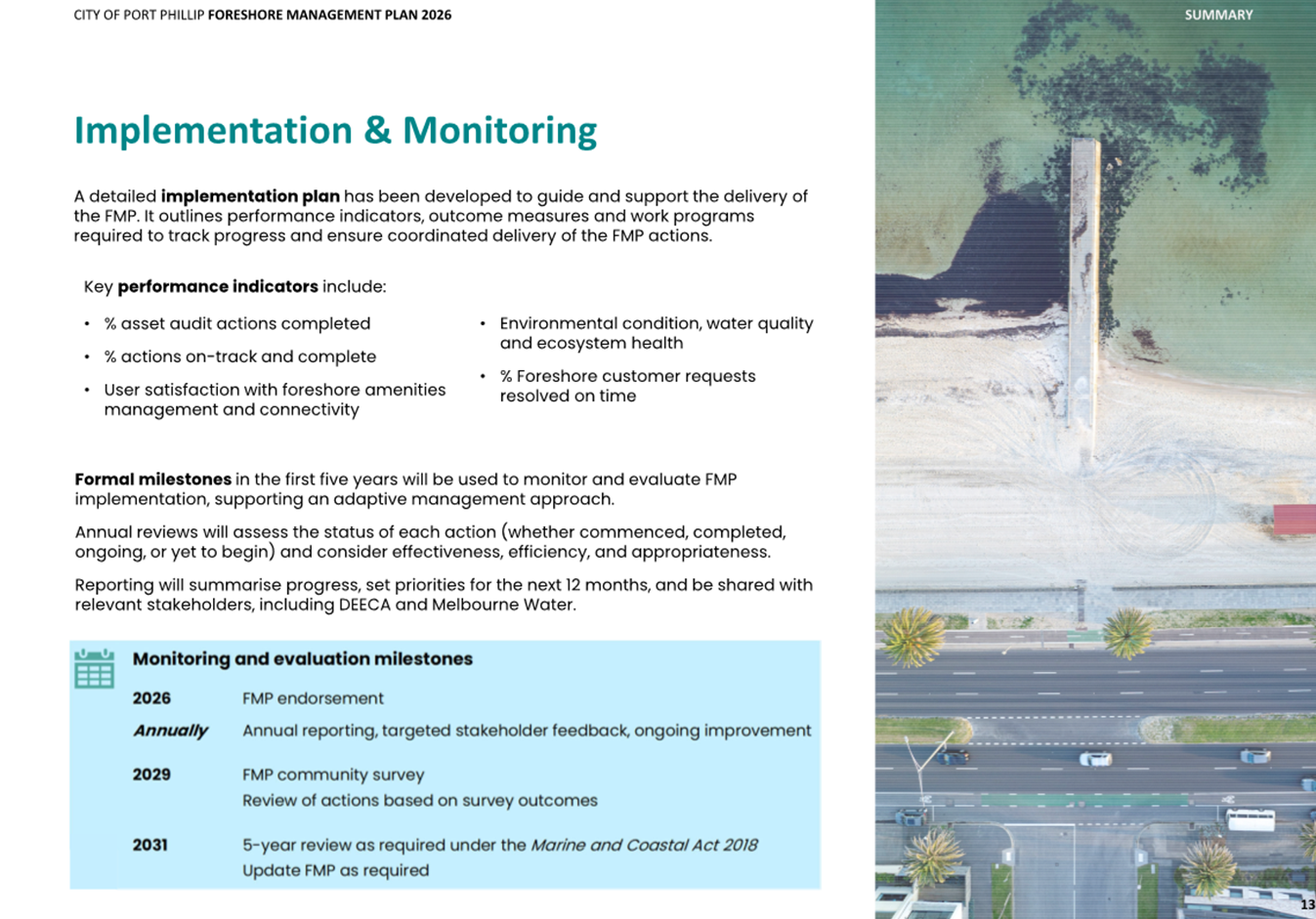
4.7 In line with the State Framework, the next stage of the delivery of the FMP is Council’s formal adoption of the finalised Plan in June 2026, before seeking the State Minister’s endorsement.
Draft Foreshore Management Plan (FMP)
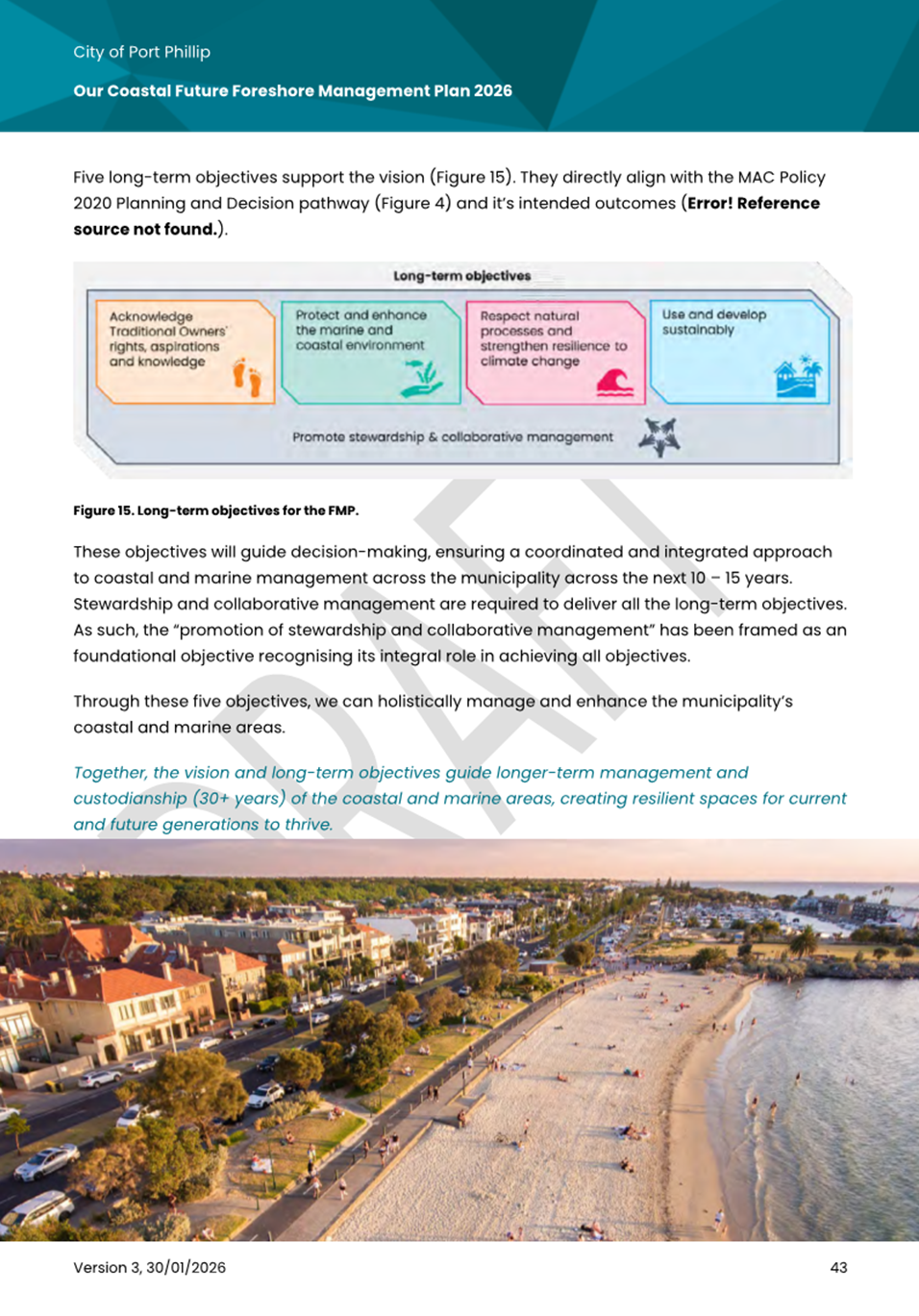
4.8 The draft FMP guides the sustainable and equitable use of the foreshore over the next 10 years.
4.9 The draft FMP responds to emerging issues and opportunities in line with the community feedback and new coastal legislation.
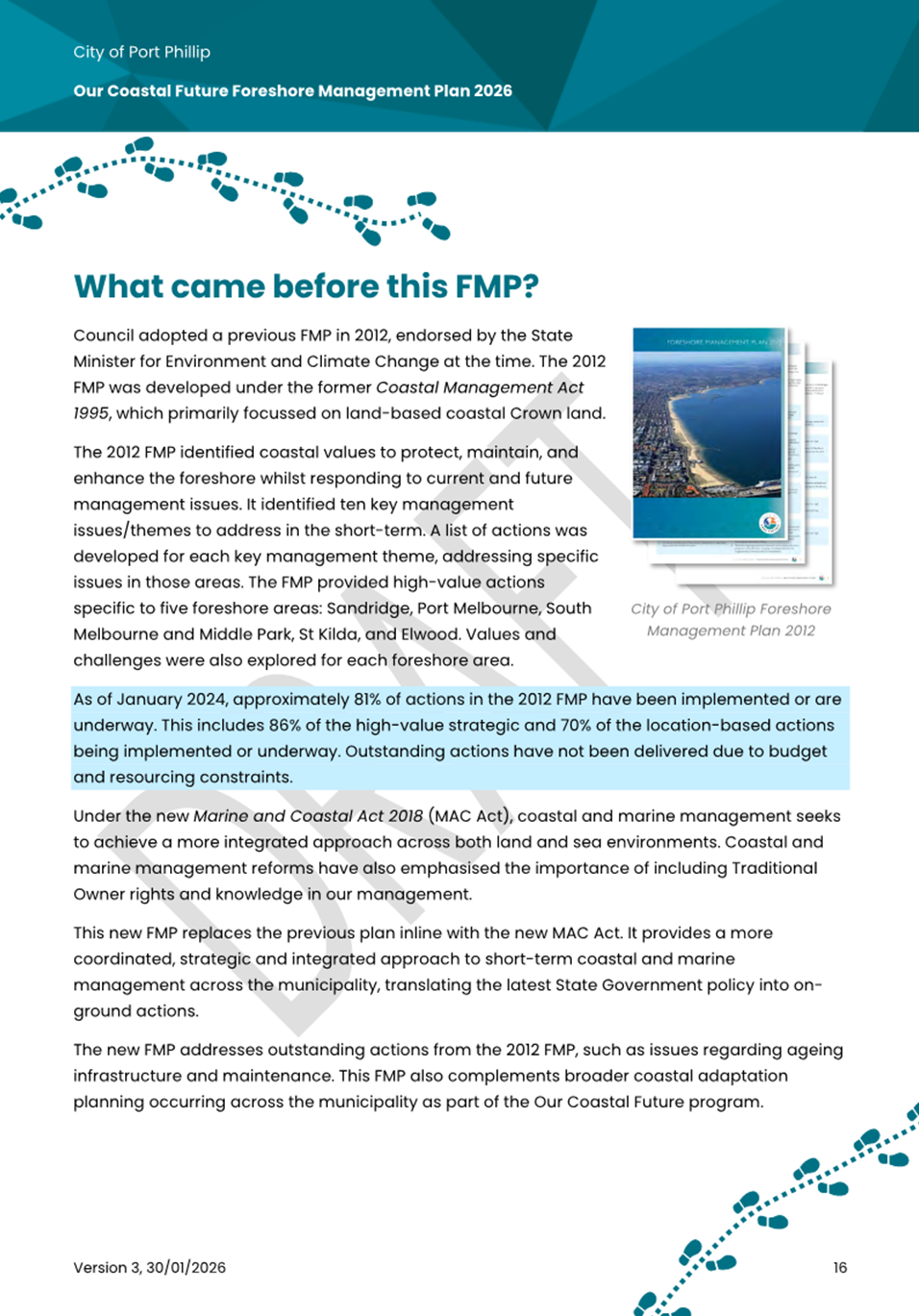
4.10 The draft will replace the current FMP, which was adopted in 2012.
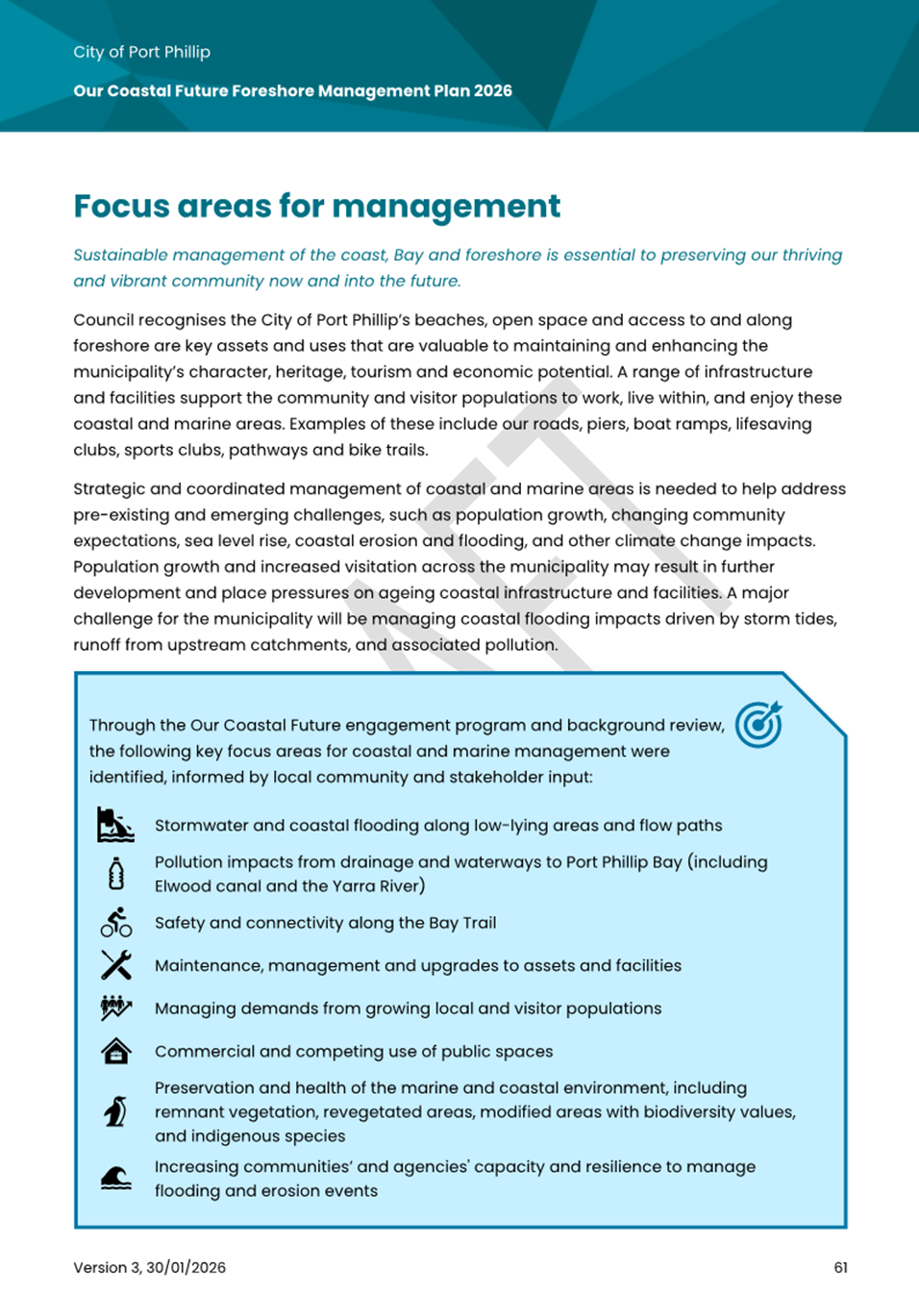
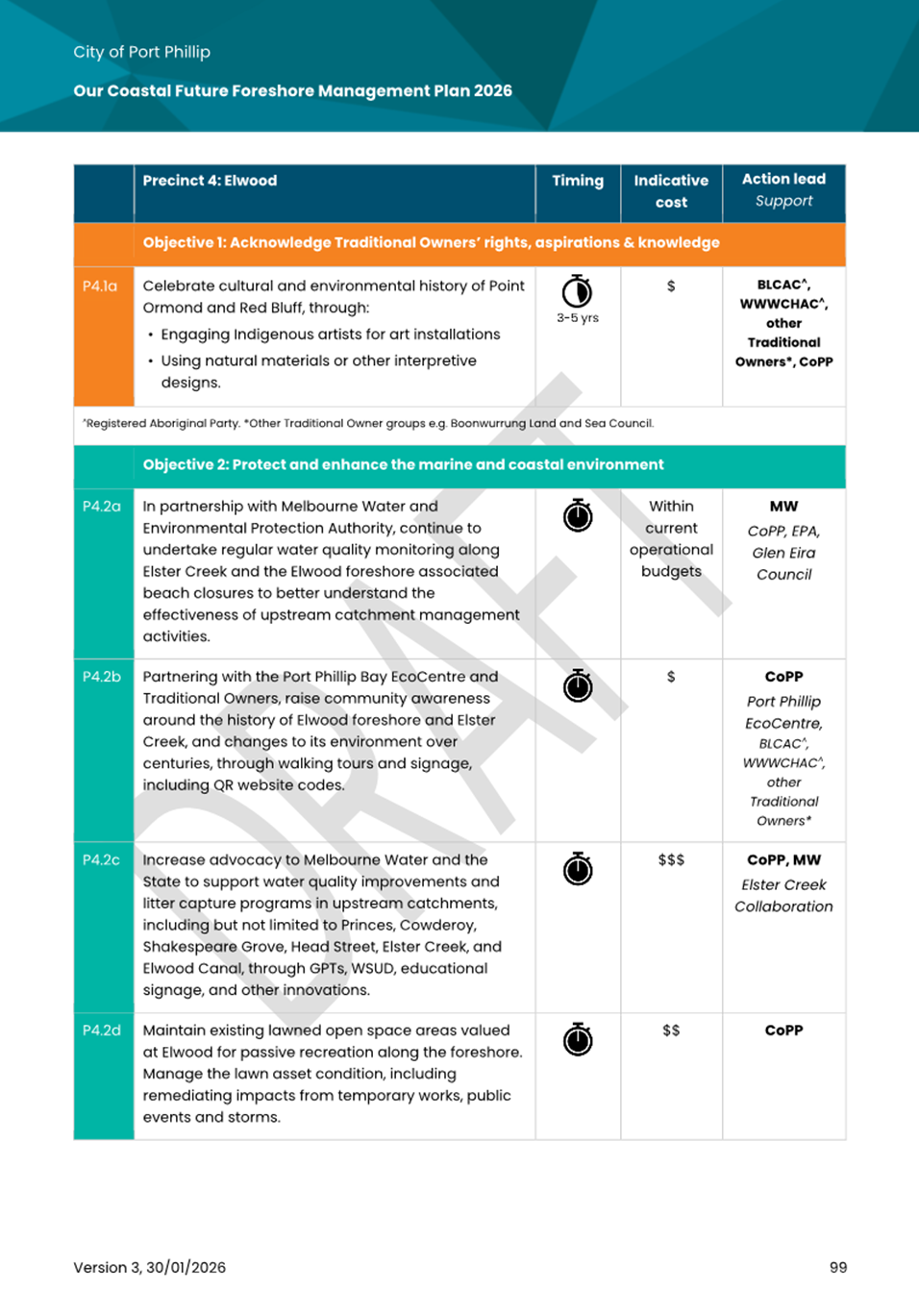
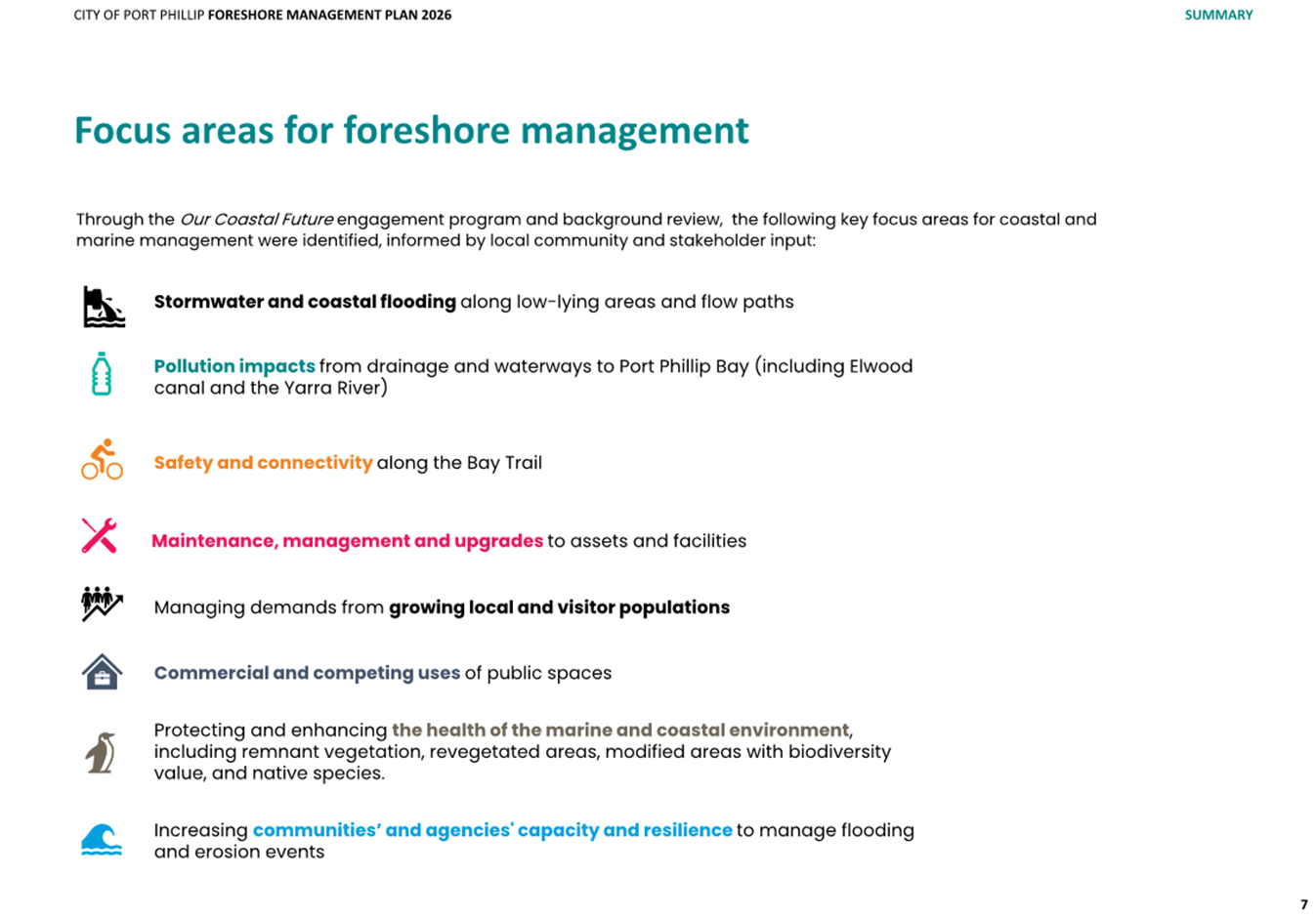
4.11 The draft FMP seeks to address the following key focus areas that have been identified through community engagement to date:
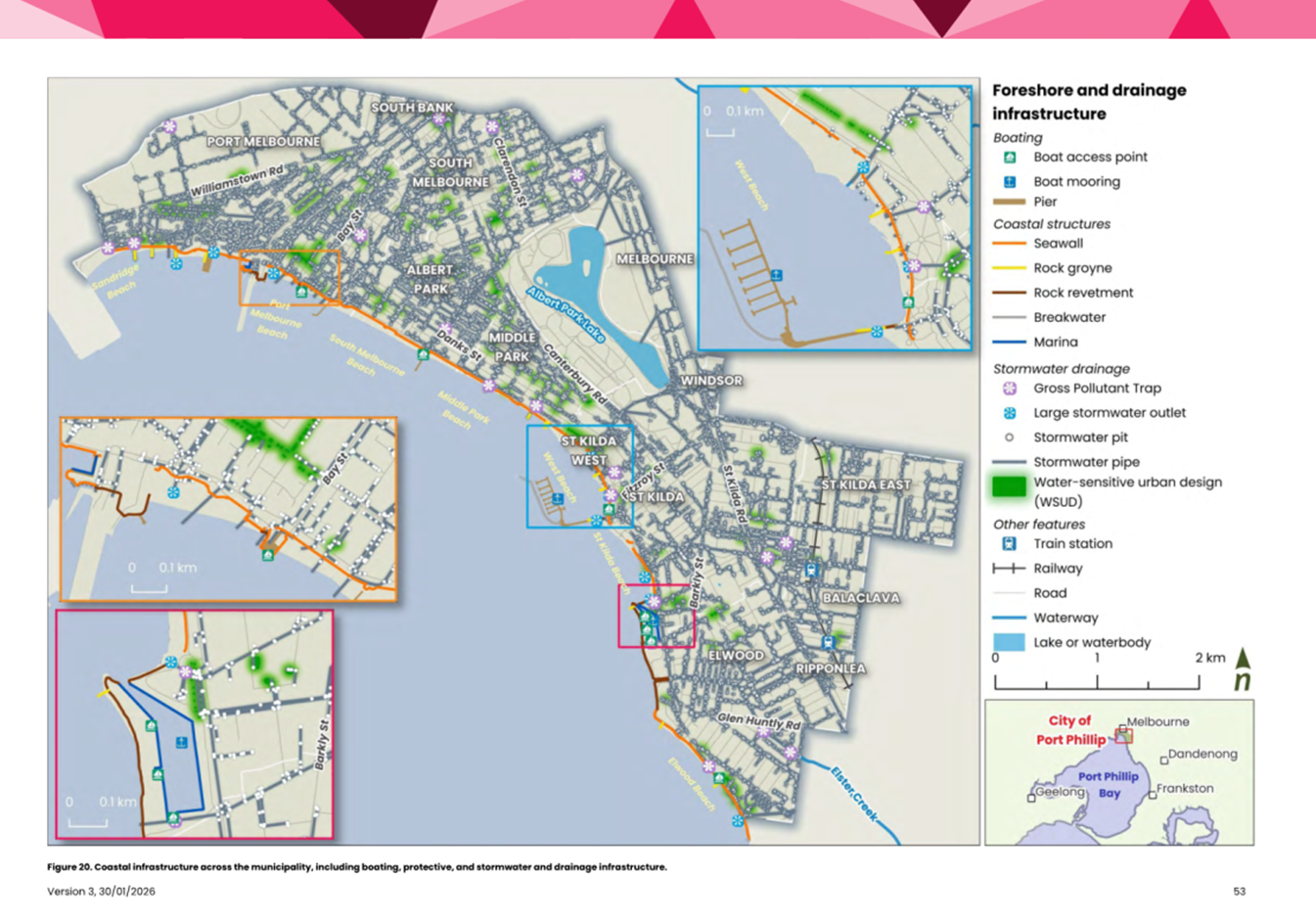
· Stormwater and coastal flooding along low-lying areas and flow paths.
· Pollution impacts from drainage and waterways to Port Phillip Bay.
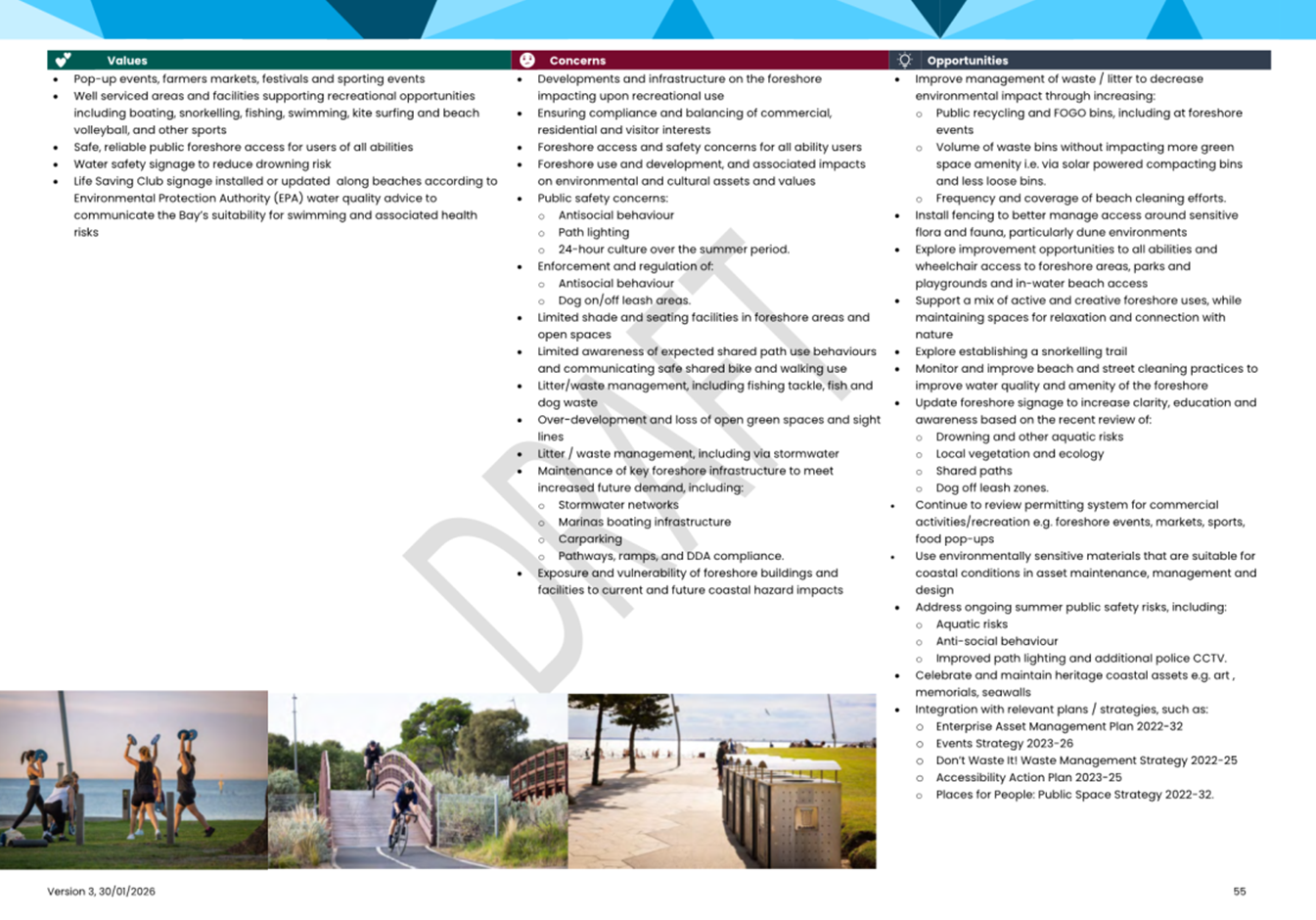
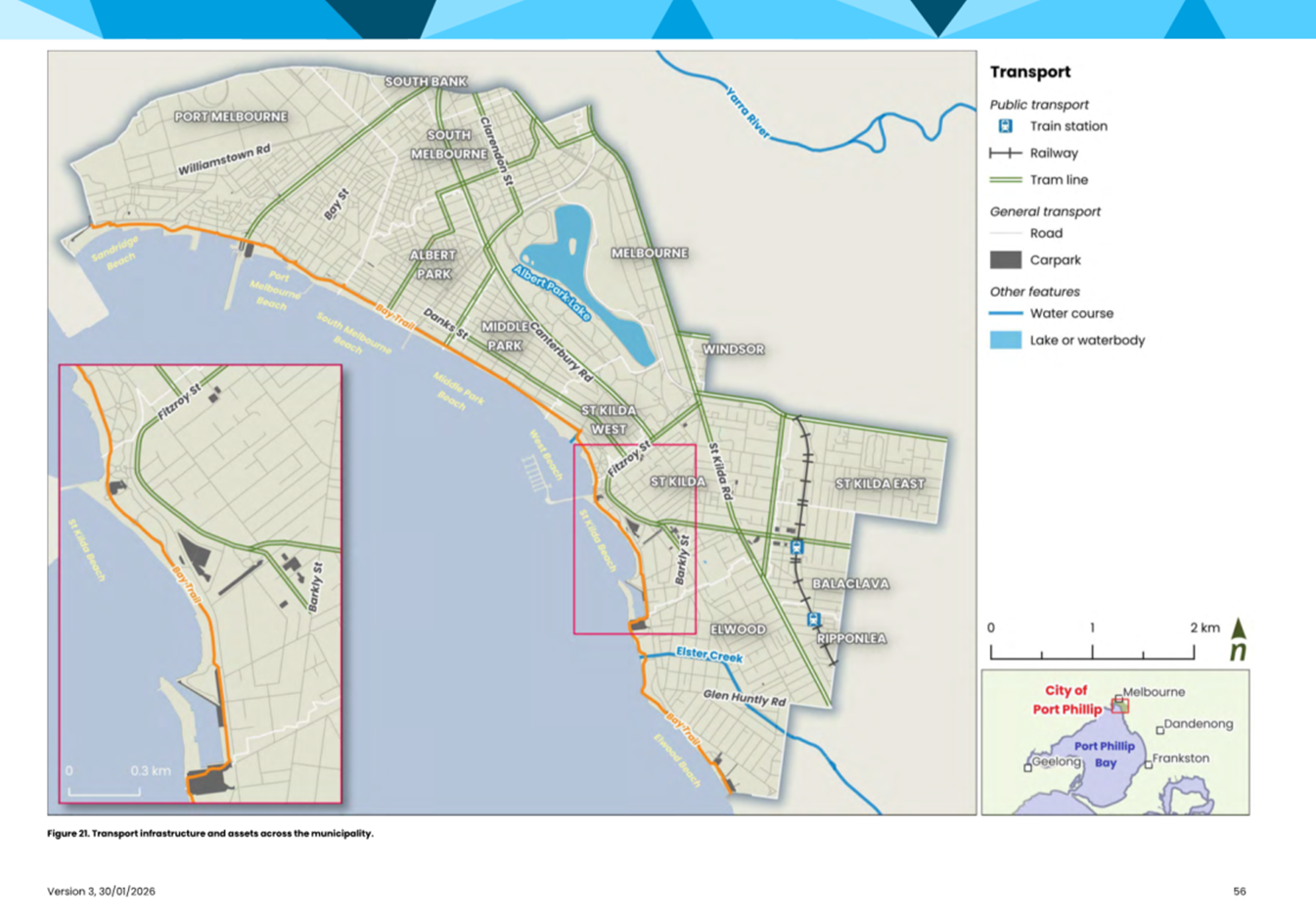
· Safety and connectivity along the Bay Trail.
· Maintenance, management and upgrades to assets and facilities.
· Managing demands from growing local and visitor populations.
· Commercial and competing use of public spaces.
· Preservation and health of the marine and terrestrial environment.
· Increasing communities’ and agencies' capacity and resilience to manage flooding and erosion events.
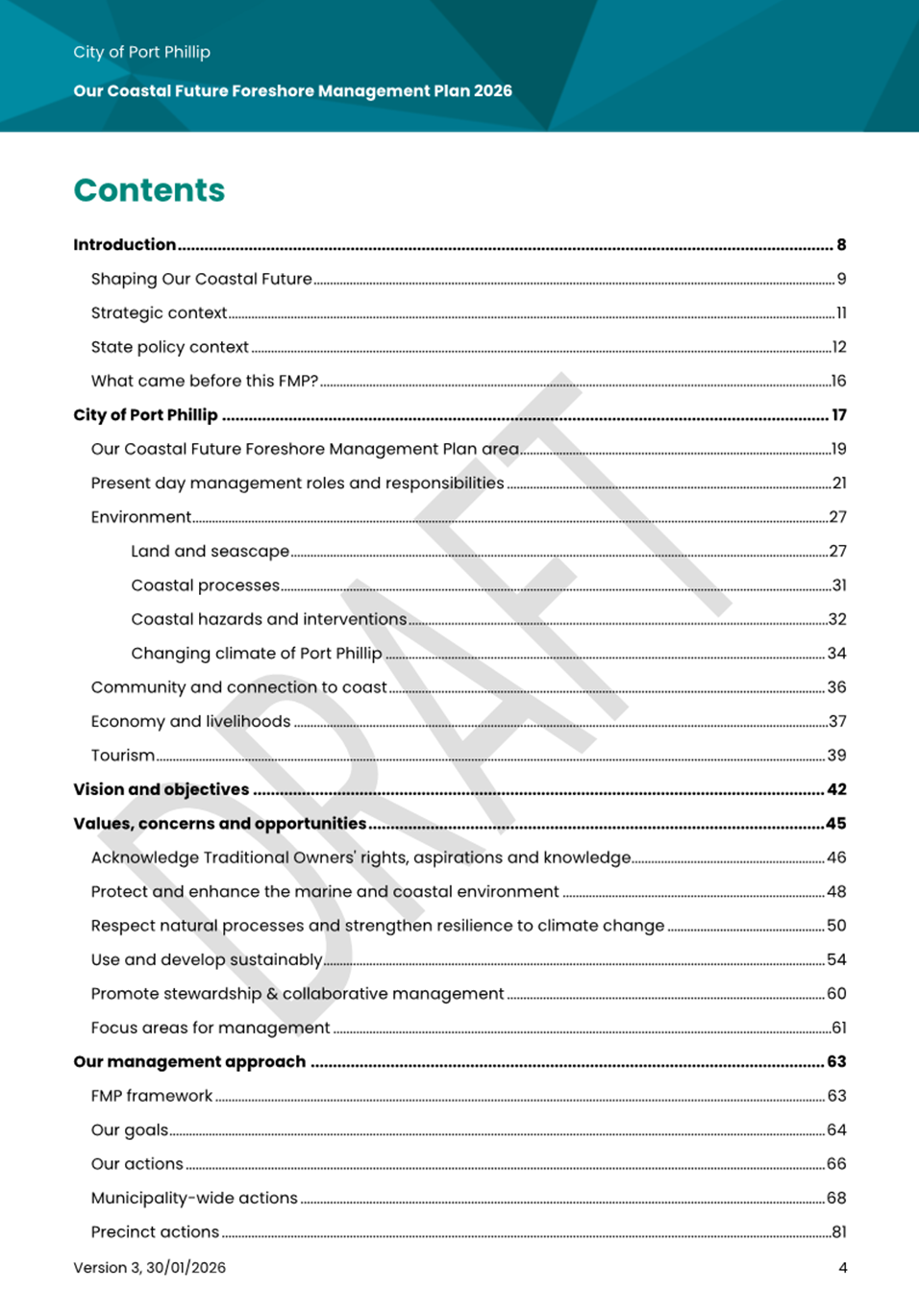
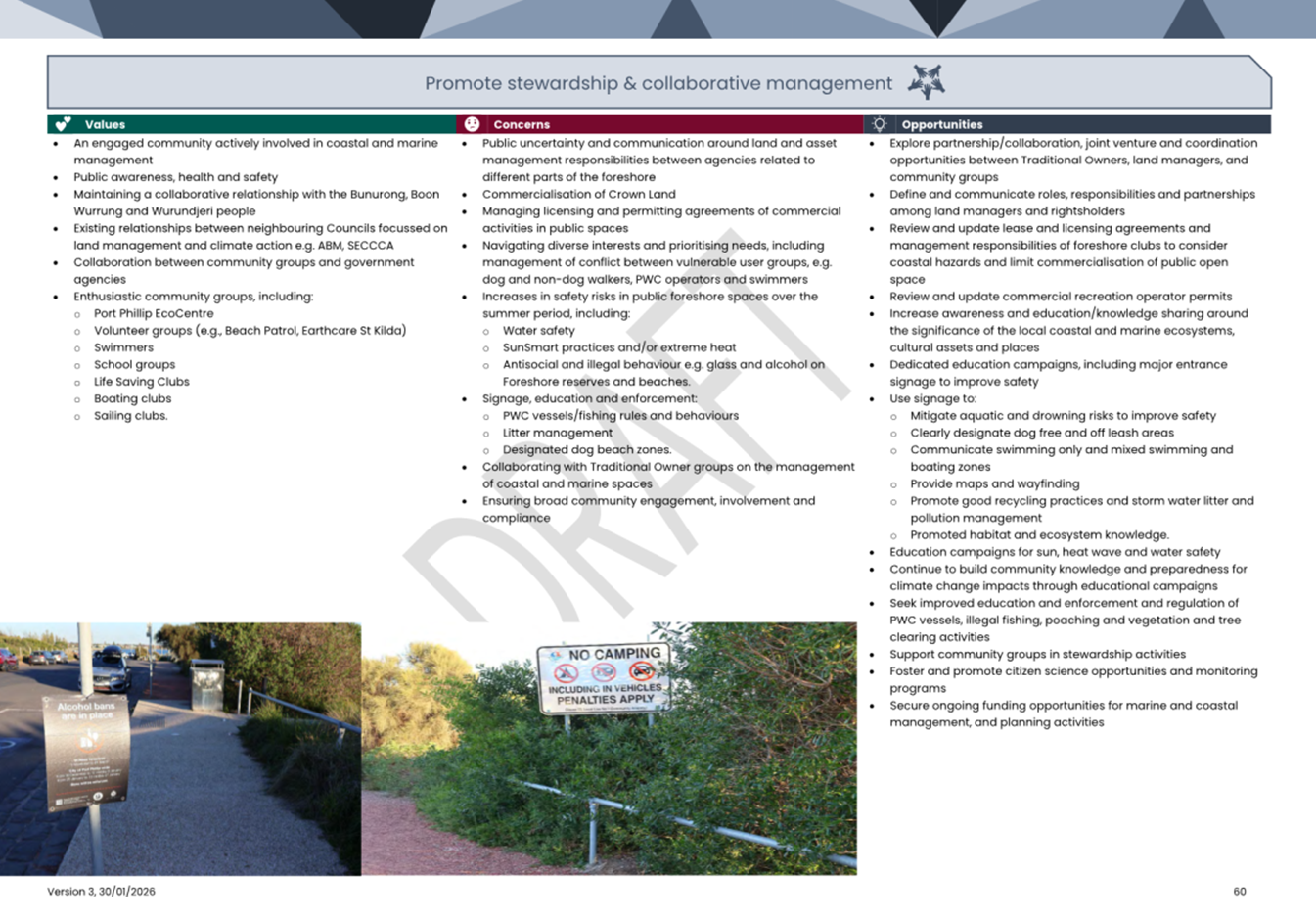
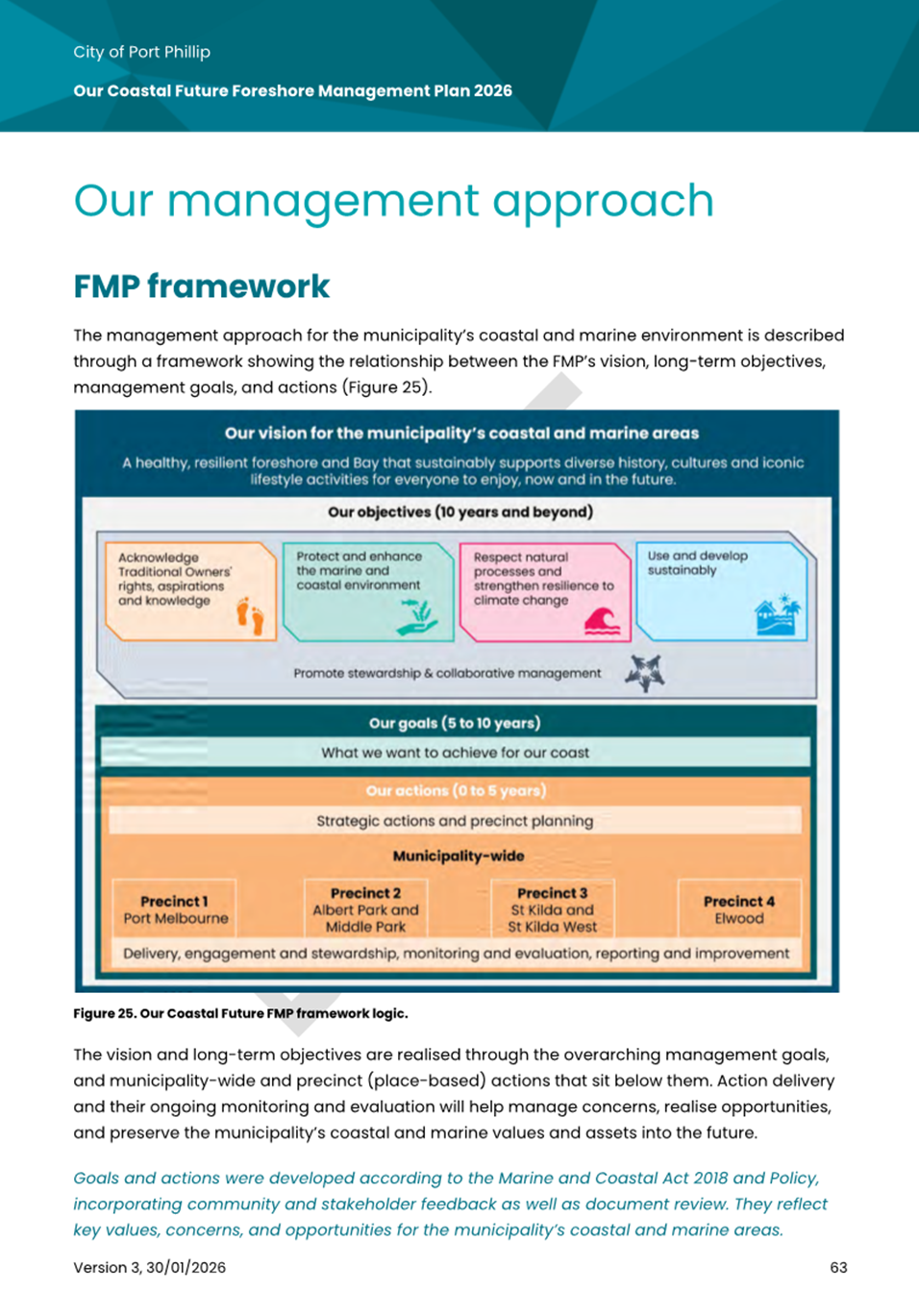
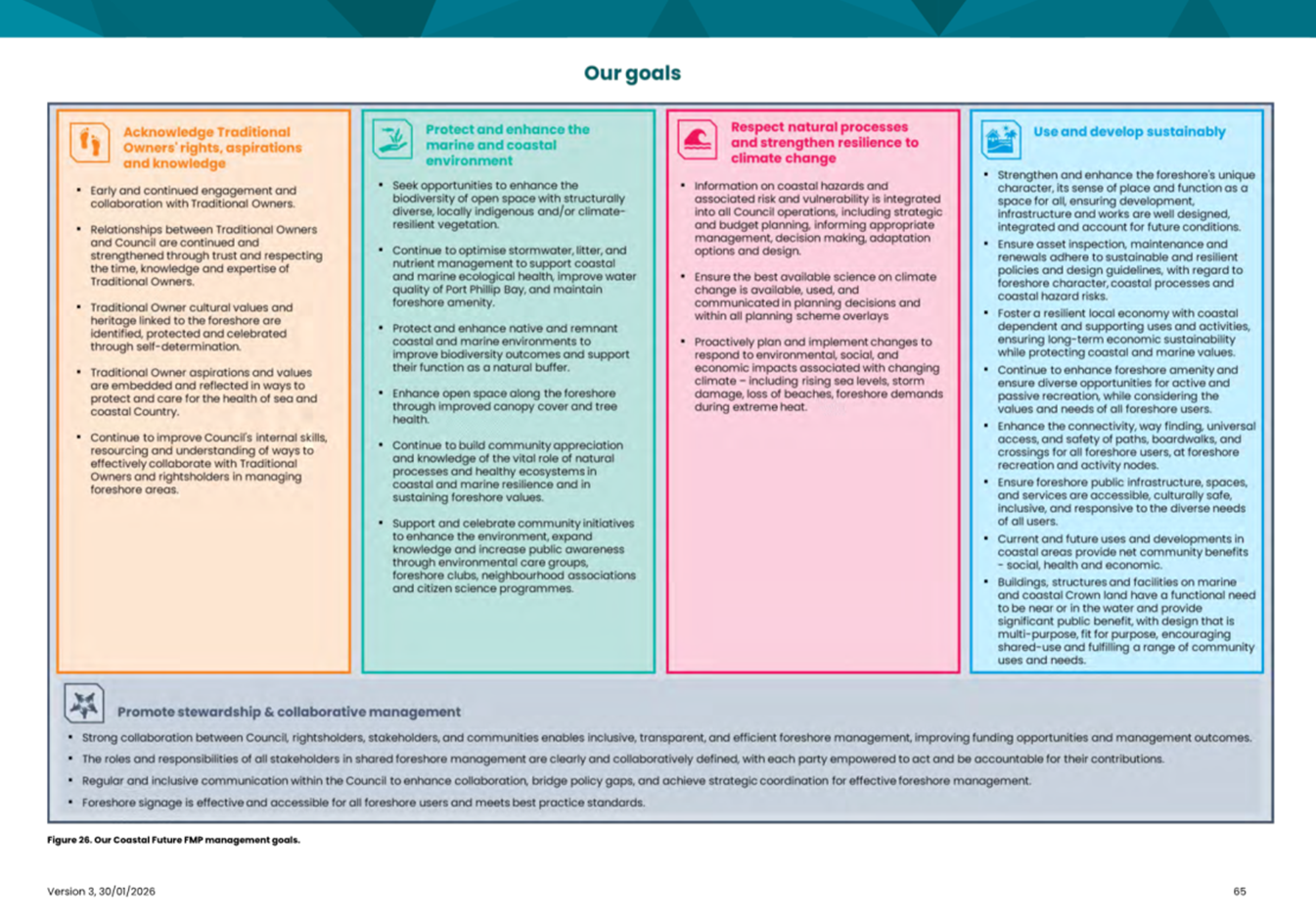
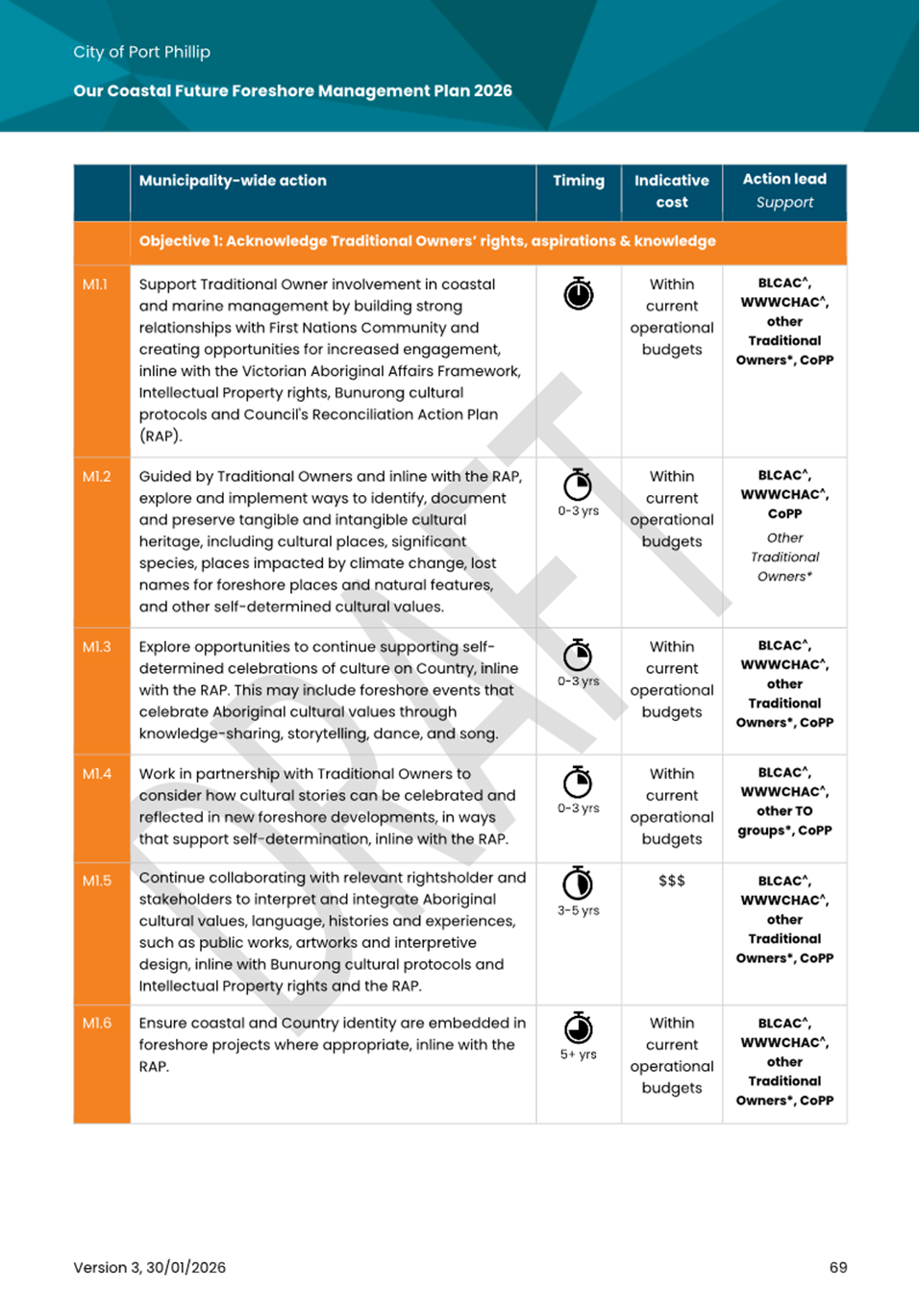
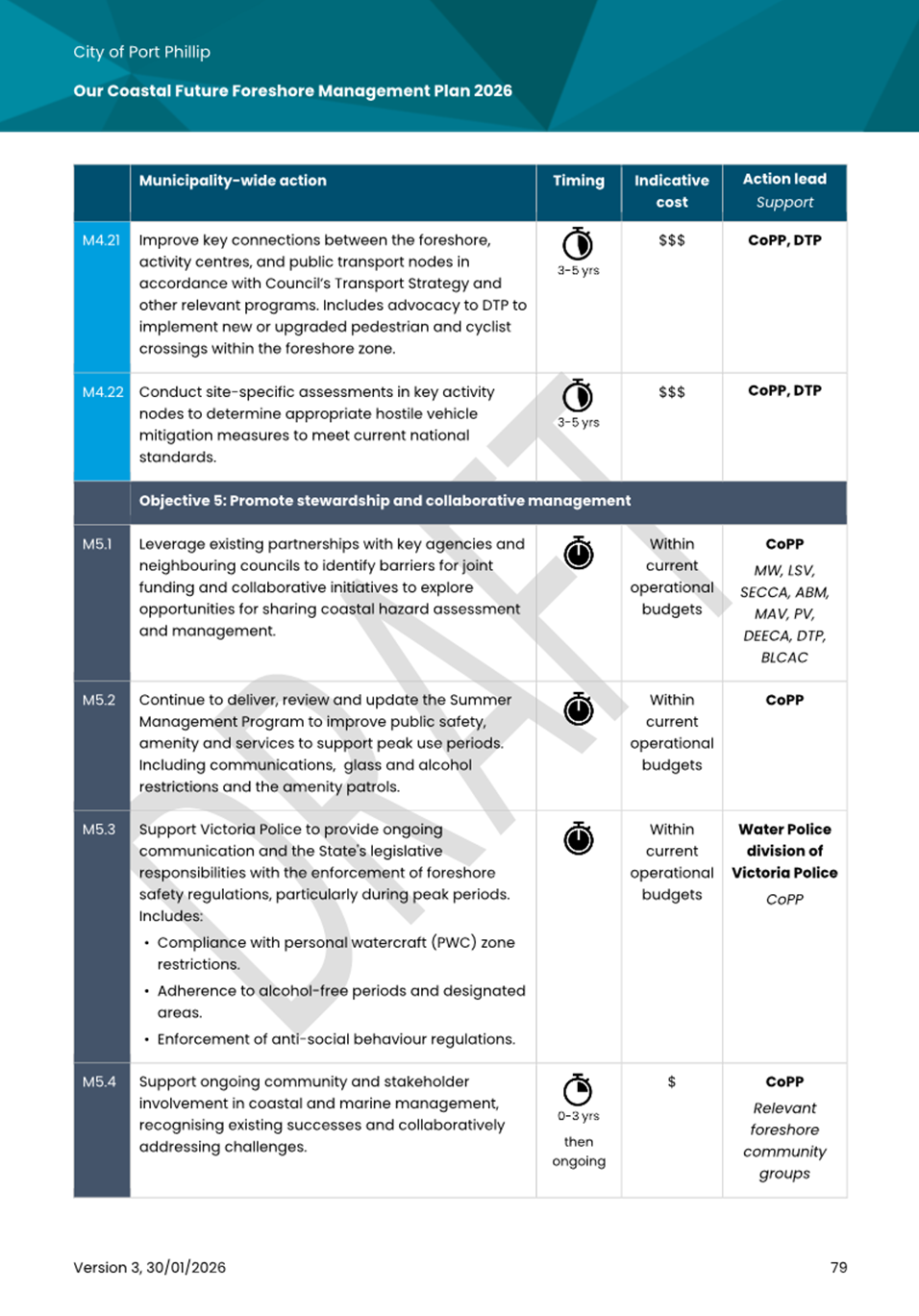
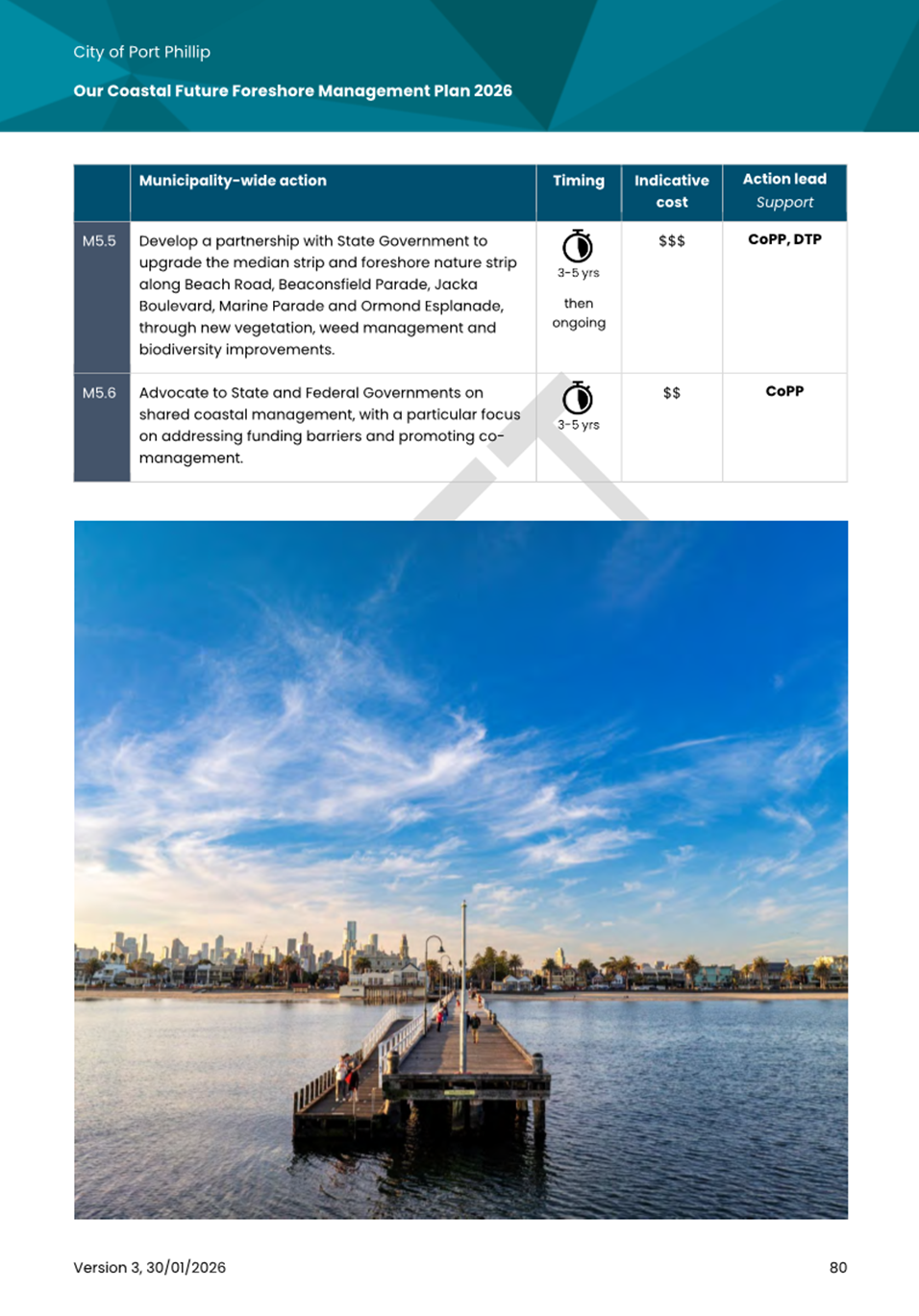
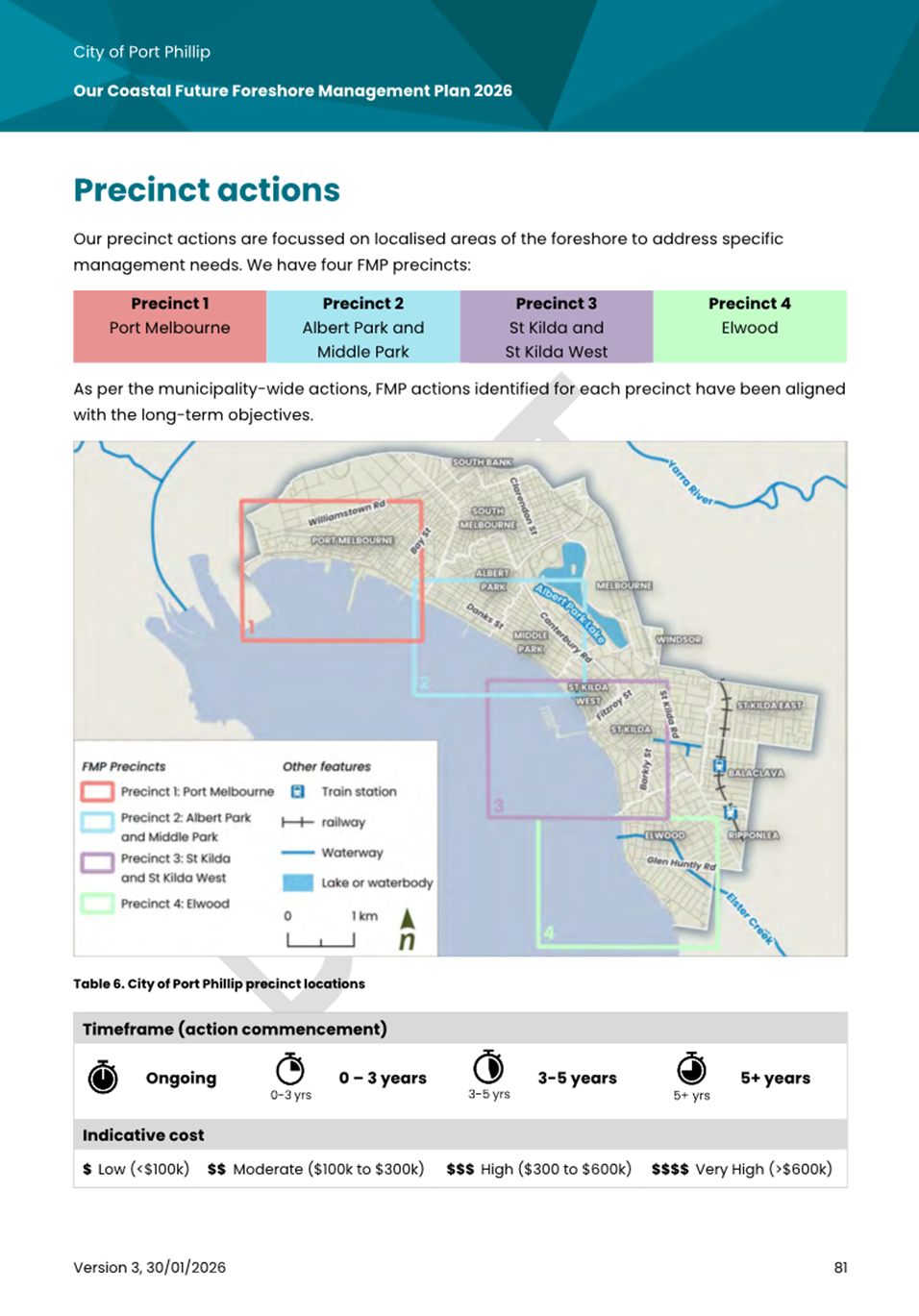
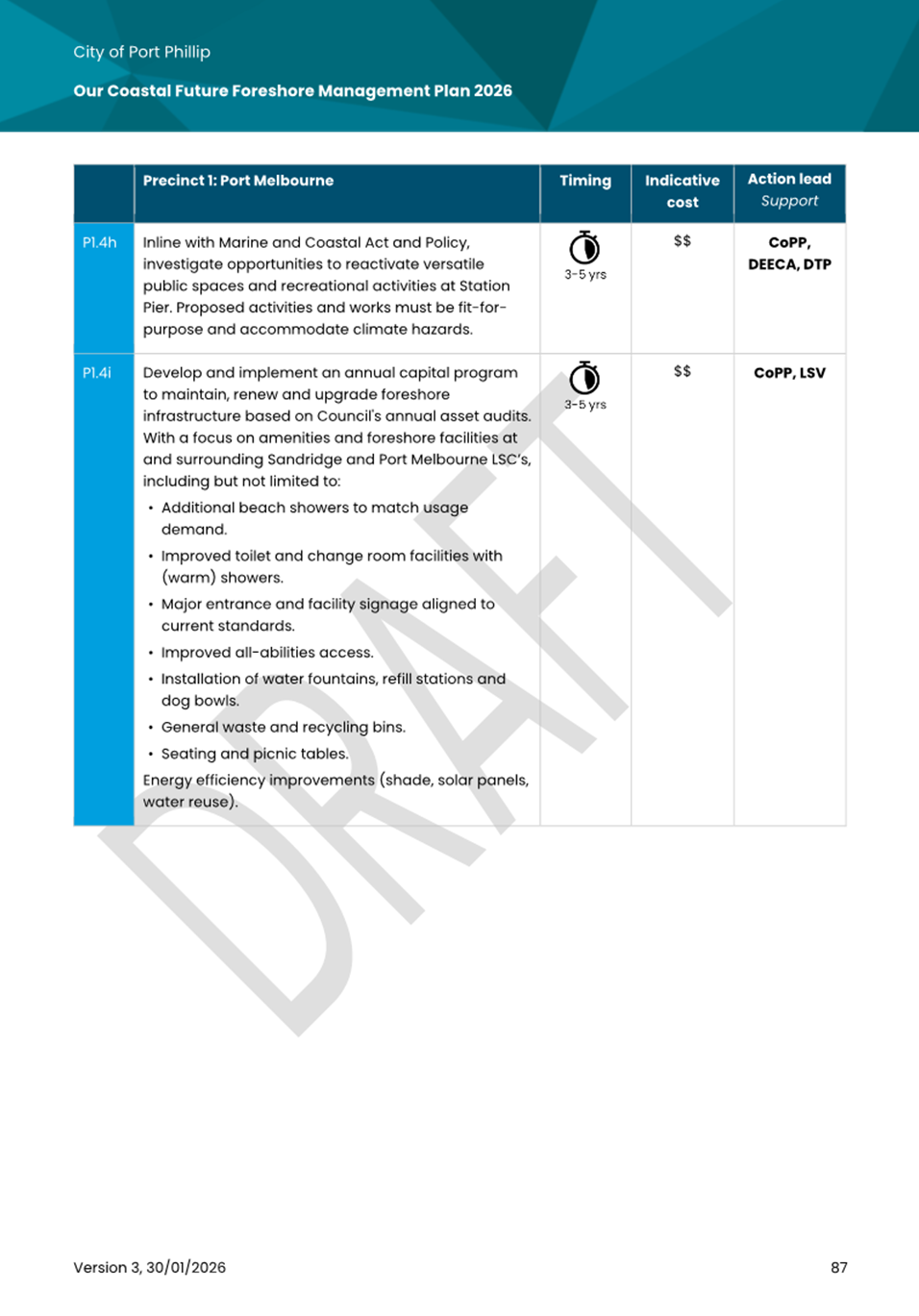
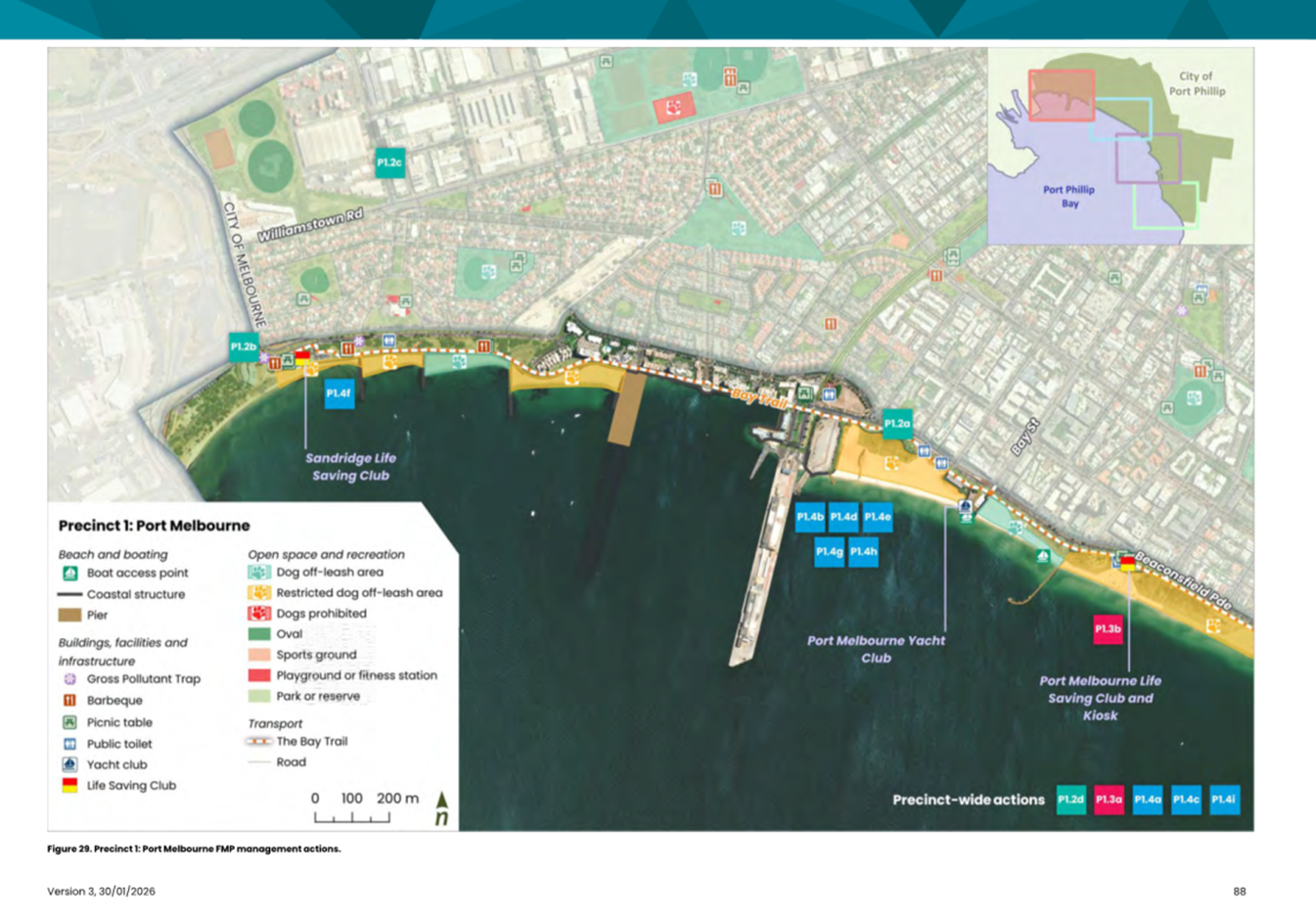
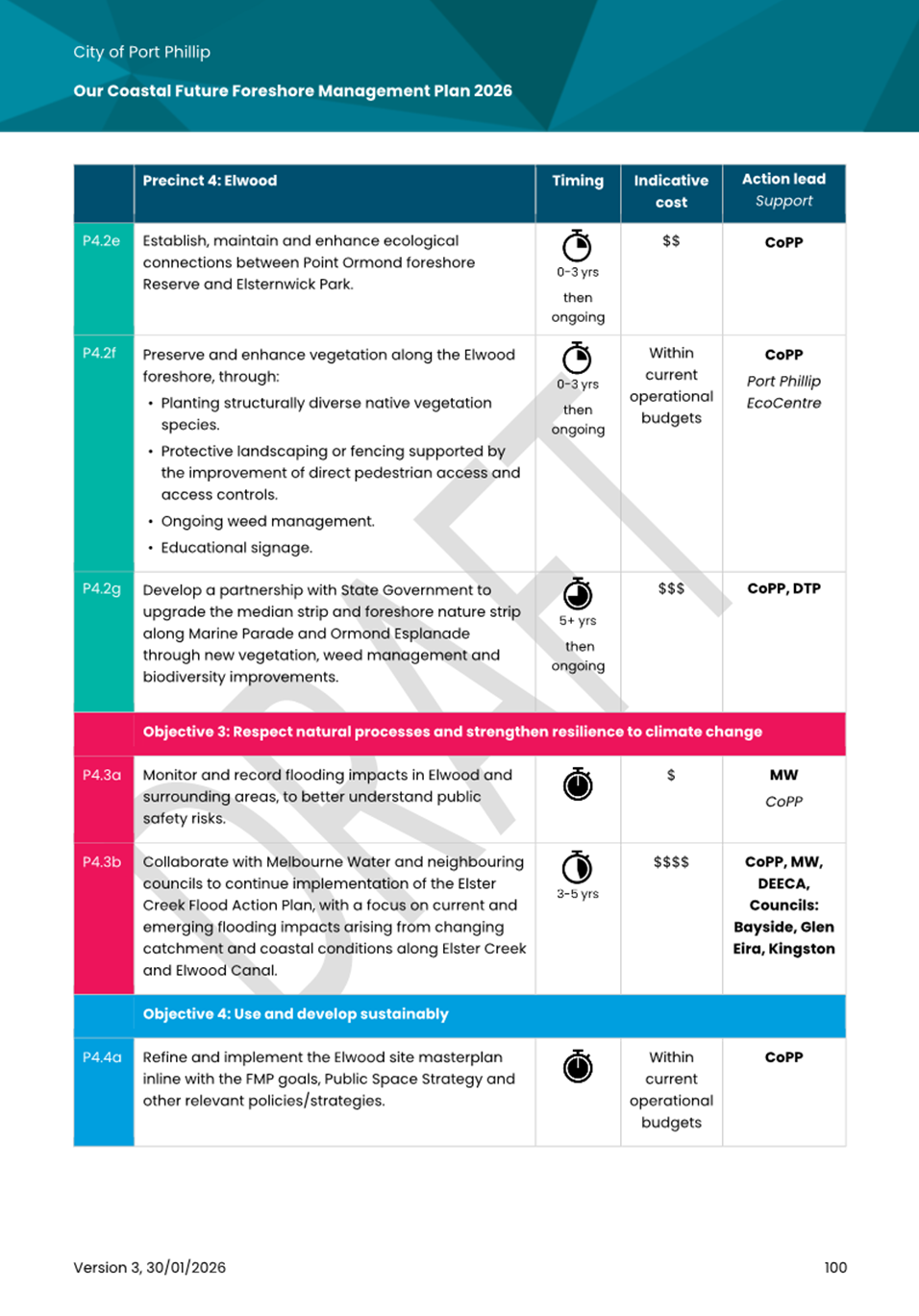
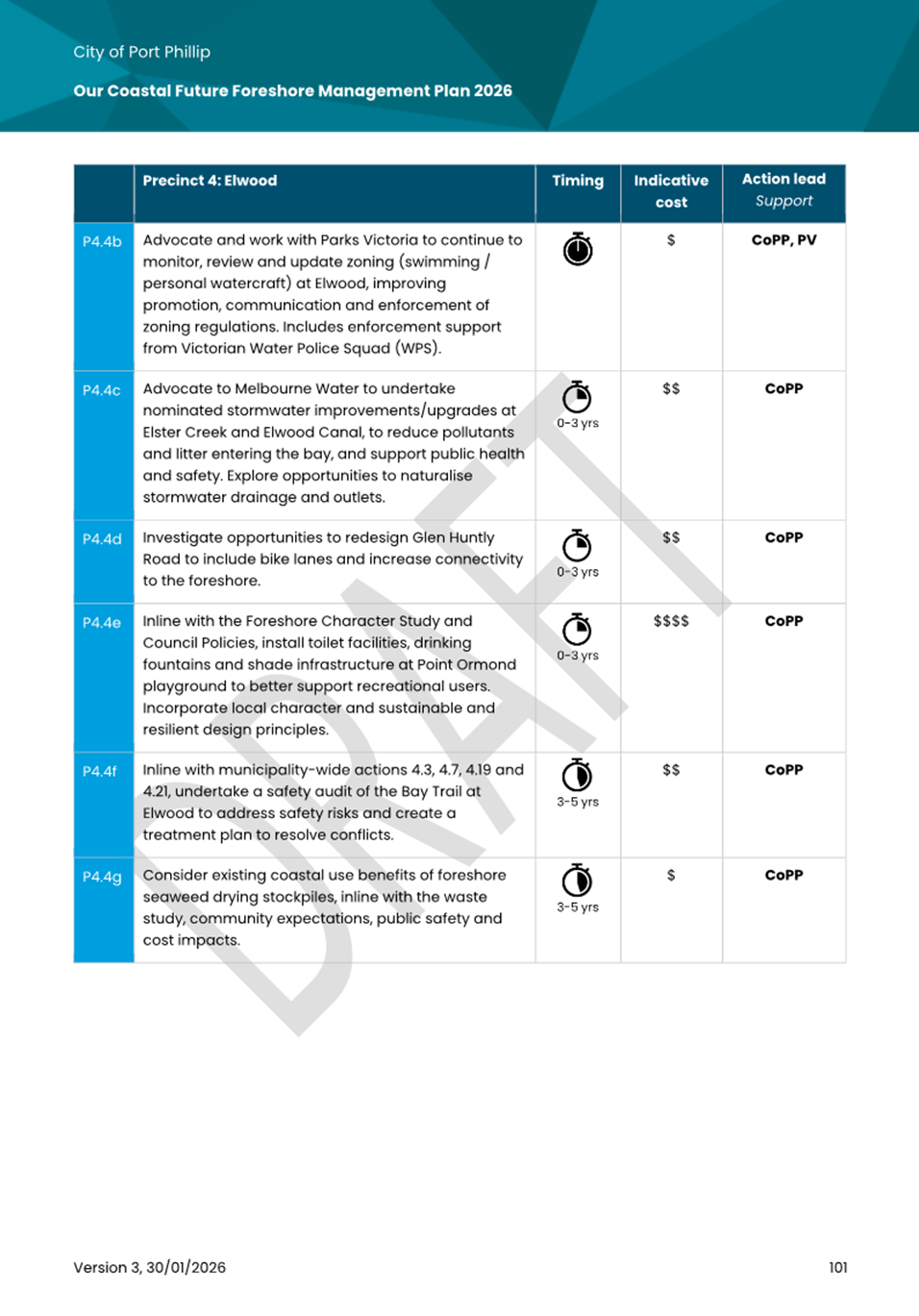
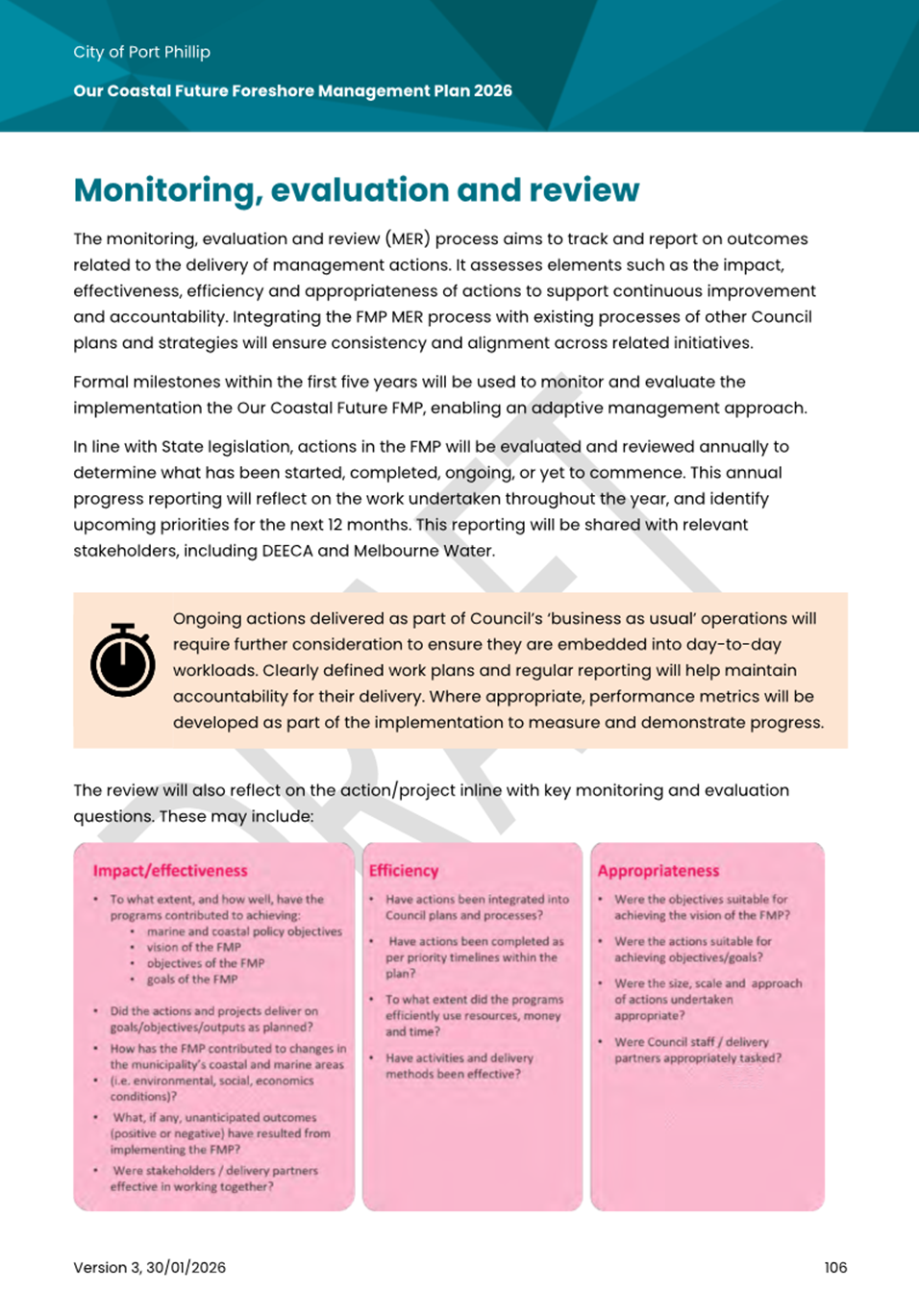
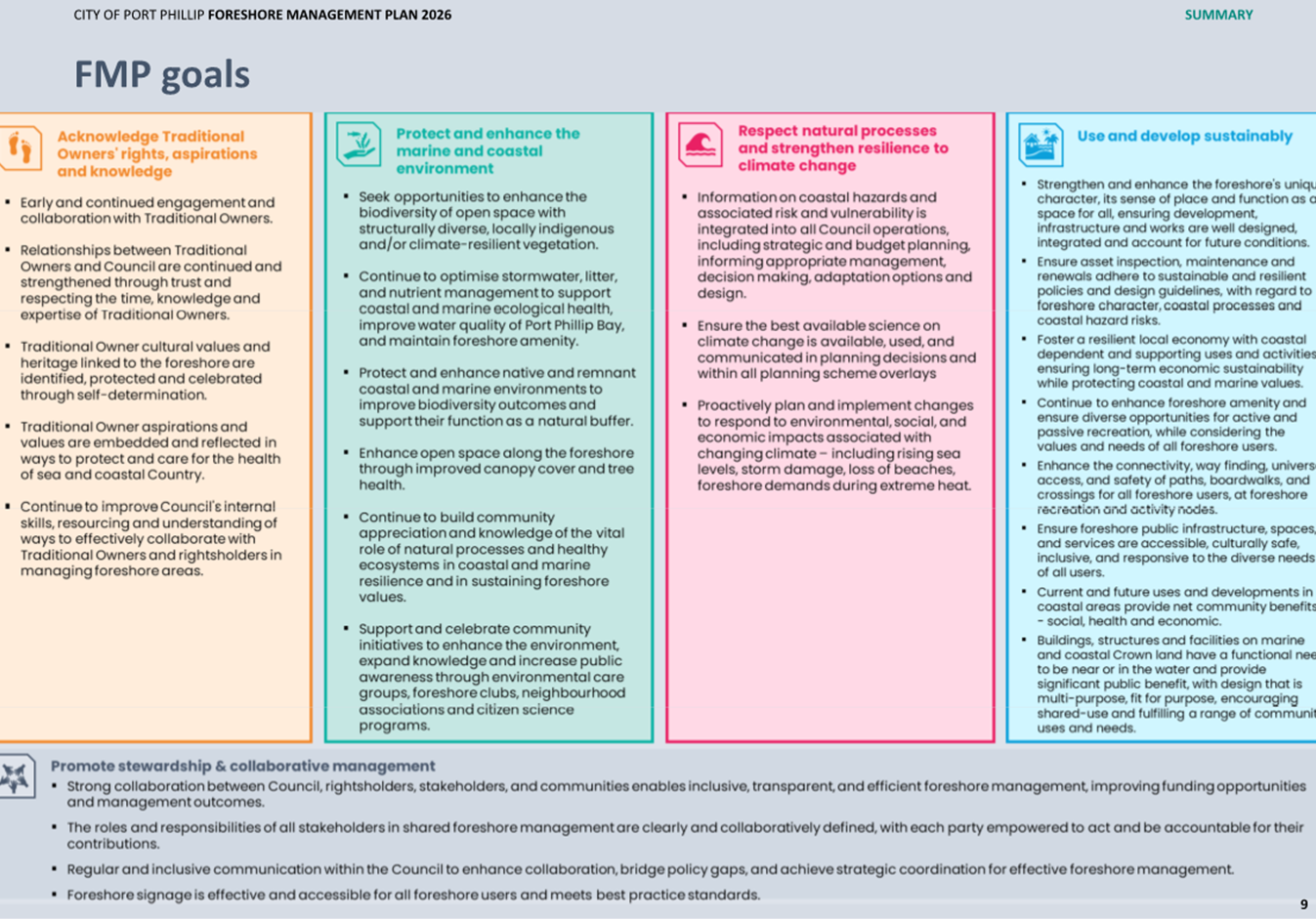
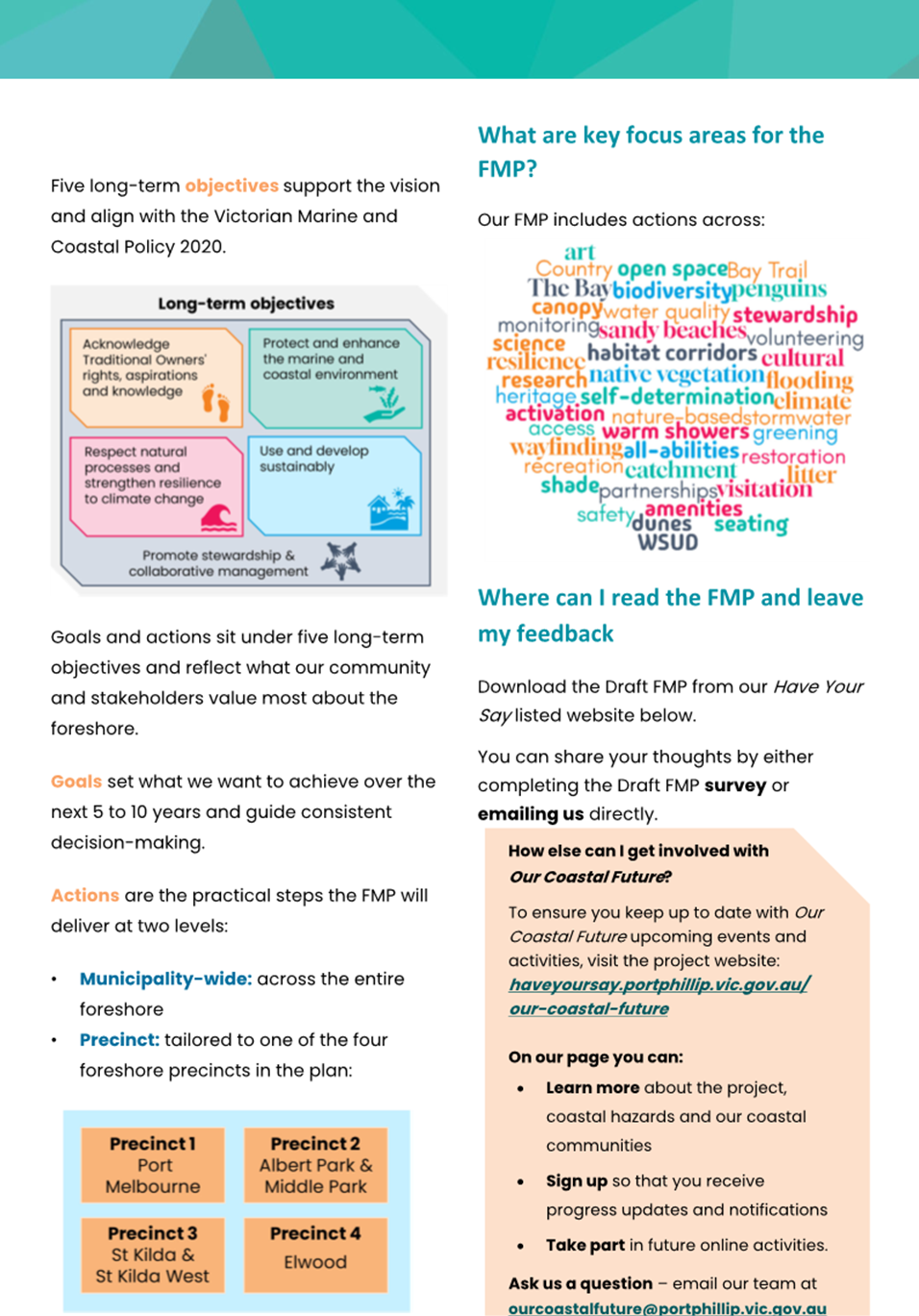
4.12 The draft FMP (Attachment 1) includes a management framework comprised of draft goals and associated actions structured under five strategic pillars.
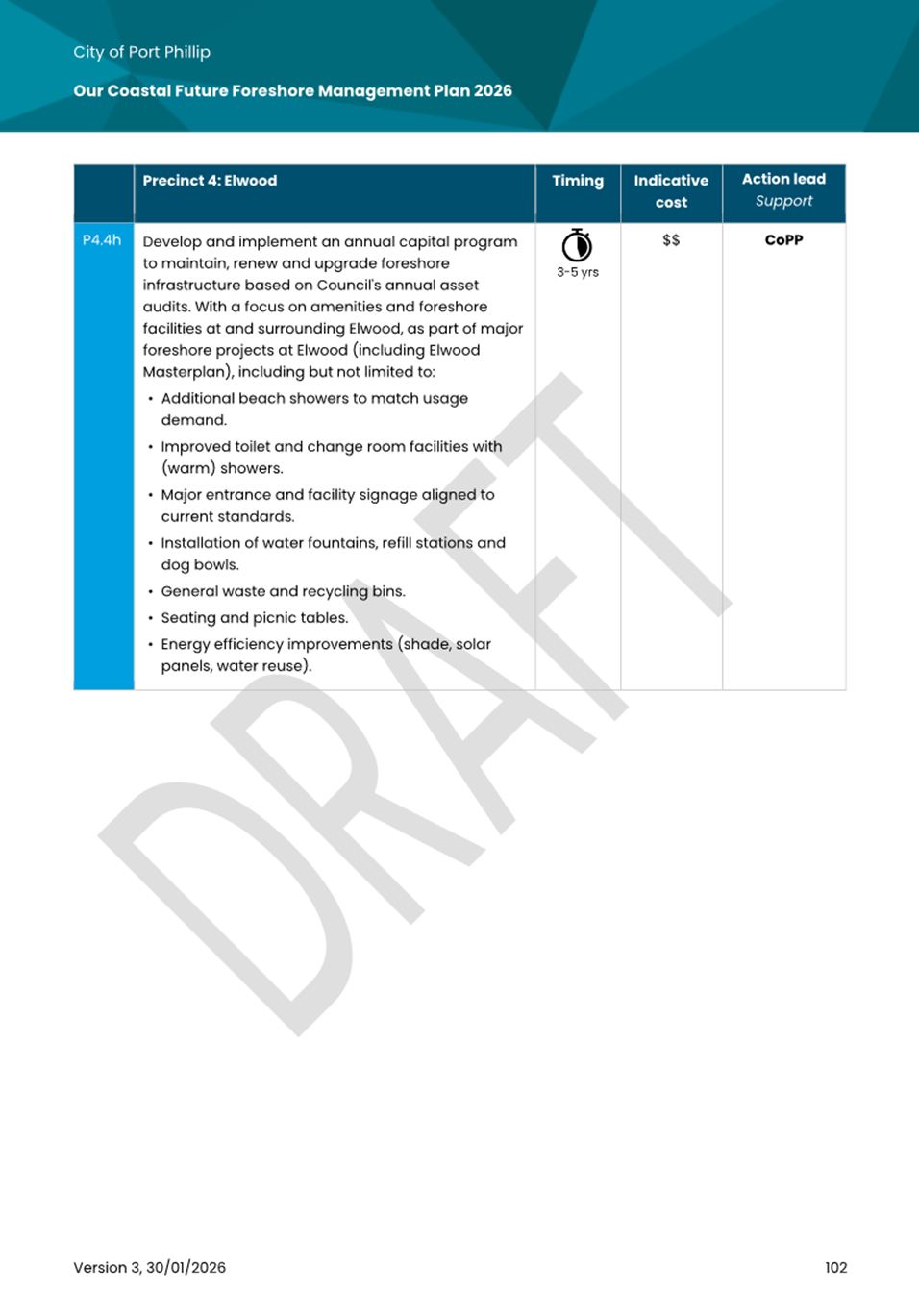
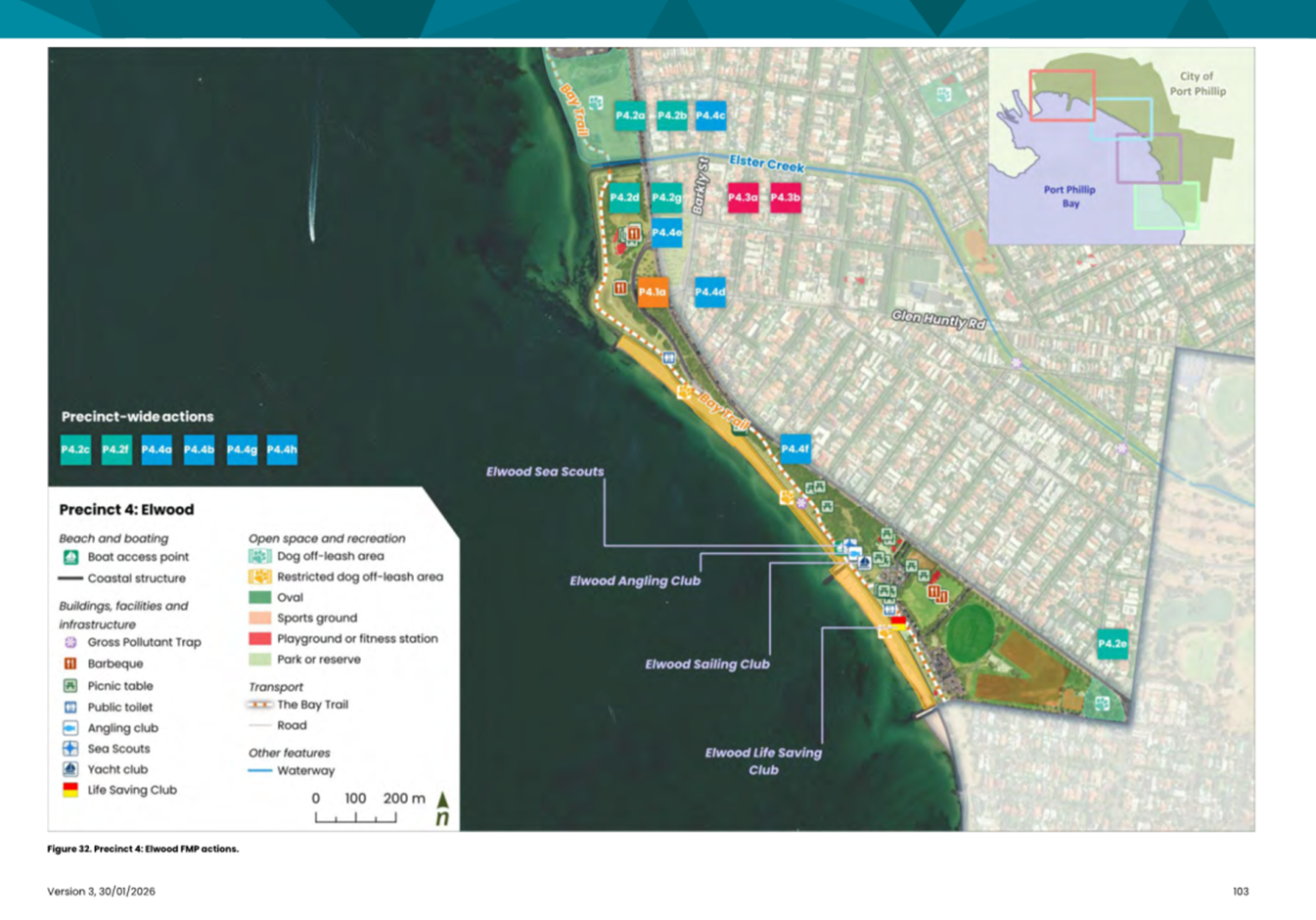
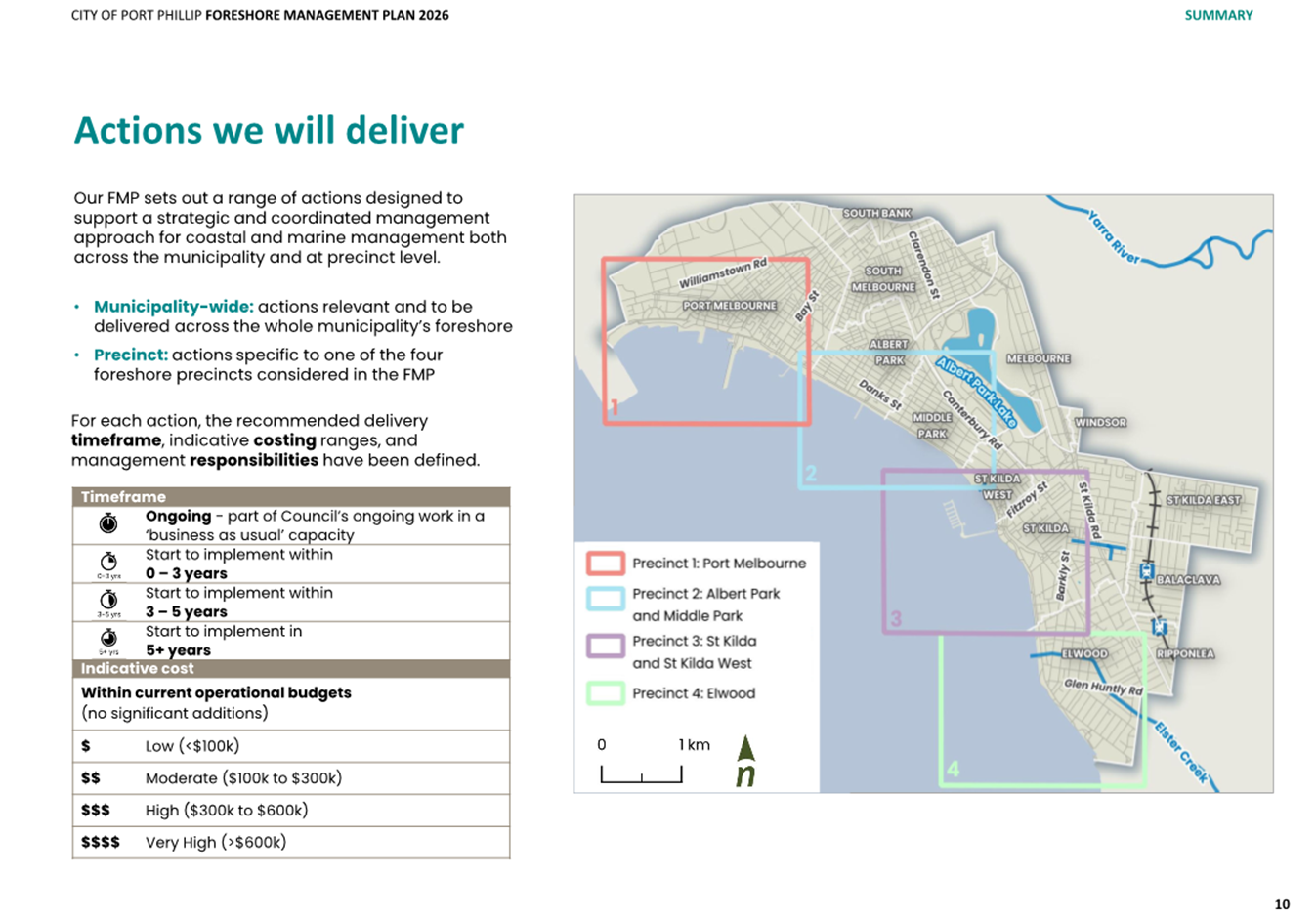
4.13 A total of 62 proposed actions have been identified in line with community and stakeholder feedback. The municipality wide actions and local precinct (suburb) level priority actions are also consistent with the requirements in the State Guidelines and Policy.
Coastal Adaptation Plan (CAP)
4.14 The CAP is being developed concurrently with the FMP. Undertaking these projects together has allowed Council to combine engagement activities and collect shared data in areas where the two plans overlap, ensuring consistency and reducing duplication.
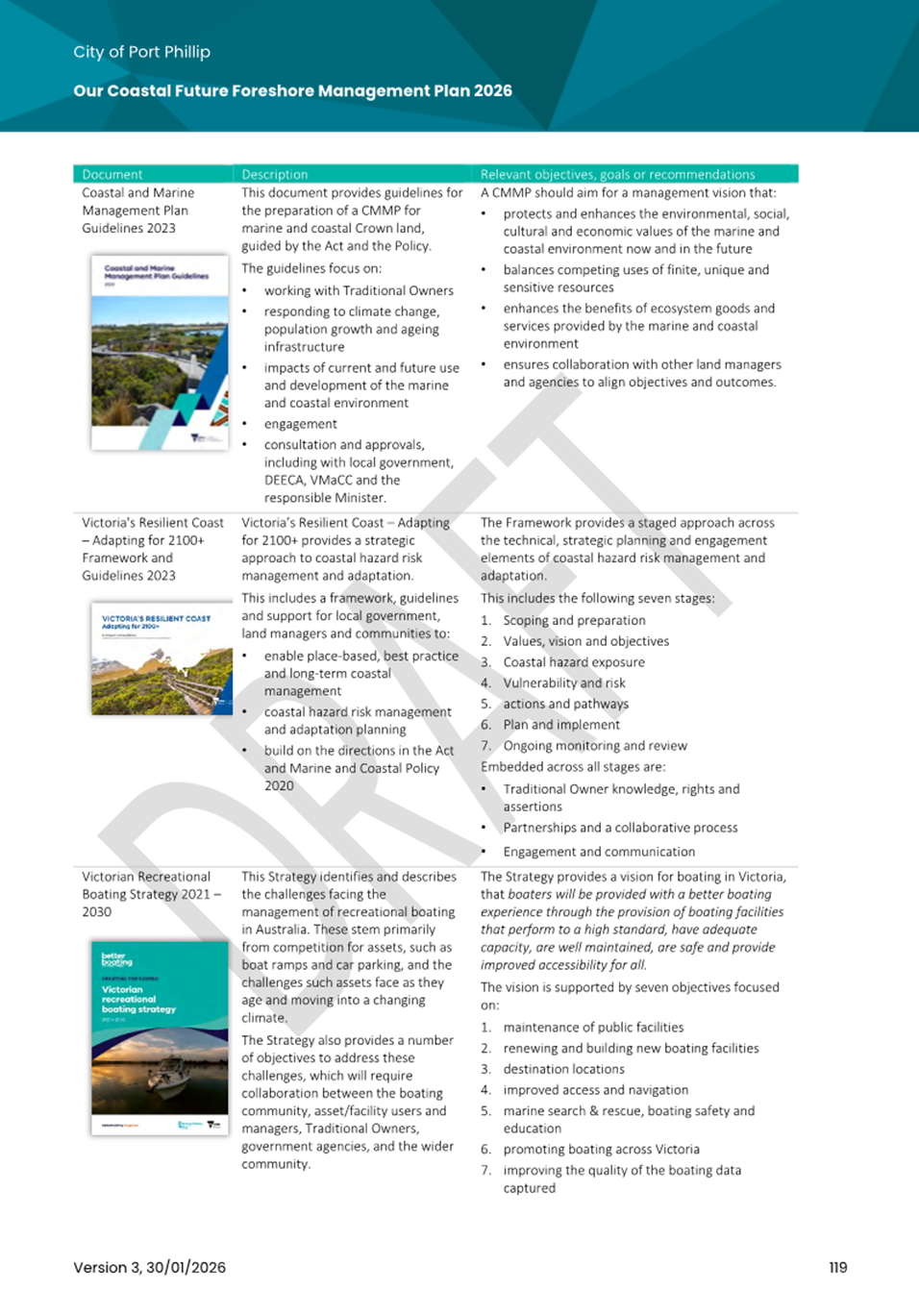
4.15 In-line with regulatory frameworks, the CAP is developed in seven (7) Stages.
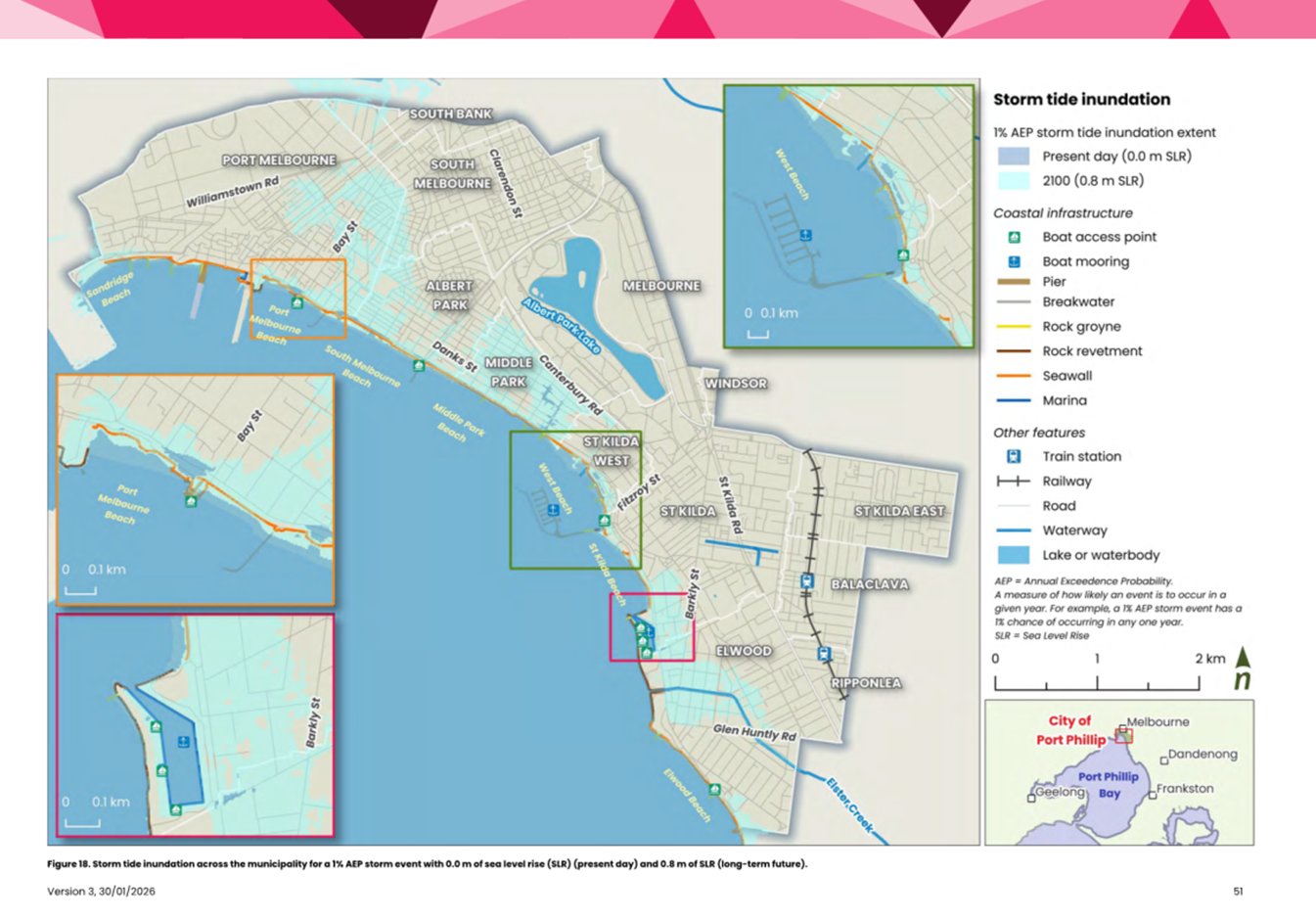
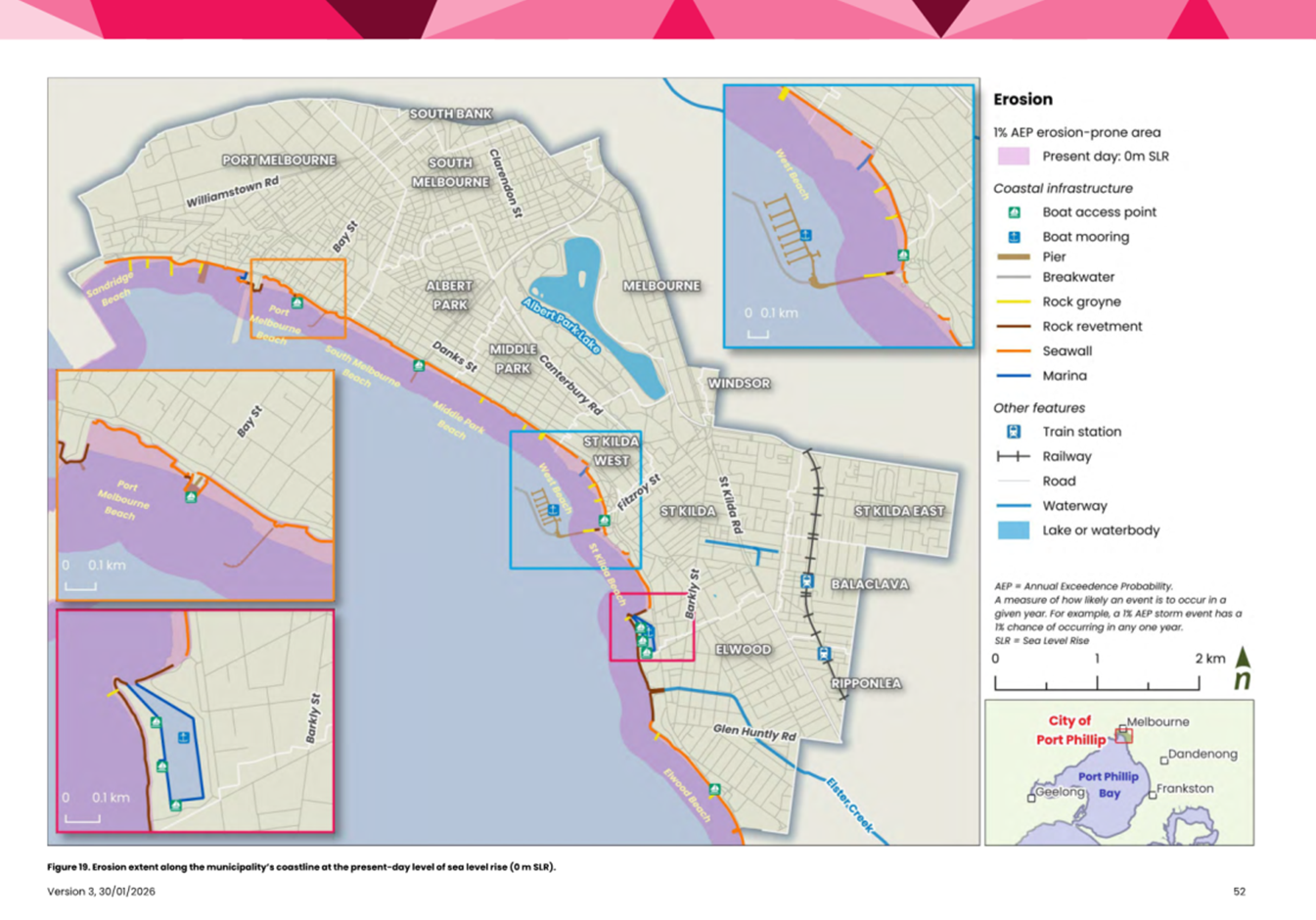
4.16 The foundational work has been drafted on the Coastal Adaptation Plan (Stages 1-3). This includes scoping, governance, engagement plan, background analysis, vision, objectives and drafting the coastal hazards assessment.
4.17 Finalising Stage 3 (Coastal Hazards Assessment) and progressing Stage 4 (Vulnerability Assessment) of the CAP is subject to the adoption of the FMP, and receiving the new Melbourne Water detailed flood modelling. This is to ensure the data used and information is consistent and up to date.
4.18 The next CAP Stage 5-7 (adaptation options, trigger points, cost benefit analysis and implementation plan) will begin in 2026/27 financial year and be completed the following financial year.
4.19 These
Stages include coastal hazard mapping (including flooding and inundation
mapping of the city), vulnerability assessments and community expectations for
solutions with Stages 5-7 requiring adaptation options,
trigger points, cost benefit analysis and implementation plan.
5. CONSULTATION AND STAKEHOLDERS
Previous engagement
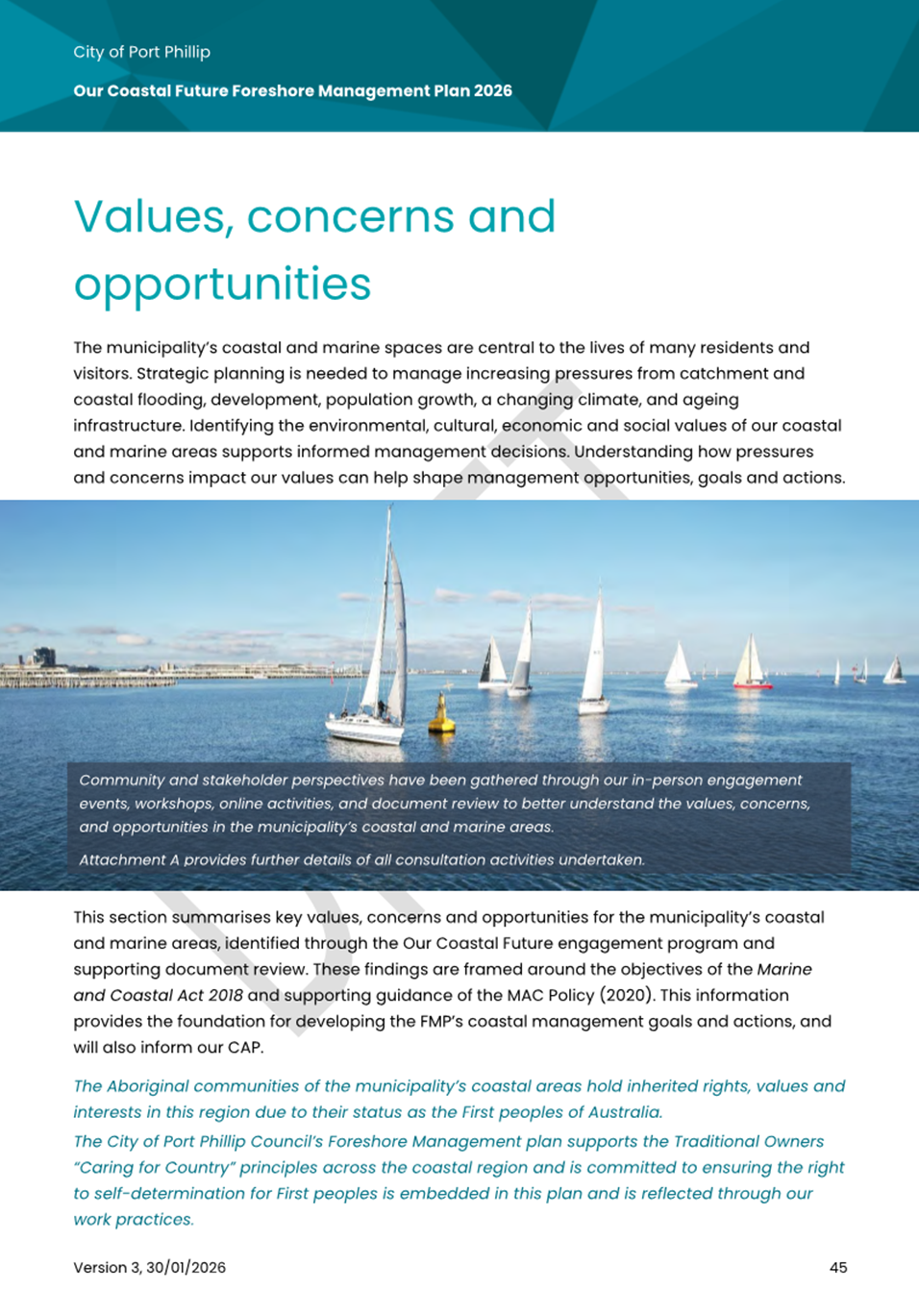
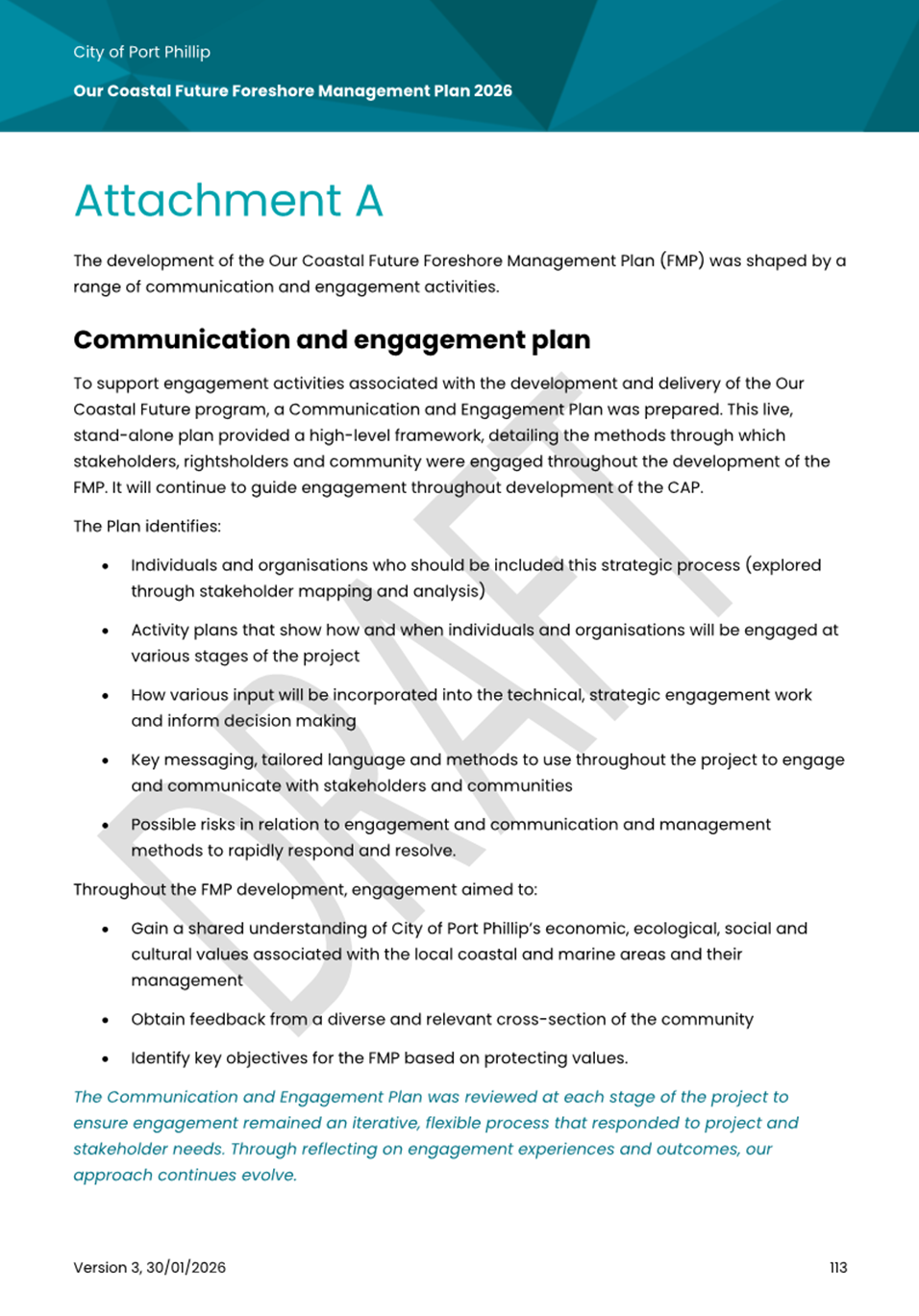
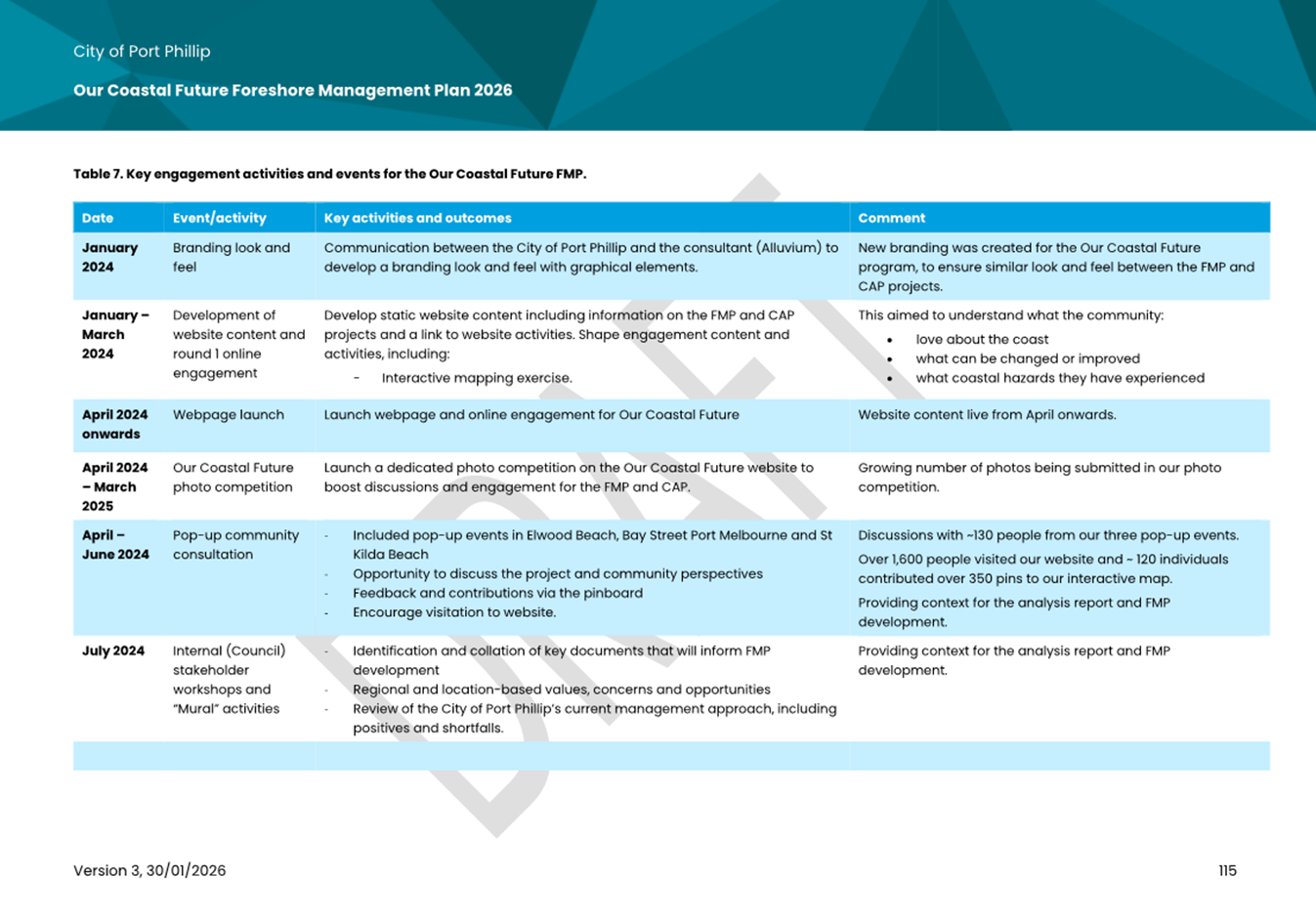
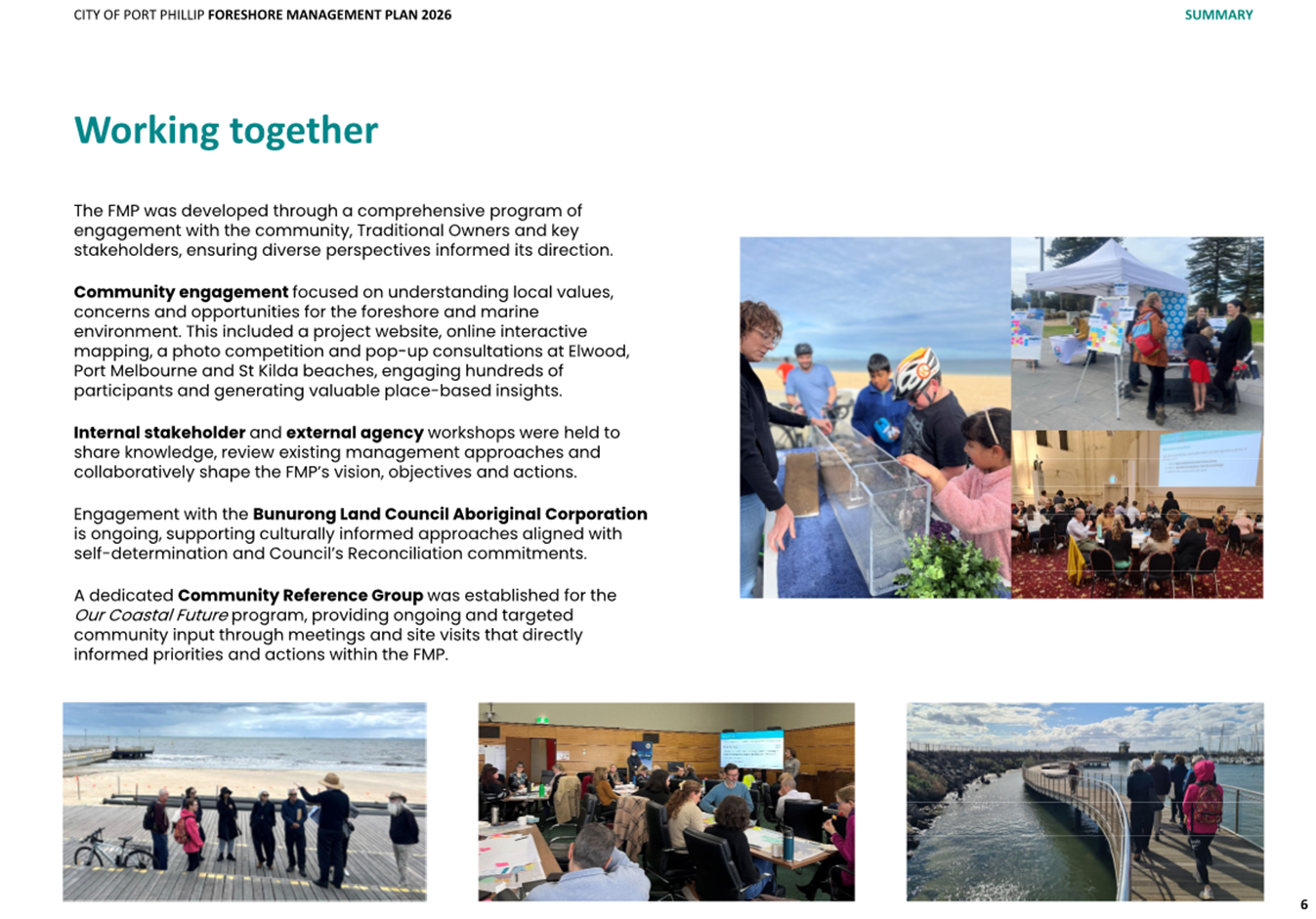
5.1 The development of the plans has included several rounds of extensive public consultations, in line with Council’s and DEECA’s requirements. A consultation summary and verbatim feedback of the initial community engagement was published and can be found in the document library via Our Coastal Future | Have Your Say Port Phillip.
5.2 The community engagements on Our Coastal Future has already included:
· Over 120 people attended the on-site consultation events.
· Over 1,600 people had visited the Have Your Say webpage with 120+ contributors submitting nearly 350 pins and comments on our interactive map.
· Online engagements totalling 11,295 for the Our Coastal Future photo competition with 543 photo submissions.
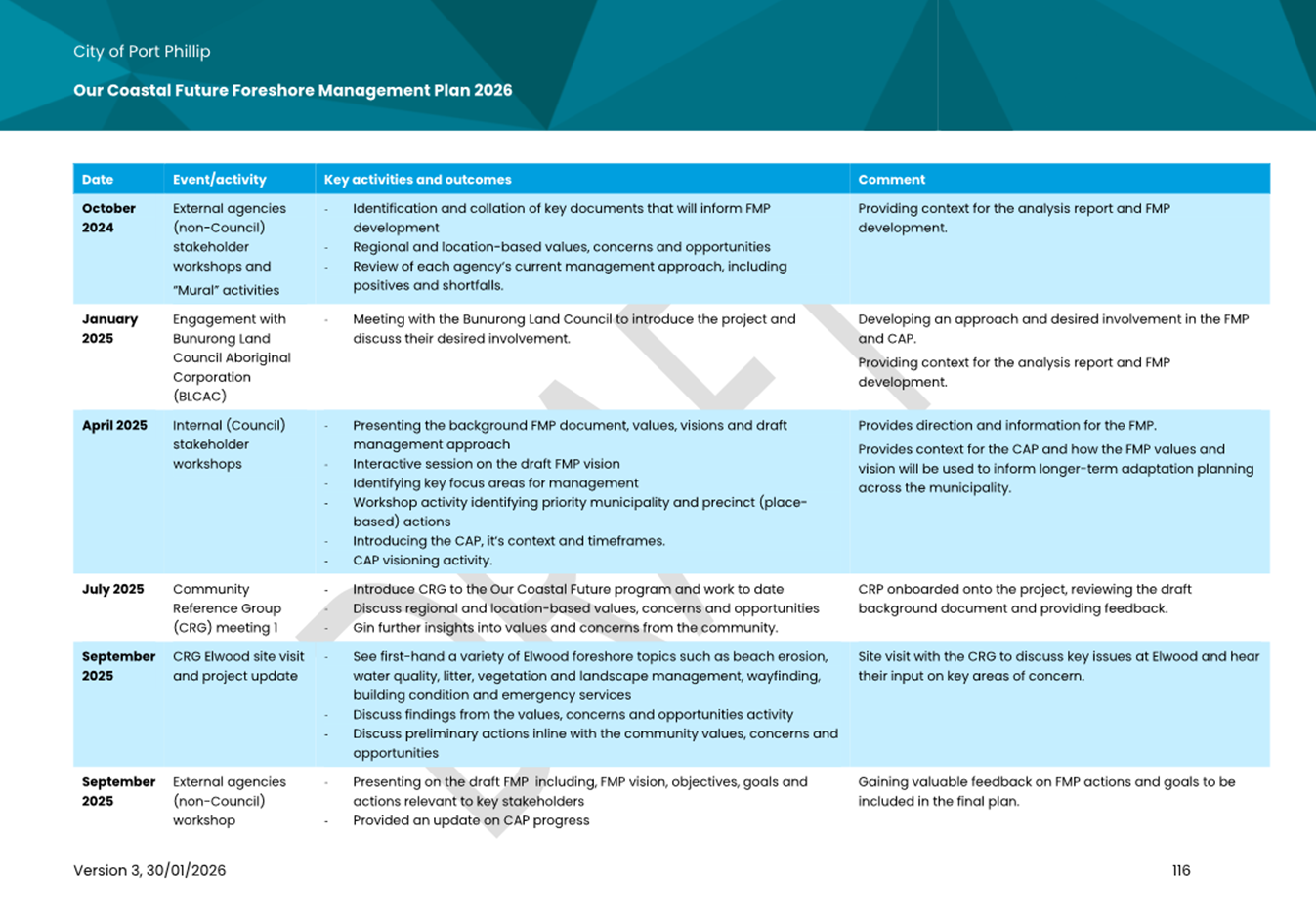
· Over 50 staff attending the internal Council workshops.
· Joint meetings with eight different State Agencies involved in the management of our coast.
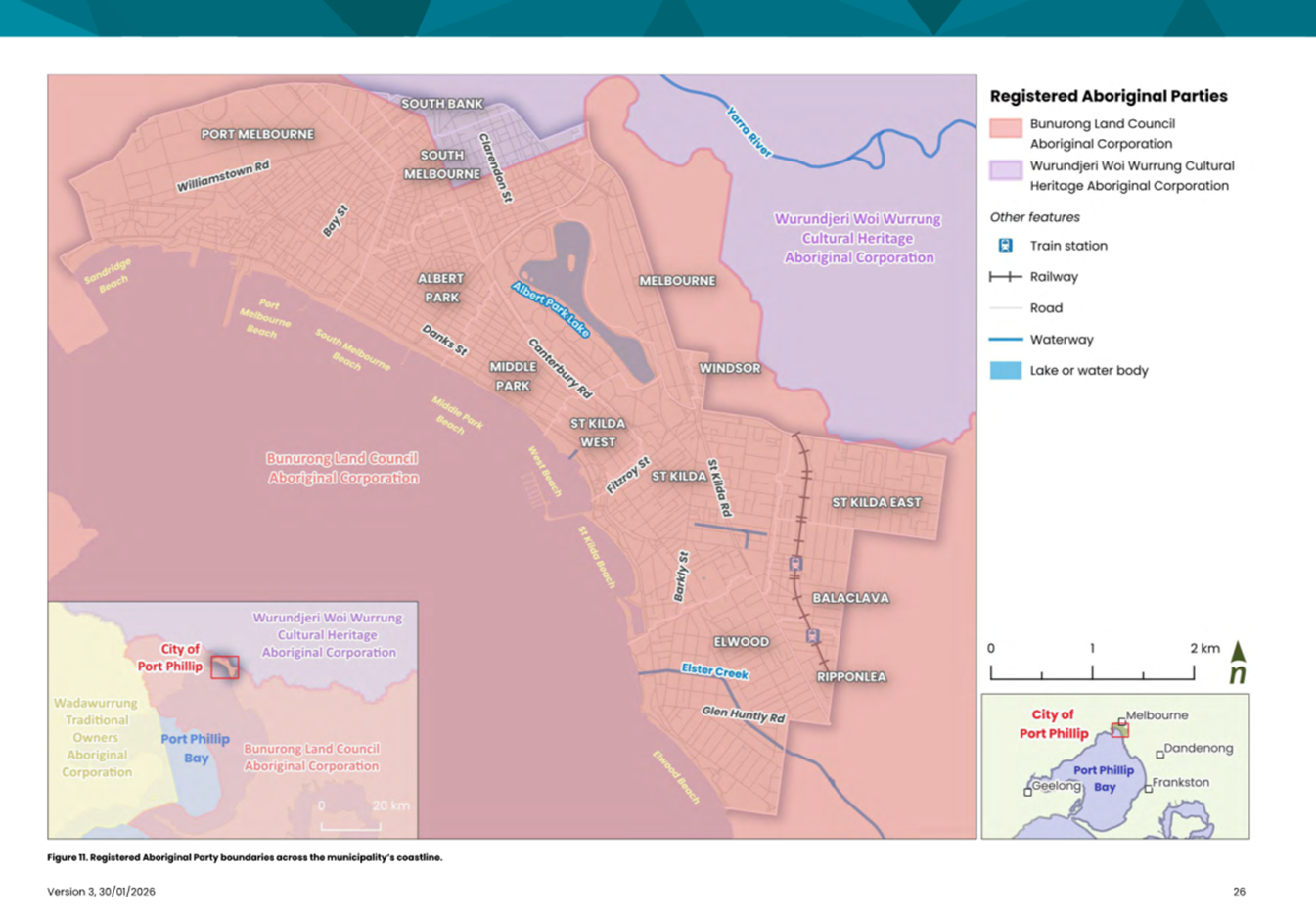
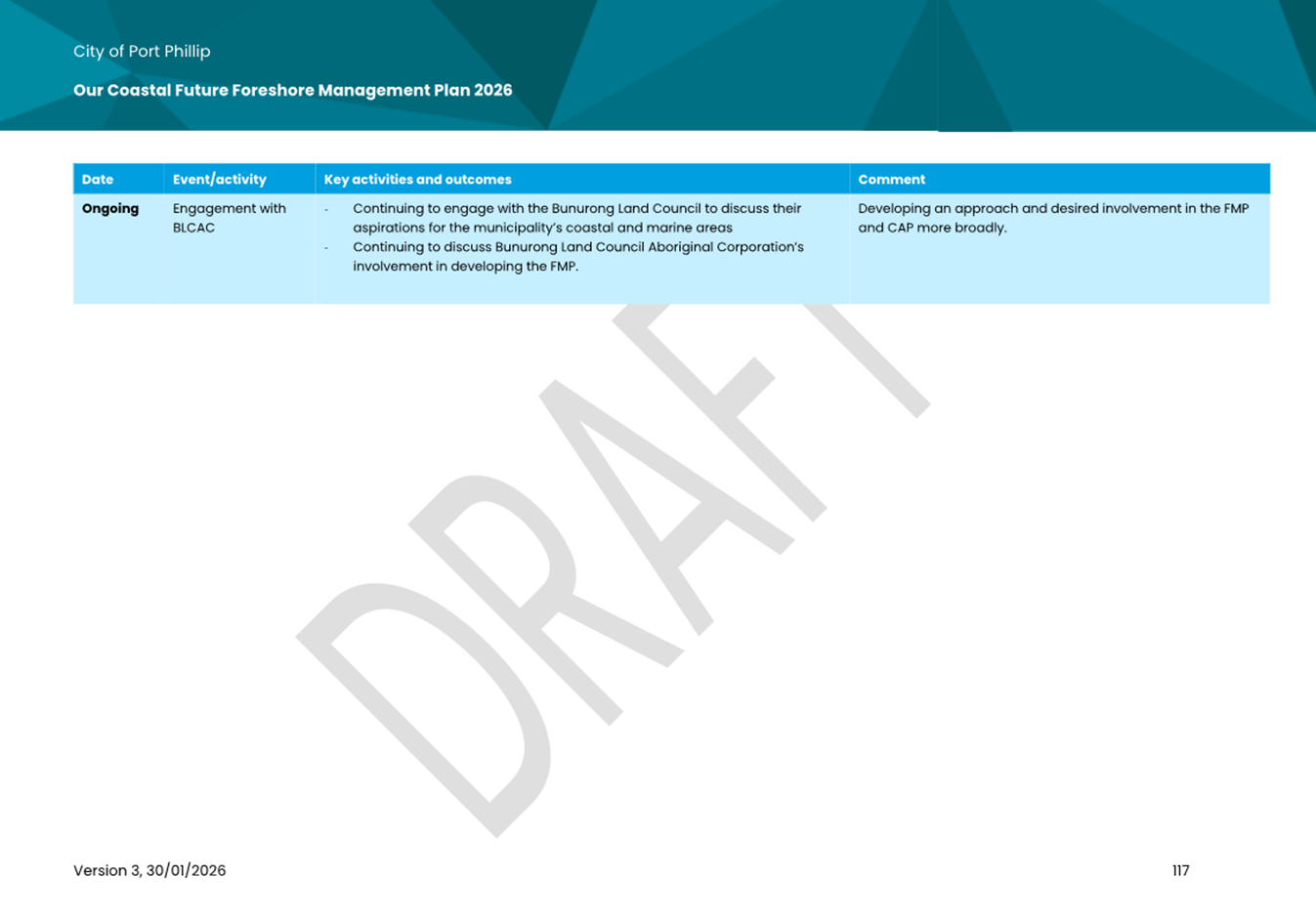
· Bunurong Land Council Aboriginal Corporation (BLCAC) Traditional Owners has provided feedback on the draft FMP in both December 2025 and January 2026.
· The Community Reference Group (including trader, club, environmental group and resident representatives) who have participated in two site tours and three workshops to also help guide the development of the FMP.
Engagement Draft FMP
5.3 The next stage of engagement on the draft FMP is proposed to include the following groups – residents, foreshore traders, foreshore clubs, on-ground environmental care groups, State Agencies Reference Group, Community Reference Group, Traditional Owners and individuals who have expressed interest in ‘Our Coastal Future’ program.
5.4 Engagement on the draft FMP is due to commence in March 2026 for four weeks pending Council’s resolution.
5.5 While the engagement period will fall over the school holiday period and under Council Policy this would normally require a six-week engagement period, it is recommended that Council resolve to vary its Policy to four-weeks. The reason for this request is that extensive engagement has occurred to develop the draft Plan, and it is largely a technical document that needs to respond to a range of State Government requirements.
5.6 The key engagement activities are planned as follows:
· An online survey via Have Your Say webpage to gather public feedback on the draft FMP, covering vision, objectives, actions and priorities proposed in the FMP. Paper versions of the Plan, summary, fact sheet update and survey will also be provided at Council’s customer service centres.
· Targeted outreach via social media and other Council communications and engagement platforms.
· On-site signage along the foreshore with a QR webpage code.
· Emails to all foreshore Clubs, businesses and community groups.
· Advertisement in the Government Gazette in line with State Guidelines.
· Further workshops with State Agencies and Community Reference Groups.
· Workshop with the Traditional Owner group to validate the refined actions in the final draft following the initial conversations in 2025 and 2026.
5.7 Following the consultation engagement, the FMP will be finalised to incorporate the community and stakeholder relevant feedback.
6. CONSULTATION AND STAKEHOLDERS
Previous engagement
6.1 The development of the plans has included several rounds of extensive public consultations, in line with Council’s and DEECA’s requirements. A consultation summary and verbatim feedback of the initial community engagement was published and can be found in the document library via Our Coastal Future | Have Your Say Port Phillip.
6.2 The community engagements on Our Coastal Future has already included:
· Over 120 people attended the on-site consultation events.
· Over 1,600 people had visited the Have Your Say webpage with 120+ contributors submitting nearly 350 pins and comments on our interactive map.
· Online engagements totalling 11,295 for the Our Coastal Future photo competition with 543 photo submissions.
· Over 50 staff attending the internal Council workshops.
· Joint meetings with eight different State Agencies involved in the management of our coast.
· Bunurong Land Council Aboriginal Corporation (BLCAC) Traditional Owners has provided feedback on the draft FMP in both December 2025 and January 2026.
· The Community Reference Group (including trader, club, environmental group and resident representatives) who have participated in two site tours and three workshops to also help guide the development of the FMP.
Engagement Draft FMP
6.3 The next stage of engagement on the draft FMP is proposed to include the following groups – residents, foreshore traders, foreshore clubs, on-ground environmental care groups, State Agencies Reference Group, Community Reference Group, Traditional Owners and individuals who have expressed interest in ‘Our Coastal Future’ program.
6.4 Engagement on the draft FMP is due to commence in March 2026 for four weeks pending Council’s resolution.
6.5 While the engagement period will fall over the school holiday period and under Council Policy this would normally require a six-week engagement period, it is recommended that Council resolve to vary its Policy to four-weeks. The reason for this request is that extensive engagement has occurred to develop the draft Plan, and it is largely a technical document that needs to respond to a range of State Government requirements.
6.6 The key engagement activities are planned as follows:
· An online survey via Have Your Say webpage to gather public feedback on the draft FMP, covering vision, objectives, actions and priorities proposed in the FMP. Paper versions of the Plan, summary, fact sheet update and survey will also be provided at Council’s customer service centres.
· Targeted outreach via social media and other Council communications and engagement platforms.
· On-site signage along the foreshore with a QR webpage code.
· Emails to all foreshore Clubs, businesses and community groups.
· Advertisement in the Government Gazette in line with State Guidelines.
· Further workshops with State Agencies and Community Reference Groups.
· Workshop with the Traditional Owner group to validate the refined actions in the final draft following the initial conversations in 2025 and 2026.
6.7 Following the consultation engagement, the FMP will be finalised to incorporate the community and stakeholder relevant feedback.
7. LEGAL AND RISK IMPLICATIONS
7.1 It is a regulatory requirement that both plans (FMP and CAP) are implemented under the Marine and Coastal Act 2018 (Vic) and associated marine and coastal policies, strategies and guidelines.
7.2 Coastal beach erosion and the renewal of States ageing seawalls and rock revetments has been a major theme with the topic included on Council's Advocacy Plan.
7.3 The FMP provides the strategic priorities and service levels required for Council’s Enterprise Asset Management Plan to reduce the number of declining assets and reset the quality requirements to match the functional and users demands serving millions of people along with the harsh coastal conditions.
7.4 Council is required to report annually to DEECA on its activities implemented in line with the State’s Coastal and Marine Strategy as well as Council’s FMP Implementation Plan.
8. FINANCIAL IMPACT
8.1 There is $526,000 in the Council Plan to deliver the FMP and Stages 1-4 of the CAP. This includes $165,000 in funding from Department of Energy, Environment and Climate Action (DEECA).
8.2 A further $650,000 has been committed through the mid-year budget review to ensure the full CAP can be delivered over the next two years.
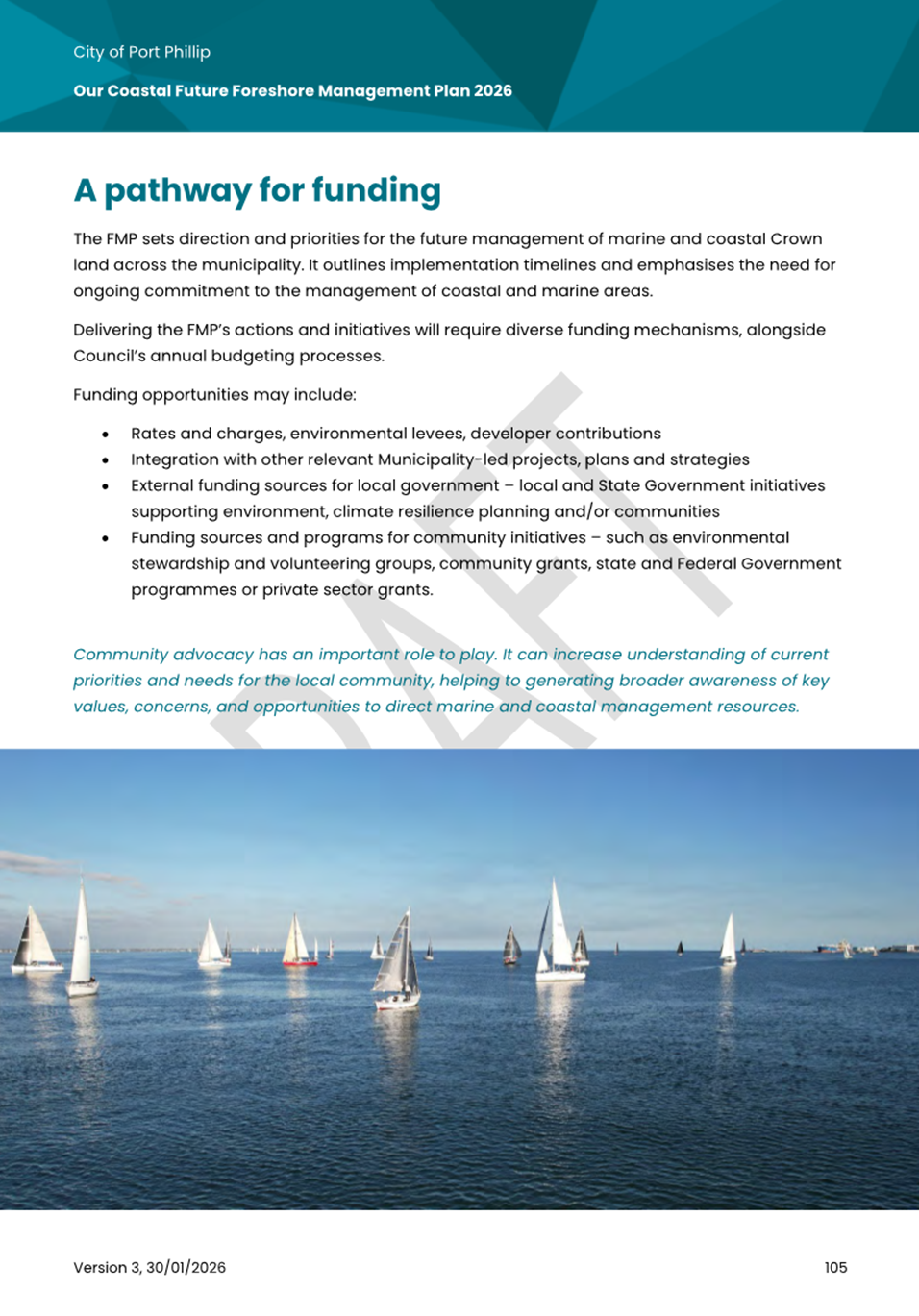
8.3 53% of FMP actions are included in current budget envelopes and 47% FMP actions require new funding. These actions will be delivered through multiple funding streams both capital and operational. All funding will be subject to future Council Plan and annual Budget Process. Grant funding opportunities will be explored and advocacy to other levels of government for funding will be required.
8.4 70% of all draft actions are asset related, the maintenance and renewals of this infrastructure will be in line with audit condition information.
8.5 State funding will be sought for upgrades to any State-owned assets such as beach renourishment and seawalls upgrades or for projects which are also in high profile areas which attract a large number of visitors. In the past there has been State funding available for beach renourishment, coastal protective structures, DDA compliance, improvements to vegetation and projects which enhance public safety.
9. ENVIRONMENTAL IMPACT
9.1 The FMP and CAP collectively address both the immediate and future risks of climate change and sea level rise.
9.2 The coast forms a major part of Council’s 2025/2026 advocacy Tier 1 priorities including support for investment to deal with coastal erosion and the renewal and upgrade of coastal Assets in which the State Government is custodian. Coastal Health and Water Management in Port Phillip - City of Port Phillip
9.3 The FMP will assist to protect and enhance the significant native vegetation that are critical to the health of marine and coastal environment.
10. COMMUNITY IMPACT
10.1 Our Coastal Future Program directly supports all six strategic directions outlined in Council’s Plan for Port Phillip 2025–2035, reinforcing Council’s commitment to climate resilience, community wellbeing, and sustainable coastal management.
10.2 Port Phillip’s 11 km foreshore attracts over 5 million visitors annually including locals, domestic day-trippers and hundreds of thousands of overnight visitors annually, making it one of Victoria’s most visited urban coastlines. Tourism is estimated to contribute $4.2 billion to the economy.
11. Gender Impact Assessment
11.1 A Gender Impact Assessment has been completed.
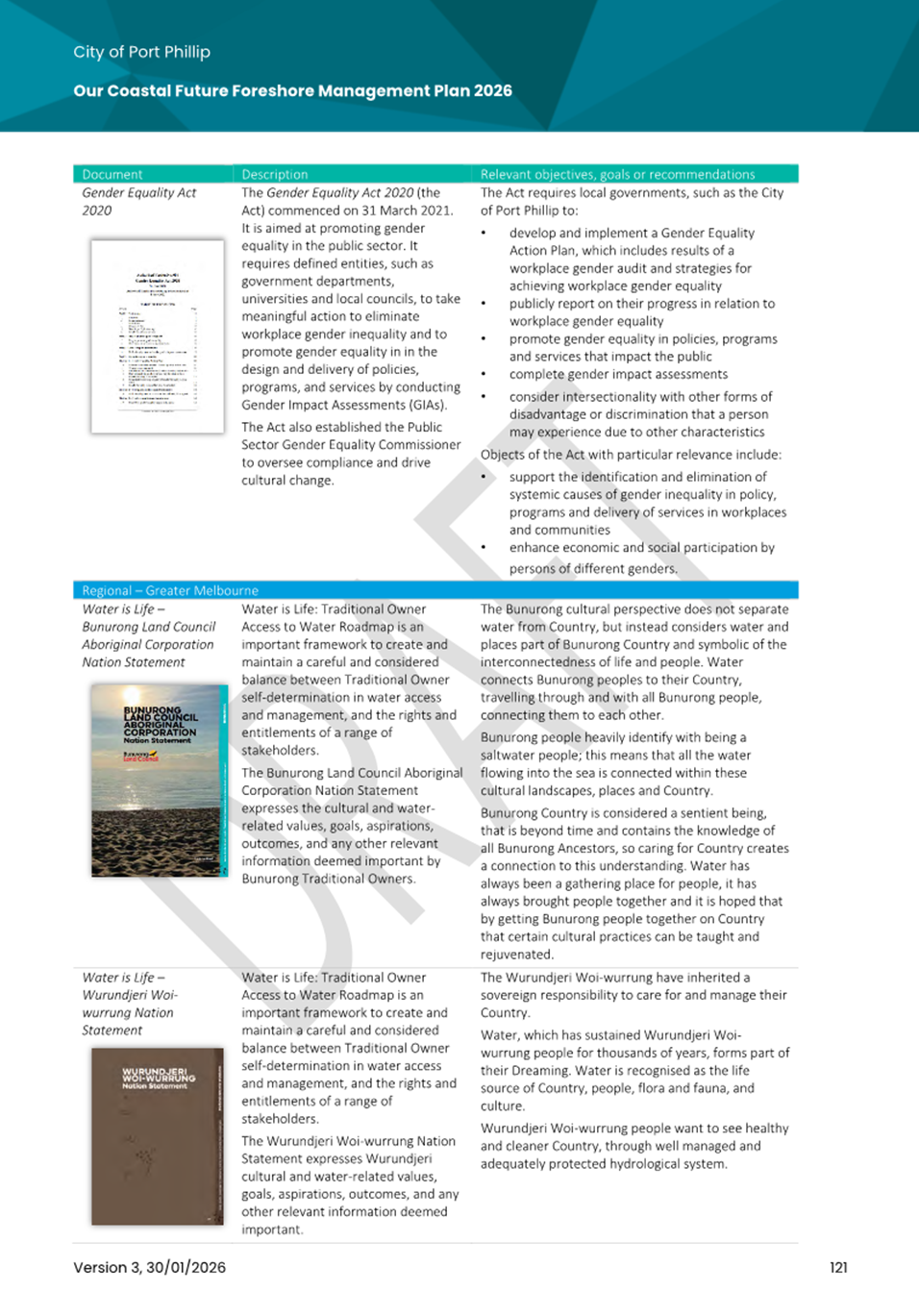
11.2 Recommendations are made aligning with legislative obligations under the Gender Equality Act and supports inclusive, equitable planning outcomes.
12. ALIGNMENT TO COUNCIL PLAN AND COUNCIL POLICY
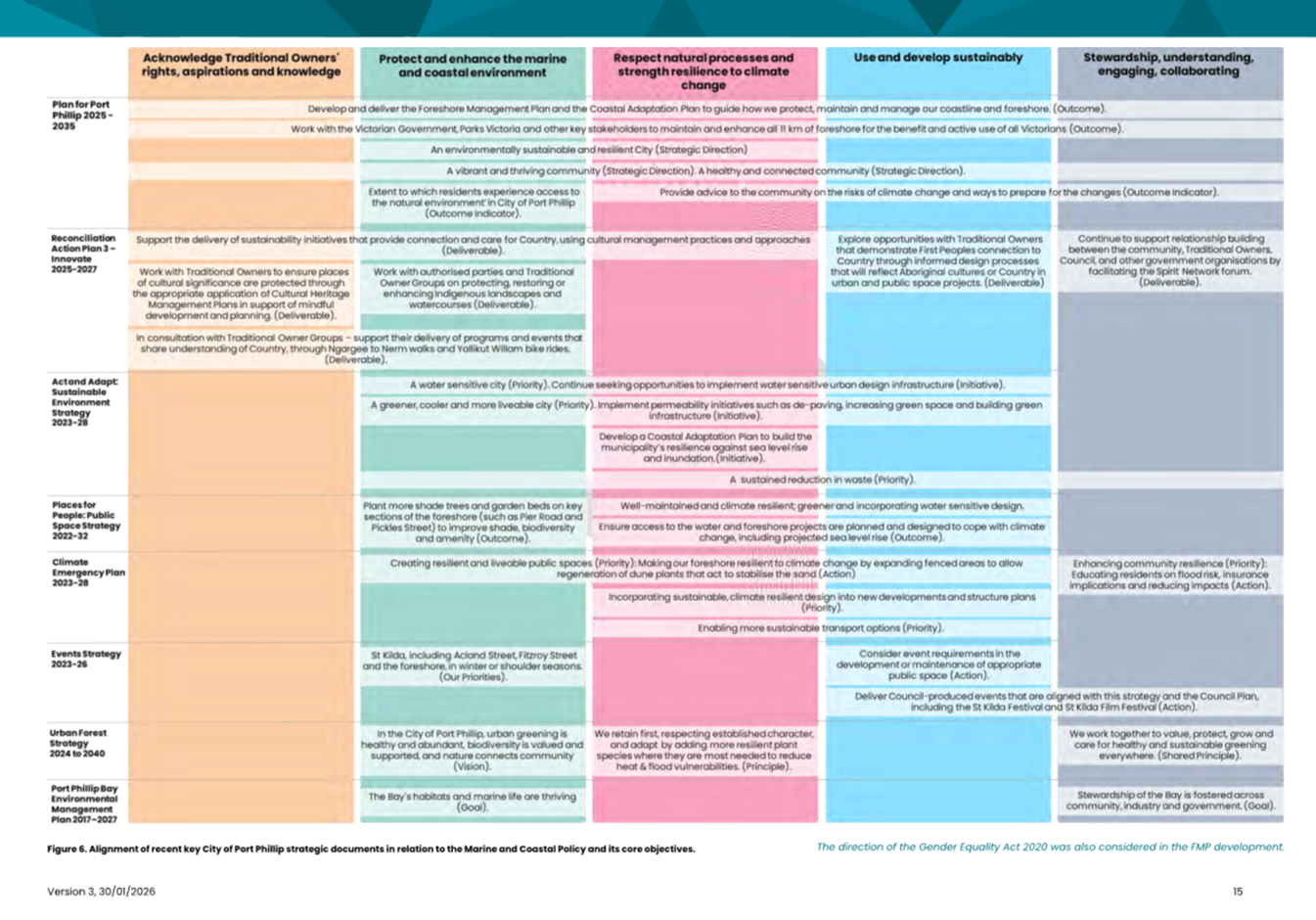
12.1 The draft FMP aligns with the Council Plan 2025–35, including the strategic directions focused on environmental sustainability, safety and liveability, and community health and connection.
12.2 The draft FMP specifically aligns with the Council’s Plan:
12.2.1 Direction 1 – A Healthy and Connected Community by supporting active recreation and equitable access to high‑quality public open space;
12.2.2 Direction 3 – A Safe and Liveable City, to ‘develop and deliver the Foreshore Management Plan and the Coastal Adaptation Plan to guide how we protect, maintain and manage our coastline and foreshore’. And ‘Work with the Victorian Government, Parks Victoria and other key stakeholders to maintain and enhance all 11 km of foreshore for the benefit and active use of all Victorians.’;
12.2.3 The FMP also contributes to delivering on the ‘Major Initiatives’ in 2025/26 to: ‘renew the Foreshore Management Plan and develop a Coastal Adaptation Plan as required by the State Marine and Coastal Act 2018.’; and
12.2.4 Direction 5 – An Engaged and Empowered Community through its extensive engagement program, which shaped the priorities and actions in the draft FMP.
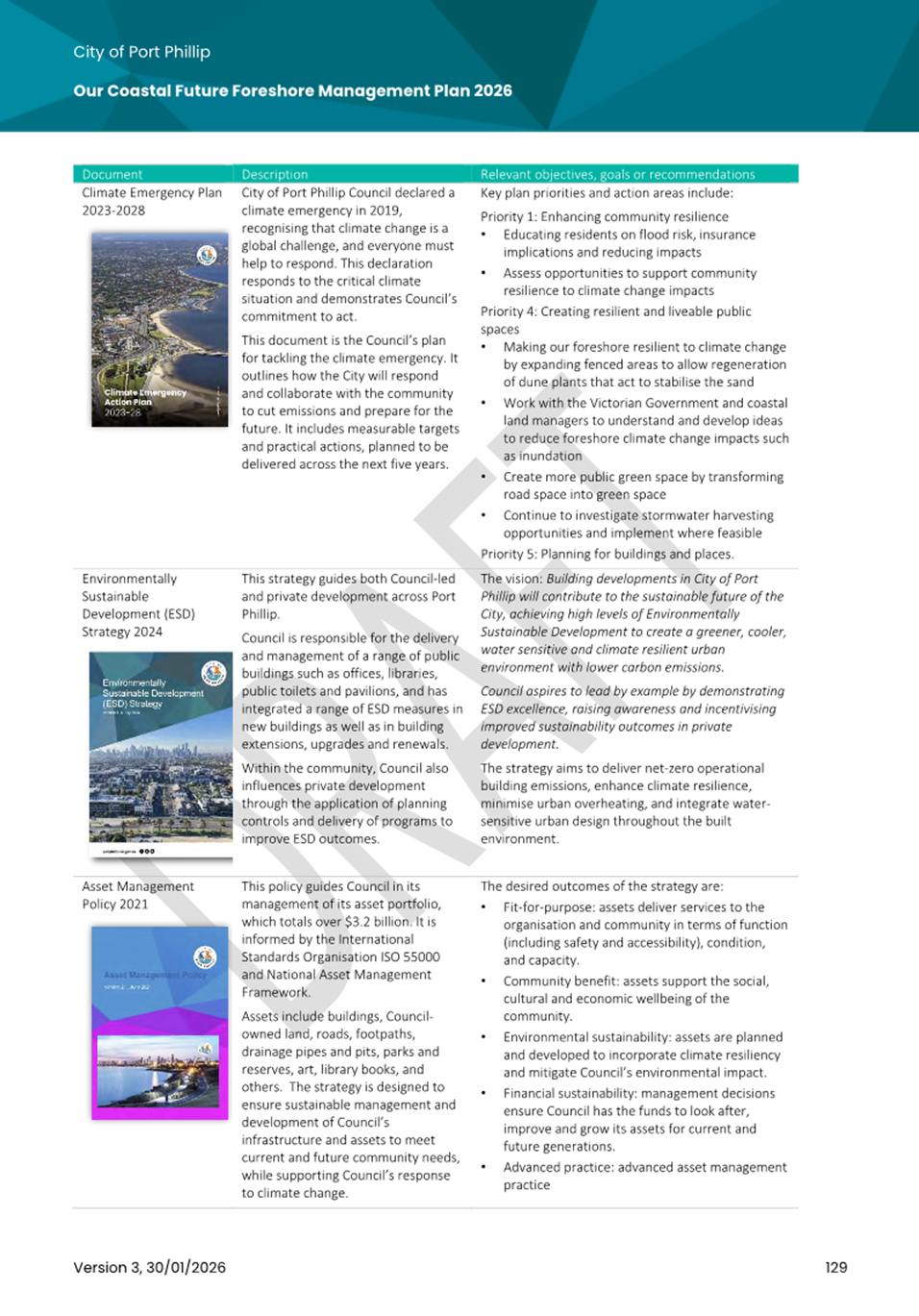
12.3 The Place for People: Publics Space Strategy 2022-2032 includes references that align to the FMP including: update Council’s FMP and develop a coastal adaptation Plan, improving accessibility, public space upgrades (such as South Beach Reserve, Pier Rd, Elwood Park and Point Ormond Reserve), more shade trees and garden beds, protect and enhance biodiversity and connections to key areas, improve paths and safety, ensure access to water and foreshore projects are planned and designed to cope with climate change including projected sea level rise.
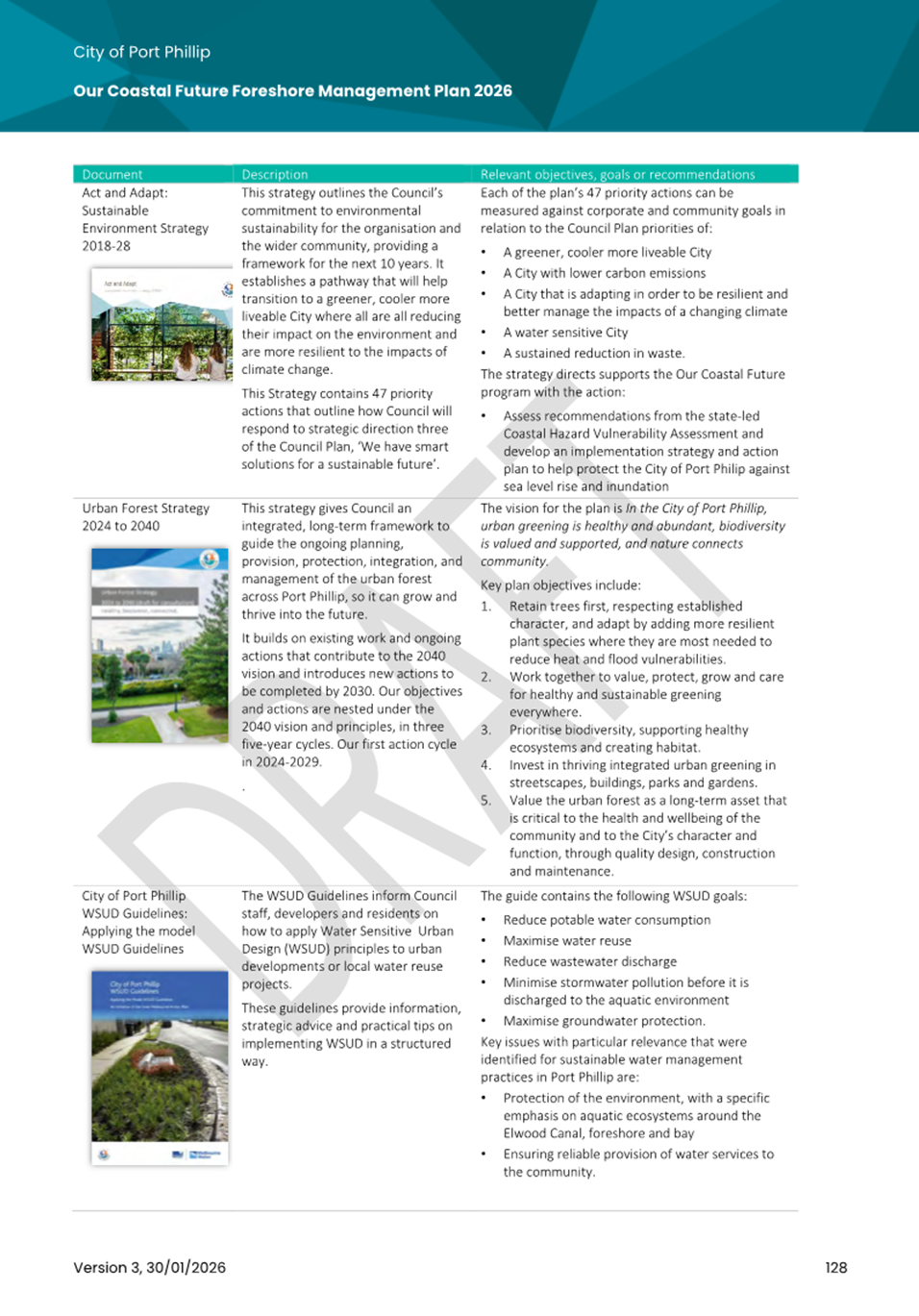
12.4 The Act and Adapt Strategy 2023-2028 aligns to the FMP including: Priority 2: A greener, cooler, more liveable City and the development of a new FMP.
12.5 Once endorsed by the State Minister the new FMP will replace the current FMP from 2012.
13. IMPLEMENTATION STRATEGY
13.1 TIMELINE
13.1.1 The adoption of the FMP is expected to be in June 2026.
13.1.2 Progression of the Coastal Adaptation Plan sequential Stages and related public consultation for each Stage.
13.2 COMMUNICATION
13.2.1 Engagement on the draft FMP is due to commence in March 2026 for four weeks pending Council’s resolution.
13.2.2 Communication of the draft FMP will include:
· An online survey via Have Your Say webpage to gather public feedback on the draft FMP, covering vision, objectives, actions and priorities proposed in the FMP. Paper versions of the Plan, summary, fact sheet update and survey will also be provided at Council’s customer service centres.
· Targeted outreach via social media and other Council communications and engagement platforms.
· On-site signage along the foreshore with a QR webpage code.
· Emails to all foreshore Clubs, businesses and community groups.
· Advertisement in the Government Gazette in line with State Guidelines.
· Further workshops with State Agencies and Community Reference Groups.
· Workshop with the Traditional Owner group to validate the refined actions in the final draft following the initial conversations in 2025 and 2026.
14. OFFICER MATERIAL OR GENERAL INTEREST
14.1 No officers involved in the preparation of this report has declared a material or general interest in the matter.
|
ATTACHMENTS |
1. Draft Foreshore Management Plan 2. Summary of Draft Foreshore Management Plan 3. Fact Sheet Update - Foreshore Management Plan |
Meeting of the Port Phillip City Council
18 March 2026
10.1 Collaborative procurement to new e-bike and e-scooter agreement.......................................... 331
Meeting of the Port Phillip City Council
18 March 2026
|
Collaborative procurement to new e-bike and e-scooter agreement |
|
|
Executive Member: |
Brian Tee, General Manager, City Development |
|
PREPARED BY: |
Max Massingham, Senior Shared Transport Planner Karen Roache, Coordinator Strategic Transport |
1. PURPOSE
1.1 To enable collaborative procurement of a new shared micro-mobility (e-bike and e-scooter) scheme with adjoining local government areas.
2. EXECUTIVE Summary
2.1 The City of Port Phillip has participated in trials of shared micro-mobility (e-bikes and e-scooters) since December 2020 and February 2022 respectively.
2.2 Participation in these trials aligns with Move Connect Live - Integrated Transport Strategy 2018-2028 (ITS) and a Council resolution 19 May 2021 to participate in Victorian Government trial of dockless electric scooters (e-scooters).
2.3 Shared micro-mobility is popular in Port Phillip with 1.9 million e-scooters trips and 650,000 e-bike trips in the municipality since 2022. These services are provided by two operators Lime Network Pty Ltd (250 e-scooters and an average of 300 e-bikes) and Neuron Mobility (Australia) Pty Ltd (250 e-scooters).
2.4 Some members of the community have raised concerns about safety and public amenity specifically inappropriate parking and unsafe rider behaviour. To address these issues and improve compliance, officers have worked with the Victorian government and the current operators (Lime and Neuron) to introduce a stricter regulatory framework. This includes enhanced requirements relating to parking and riding restrictions, footpath detection technology, mandatory insurances, helmets on devices and improved reporting.
2.5 The Victorian government has undertaken action to support safety, amenity and to empower local government to manage these schemes including:
2.5.1 Legislation in 2024 providing local governments the power to regulate shared micromobility services in their municipality
2.5.2 Enhanced the penalties for e-scooters & e-bikes that break road rules
2.5.3 Legislation in 2025 mandating operators obtain pre-approval from Victorian government to comply with high technology and safety standards.
2.6 At the Council meeting on 4 October 2023 Council approved the following resolution:
Endorses Council’s continued participation in e-scooter schemes provided that Councils have the power to manage shared e-scooter schemes through contractual arrangements that can address safety and amenity.
Authorises the Chief Executive Officer (or their delegate) to undertake any procedures required to allow participation in a three-year shared e-scooter scheme with up to two operators and (subject to agreement with Council) a maximum of 500 e-scooters including, in collaboration with other councils.
2.7 Following the completion of the Victorian government led trial of e-scooters in 2024 and the introduction of the Vehicle Sharing Scheme Safety and Standards Bill 2025, officers have been working with neighbouring councils on procurement principles that can be reflected in a competitive procurement process.
2.8 Having gone to market 5 years ago it is timely we go back the market to establish a regulated, long‑term shared micro‑mobility scheme that reflects new State legislation and technology improvements. It also provides operators with the certainty needed to invest in improved technology, higher standards and more diverse devices through a coordinated approach with neighbouring councils.
2.9 While Council at its meeting on 4 October 2023 approved a three-year scheme with a maximum of 500 e-scooters, discussions with neighbouring councils found support for a greater contract length and flexibility of device cap will provide greater certainty to prospective operators. This certainty to operators will support the following outcomes:
2.9.1 Investment in improved safety technology (footpath detection cameras)
2.9.2 Implementation of high contract standards (response times, staffing/operational commitments)
2.9.3 Commitment to multiple corporate and consumer insurance policies covering preserving council indemnity and providing assurance to community
2.9.4 Associated minimisation of impact on community safety and amenity in public space.
2.9.5 Investment in device diversity to broaden service appeal (seated scooters, light-weight e-bikes)
2.9.6 Competitive pricing including concession eligible options
2.10 Discussions with neighbouring councils resulted in the signing of a Memorandum of Understanding with City of Stonnington to work together to develop a procurement approach of shared micromobility schemes (e-bikes and/or e-scooters).
2.11 The City of Stonnington has an endorsed position to procure e-bikes and they may elect to incorporate e-scooters at a later date. Partnering with Stonnington for this procurement will ensure a consistent approach to how shared micro-mobility operates in both local government areas.
2.12 Discussions with other councils, including the City of Melbourne, are ongoing. However, they are not committed to procurement at this stage.
2.13 To ensure a consistent approach to contract development this report seeks Council endorsement to the following changes to the previous position:
2.13.1 Authorises the Chief Executive Officer (or their delegate) to form agreement/s of up to five (5) years (three-year minimum with the option of a 2-year extension) with up to two (2) shared micro-mobility providers.
|
That Council: 3.1 Notes that the Victorian Government enacted legislation in 2024 that provides Local Governments the power to permit (or deny) shared micromobility services (e-scooters or e-bikes) in their municipality based on the formation of an authorising agreement. 3.2 Notes that Officers have worked collaboratively with neighbouring Councils (The City of Stonnington) to prepare for the joint procurement for shared micro-mobility agreements (e-bikes and/or e-scooters) with procurement to commence in April 2026. 3.3 Notes that the procurement principles outlined in the report demonstrate a primary emphasis on preserving safety and amenity where the service operates and obtaining best in market technology and performance measures to deliver this. 3.4 Authorises the Chief Executive Officer, or their delegate, to enter into agreement/s of up to five (5) years (three-year minimum with the option of a 2 year extension) with up to two (2) shared micro-mobility providers. 3.5 Notes that any revenue generated from operator fees in excess of Council’s administration and management costs for the shared micro‑mobility agreements, be reinvested into the sustainable transport reserve to fund road safety improvements for road users including e-scooter and e-bike users |
4. KEY POINTS/ISSUES
Agreement History
4.1 Following a tender process led by City of Melbourne, a Memorandum of Understanding (MOU) was established in December 2020 between the Cities of Melbourne, Port Phillip and Yarra for the provision of e-bikes with a single operator, Lime.
4.2 In February 2022, the City of Stonnington entered into an agreement with Lime to govern e‑bike operations within its municipality.
4.3 Also in February 2022, a Commercially Operated Share Scheme agreement (COSS) was established between the Cities of Melbourne, Port Phillip and Yarra for the operation of e-scooters with Lime and Neuron, as part of the Victorian Government led trial.
4.4 The COSS agreement outlined key operating parameters for each municipality, including device caps, response timeframes for addressing issues, and a per‑device per‑day fee payable to individual councils.
4.5 Since these agreements were first established, the shared micro‑mobility landscape has changed significantly. Key developments include:
4.5.1 Changes to the legislative and regulatory environment.
4.5.2 Advancements in shared micro‑mobility technology.
4.6 Proceeding to a competitive market procurement provides an opportunity to address these issues comprehensively by securing updated, fit for purpose arrangements that reflect current standards, community expectations, and operational best practice.
Legislative Changes
4.7 The conclusion of the e-scooter trial coincided with the Victorian Government enacting legislation in 2024 that provided local governments the power to permit (or deny) shared micromobility services (e-scooters or e-bikes) in their municipality based on the formation of an authorising agreement.
4.8 The Victorian Government also passed legislation (Vehicle Sharing Scheme Safety and Standards Bill 2025) formalising an ‘e-scooter pre-qualification scheme’. This requires shared e-scooter providers to gain formal approval from the Department of Transport and Planning (DTP) before they are permitted to form authorising agreements with Councils. This approval is conditional upon operators demonstrating compliance with best in market safety technology, outlined below:
4.8.1 Helmet use and verification, measures, ensuring helmets are available, that riders are wearing them, and preventing hire where no helmet is present.
4.8.2 Footpath detection technology, that can identify footpath riding and trigger actions such as audio warnings or speed reduction.
4.8.3 In-app cognitive reaction testing prior to ride commencement, reducing incidents involving intoxicated or impaired riders.
4.8.4 Digital parking and zone management which can be used to regulate where trips may occur, how they may be permitted to park
4.8.5 Mandatory Insurances, including public liability, third party liability and personal accident beyond what is general required under consumer law
4.9 In addition, the legislation included new enforceable infractions for e-scooters, including tandem riding, riding under the influence of drugs or alcohol and increased the fine penalties for road rule breaches.
Advancements in shared mobility technology
4.10 Over the trial period Council has employed issue mitigation processes and actions including:
4.10.1 Footpath detection technology across all e-scooters (500), the first city globally to rollout this technology at this scale. This technology issues verbal alerts when footpath riding is detected and slow the device in select locations.
4.10.2 Implementation of helmet detection technology, preventing the hiring of bikes or scooters that do not have a helmet attached at ride commencement.
4.10.3 Expanded in-app parking and riding restrictions in response to community feedback on problem parking obstruction areas.
4.10.4 Implemented and expanded use of cognitive reaction test; an in-app step to complete prior to ride commencement to test reaction time, that locks a rider out from riding if you don’t pass. This can act as a barrier to users who many attempt intoxicated riding.
4.10.5 Trial parking beacons in dedicated locations to gauge whether they contribute to improved parking outcomes
Officer review and process improvements
4.11 The shared micro-mobility trials (comprising e-scooters and e-bikes) have attracted community attention and concerns with over 1000 inquiries received over the past four years.
4.12 Of the total complaints, five individuals have been responsible for 35% of requests.
4.13 Over 90% of requests relate to localised parking issues with the remaining 10% relating to footpath riding, non-helmet wearing, or broad complaint about the trial in general.
4.14 More than 2.33 million trips have taken place in the municipality, meaning that 99.95% of trips that occur within Port Phillip do not result with a concern raised at Council.
4.15 Officers have used this feedback to continually refine and improve the service by:
4.15.1 Using technology to implement operational changes, including no‑parking and no‑riding zones, mandatory parking verification photos, footpath‑width assessments, enhanced reporting requirements, and advocating for device and operational improvements.
4.15.2 Requiring operators to deliver education campaigns and safety events in Port Phillip.
4.15.3 Reviewing operator response timeframes for addressing reported issues.
4.15.4 Introducing requirements for localised customer service from operators.
4.15.5 Advocating for legislative reforms empowering councils to authorise and regulate shared schemes (both e-bikes and e-scooters).
4.15.6 Installing 50 “no footpath riding” decals in key activity centres to promote road rule awareness.
4.15.7 Installing 12 footpath and four on‑road marked micro‑mobility parking bays to support more compliant parking behaviour with more planned.
Procurement Principles and Preparation
4.16 The lessons from the past four years and from other cities have shaped the approach that will be taken to procurement.
4.17 General principles that will be reflected in a competitive procurement process are as follows
4.17.1 Requirement for operators to demonstrate conformance to new State Government Technology pre-approval scheme
4.17.2 Emphasis on safety, education and enforcement implemented via technology, processes or operational innovations – above an already high minimum standard set by State Legislation.
4.17.3 Test the market for innovative parking solutions (technology, physical infrastructure, partnerships with third parties) to drive strong compliance with parking rules
4.17.4 Commitment to broadening the accessibility of the service to a greater proportion of community via competitive pricing, greater diversity of device types, or local partnerships with businesses or social organisations.
4.17.5 Requirement of an in-person testing demonstration to validate technology and safety claims in a real-world environment.
4.17.6 A rigorous compliance regime that includes key performance indicators and review of the service that is being provided.
5. CONSULTATION AND STAKEHOLDERS
5.1 Officers record, review, respond and make proactive modifications based on the feedback that is received by the community, particularly where it impacts safety and amenity. These communications channels (phone, in person, My Port Phillip or Snap Send Solve) will remain available for community to improve the service.
5.2 Operators will be contractually required to maintain multiple communication channels so that community can report feedback or parking issues quickly and easily. These queries must be responded to and addressed within contractually specified time periods by operators.
5.3 Internal feedback has been sought from subject matter experts across Council functions that have direct community interaction including Open Space, Footpath Trading & Business Engagement, Assets, Local Laws and Transport Safety.
5.4 External stakeholder engagement has included ongoing dialogue with other inner-Melbourne LGA’s. Officers have explored other states experience to compare lessons learnt and understand challenges and opportunities. These have included meetings with the City of Brisbane, Canberra, State Government of NSW and City of Hobart.
5.5 Engagement with the relevant state authority (Department of Transport and Planning) has been regular throughout the trial and will remain post procurement completion
6. LEGAL AND RISK IMPLICATIONS
6.1 The Victorian Government legislation –Transport Legislation Amendment Bill 2023 –provided local governments the power to permit (or deny) shared micromobility services (e-scooters or e-bikes) in their municipality.
6.2 The Victorian Government legislation – Transport Legislation Amendment: Vehicle Sharing Scheme Safety and Standards Bill 2025 –requires Department of Transport and Planning (DTP approval before shared e-scooter providers can enter authorising agreements with Councils. This approval is conditional upon operators demonstrating compliance with best in market safety technology.
6.3 As part of preparations for procurement, agreements will undergo external legal review to ensure compliance with the legal frameworks and other relevant considerations.
6.4 Operators will be required to hold key corporate insurances: Public Liability and Professional Indemnity Insurance. In addition, they will be required to hold consumer insurances Third Party Liability and Personal Accident.
7. FINANCIAL IMPACT
7.1 The current e-scooter agreement with operators provides Port Phillip annual revenue of $182,000 (based on $1 per scooter per day and a maximum of 500 e-scooters). This recovers officer time and other costs associated with management of the scheme.
7.2 The current e-bike agreement with Lime does not have any fee revenue but is proposed through the procurement.
7.3 A future single shared micro-mobility agreement (e-bikes and e-scooters) should cover Council costs including officer time and any other costs associated with the management of the scheme.
7.4 It is proposed that any revenue generated from operator fees in excess of Council’s administration and management costs for the shared micro‑mobility agreements be reinvested into the sustainable transport reserve to fund road safety improvements for road users including e-scooter and e-bike users.
8. ENVIRONMENTAL IMPACT
8.1 Reduction of carbon emissions in the municipality will require attractive sustainable transport options to achieve a shift away from private vehicle trips. This is especially important as the municipality is set to grow to 147,000 people by 2036.
8.2 Operator surveys and DTP estimates that up to 30% of micro-mobility trips replace car journeys (private vehicle or ride share). This suggests riders in Port Phillip have saved approximately 147 tonnes of carbon emissions between Feb 1 2022 and 31 Dec 2025.
8.3 Any competitive procurement process will assess providers against corporate social responsibility provisions which will include environmental sustainability criteria.
9. COMMUNITY IMPACT
9.1 E-scooters and e-bikes offer an affordable and convenient transport option for residents and visitors to access businesses, work, destinations and events across our city.
9.2 Between February 2022 and February 2026 1.9 million e-scooter trips and 650,000 e-bike trips take place in City of Port Phillip, illustrating their popularity as sustainable alternative transport mode.
9.3 Adverse impacts to safety and amenity of the community, and measures to mitigate these have been outlined in this document.
10. Gender Impact Assessment
10.1 A short form Gender Impact Assessment has been completed for the provision of shared micro-mobility and associated procurement. This assessment is underpinned by a comprehensive assessment completed in the review of the Integrated Transport Strategy 2018-2028 in 2024.
10.2 Key Recommendations and findings are
10.2.1 Explore opportunity in procurement process to test the market to provide diversity of device types in their fleets (seated scooters, lightweight e-bikes)
10.2.2 Test the market willingness to provide competitive concessional pricing to expand service relevance to economically vulnerable community members
10.2.3 Explore potential to roll out dedicated parking infrastructure at high visibility, well-lit areas to improve safety potential.
10.2.4 Undertake in person testing to achieve best in market footpath detection and parking technology to minimize footpath riding and parking obstruction that may impact vulnerable or mobility limited community members including women accompanying young children/prams
11. ALIGNMENT TO COUNCIL PLAN AND COUNCIL POLICY
11.1 A shared micro-mobility scheme delivers on key objectives from ‘Plan for Port Phillip 2025-35’.
11.1.1 A Safe and Liveable City: Our City offers ease of movement for everyone: Port Phillip is a great place to live, with high-quality public spaces, well-planned development, accessible community services and safe, well-connected neighbourhoods.
11.1.2 An Environmentally Sustainable and Resilient City: Our Port Phillip community actively takes steps to reduce its environmental impact, enhance resilience to climate change and protect our natural spaces for future generations.
11.2 Council’s Move, Connect, Live Integrated Transport Strategy 2018 – 2028, Outcome 5 recognises that – Our community benefits from new transport options and technology to move around.
11.3 The strategy recognises that emerging technologies will play a major role in addressing both contemporary challenges and the transport requirements of future generations. It recognises the need to partner with others to manage shared transport services.
11.3.1 Action 38: Partner with the Victorian Government and other councils to regulate and promote shared transport services and manage disruptive shared transport technologies
12. IMPLEMENTATION STRATEGY
12.1 TIMELINE
April 2026 – August 2026 (Indicative)
· Finalisation of tender documents
· Issuing of documents to market
· Evaluation of proposals
· In Person Testing
· Preferred Candidates Selected
September 2026 – December 2026 (Indicative)
· Transition period to new operator/s if required
· Phasing out of historic agreements
· Ramp up staff hiring/warehousing/delivery of devices
· Communications for supplier handover
13. OFFICER MATERIAL OR GENERAL INTEREST
13.1 No officers involved in the preparation of this report has declared a material or general interest in the matter.
|
ATTACHMENTS |
Nil |
Meeting of the Port Phillip City Council
18 March 2026
11. A Vibrant and Thriving Community
11.1 Port Melbourne Special Rate and Charge 2026-2031 - Consideration of Objections and Submissions.................................................... 340
11.2 South Melbourne Special Rate and Charge 2026-2031 - Consideration of Objections and Submissions.................................................... 370
Meeting of the Port Phillip City Council
18 March 2026
|
Port Melbourne Special Rate and Charge 2026-2031 - Consideration of Objections and Submissions |
|
|
Executive Member: |
Brian Tee, General Manager, City Development |
|
PREPARED BY: |
Susie Filleti, Business Engagement Coordinator Mike Fisher, Manager City Planning and Sustainability |
1. PURPOSE
1.1 To consider the written submissions received by Council, and to hear people speaking in support of their submissions, pursuant to the statutory process to renew the Port Melbourne Special Rate and Charge for 2026 – 2031.
2. EXECUTIVE Summary
2.1 On 30 September 2025, Council received a letter from Port Melbourne Business Association (PMBA) requesting that Council begin the statutory process to renew the Port Melbourne Special Rate and Charge. The PMBA had contacted all open businesses in the Precinct (266 businesses) and received support from 182 which represented 68 percent.
2.2 the Council Meeting held on the 10 December 2025 Council resolved to commence the statutory process under the Local Government Act 1989 to renew a Special Rate and Charge for the properties within the defined Port Melbourne Business Precinct. The Special Rate and Charge is to raise up to $320,000 per annum in each of the financial years from 2026-2027 to 2030-2031.
2.3 The proposed new Special Rate and Charge includes 376 properties.
2.4 Council must consider all submissions received in relation to the Special Rate and Charge in accordance with Sections 163A, 163B and 223 of the Local Government Act 1989 (Act) prior to deciding whether to declare the Port Melbourne Special Rate and Charge.
2.5 On 15 December 2025 Council published notice of the proposed Special Rate and Charge. Copies of the notice were sent to persons who would be liable to pay the Special Rate and Charge, if declared.
2.6 During the statutory consultation period, Council received the following responses on the Special Rate and Charge.
• 7 submissions of support;
• 7 submissions of feedback; and
• 52 objections - 42 valid and 10 invalid objections.
2.7 Based on independent legal advice, Council Officers calculate valid objections equating to 11.2 percent of the total proposed rateable properties included in the Special Rate and Charge (being 376 properties). Total objections, including invalid, equate to 13.8 percent.
2.8 Validity of an objection is determined under Section 163B of the Act, which outlines that any person who will be required to pay the proposed special rate or charge is entitled to exercise the right of objection. For an objection from an occupier/tenant to be valid under the Act, documentary evidence is needed which shows that the occupier/tenant will be required to pay the special rate or special charge as a condition of their lease. Where this evidence was requested and not provided, an objection was determined to be invalid as the rate would not apply to them.
2.9 Section 163B(6) of the Act states that Council cannot make a declaration of a Special Rate and Charge if it receives objections from a majority (exceeding 50 percent) of the rateable properties where the Special Rate and Charge would be imposed. In this case, Council has not received objections from a majority of rateable properties to the proposed Special Rate and Charge.
2.10 Many of the objections were based on concerns regarding the benefit of the rate to the precinct, part of the precinct or their particular property or business. Several objectors also raised issues relating to the challenging economic climate, increasing operating costs, and the financial impact the Special Rate and Charge would have on their business or tenants.
2.11 A summary of the of submissions received is outlined in the attached table (Attachment 1). Property and business owners that made submissions have been invited to speak to their submissions at this meeting. Copies of all the submissions received have been provided to all Councillors.
2.12 In considering and hearing the submissions and deciding in whether to declare the Special Rate and Charge, consideration should be given to the following:
2.8.1 whether the basis distribution of the Special Rate and Charge on properties liable to pay it is fair and equitable and that all affected properties will receive a special benefit as a result of the Special Rate and Charge.
2.8.2 whether there is a need to modify the Special Rate and Charge due to inaccuracies within the Public Notice or abandon the proposed Special Rate and Charge.
2.8.3 The views of those who responded.
|
That Council: 3.1 Considers all written submissions, and verbal submissions of property and business owners who have requested to speak, to the proposed Port Melbourne Special Rate and Charge 2026 - 2031 and in accordance with sections 163A, 163B and 223 of the Local Government Act 1989 (Act). 3.2 Notes that a formal decision on whether to declare the Port Melbourne Special Rate and Charge 2026 – 2031 (scheme) will be considered at the Council Meeting on 22 April 2026. |
4. KEY POINTS/ISSUES
4.1 Special Rate and Charge declarations are a statutory process governed by Part 8 of the Local Government Act 1989. Despite the enactment of the Local Government Act 2020, the Special Rate and Charge provisions of the 1989 legislation are still in force. In declaring a Special Rate and Charge, Council must consider that:
4.1.1 the proposal relates to the performance of a function authorised under Section 163 of the Act;
4.1.2 there will be a special benefit to those persons liable to pay the Special Rate and Charge levy; and
4.1.3 there is a reasonable distribution of the rate amongst those persons liable to pay the Special Rate and Charge levy.
4.2 On 30 September 2025, Council received a letter from PMBA requesting that Council begin the statutory process to renew the Port Melbourne Special Rate and Charge for five years, from 1 July 2026 to 30 June 2031.
4.3 In October and November 2025, PMBA contacted all open businesses in the Precinct (266 businesses) to gauge support for the Special Rate. PMBA received support from 182 out of the 266 properties which represented 68 percent.
4.4 The proposed new Special Rate and Charge is for a five-year period (2026 – 2031) and includes 376 properties. The proposed Boundary Map is attached (Attachment 2).
4.5 The proposed 2026 – 2031 Special Rate and Charge is modelled to raise up to $320,000 per annum in each of the financial years from 2026-2027 to 2030-2031.
4.6 In accordance with Council’s statutory obligations under sections 163(1A) and 163B(3) of the Act, a Public Notice was published in The Age on 15 December 2025, outlining the details of the proposed declaration of Special Rate and Charge. This Public Notice commenced the statutory consultation process. The process concluded at 5pm on 30 January 2026.
4.7 During the statutory consultation period, between 15 December 2025 and 30 January 2026, Council received the following response on the proposed Special Rate and Charge:
• 7 submissions of support from 5 business and property owners representing 7 properties;
• 7 submissions of feedback from 1 property owner representing 7 properties; and
• 42 valid and 10 invalid objections from 42 property and business owners representing 51 properties.
4.8 The City of Port Phillip currently has four Special Rate schemes in operation – Fitzroy Street, Acland Street Village, Carlisle Street, as well as Port Melbourne. All Port Phillip schemes incorporate the collection of a levy from commercial properties within a defined geographic area, for the sole purpose of marketing, promotion and business development of the specified activity centre.
4.9 All funds collected are distributed to the relevant incorporated Business Association under a funding agreement with Council.
4.10 Properties exempt from paying the Special Rate and Charge levy include:
· Dedicated car parking lots;
· telecommunication towers and power substations;
· all residential properties; and
· non rateable properties.
4.11 If redevelopments occur within the proposed Special Rate and Charge boundary, any new eligible properties that have not previously been levied will be added to the Special Rate and Charge. Any property that changes from commercial, retail, leisure, tourism or light industrial to residential use will be removed from the Special Rate and Charge. Amendments to the Special Rate and Charge will occur from the date the supplementary valuation takes effect.
4.12 The PMBA has developed its Business Plan for the proposed 2026 – 2031 Special Rate and Charge as well as a Budget and Action Plan for FY2026/2027 (Attachment 3). The Business Plan and Budget and Action Plan will form part of the new funding agreement with Council.
4.13 The Special Rate and Charge will be for the sole purpose of marketing, promotion, business development and centre management of the specified Activity Centre. It is considered that the value of the properties included in the Special Rate and Charge, their desirability as a letting proposition, and their general amenity could be enhanced by the activities generated from the Special Rate funds.
4.14 To distribute the Special Rate and Charge across the commercial properties within the Port Melbourne precinct boundary the current two benefit areas will remain – primary and secondary. Details of the benefit areas and scheme boundary are specified in the Proposed Declaration of a Special Rate and Charge (Attachment 4).
5. CONSULTATION AND STAKEHOLDERS
5.1 On 11 December 2025 Council sent separate letters to all affected property owners and occupiers within the proposed Port Melbourne boundary. This advised them of the Intention to Declare the Port Melbourne Special Rate and Charge, the commencement of the statutory process including a copy of the Public Notice, and an estimation of the levy based on 2025 Net Annual Value (NAV) valuations that would be applied to the property.
5.2 A Public Notice was published in the Age and on Council’s website on the 15 December 2025, outlining the details of the proposed declaration of Special Rate and Charge. This Public Notice commenced the statutory consultation process. The process concluded at 5pm on 30 January 2026.
5.3 Council has acknowledged receipt of all submissions and has provided details of the Council Meeting at which those property and business owners may speak to their submission.
6. LEGAL AND RISK IMPLICATIONS
6.1 The risks associated with the proposal are limited by the following:
6.1.1 Council procured legal services from Maddocks to independently review objections submitted during the statutory consultation process.
6.1.2 Council cannot declare the Special Rate and Charge if it receives objections that exceed 50 percent of the total properties in accordance with Section 163B(6) of the Local Government Act 1989. The number of valid objections received for the Special Rate and Charge was 11.2 percent. This percentage is significantly less than the legislative threshold required for Council to discontinue the process under this section.
6.1.3 If the Special Rate and Charge is declared, PMBA will enter into a formal funding agreement with Council for the duration of the Special Rate and Charge. This agreement outlines the specific purposes for which the funds can be spent (being the purposes for which the Special Rate and Charge is declared).
6.1.4 Under the terms of the proposed funding agreement:
• PMBA will be required to submit an Activity Report that includes financial reporting documentation every six months (profit and loss, balance sheet, general ledger, and marketing activity report). Special Rate and Charge monies will not be paid to the Association until all reporting is received and approved.
• PMBA must be an incorporated entity through the life of the Special Rate and Charge and must act in accordance with the Associations Incorporation Reform Act 2012.
• PMBA will be required to develop and adopt their five-year Business Plan to guide expenditure of the funds.
• PMBA will be required to develop an annual Budget and Action Plan that details how the operating budget will be spent.
• PMBA will expend the monies raised by the Special Rate and Charge on behalf of Council as an administrator of the funds. At all times PMBA will be bound by the funding agreement with Council and under the direction of Council, and Council will reserve solely all discretions relevant to the application of the proceeds of the Special Rate. Section 164 of the Act enables Council to discontinue the Special Rate and Charge if there is any inappropriate expenditure.
6.1.5 If Council does not wish to support the Port Melbourne Special Rate and Charge, there may be an expectation from the commercial precinct that Council will fund marketing and promotion activities for the precinct.
6.1.6 If Council proceeds with the declaration at its Council Meeting on 22 April 2026, a person then has 30 days from the date of issue of the Special Rate and Charge notice to apply to VCAT for a review of a decision of Council to impose a Special Rate and Charge on limited grounds under section 185 the Local Government Act 1989.
6.1.7 If an appeal is lodged at VCAT, Council would consider whether to proceed with the implementation of any Special Rate and Charge until this appeal has been heard, and whether to provide any monies raised to PMBA until there is a VCAT decision on the matter.
7. FINANCIAL IMPACT
7.1 Council incurs administrative costs for the renewal of the Port Melbourne Special Rate and Charge. These have been included in the FY2025/2026 budget.
7.2 If the Special Rate and Charge is successful, ongoing resources will be required to monitor the Special Rate and Charge, this will be funded from the operational budget and supported via existing resourcing.
7.3 Council administers the collection of the funds of the Special Rate and Charge and would distribute the funds to PMBA in two half-yearly instalments, after they complete reporting requirements under the proposed funding agreement.
8. ENVIRONMENTAL IMPACT
8.1 A financially sustainable business association allows Council to work with businesses in the Precinct on leading practice sustainability programs that will reduce emissions, waste and energy usage amongst other outcomes.
8.2 Vibrant local activity centres provide residents with the opportunity to shop locally and sustainably by walking, cycling or taking public transport to access their centre rather than driving elsewhere.
9. COMMUNITY IMPACT
9.1 Vibrant activity centres are critical to the health and development of the local community. Centres provide employment, community meeting places, resources, leisure opportunities and essential services to the community.
10. ALIGNMENT TO COUNCIL PLAN AND COUNCIL POLICY
10.1 Special Rate and Charge schemes align with:
10.1.1 A healthy and connected community - Our Council fosters collaboration and mutual support within the community:
· Business and retail precincts play a vital role in supporting community wellbeing by offering diverse services. These precincts act as hubs of connection, where people gather, interact, and feel a sense of belonging. Through collaboration with Business Associations, Council helps ensure these precincts remain inclusive, accessible, and responsive to community needs.
10.1.2 An environmentally sustainable and resilient City - Our Council engages the community in enhancing environmental outcomes:
· Council can collaborate with Business Associations to promote and support environmentally sustainable practices across precincts.
10.1.3 A safe and liveable City - Our City values the distinct character and identity of local neighbourhoods:
· Successful business precincts underpin the liveability of a high-density city such as Port Phillip and are pivotal in creating a city of diverse and distinctive neighbourhoods and public spaces.
10.1.4 A vibrant and thriving community - Our City has a strong, resilient economy:
· Special rate funds empower the business community to actively and creatively market, promote and develop their precinct to maintain vibrancy and economic viability and to provide the community with a well-resourced business precinct that provides excellent services, gathering places and employment.
10.1.5 An engaged and empowered community - Our residents and businesses are well informed:
· Business Associations serve as a vital conduit between Council and the business community, helping to identify precinct needs and communicate priorities effectively.
10.1.6 A trusted and high-performing organisation - Port Phillip Council is financially sustainable, cost effective, and efficient:
· Special Rate funds enable cost-sharing models for marketing, events and activations of business precincts, improving financial efficiency.
11. IMPLEMENTATION STRATEGY
11.1 TIMELINE
11.1.1 Council considers submissions at its Council Meeting on 18 March 2026.
11.1.2 Council considers whether to declare (or not) the Port Melbourne Special Rate and Charge 2026-2031 at its Council Meeting on 22 April 2026.
11.1.3 Council advises the PMBA following the Council decision on 22 April 2026.
11.1.4 Council advises property and business owners, by letter sent to the nominated postal address and the street address in the designated Special Rate and Charge area, of the decision regarding the Port Melbourne Special Rate and Charge following the decision at the Council Meeting on 22 April 2026.
11.1.5 If the decision is to declare:
· the Port Melbourne Special Rate and Charge 2026-2031 commences on 1 July 2026; and
· once the Special Rate and Charge is imposed on affected properties under 2026/27 rate notices, there will be a statutory opportunity of 30 days for lodging appeals with VCAT against Council’s declaration of the Special Rate and Charge.
11.2 COMMUNICATION
11.2.1 Council advises the PMBA of Council’s decision regarding the Port Melbourne Special Rate and Charge.
11.2.2 Council advises, by letter, all the eligible rate payers nominated postal addresses and the street addresses in the designated Special Rate and Charge area of the decision regarding the Port Melbourne Special Rate and Charge following the decision at the Council Meeting on 22 April 2026.
12. OFFICER MATERIAL OR GENERAL INTEREST
12.1 No officers involved in the preparation of this report has declared a material or general interest in the matter.
|
ATTACHMENTS |
2. Proposed Port Melbourne Special Rate Boundary Map 3. Port Melbourne Business Association Business Plan
2026-2031 4. Proposed Port Melbourne Special Rate Declaration 5. Confidential- Port Melbourne Special Rate and Charge Submissions and Objections Received |
Meeting of the Port Phillip City Council
18 March 2026
|
South Melbourne Special Rate and Charge 2026-2031 - Consideration of Objections and Submissions |
|
|
Executive Member: |
Brian Tee, General Manager, City Development |
|
PREPARED BY: |
Susie Filleti, Business Engagement Coordinator Mike Fisher, Manager City Planning and Sustainability |
1. PURPOSE
1.1 To consider the written submissions received by Council, and to hear people speaking in support of their submissions, pursuant to the statutory process to introduce the South Melbourne Special Rate and Charge for 2026 – 2031.
2. EXECUTIVE Summary
2.2 At the Council Meeting held on the 10 December 2025 Council resolved to commence the statutory process under the Local Government Act 1989 to introduce a Special Rate and Charge for the properties within the defined South Melbourne Business Precinct. The Special Rate and Charge is up to $280,000 in the 2026–2027 financial year and indexed for each subsequent year of the Scheme using CPI, with a minimum increase of two percent and a maximum increase of four percent.
2.3 The proposed new Special Rate and Charge includes 318 commercial properties.
2.4 Council must consider all submissions received in relation to the Special Rate and Charge in accordance with Sections 163A, 163B and 223 of the Local Government Act 1989 (Act) prior to deciding whether to declare the South Melbourne Special Rate and Charge.
2.5 On 15 December 2025 Council published notice of the proposed Special Rate and Charge. Copies of the notice were sent to persons who would be liable to pay the Special Rate and Charge, if declared.
2.6 During the statutory consultation period, Council received the following response on the Special Rate and Charge:
• 26 submissions of support;
• 1 submission of feedback;
• 4 submissions objecting, however, these were not included in the counts as the properties fall outside the proposed Boundary Map (Attachment 1); and
• 36 valid and 12 invalid objections.
2.7 Based on independent legal advice, Council Officers calculate valid objections equating to 11.3 percent, and total objections including invalid equating to 15.1 percent, of the total proposed rateable properties included in the Special Rate and Charge (being 318 properties).
2.8 Validity of an objection is determined under Section 163B of the Act, which outlines that any person who will be required to pay the proposed special rate or charge is entitled to exercise the right of objection. For an objection from an occupier/tenant to be valid under the Act, documentary evidence is needed which shows that the occupier/tenant will be required to pay the special rate or special charge as a condition of their lease. Where this evidence was requested and not provided, an objection was determined to be invalid as the rate would not apply to them.
2.9 Section 163B(6) of the Act states that Council cannot make a declaration of a Special Rate and Charge if it receives objections from a majority (exceeding 50 percent) of the rateable properties where the Special Rate and Charge would be imposed. In this case, Council has not received objections from a majority of rateable properties to the proposed Special Rate and Charge.
2.10 Many of the objections were based on concerns regarding the benefit of the rate to the precinct, part of the precinct or their particular property or business. Several objectors also raised issues relating to the challenging economic climate, increasing operating costs, and the financial impact the Special Rate and Charge would have on their business or tenants.
2.11 A summary of the submissions received is outlined in the attached table (Attachment 2). Property and business owners that made submissions have been invited to speak to their submissions at this meeting. Copies of all the submissions received have been provided to all Councillors.
2.12 In considering and hearing the submissions, and deciding in whether to declare the Special Rate and Charge, consideration should be given to the following:
2.8.1 Whether the basis distribution of the Special Rate and Charge on properties liable to pay it is fair and equitable and that all affected properties will receive a special benefit as a result of the Special Rate and Charge.
2.8.2 Whether there is a need to modify the Special Rate and Charge due to inaccuracies within the Public Notice or abandon the proposed Special Rate and Charge.
2.8.3 The views of those who responded.
|
That Council: 3.1 Considers all written submissions, and verbal submissions of property and business owners who have requested to speak, to the proposed South Melbourne Special Rate and Charge 2026 - 2031 and in accordance with sections 163A, 163B and 223 of the Local Government Act 1989 (Act). 3.2 Notes that a formal decision on whether to declare the South Melbourne Special Rate and Charge 2026 – 2031 (scheme) will be considered at the Council Meeting on 22 April 2026. |
4. KEY POINTS/ISSUES
4.1 Special Rate and Charge declarations are a statutory process governed by Part 8 of the Local Government Act 1989. Despite the enactment of the Local Government Act 2020, the Special Rate and Charge provisions of the 1989 legislation are still in force. In declaring a Special Rate and Charge, Council must consider that:
4.1.1 the proposal relates to the performance of a function authorised under Section 163 of the Act;
4.1.2 there will be a special benefit to those persons liable to pay the Special Rate and Charge levy; and
4.1.3 there is a reasonable distribution of the rate amongst those persons liable to pay the Special Rate and Charge levy.
4.2 On 30 September 2025, Council received a letter from South Melbourne Business Association (SMBA) requesting that Council begin the statutory process to introduce the South Melbourne Special Rate and Charge for five years, from 1 July 2026 to 30 June 2031.
4.3 In August and September 2025, SMBA contacted all open businesses in the Precinct (226 businesses) to gauge support for the Special Rate. SMBA received support from 129 out of the 226 properties which represented 57 percent.
4.4 The proposed new Special Rate and Charge is for a five-year period (2026 – 2031) and includes 318 properties. The proposed Boundary Map is attached (Attachment 1).
4.5 The proposed 2026 – 2031 Special Rate and Charge is modelled to raise up to $280,000 in the 2026–2027 financial year and indexed for each subsequent year of the Scheme using CPI, with a minimum increase of two percent and a maximum increase of four percent.
4.6 In accordance with Council’s statutory obligations under sections 163(1A) and 163B(3) of the Act, a Public Notice was published in The Age on 15 December 2025, outlining the details of the proposed declaration of Special Rate and Charge. This Public Notice commenced the statutory consultation process. The process concluded at 5pm on 30 January 2026.
4.7 During the statutory consultation period, between 15 December 2025 and 30 January 2026, Council received the following response on the proposed Special Rate and Charge:
• 26 submissions of support from 8 business and property owners representing 26 properties;
• 1 submission of feedback from 1 business owner representing 1 property;
• 4 submissions were received from 1 property owner, representing 4 properties objecting. However, these were not included in the counts as the properties fall outside the proposed Boundary Map (Attachment 1); and
• 36 valid and 12 invalid objections from 33 property and business owners representing 45 properties.
4.8 The City of Port Phillip currently has four Special Rate schemes in operation – Fitzroy Street, Acland Street Village, Carlisle Street and Port Melbourne. All Port Phillip schemes incorporate the collection of a levy from commercial properties within a defined geographic area, for the sole purpose of marketing, promotion and business development of the specified activity centre.
4.9 All funds collected are distributed to the relevant incorporated Business Association under a funding agreement with Council.
4.10 Properties exempt from paying the Special Rate and Charge levy include:
· Dedicated car parking lots;
· telecommunication towers and power substations;
· all residential properties; and
· non rateable properties.
4.11 If redevelopments occur within the proposed Special Rate and Charge boundary, any new eligible properties that have not previously been levied will be added to the Special Rate and Charge. Any property that changes from commercial, retail, leisure, tourism or light industrial to residential use will be removed from the Special Rate and Charge. Amendments to the Special Rate and Charge will occur from the date the supplementary valuation takes effect.
4.12 The SMBA has developed its Business Plan for the proposed 2026 – 2031 Special Rate and Charge as well as a Budget and Action Plan for FY2026/2027 (Attachment 3). The Business Plan and Budget and Action Plan will form part of the new funding agreement with Council.
4.13 The Special Rate and Charge will be for the sole purpose of marketing, promotion, business development and centre management of the specified Activity Centre. It is considered that the value of the properties included in the Special Rate and Charge, their desirability as a letting proposition, and their general amenity could be enhanced by the activities generated from the Special Rate funds.
4.14 To distribute the Special Rate and Charge across the commercial properties within the South Melbourne precinct boundary, three benefit areas will be implemented – primary, secondary and tertiary. Details of the benefit areas and scheme boundary are specified in the Proposed Declaration of a Special Rate and Charge (Attachment 4).
5. CONSULTATION AND STAKEHOLDERS
5.1 On 11 December 2025 Council sent separate letters to all affected property owners and occupiers within the proposed South Melbourne boundary. This advised them of the Intention to Declare the South Melbourne Special Rate and Charge, the commencement of the statutory process including a copy of the Public Notice, and an estimation of the levy based on 2025 Net Annual Value (NAV) valuations that would be applied to the property.
5.2 A Public Notice was published in the Age and on Council’s website on the 15 December 2025, outlining the details of the proposed declaration of Special Rate and Charge. This Public Notice commenced the statutory consultation process. The process concluded at 5pm on 30 January 2026.
5.3 Council has acknowledged receipt of all submissions and has provided details of the Council Meeting at which those property and business owners may speak to their submission.
6. LEGAL AND RISK IMPLICATIONS
6.1 The risks associated with the proposal are limited by the following:
6.1.1 Council procured legal services from Maddocks to independently review objections submitted during the statutory consultation process.
6.1.2 Council cannot declare the Special Rate and Charge if it receives objections that exceed 50 percent of the total properties in accordance with Section 163B(6) of the Local Government Act 1989. The number of valid objections received for the Special Rate and Charge was 11.3 percent. This percentage is significantly less than the legislative threshold required for Council to discontinue the process under this section.
6.1.3 If the Special Rate and Charge is declared, SMBA will enter into a formal funding agreement with Council for the duration of the Special Rate and Charge. This agreement outlines the specific purposes for which the funds can be spent (being the purposes for which the Special Rate and Charge is declared).
6.1.4 Under the terms of the proposed funding agreement:
• SMBA will be required to submit an Activity Report that includes financial reporting documentation every six months (profit and loss, balance sheet, general ledger, and marketing activity report). Special Rate and Charge monies will not be paid to the Association until all reporting is received and approved.
• SMBA must be an incorporated entity through the life of the Special Rate and Charge and must act in accordance with the Associations Incorporation Reform Act 2012.
• SMBA will be required to develop and adopt their five-year Business Plan to guide expenditure of the funds.
• SMBA will be required to develop an annual Budget and Action Plan that details how the operating budget will be spent.
• SMBA will expend the monies raised by the Special Rate and Charge on behalf of Council as an administrator of the funds. At all times SMBA will be bound by the funding agreement with Council and under the direction of Council, and Council will reserve solely all discretions relevant to the application of the proceeds of the Special Rate. Section 164 of the Act enables Council to discontinue the Special Rate and Charge if there is any inappropriate expenditure.
6.1.5 If Council does not wish to support the South Melbourne Special Rate and Charge, there may be an expectation from the commercial precinct that Council will fund marketing and promotion activities for the precinct.
6.1.6 If Council proceeds with the declaration at its Council Meeting on 22 April 2026, a person then has 30 days from the date of issue of the Special Rate and Charge notice to apply to VCAT for a review of a decision of Council to impose a Special Rate and Charge on limited grounds under section 185 the Local Government Act 1989.
6.1.7 If an appeal is lodged at VCAT, Council would consider whether to proceed with the implementation of any Special Rate and Charge until this appeal has been heard, and whether to provide any monies raised to SMBA until there is a VCAT decision on the matter.
7. FINANCIAL IMPACT
7.1 Council incurs administrative costs for the implementation of the South Melbourne Special Rate and Charge. These have been included in the FY2025/2026 budget.
7.2 If the Special Rate and Charge is successful, ongoing resources will be required to monitor the Special Rate and Charge, this will be funded from the operational budget and supported via existing resourcing.
7.3 Council administers the collection of the funds of the Special Rate and Charge and would distribute the funds to SMBA in two half-yearly instalments after they complete reporting requirements under the proposed funding agreement.
8. ENVIRONMENTAL IMPACT
8.1 A financially sustainable business association allows Council to work with businesses in the Precinct on leading practice sustainability programs that will reduce emissions, waste and energy usage amongst other outcomes.
8.2 Vibrant local activity centres provide residents with the opportunity to shop locally and sustainably by walking, cycling or taking public transport to access their centre rather than driving elsewhere.
9. COMMUNITY IMPACT
9.1 Vibrant activity centres are critical to the health and development of the local community. Centres provide employment, community meeting places, resources, leisure opportunities and essential services to the community.
10. ALIGNMENT TO COUNCIL PLAN AND COUNCIL POLICY
10.1 Special Rate and Charge schemes align with:
10.1.1 A healthy and connected community - Our Council fosters collaboration and mutual support within the community:
· Business and retail precincts play a vital role in supporting community wellbeing by offering diverse services. These precincts act as hubs of connection, where people gather, interact, and feel a sense of belonging. Through collaboration with Business Associations, Council helps ensure these precincts remain inclusive, accessible, and responsive to community needs.
10.1.2 An environmentally sustainable and resilient City - Our Council engages the community in enhancing environmental outcomes:
· Council can collaborate with Business Associations to promote and support environmentally sustainable practices across precincts.
10.1.3 A safe and liveable City - Our City values the distinct character and identity of local neighbourhoods:
· Successful business precincts underpin the liveability of a high-density city such as Port Phillip and are pivotal in creating a city of diverse and distinctive neighbourhoods and public spaces.
10.1.4 A vibrant and thriving community - Our City has a strong, resilient economy:
· Special rate funds empower the business community to actively and creatively market, promote and develop their precinct to maintain vibrancy and economic viability and to provide the community with a well-resourced business precinct that provides excellent services, gathering places and employment.
10.1.5 An engaged and empowered community - Our residents and businesses are well informed:
· Business Associations serve as a vital conduit between Council and the business community, helping to identify precinct needs and communicate priorities effectively.
10.1.6 A trusted and high-performing organisation - Port Phillip Council is financially sustainable, cost effective, and efficient:
· Special Rate funds enable cost-sharing models for marketing, events and activations of business precincts, improving financial efficiency.
11. IMPLEMENTATION STRATEGY
11.1 TIMELINE
11.1.1 Council considers submissions at its Council Meeting on 18 March 2026.
11.1.2 Council considers whether to declare (or not) the South Melbourne Special Rate and Charge 2026-2031 at its Council Meeting on 22 April 2026.
11.1.3 Council advises the SMBA following the Council decision on 22 April 2026.
11.1.4 Council advises property and business owners, by letter sent to the nominated postal address and the street address in the designated Special Rate and Charge area of the decision regarding the South Melbourne Special Rate and Charge following the decision at the Council Meeting on 22 April 2026.
11.1.5 If the decision is to declare:
· the South Melbourne Special Rate and Charge 2026-2031 commences on 1 July 2026; and
· once the Special Rate and Charge is imposed on affected properties under 2026/27 rate notices, there will be a statutory opportunity of 30 days for lodging appeals with VCAT against Council’s declaration of the Special Rate and Charge.
11.2 COMMUNICATION
11.2.1 Council advises the SMBA of Council’s decision regarding the South Melbourne Special Rate and Charge.
11.2.2 Council advises, by letter, all the eligible rate payers nominated postal addresses and the street addresses in the designated Special Rate and Charge area of the decision regarding the South Melbourne Special Rate and Charge following the decision at the Council Meeting on 22 April 2026.
12. OFFICER MATERIAL OR GENERAL INTEREST
12.1 No officers involved in the preparation of this report has declared a material or general interest in the matter.
|
ATTACHMENTS |
2. Number of Submissions Summary for the Proposed South
Melbourne Special Rate and Charge 3. South Melbourne Business Association Business Plan
2026-2031 4. Proposed South Melbourne Special Rate and Charge
Declaration 5. Confidential- South Melbourne Special Rate and Charge Submissions and Objections Received |
|
Number of Submissions Summary for the Proposed South Melbourne Special Rate and Charge |
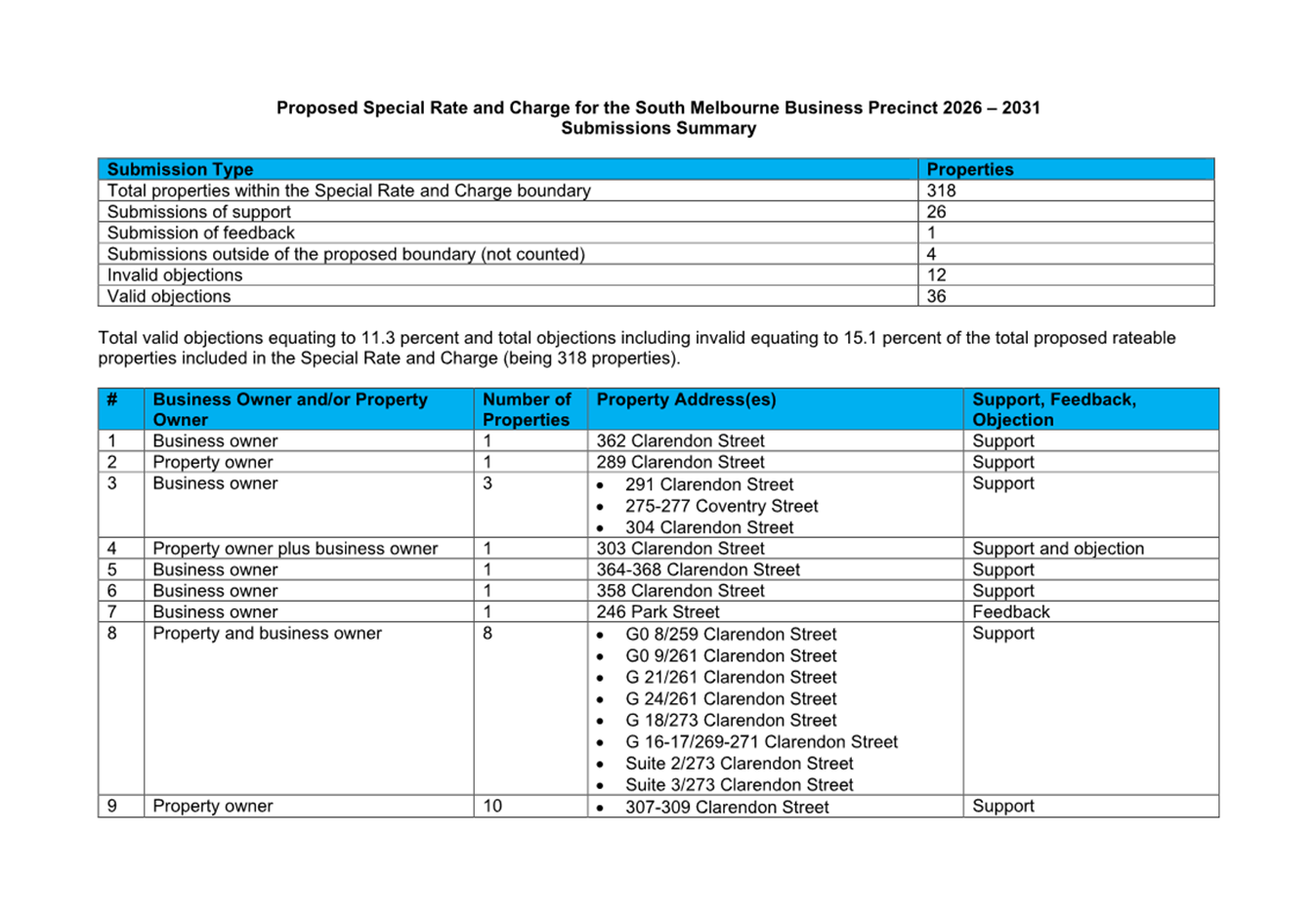
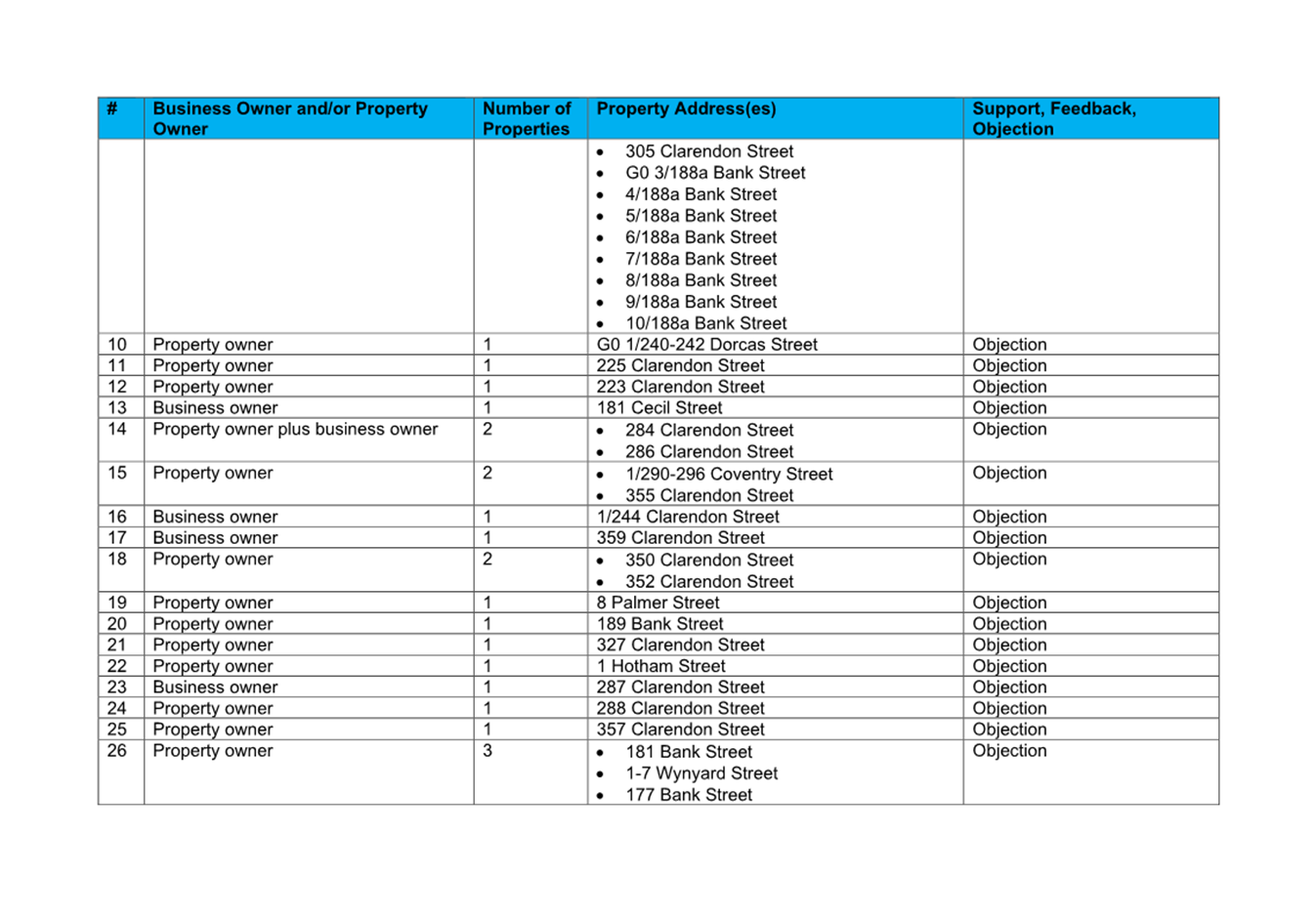
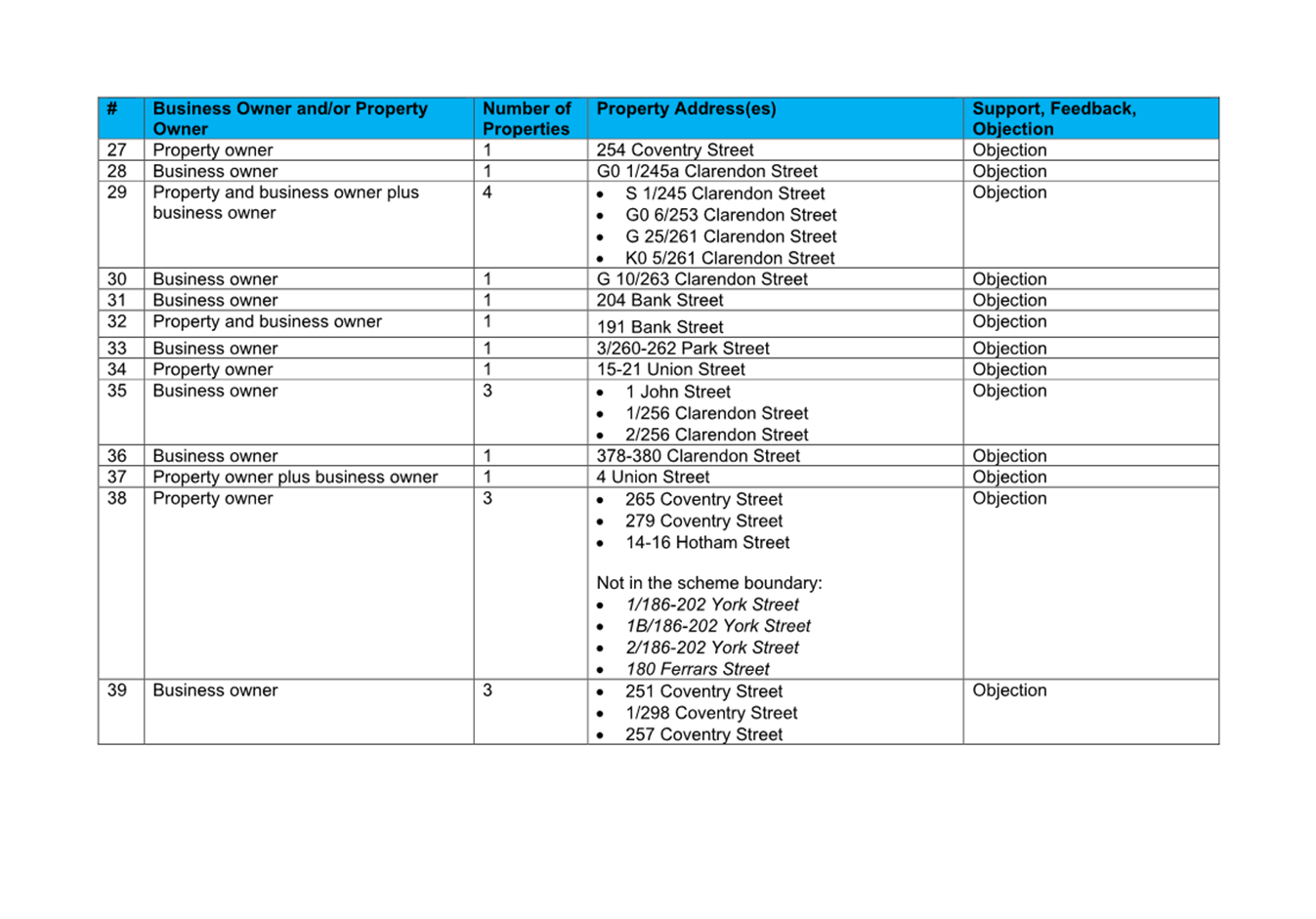
Meeting of the Port Phillip City Council
18 March 2026
12. An Engaged and Empowered Community
12.1 Municipal Association of Victoria - Motion Submissions.................................................... 405
12.2 Councillor Expenses Monthly Reporting - February 2026................................................. 417
Meeting of the Port Phillip City Council
18 March 2026
|
Municipal Association of Victoria - Motion Submissions |
|
|
Executive Member: |
Robyn Borley, General Manager, Governance and Performance |
|
PREPARED BY: |
Elizabeth Cowin, Coordinator Advocacy, Grants & Partnership |
1. PURPOSE
1.1 To seek Council endorsement to submit motions to the Municipal Association of Victoria’s State Conference.
2. EXECUTIVE Summary
2.1 The Municipal Association of Victoria (MAV) convenes State Council twice each year, providing Victorian councils with a forum to submit and debate motions on matters of state‑wide significance; the next State Council meeting is Friday, 29 May 2026.
2.2 Formal Council endorsement of each motion is required by submitting councils.
2.3 Council officers have prepared draft motions at Attachment 1 aligned with Council’s endorsed advocacy priorities. These motions address state‑wide challenges for Victorian local government.
2.4 Council endorsement is now sought to submit the proposed motions to the 2026 National General Assembly and to authorise the Chief Executive Officer to make non‑material amendments to ensure regional alignment where appropriate.
|
That Council: 3.1 Endorses the submission of motions to the Municipal Association of Victoria’s State Council on the following themes (as per Attachment 1): 3.1.1 Strengthening council-led social cohesion
initiatives 1. Acknowledge the importance of all levels of government working collaboratively and constructively to combat all forms of racism, hatred and bigotry as well as promote social cohesion in Victoria. 2. Establish a dedicated funding stream and partnership framework to support local governments in leading the community in social cohesion initiatives, and to prevent and respond to racially malicious incidents. 3. Resource councils to deliver practical, evidence-based initiatives such as upstander training in schools, community engagement, and social cohesion taskforces. 4. Facilitate collaboration between councils, state agencies, and community organisations to share best practice, respond to incidents, and build safer, more inclusive communities. 3.1.2 Statewide multi‑year beach renourishment program That the MAV advocate to the Victorian Government to: 1. Establish a statewide, multi-year beach renourishment program with clear governance, risk-based triggers and transparent funding pathways to protect public assets and promenades, maintain safe and accessible beaches, reduce storm damage and repair costs, and safeguard tourism and coastal ecosystems across Port Phillip Bay and the broader Victorian coastline. 2. Implement coordinated delivery and capability supports, including a predictable co-funding model, standardised technical guidance and monitoring, streamlined environmental approvals, and a preference for nature-based, climate-resilient designs to achieve better value for money and scheduling certainty for councils. 3.1.3 Improving bus service frequencies in Victoria That the MAV: Call on the Victorian Government to: 1. Fund and implement Victoria’s Bus Plan, as outlined in the Department of Transport and Planning’s Bus Network Reform Implementation Approach, to improve bus services in Victoria and; 2. Deliver a vibrant public education campaign to promote bus use. 3.1.4 Protecting Local Law officers as front-line workers That the MAV advocate to the Victorian Government to: 1. Amend legislation to recognise local government authorised officers as protected front-line workers, applying emergency-worker-level aggravated assault penalties for assault, threats, intimidation, or obstruction while performing - or because of - their official duties, regardless of the enabling Act. 2. Provide implementation guidance to Victoria Police and courts, and public communications reinforcing zero-tolerance for aggression towards council officers. 3.1.5 Legislation and funding to the EPA to support acoustic cameras to mitigate hooning That MAV calls on the Victorian Government to: 1. Enable enforcement with acoustic cameras by clarifying or amending the Environment Protection Act 2017 and Environment Protection Regulations 2021 so EPA Victoria can rely on approved acoustic-camera evidence (with human review) to issue Vehicle Testing Notices and infringements. 2. Fund a statewide program for EPA Victoria (with Victoria Police and DTP) to deploy mobile and fixed acoustic cameras at Police-identified hotspots, under a standards, privacy and evaluation framework. 3. Co-fund council participation, recognising local installation costs, with EPA managing devices, data and enforcement.
3.1.6 Statewide active & accessible transport acceleration That the Municipal Association of Victoria advocate to the Victorian Government to: 1. Establish a recurrent funding mechanism to co-fund council-led walking, wheeling and cycling upgrades and public-transport access works, building on the congestion-levy reinvestment precedent. 2. Publish and fund a time-bound program for accessible tram stops (level boarding) and higher-capacity trams, with milestones co-designed with councils. 3. Complete a metropolitan bus network review and uplift (frequency, operating span, and intermodal connections), prioritising first/last-mile corridors identified by councils. 4. Co-deliver protected, connected cycling corridors on State-managed arterials and protected intersections at key nodes to close network gaps and reduce serious injuries. 3.1.7 Strengthened homelessness responses, social housing access, and rental stability That the Municipal Association of Victoria advocate to the Victorian and Australian Governments to: 1. Strengthen integrated, prevention‑focused homelessness responses, including early‑exit pathways from institutions, properly resourced interim housing, and retention/expansion of locally delivered services. 2. Renew and expand social and community housing with tenant‑safe renewal; deliver emergency and short‑term options (including culturally appropriate First Nations responses); and scale proven, diverse models. 3. Increase affordable and key‑worker supply through partnerships and innovation, a statewide register to track voluntary affordable housing agreements, and measures that reduce displacement from short‑stay accommodation. 4. Stabilise the private rental market via mandatory affordable housing contribution requirements, stronger renter protections (lease security, improved CRA), mitigation of short‑stay impacts, and accessible dispute resolution. 5. Strengthen place‑based systems with a single coordinated access point, growth‑enabling State infrastructure, and opportunities to collocate Council services in new social, community and affordable housing. 3.2 Authorises the Chief Executive Officer or delegate to make non‑material changes to the motions where required, or to align with collaborating Councils. |
4. KEY POINTS/ISSUES
4.1 The Municipal Association of Victoria (MAV) is a membership association and the legislated peak body for local government in Victoria. State Council is the governing body of the MAV and when it meets, State Council debates motions proposed by member councils to determine the strategic direction for the year ahead.
4.2 Motions must be on state significance, and are required to align with the strategic outcomes highlighted in the MAV Strategic Plan 2024-2027 ‘Shaping our Future’, which include:
· Active local democracy
· Connected places
· Health & wellbeing
· Sustainable economy
· FutureGen
· First Peoples local government relations
· Climate & regenerative design
· Diversity, equity & inclusion
· Resilience & recovery
· Intergenerational infrastructure.
4.3 Motions must be formally endorsed by Council and submitted online by 30 March.
5. CONSULTATION AND STAKEHOLDERS
5.1 The motions are derived from Council’s endorsed advocacy positions, which have been informed by:
5.1.1 community feedback
5.1.2 strategic engagement with Councillors
5.1.3 ongoing monitoring of national policy developments
5.1.4 Plan for Port Phillip
5.2 Officers have consulted and partnered with other councils where possible to align motions.
5.3 No additional consultation is required at this stage.
6. LEGAL AND RISK IMPLICATIONS
6.1 There are no legal or risk implications arising from submitting motions to the MAV State Council.
6.2 The proposed motions align with Council’s previously endorsed advocacy positions.
7. FINANCIAL IMPACT
7.1 No financial implications arise from preparing or submitting the motions. Current advocacy on this matter is being accommodated within existing Council resources/budgets.
8. ENVIRONMENTAL IMPACT
8.1 The submission of motions does not generate environmental impacts.
9. COMMUNITY IMPACT
9.1 The proposed motions are consistent with Council’s established advocacy priorities and focus on issues that have direct implications for community wellbeing, community safety and social cohesion, environmental and climate considerations, public and active transport access, and social housing access.
9.2 While the submission of motions itself does not create immediate community impacts, successful State advocacy may result in future initiatives, funding programs, or policy reforms that benefit the local community.
10. Gender Impact Assessment
10.1 A Gender Impact Assessment is not required for this report.
11. ALIGNMENT TO COUNCIL PLAN AND COUNCIL POLICY
11.1 The proposed motions align with Council’s endorsed advocacy priorities and support key Council Plan objectives, including strengthening community wellbeing, community safety and social cohesion, environmental and climate considerations, public and active transport access, and social housing access.
11.2 The motions also reinforce existing Council policy positions related to community infrastructure investment, housing and homelessness, social cohesion, and integrated transport and land‑use planning.
12. IMPLEMENTATION STRATEGY
12.1 TIMELINE
12.1.1 Subject to Council endorsement, officers will lodge the motions via MAV’s online submission portal by the due date.
12.2 COMMUNICATION
12.2.1 Motions that are accepted and endorsed at the MAV State Conference will be reported on by Councils’ communication channels at the time they are considered.
13. OFFICER MATERIAL OR GENERAL INTEREST
13.1 No officers involved in the preparation of this report has declared a material or general interest in the matter.
|
ATTACHMENTS |
1. 2026 MAV May State Conference - Motions |
Meeting of the Port Phillip City Council
18 March 2026
|
Councillor Expenses Monthly Reporting - February 2026 |
|
|
Executive Member: |
Robyn Borley, General Manager, Governance and Performance |
|
PREPARED BY: |
Mitchell Gillett, Coordinator Councillor and Executive Support |
1. PURPOSE
1.1 To report on the expenses incurred by Councillors during February 2026 in accordance with the Councillor Expenses and Support Policy.
2. EXECUTIVE Summary
2.1 The Local Government Act 2020 requires Council to maintain a policy in relation to the reimbursement of out-of-pocket expenses for Councillors and members of delegated committees. Council endorsed its Councillor Expenses and Support Policy at the Council Meeting held on 19 June 2024.
2.2 The policy requires a monthly report on Councillor allowances and expenses to be tabled at a Council meeting in addition to publishing the monthly report on Council’s website.
2.3 The report outlines the total amount of expenses and support provided to Councillors and is detailed by category of support. Any reimbursements made by Councillors are also included in this report.
|
That Council: 3.1 Notes the monthly Councillor expenses report for February 2026 (Attachment 1) and that this will be made available on Council’s website. |
4. KEY POINTS/ISSUES
4.1 The Local Government Act 2020 (the Act) provides that councillors and members of delegated committees are entitled to be reimbursed for bona fide out-of-pocket expenses that have been reasonably incurred while performing their role, and that are reasonably necessary to perform their role.
4.2 The management of expenses is governed by the updated Councillor Expenses and Support Policy (the Policy), developed in accordance with the requirements of the Act and adopted by Council on 19 June 2024.
4.3 The Policy sets out the process for submitting requests for support and/or reimbursement. All requests are required to be assessed by officers prior to processing.
4.4 All requests for reimbursement must be lodged with officers for processing no later than 30 days from the end of the calendar month, except for the month of June where claims must be submitted within 7 days. Claims for reimbursement lodged outside this timeline will not be processed unless resolved by Council.
4.5 To
accurately capture expenses, monthly reports are prepared no earlier than
30 days following the end of the month and generally reported at the next
available Council meeting cycle. This means that reports are generally
presented in a 2-3 month rolling cycle.
4.6 Notes the variations in Information and Communication Technology charges are due to the number of devices requested by those Councillors, such as the use of an iPad as well as a mobile phone and additional data packages.
4.7 Notes the higher Information and Communication Technology charges attributed to certain councillors in February 2026 is for International Roaming being enabled on respective councillor’s council issued devices to allow them to participate in official Council business while overseas.
5. CONSULTATION AND STAKEHOLDERS
5.1 No community consultation is required for the purposes of this report.
5.2 A copy of Councillor expense reports will be provided to the Audit and Risk Committee.
6. LEGAL AND RISK IMPLICATIONS
6.1 The provision of expenses and support to Councillors is governed by the Local Government Act 2020, and Council’s adopted policy.
7. FINANCIAL IMPACT
7.1 Provision of support and expenses for Councillors is managed within Council’s approved operational budgets.
8. ENVIRONMENTAL IMPACT
8.1 There are no direct environmental impacts as a result of this report.
9. COMMUNITY IMPACT
9.1 This report provides to the community transparency and accountability by publicly disclosing expenses and support accessed by Councillors.
10. ALIGNMENT TO COUNCIL PLAN AND COUNCIL POLICY
10.1 Reporting on Councillor expenses delivers on Strategic Direction 5 – An Engaged and Empowered Community.
11. IMPLEMENTATION STRATEGY
11.1 Council reports to the community monthly on the expenses and reimbursements provided to Councillors.
11.2 Officers will publish monthly expense reports to Council’s website once adopted.
12. OFFICER material OR general INTEREST
12.1 No officers involved in the preparation of this report has declared a material or general interest in the matter.
|
ATTACHMENTS |
1. Declaration of Councillor Expenses - February 2026 |
Meeting of the Port Phillip City Council
18 March 2026
13. A Trusted and High Performing Organisation
13.1 Psychological Health and Psychosocial Hazards Policy............................................................... 424
Meeting of the Port Phillip City Council
18 March 2026
|
Psychological Health and Psychosocial Hazards Policy |
|
|
Executive Member: |
Daniel Lew, Acting Director, People and Experience |
|
PREPARED BY: |
Karen Lyons, Head of Safety and Wellbeing |
1. PURPOSE
1.1 To seek Council endorsement of the revised Psychological Health and Psychosocial Hazards Policy
2. EXECUTIVE Summary
2.1 Council’s current Psychologically Safe Workplace Policy which applies to both Councillors and Staff was endorsed by Council on 21 August 2021.
2.2 The Policy was originally developed following a motion tabled at Council in September 2020. The motion requested the CEO prepare a Policy on the creation and maintenance of a Psychologically Safe Workplace. The intention was to include the respective legal obligations under relevant legislation, to create a workplace that supports the mental and physical health and wellbeing of individual Councillors, the CEO and all staff employed by the CEO.
2.3 Psychological Health and Psychosocial hazard management have a greater emphasis in the Workplace now more than at any previous time.
2.4 The Victorian Safety Regulator, Worksafe alongside most other Australian Safety regulators has been taking steps to incorporate enhanced aspects of psychological health and psychosocial risk and hazard management over the past few years and new Victorian regulations came into effect in December 2025.
2.5 Over the past two years, People, Culture and Safety (PC&S) and Council more broadly have worked towards better incorporating the awareness and understanding of psychosocial hazards in the workplace and their risk controls.
2.6 To reflect these broader changes and to ensure we have an up-to-date policy, PC&S have reviewed and revised the existing Psychologically Safe Workplace Policy which will now become the Psychological Health and Psychosocial Hazard Policy (Attachment 1).
2.7 This revised Policy
· Provides a specific commitment to psychological health and the approach to management for both Councillors and staff
· Supplements the overarching Health and Safety Policy and Safety Management System (SMS) framework reflecting the new regulatory environment and obligations on organisations
· Identifies the different channels for escalation and support for Councillors and Staff
|
That Council: 3.1 Endorses the revised Psychological Health and Psychosocial Hazards Policy (Attachment 1) and notes its application to Councillors. 3.2 Authorises the Chief Executive Officer, or their delegate to make minor edits to the Policy that do not materially alter its content. |
4. KEY POINTS/ISSUES
4.1 Psychological Health and Psychosocial hazard management have a greater emphasis in the Workplace now, more than at any previous time.
4.2 The Victorian Safety Regulator, Worksafe alongside most other Australian Safety regulators has been taking active steps to incorporate enhanced aspects of psychological health and psychosocial risk and hazard management into their frameworks and regulatory requirements. This is evident with the new regulations enacted in Victoria in December 2025 (Occupational Health and Safety (Psychological Health) Regulations 2025).
4.3 The key aims of these new regulations include:
· Make psychological health an explicit occupational health and safety obligation, recognising psychosocial hazards as equivalent to physical hazards under Victorian OHS law
· Require proactive prevention of harm: Impose a positive duty on employers to identify, eliminate or reduce psychosocial risks (so far as reasonably practicable) before psychological injury occurs, using the same risk‑management approach as for physical hazard
· Drive systemic workplace change: Shift employer focus from training‑only responses to higher‑order controls such as work design, systems of work, management practices and consultation, with ongoing review of controls
4.4 Council has an existing robust and comprehensive Safety Management System (SMS) that incorporates all the Regulatory requirements relating to these Regulations.
4.5 In addition, Council has in recent years strengthened our systematic approach to psychological health and psychosocial hazards to ensure these are adequately managed and have a strong framework to support our people and Councillors.
4.6 In order to enhance Council’s approach to safety, in line with these new regulations and expectations a review was undertaken on the current Psychologically Safe Workplace Policy.
4.7 The proposed (reviewed, updated and renamed) Psychological health and Psychosocial Hazard Policy) is a component of this framework, and has been consulted on with both Staff and Councillors.
4.8 This is a complex area requiring workplaces to become more familiar with both the language and how we think about Workplace safety.
4.9 Terminology has been evolving. In general, the accepted language by regulators and Subject Matter Experts in the field is:
· Psychological safety is the ability to speak up without fear of retribution
· Psychosocial hazards are hazards that arise from workplace interactions, behaviours or culture, design or management of work, the work environment and/or plant at a workplace that cause a stress response. When the hazard is frequent, prolonged and/or severe this can result in psychological and/or physical harm.
· Psychological health is a state of overall emotional, mental, behavioural, and social well-being, where an individual can cope with the normal stresses of life, realize their potential, work productively, and contribute to their community
4.10 Consistent with the previous version of the policy, the scope of the revised policy includes both Councillors and Staff.
4.11 Whilst not legally required to have a Policy specifically addressing these aspects of safety, a policy that covers both Councillors and Staff to highlight the mechanism for support and addressing psychosocial hazards for both, provides for a robust and comprehensive scaffold that complements the existing Safety Management System. This is particularly relevant in the current environment where psychosocial hazards are becoming a more prevalent part of Councillors and Council considerations and interactions.
4.12 The updated Policy encompasses
· Overview of psychosocial hazards
· Council’s obligations to Councillors and Staff and their respective roles
· Available support mechanisms
5. CONSULTATION AND STAKEHOLDERS
5.1 Consultation with a range of staff and our staff consultative committee has been completed, as well as a briefing and input from Councillors in October 2025.
6. LEGAL AND RISK IMPLICATIONS
6.1 The Victorian Regulatory environment relating to management of Psychosocial Hazards and supporting Psychological Health with Regulations was enacted in December 2025.
6.2 The SMS and associated documents are Councils systematic way to address and mitigate or prevent hazard from impacting staff and these are well documented in the SMS documentation.
6.3 Whilst not legally required to have a specific Policy relating to psychosocial matters it provides additional guidance and risk control to support our regulatory obligations.
7. FINANCIAL IMPACT
7.1 No Financial impact or implications are expected as the program of work and support mechanisms are already in place and part of regular operational budgets and workplans.
8. ENVIRONMENTAL IMPACT
8.1 This initiative does not have a direct environmental impact.
9. COMMUNITY IMPACT
9.1 This initiative is related to the wellbeing and safety of Councillors and employees and does not have a direct connection to Community.
10. Gender Impact Assessment
10.1 A GIA is not required for this Policy as it does not have a direct or significant impact on the Community.
11. ALIGNMENT TO COUNCIL PLAN AND COUNCIL POLICY
11.1 This Policy is aligned to Strategic Direction 6; A trusted and high-performing organisation.
12. IMPLEMENTATION STRATEGY
12.1 TIMELINE
Policy will become active, and the previous Policy rescinded following Council endorsement and subsequent organisational communications.
12.2 COMMUNICATION
Communication will occur via the relevant Staff Committees, and channels as well as in Councillor training and through the ongoing safety and wellbeing education program. Next steps will include:
· Rescinding the Psychologically Safe Workplace Policy and replacing it with Psychological Health and Psychosocial Hazards Policy
· Alignment to Health and Safety policy and Safety Management System
· Additional organisational education on wellbeing and support mechanisms available
13. OFFICER MATERIAL OR GENERAL INTEREST
13.1 No officers involved in the preparation of this report has declared a material or general interest in the matter.
|
ATTACHMENTS |
1. Psychological Health and Psychosocial Hazards Policy |
Meeting of the Port Phillip City Council
18 March 2026
14. Notices of Motion
Nil
15. Reports by Councillor Delegates
16. Urgent Business
17. Confidential Matters
The information contained in the following Council reports is considered to be Confidential Information in accordance with Section 3 of the Local Government Act 2020.
17.1 CEO Employment Matters
3(1)(f) personal information, being information which if released would result in the unreasonable disclosure of information about any person or their personal affairs.
Reason: Under the CEO Employment and Remuneration Policy, Section 16 - Confidentiality, Council does not disclose any personal information, being information which if released would result in the unreasonable disclosure of information about any person or their personal affairs. The CEO's remuneration falls into that category.